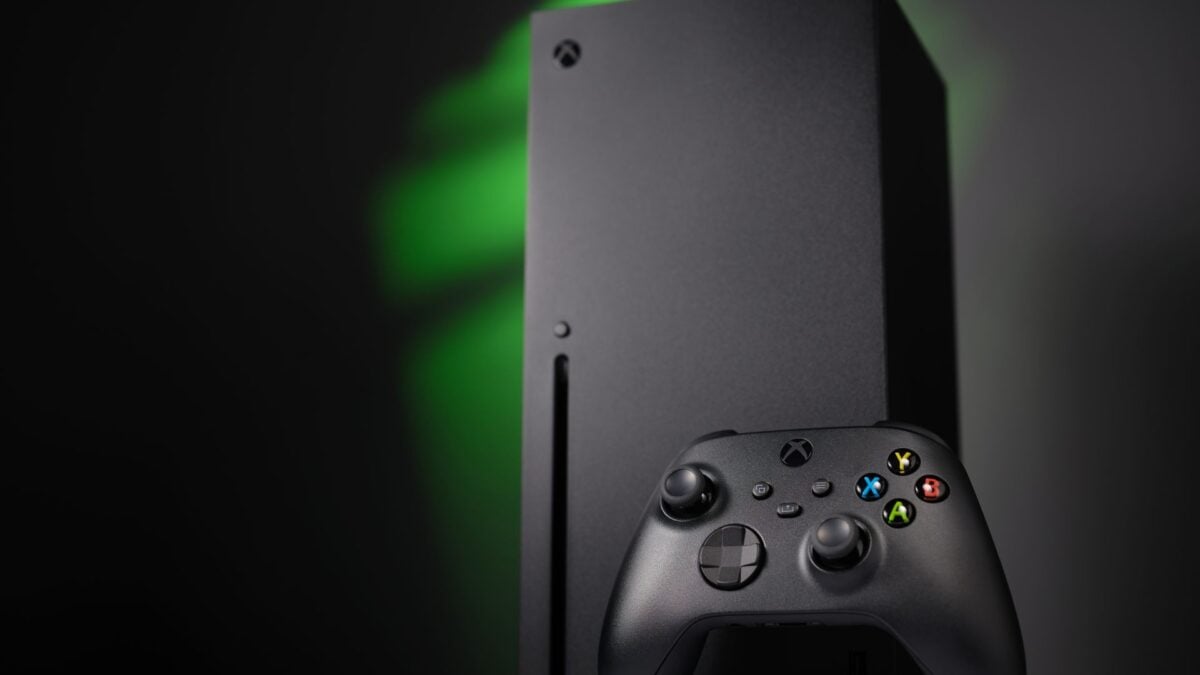
The great green “X” that brought us joy over 27 years of gaming history is once again suffering from poor hardware sales and declining revenue from its cloud-based subscriptions. This is only another note in Xbox’s depressing financial diary, though this may be one of the most significant periods of loss yet.
Microsoft’s personal computing business, which accounts for Windows OS, its Surface PCs, and Xbox, was down 3% compared to the same time last year. Microsoft said Xbox was what brought down the total. At the same time, the Windows OEM (original equipment manufacturer) business—namely, those businesses that partner with Microsoft to sell Windows PCs—saw revenue stay effectively flat at just 1% gains (mostly because of declines in Surface revenue) compared to the same holiday period last year. PC shipments were up year over year according to recent data, but Microsoft’s hardware brands took such a licking last year that it offset any gains.
Xbox hardware revenues have not had a consistently positive number since 2023. In this past quarter ending Dec. 31, 2025, Xbox hardware declined 32%. Last year, Xbox blamed tariffs while it hiked the price of all its gaming hardware. An Xbox Series X console now costs $600 if you get a digital edition with 1TB of storage. It’s no wonder the console did not sell well over the holidays.
See Xbox Series X and S at Amazon
Microsoft made all its money from cloud services
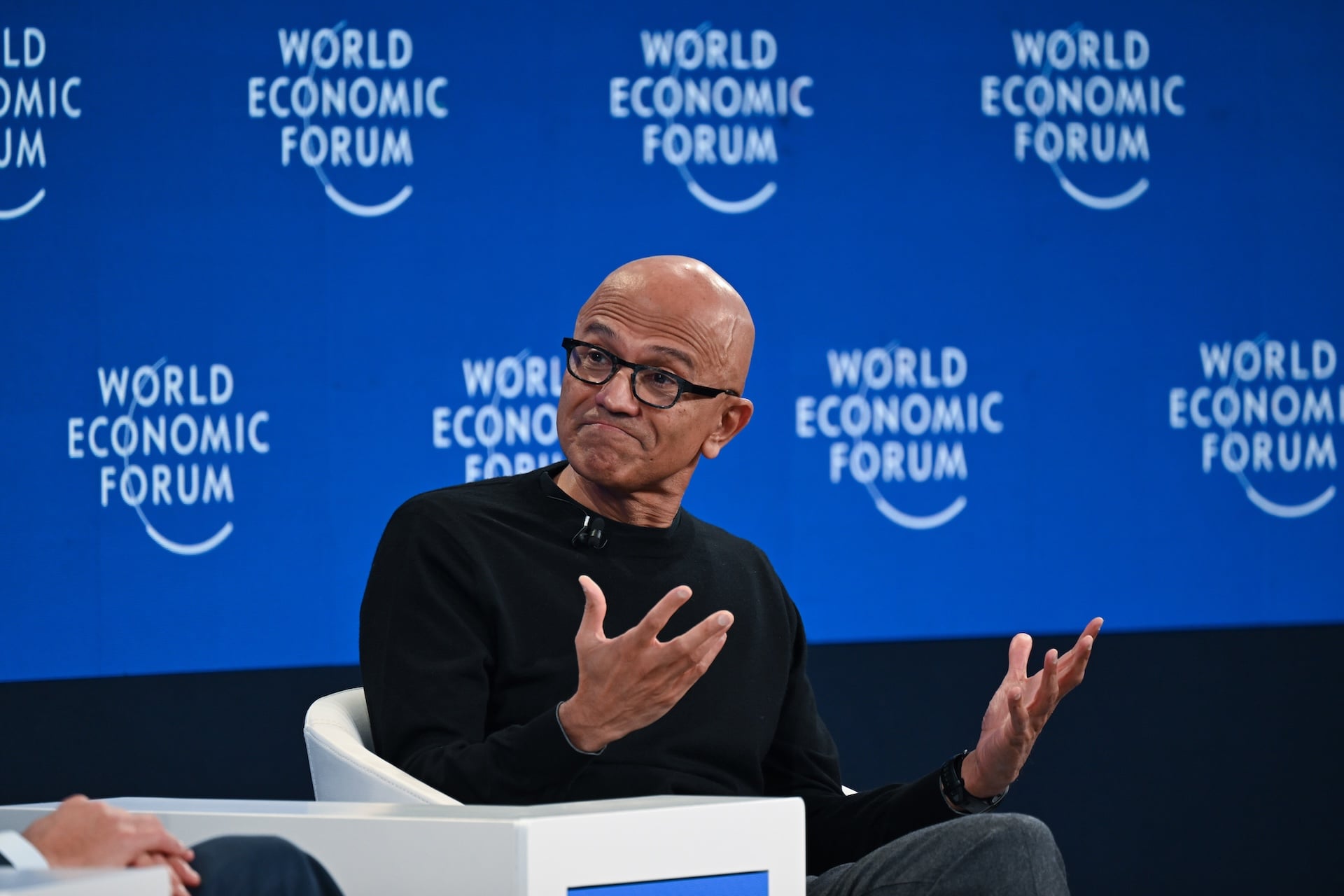 Microsoft CEO Satya Nadella said Xbox had ‘record PC players and paid streaming hours’ on Xbox, all while services and content revenue were down. © Harun Ozalp/Anadolu via Getty Images
These dour financial forecasts for Xbox don’t mean Microsoft is having a bad time. On the contrary, it’s making bank off its services—specifically anything that’s based around AI. In its second quarterly earnings report for its 2026 fiscal year, Microsoft’s total revenue was up 17% while its net income had shot up by another 23%. Its total of $81.3 billion in revenue isn’t indicative of a healthy state of its consumer-end hardware.
In a thread on X, CEO Satya Nadella proclaimed his company’s cloud revenue had finally hit $51.5 billion, up 26% from last year. And you can guess where the real money was. Microsoft’s intelligent cloud services made up the lion’s share of the profit, with its Azure and other cloud service products revenue up 39%.
Xbox content and services revenue was also down another 5%. That shouldn’t be a shock, as last October Microsoft increased the price of its Game Pass Ultimate from $20 to $30 a month. In his earnings call on Wednesday, Nadella revered the “record PC players and paid streaming hours on Xbox.” That’s consistent with what Xbox boss Phil Spencer recently touted in a post on LinkedIn, with Game Pass cloud hours up 45% year-over-year.
You could blame select video games for Xbox’s decline. Call of Duty: Black Ops 7 didn’t sell nearly as well as Black Ops 6. Late last year, GamesIndustry.biz quoted data from Alinea Analytics, which said the latest Call of Duty sold just 401,000 copies on Steam close to a month after launch compared to the nearly 2.3 million of last year’s rendition. Xbox had many other games released last year. Some of them were pretty good, such as The Outer Worlds 2 and Ninja Gaiden 4. There were even more remakes of Xbox 360-era classics like Gears of War: Reloaded. Even selling cross-platform, they didn’t make enough money to overcome Xbox’s waning hardware sales or drive more players to get a costlier Game Pass subscription.
Microsoft has to survive the AI bubble for Xbox to live
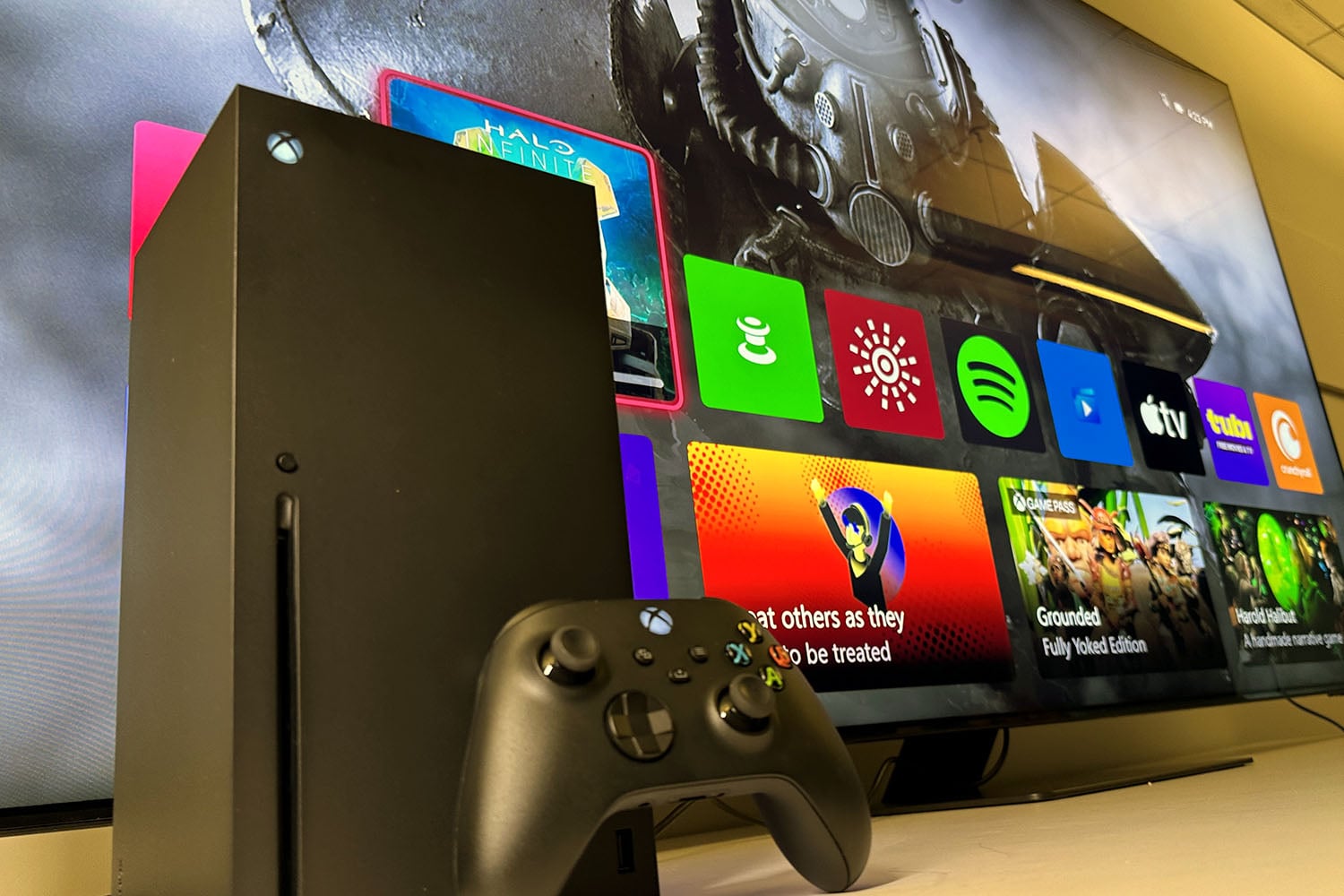 © Kyle Barr / Gizmodo
This month, Xbox touted several new games from its portfolio we should get excited for. Two games—the open-world racing game Forza Horizon 6 and the return of the action fantasy RPG Fable—seem promising. Both of these games will also be available on PlayStation 5. The Halo remake, Halo: Campaign Evolved, and Gears of War: E-Day should also be out on Xbox services and PlayStation 5 in 2026. Plus, we’ll have indie games like Double Fine’s pottery brawler Kiln and likely a few surprises before Grand Theft Auto VI steals the thunder.
There’s enough here for gamers to sink their teeth into, but is any of it enough to enforce more Game Pass subscriptions? They certainly won’t be buying a new Xbox console for the sake of these titles, especially when the Series X without a disc drive and 1TB of storage costs $600.
Microsoft has never made most of its money on hardware. It’s long been a software company first and foremost. Nadella was happy to announce Windows 11 had reached 1 billion users, a near 45% jump year over year. A big part of that metric is thanks to the company sunsetting Windows 10 and forcing users to make the switch.
Xbox is dragging down Microsoft’s numbers, and that should pose a red flag for anybody who remains a fan of the brand. Nadella’s recent statements have shown he wants Microsoft to become the world’s true AI behemoth, and the company is spending boatloads to the tune of $37.5 billion to achieve it. Either Microsoft will continue to make record-high revenues on its software stack (while ignoring expenses), or the company will take a massive hit once the world realizes the AI buildout won’t happen anytime soon. In any case, Xbox is the outlier that is dampening Microsoft’s positive outlook. We can only expect more firings, more studio closures, and a harder sell for any future Xbox hardware.
See Xbox Series X and S at Amazon