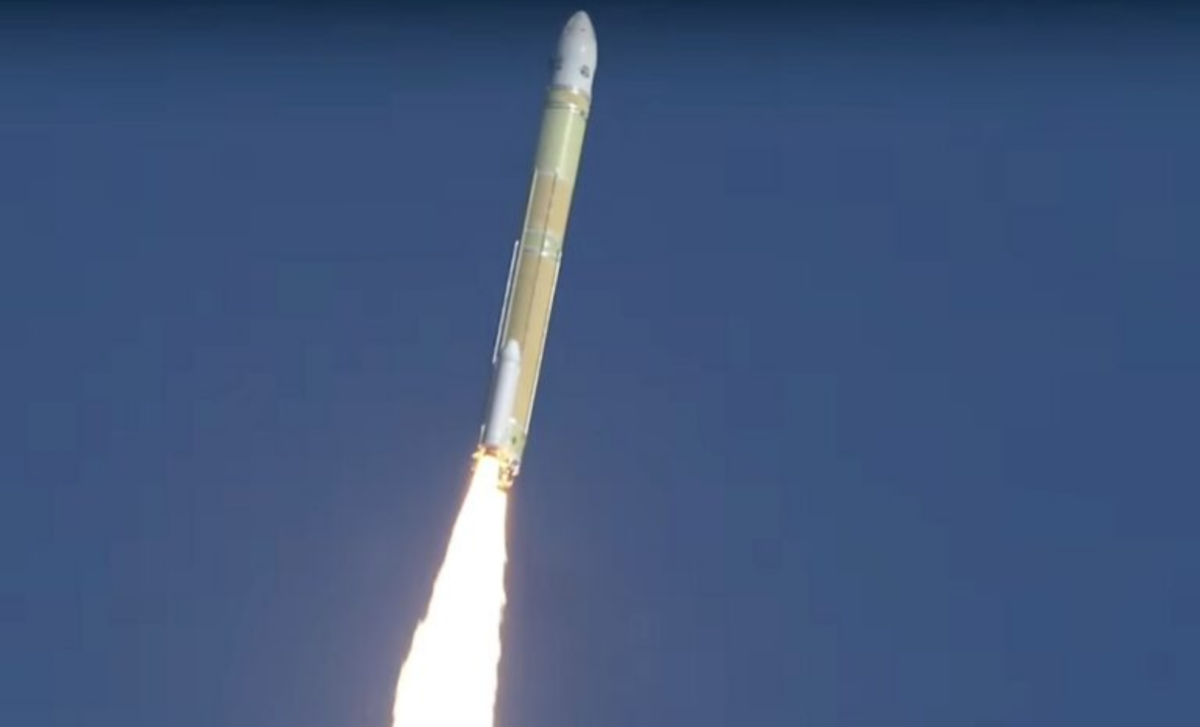
Japan’s newest heavy-lift rocket completed a largely successful ascent in late 2025, yet failed to deliver its payload after a sequence of unexpected mechanical events. The H3 rocket, developed by JAXA and Mitsubishi Heavy Industries, lifted off smoothly from Tanegashima Space Center carrying the Michibiki 5 navigation satellite, only for the mission to unravel shortly after payload fairing separation. The rocket itself continued flying as planned, but the satellite never reached its intended orbit, marking a rare and complex failure for Japan’s space program.
A Smooth Launch That Hid A Growing Problem
The launch initially appeared nominal, with the H3 rocket climbing steadily through the atmosphere and performing according to expectations. Telemetry showed stable propulsion, guidance, and structural behavior during the early minutes of flight. Trouble emerged just after the payload fairing separated, a moment designed to expose the satellite once atmospheric forces subside. Cameras onboard the rocket revealed debris and unexpected motion near the satellite, an early sign that something had gone wrong inside the payload interface region.
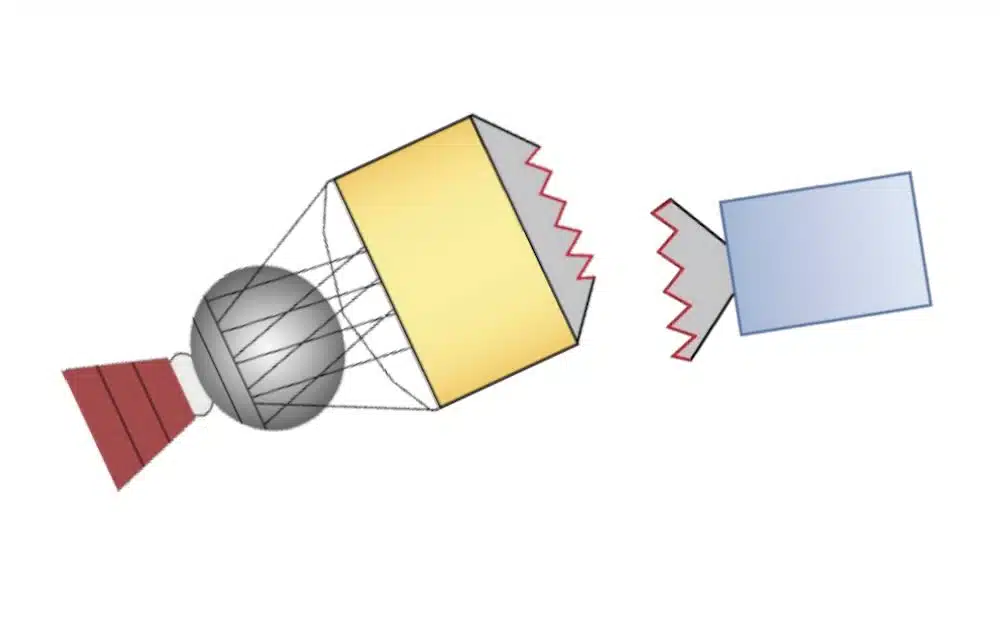
According to an in-depth report detailed by Ars Technica, sensors soon detected abnormal accelerations near the satellite mounting point. Engineers later confirmed that these forces were inconsistent with a clean separation event. “It is highly likely that the satellite mounting structure was damaged due to some factor, and as a result, the pressurization piping was damaged.” This damage appears to have compromised systems that were never expected to be vulnerable during this phase of flight, raising questions about structural margins and separation dynamics.
 Credit: JAXA
Pressure Loss Inside The LH2 Tank Raises New Questions
As the flight progressed, onboard data revealed a developing issue in the liquid hydrogen system feeding the rocket’s upper-stage engines. “A decrease in LH2 tank pressure was confirmed almost simultaneously,” officials wrote, noting that the anomaly occurred shortly after the satellite began to wobble. Automatic systems responded as designed, attempting to correct the situation. A pressurization valve opened repeatedly in an effort to stabilize tank conditions.
The recovery never came. A pressurization valve continued to open to restore pressure to the tank, but the pressure did not recover. This sequence strongly suggests that physical damage, rather than a software or sensor fault, was responsible. Investigators believe the compromised mounting structure may have transmitted forces or debris into nearby plumbing, an interaction that was not fully anticipated during design reviews or ground testing.
Investigators Weigh Debris And Leakage Scenarios
One of the most challenging aspects of the investigation involves determining whether propellant leakage played a role in the abnormal motion detected after fairing separation. Officials emphasized that no direct evidence of escaping substances has been confirmed so far.
“While no data indicating leakage of these substances has been confirmed, the possibility that they caused the abnormal acceleration cannot be ruled out at this time,” JAXA said.
This uncertainty highlights the complexity of launch vehicle diagnostics, especially when multiple systems are affected in rapid succession. Even minor structural damage can cascade into broader failures when cryogenic systems, pressure lines, and mounting hardware are tightly integrated. The H3 rocket’s ability to continue flying despite the loss of its payload underscores the robustness of its propulsion and guidance systems, even as it exposes weaknesses in payload integration.