
Sligo County Council has a plan to engage residents in the climate fight: leading by example

Coastal erosion and increasingly violent storms powering across the turbulent Atlantic are the biggest challenges facing Sligo as a result of the climate crisis.
That’s according to Kieran O’Gorman, a Sligo County Council spokesperson who said recent extreme weather events, like Storm Éowyn, are bringing with them growing concern as the council works on how to best prepare to deal with the impact and aftermath.
Éowyn left many across the county without power for days as authorities scrambled to reinstate fallen lines.
“Events like these have been challenging, not only for Sligo County Council, in terms of how to prepare and respond, but also to other organisations like the ESB and utility providers,” Mr O’Gorman said.
.jpg)
A surfer catches a massive swell in Mullaghmore, Co Sligo. Photo: Gary McCall/Red Bull Content Pool
How your county is weighing in on fighting climate change
Like every local authority across the State, Sligo is already dealing with the impacts of extremes caused by the world’s continued use of fossil fuels for energy.
According to a risk assessment carried out by KPMG, Sligo’s 70,198 people are facing a range of risks. Their analysis linked flooding that closed the Mowlam Nursing Home in 2018, and river and pluvial flooding in 2020 and 2021, with climate change.
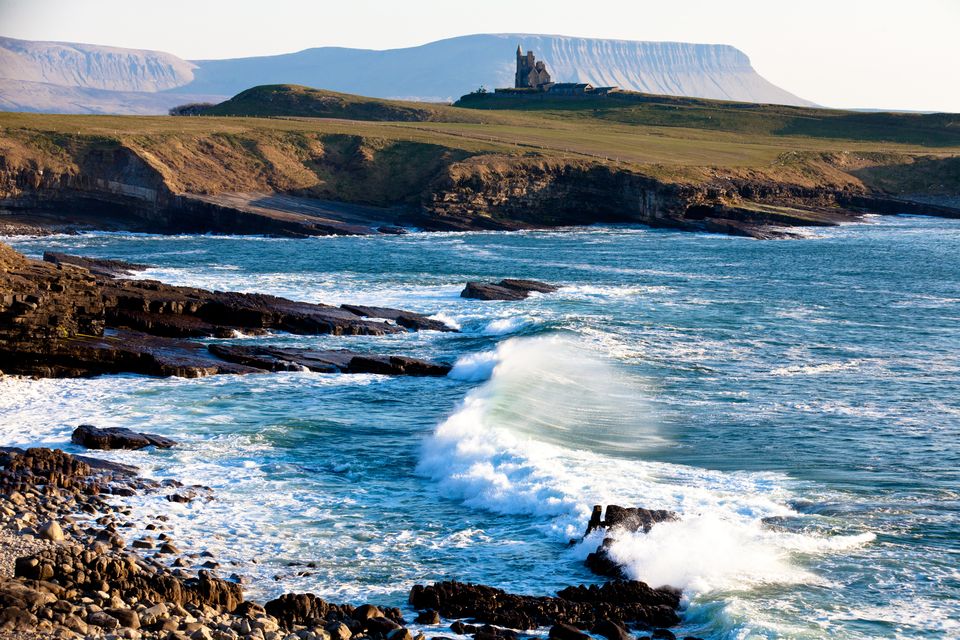
The coastline near Mullaghmore, Co Sligo. Photo: Getty
Extremes like these damaged properties, disrupted public services and hit transport networks.
The county also has significant experience of coastal erosion, but there is more to come. According to the council-commissioned KPMG report, “rising sea levels will increase the rate of coastal erosion and frequency of coastal inundation, resulting in an increased coastal erosion and flood risk”.
It also appears that severe windstorms, already hitting frequently, are here to stay – as are their wide-ranging impacts, including disruption to energy supply and transport networks – and an increase is projected in the number of heatwaves and droughts that hit water supplies and road surfaces across the county.
These risks have been laid bare in the council’s Climate Action Plan, which sets out how the local authority plans to cut Sligo’s emissions by 2030.
These cuts will be measured against Sligo’s 2018 emissions, when the county contributed 943,000 tonnes of greenhouse gases to the global problem.
According to the action plan, the county’s biggest emitters that year were agriculture (45pc), residential (17pc) and transport (14pc).
We need to make sure that we are making the most of the natural and renewable resources that we have
While the council has little control over agricultural policy, it has outlined a series of plans to reduce the carbon footprint of its own buildings and fleet, and street lights.
In a county losing two metres of coastline to rising seas every year, anything that helps to stave off the worst of what the climate crisis will bring will make a difference.
In his foreword on the action plan, the county council’s then-cathaoirleach Gerard Mullaney said: “We need to stop wasting energy and resources, and make sure that we are making the most of the natural and renewable resources that we have here in Co Sligo.
“We also need to find more sustainable ways to travel and to keep our homes warm. And, importantly, we must support vulnerable communities and all work together to make a positive difference.”
In an effort to lead by example, council staff have been encouraged to walk or cycle to work, and, according to Mr O’Gorman, that’s not where the council’s proactivity ends.
“The council has undertaken improvements in the areas of public lighting and the retrofitting of social housing,” he said.
It is hoped the realisation of an electric vehicle charging strategy will mark a sea change
“There are also plans to retrofit County Hall and Sligo fire station, and to improve the efficiency of the council fleet, which will result in further emissions reductions.”
He added that a number of projects have been delivered through the community climate action programme, which is now in its second phase, and the council’s recently implemented energy management plan has already “yielded dividends”.
Grant funding helped install two EV chargers in Sligo town and Tubbercurry’s public car parks, but the county is still well short of the charging network needed to encourage the leap to EVs. It is hoped the realisation of an electric vehicle charging strategy will mark a sea change.
Plans for travel mobility hubs are also in the pipeline to encourage a move away from private car ownership.
The action plan includes a number of actions to bring the public along on issues like active travel and household energy. The council already supports local sustainable energy communities, and hopes to reach young people through a climate forum at Atlantic Technological University and by supporting the Green Club programme and Green-Schools Project.
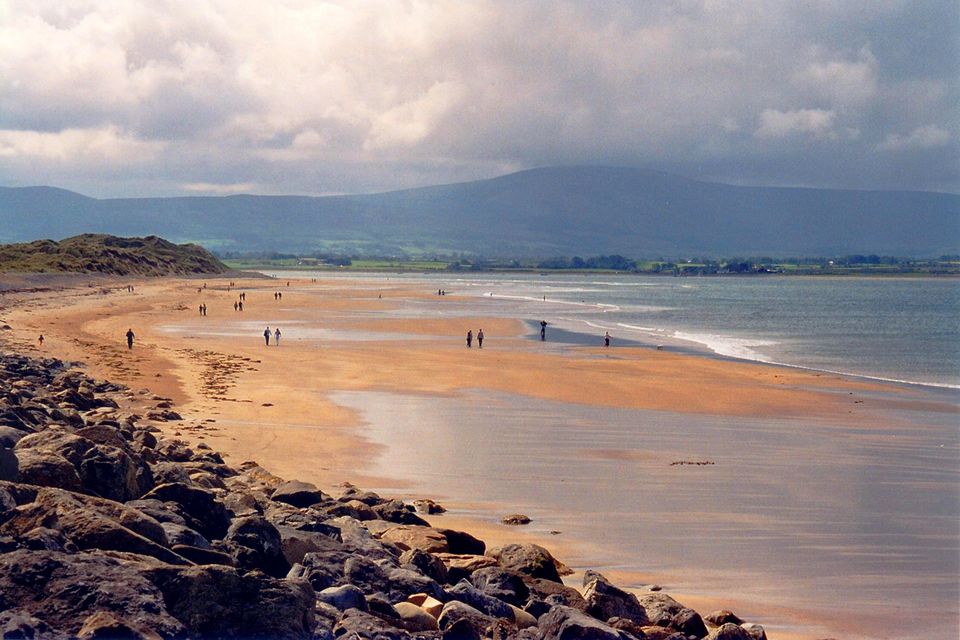
The beach at Strandhill, Co Sligo. Photo: Getty
Biodiversity is also explored in the action plan, which highlights a drive to address “relevant climate-related issues” and “integrate biodiversity considerations into new and existing operations and developments”.
According to the council, coastal erosion will continue to be monitored alongside sea defence maintenance and the consideration of nature-based solutions to the rising tide. It is also working “on a coastal erosion project for Strandhill in conjunction with the Office of Public Works”.
“The Council wants to ensure communities, infrastructure and businesses are being protected and supported before, during and after these occurrences,” Mr O’Gorman said.
When asked if Sligo County Council expects to meet its emission reduction targets, Mr O’Gorman said it “is slightly off the recommended glidepath to meeting 2030 targets”.
“However, once the planned works to buildings and fleet are completed, and there are other projects in the pipeline, the council is hopeful to meet the 2030 targets,” he added.
Funded by the Local Democracy Reporting Scheme
Additional reporting by Shauna Corr