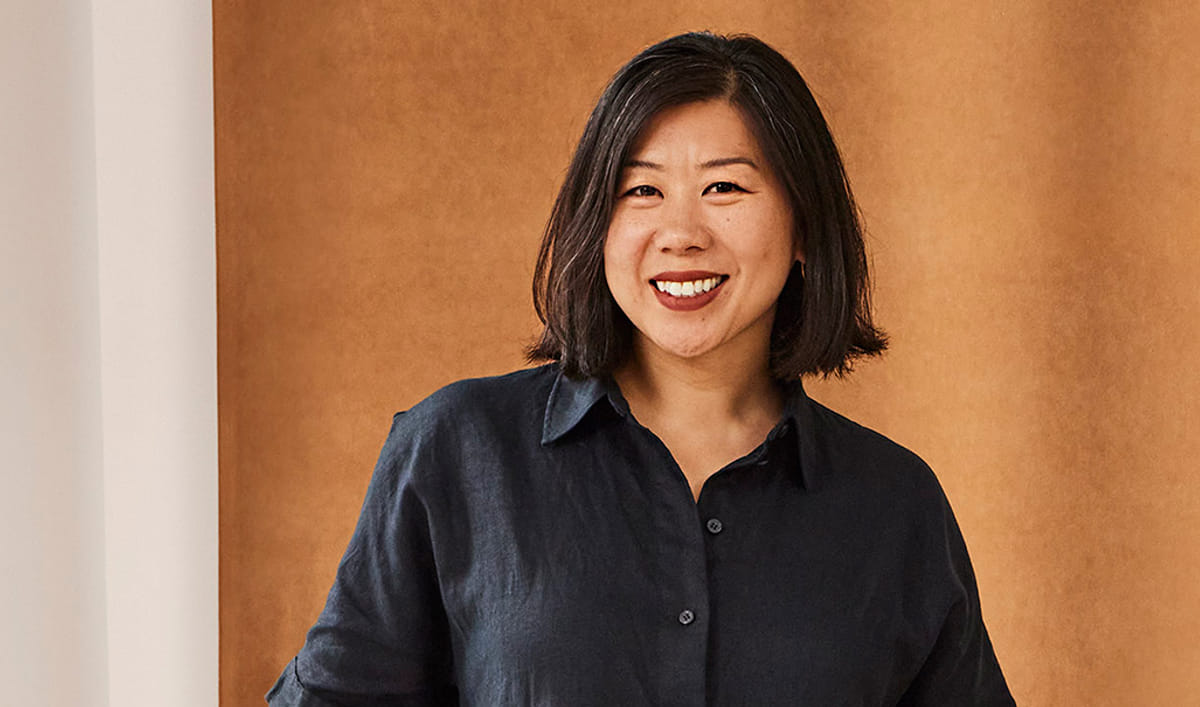
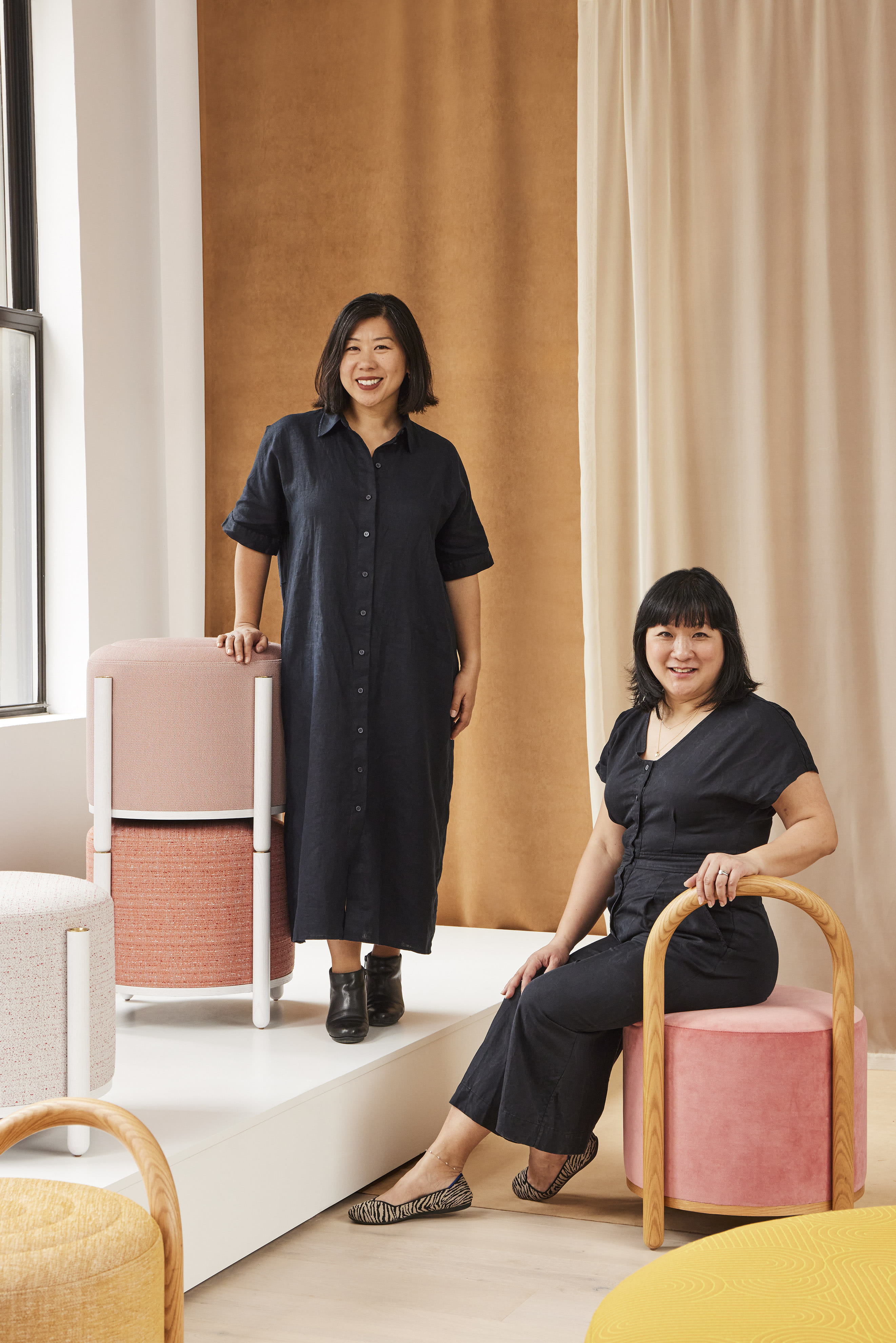
ALA Studio leadership: Alda Ly (left, founder and principal) and Tania Chau (right, studio director). Photo: Pippa Drummond, courtesy ALA Studio.
Archinect’s latest Studio Snapshot features New York-based architecture and interior design practice ALA Studio. Founded in 2017 by Alda Ly, the firm has established an impressive portfolio of completed projects in NYC and abroad.
In our conversation, Ly talks about the importance of avoiding separate “architecture studio” and “interior design studio” silos, the decision to branch out into furniture design, what it means to her to be a certified minority and woman-owned firm, and where the industry still has to make more progress.
Want to join ALA Studio’s team? They’re currently hiring an Intermediate Project Manager/Designer on Archinect Jobs!
How was ALA Studio founded?
We’re a female and minority-founded architecture and interior design firm built on the spirit of experimentation and possibility. I founded the firm in 2017, originally under the name Alda Ly Architecture, after being commissioned by the women’s coworking community, The Wing, to design their East Coast and California locations.
Today, we continue to partner with forward-thinking brands and organizations shaping what’s next. We listen deeply to our clients so we can deliver not just what they ask for, but what they didn’t yet know they needed. From architectural planning to finishes, furniture, and styling, we design the full experience — intentionally, creatively, and with people at the center.
In 2024, I rebranded the company as ALA Studio to shift focus to collective identity and signal that our design is a team effort.
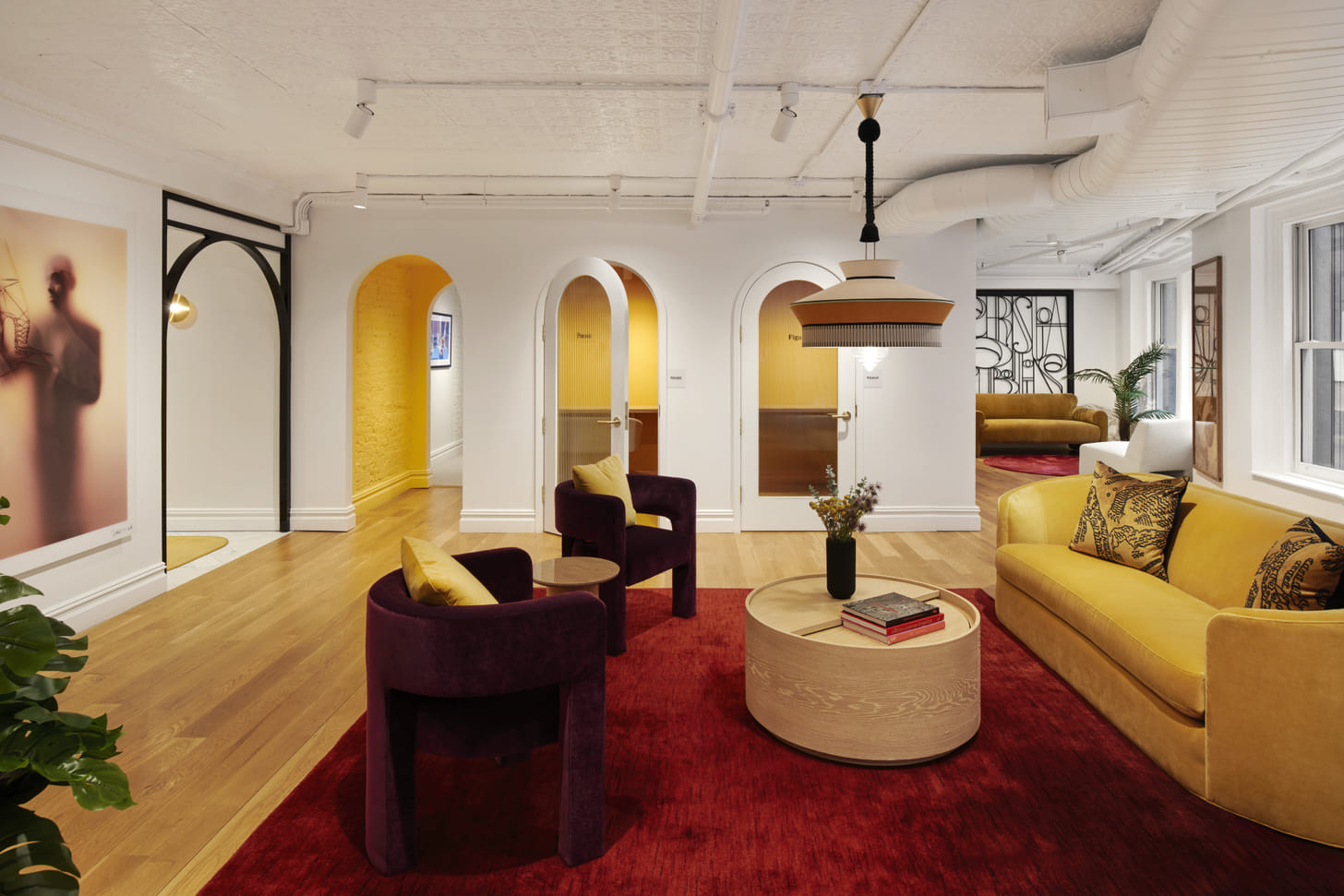
Christian Louboutin Americas HQ in New York, NY. Photo: Brooke Holm.
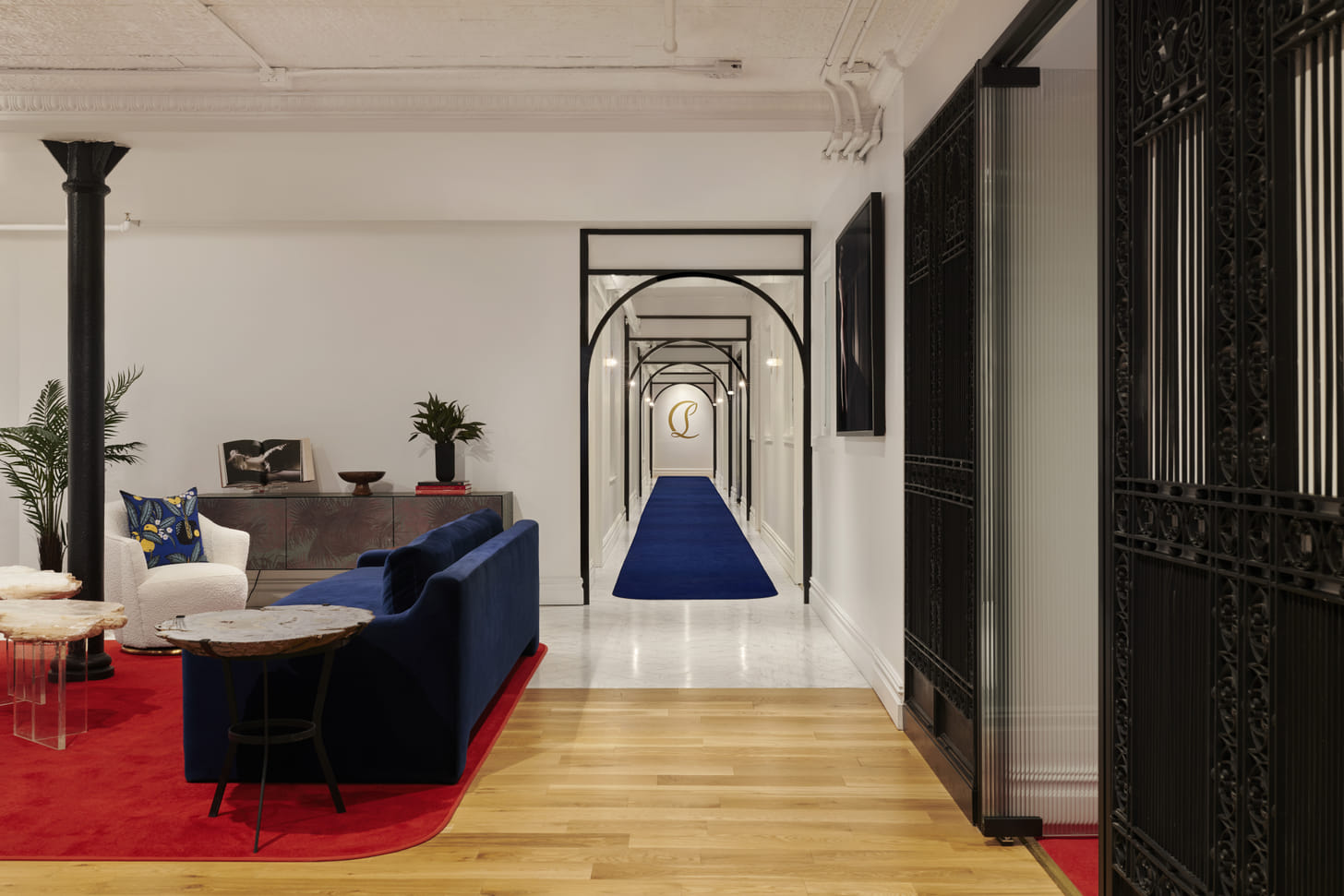
Christian Louboutin Americas HQ in New York, NY. Photo: Brooke Holm.
How many people are currently employed at the firm? How is your office structured?
Our firm operates as an integrated, tightly-knit team. As a Registered Architect, I collaborate closely on all interior architecture projects with our Studio Director, Tania Chau, an Interior Designer with decades of experience. This joint expertise ensures comprehensive support for every project and the team.
This philosophy informs our office structure: We avoid separate “Architecture Studio” and “Interior Design Studio” silos. Instead, we hire both architectural and interior designers who are comfortable flexing across disciplines and project tasks. This means architects are involved in selecting finishes and furniture, while interior designers coordinate with engineers and contractors. Everyone embraces multiple roles.
While it can be a challenge to find candidates interested in such a broad scope of design, it’s incredibly valuable for our designers. They gain exposure to all aspects of a project, accelerating their experience and knowledge!
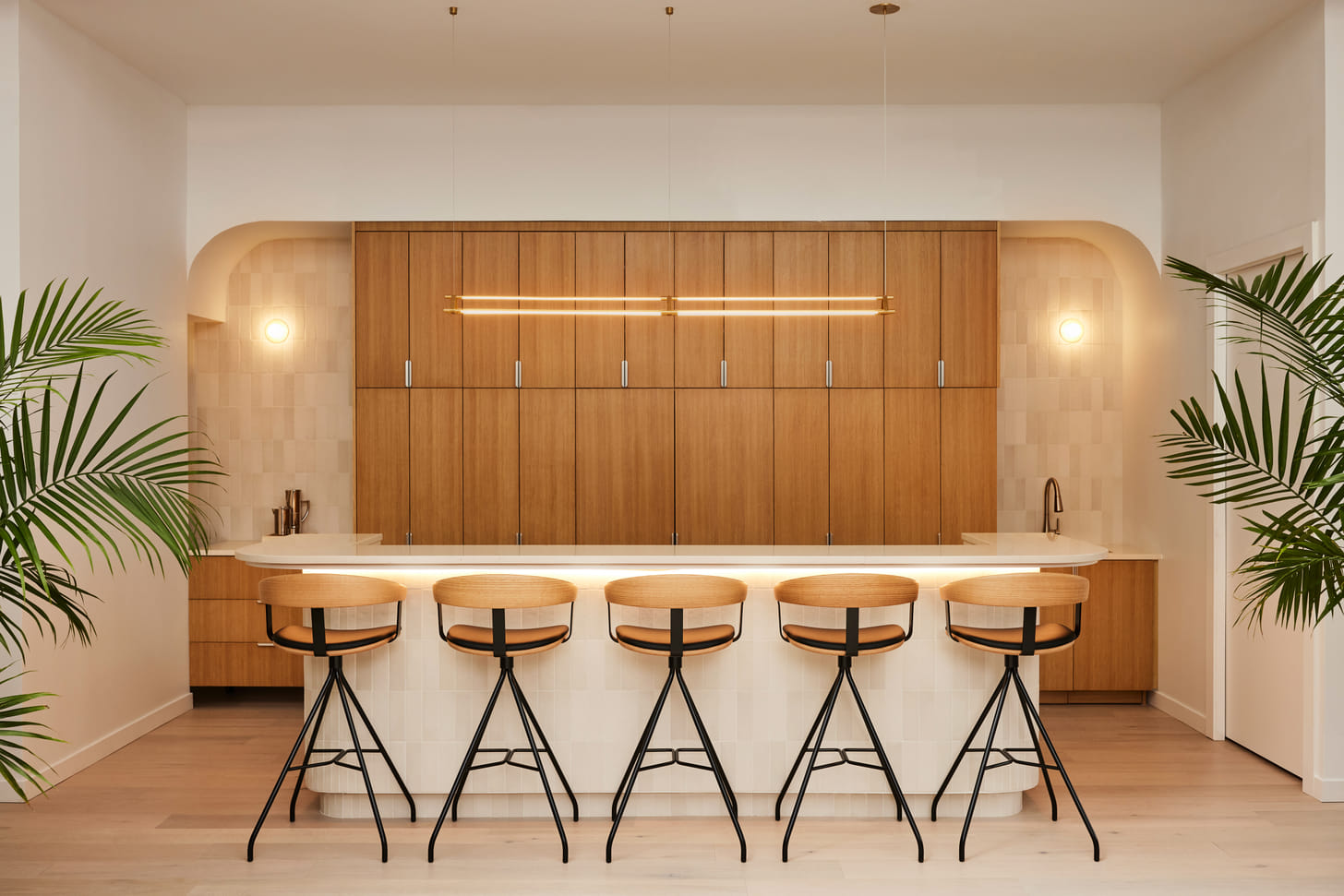
HBF Showroom in New York, NY. Photo: Pippa Drummond, courtesy of HBF.
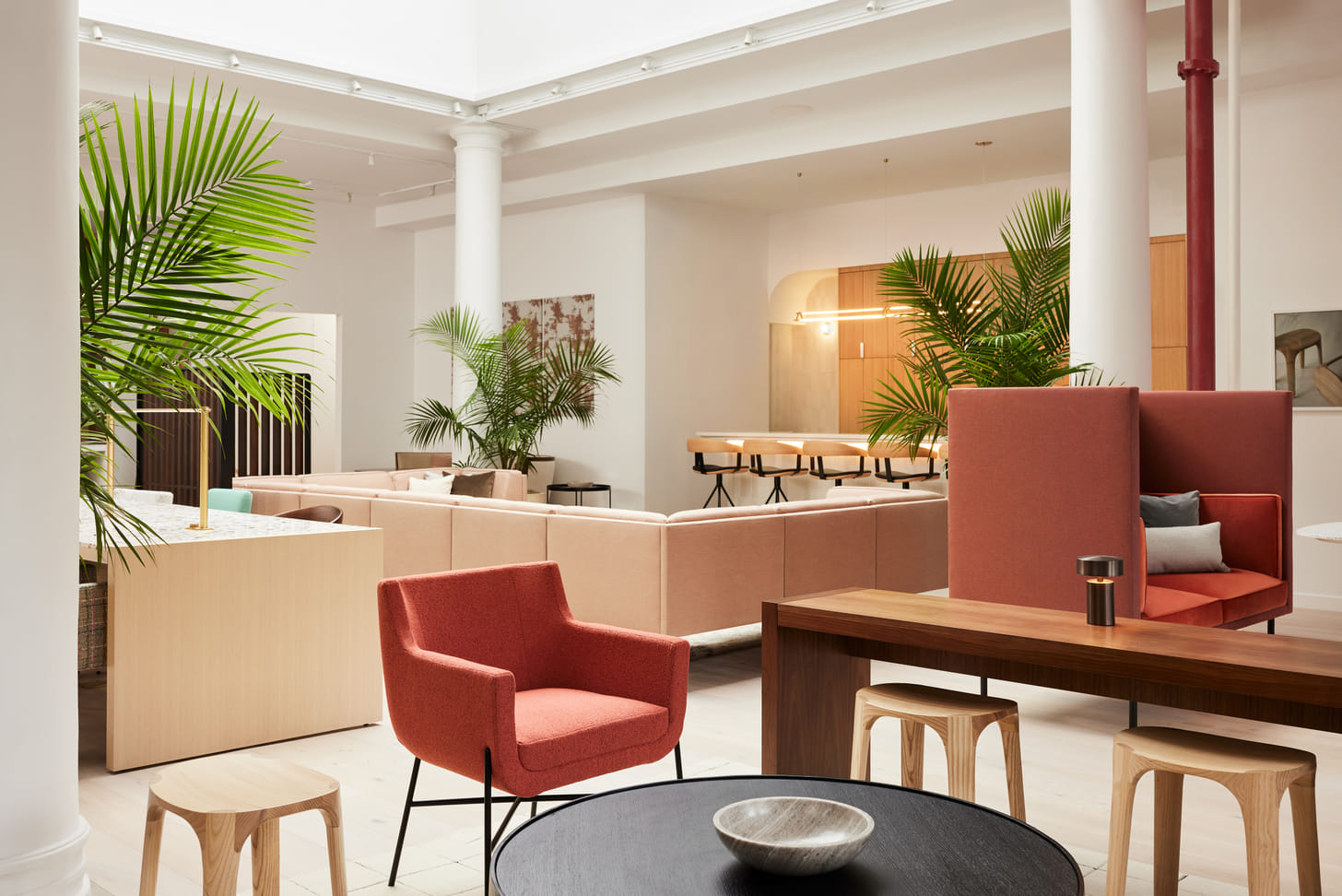
HBF Showroom in New York, NY. Photo: Pippa Drummond, courtesy of HBF.
Would you like to scale up and grow your team? What is your ideal size?
I want to grow mindfully rather than broadly. I prefer keeping the studio tight, communicative, and responsive. My ideal size is one where everyone feels seen, supported, and able to contribute meaningfully. If I feel like I can’t have a meaningful 1:1 relationship with everyone, it means we’re probably getting a little too big.
We avoid separate “Architecture Studio” and “Interior Design Studio” silos.
What have been the biggest challenges of starting and running your own practice?
Balancing the roles of business operations and design has been a constant challenge — I must both lead creatively and manage new business, finances, people, and strategy. In the early days, I handled almost everything myself — hustling for clients and personally executing every task.
Today, I have a fantastic back-end administrative team and strong project leadership. I can dedicate more time to strategic oversight while still engaging in the daily design process, and the challenge now is to maintain balance between the two.
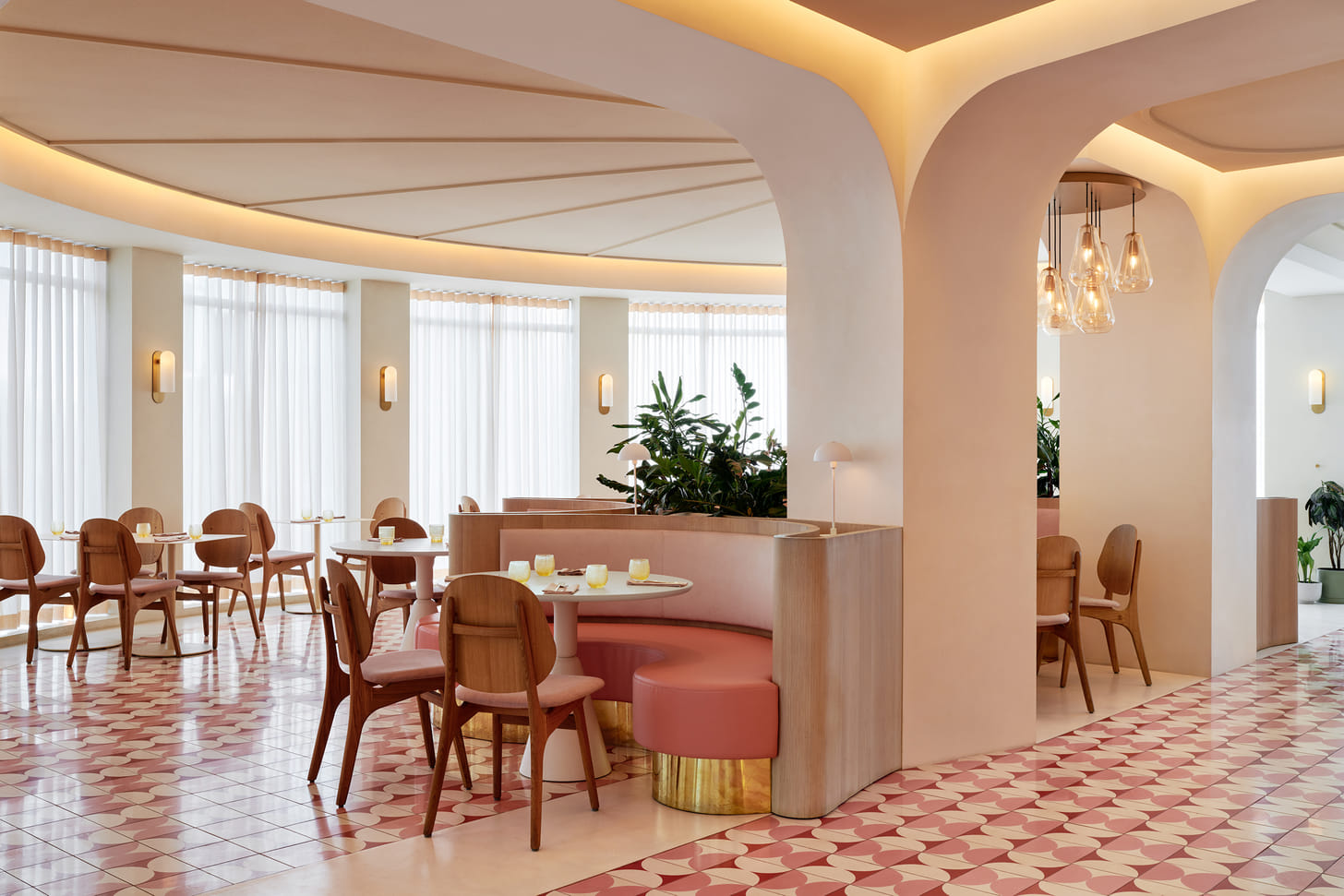
Anna Jóna Restaurant & Theater in Reykjavik, Iceland. Photo: Brooke Holm.
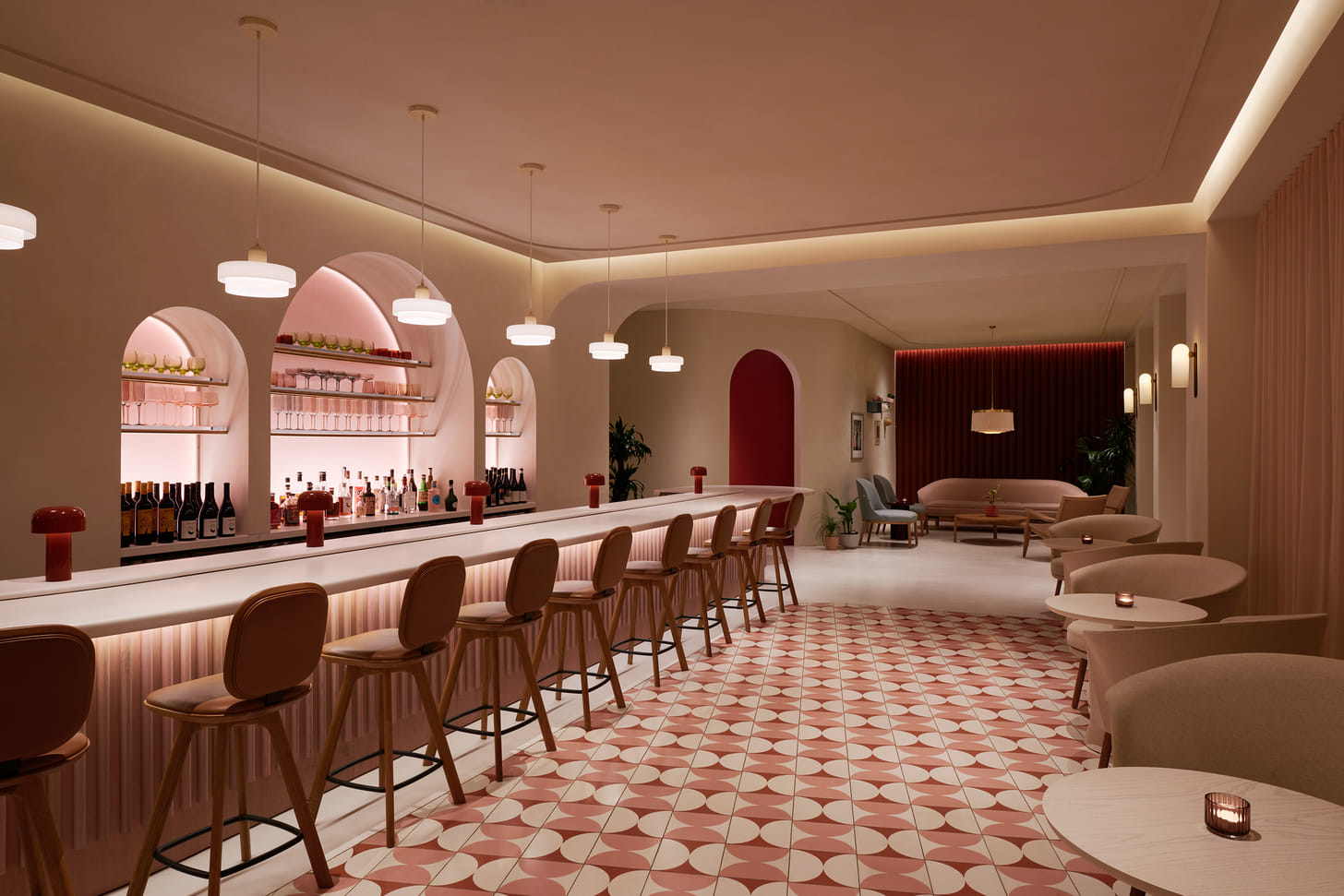
Anna Jóna Restaurant & Theater in Reykjavik, Iceland. Photo: Brooke Holm.
Do you have a favorite or especially memorable project?
One of my favorite projects is Anna Jóna in Reykjavik — it let us stretch into hospitality, arts, and emotional atmospheres with poetic touches. We worked with a visionary client whose background was in the arts, music, design, and technology, which all had a huge influence on the goals and priorities for the project.
If I feel like I can’t have a meaningful 1:1 relationship with everyone, it means we’re probably getting a little too big.
Beyond your architecture and interior design work, you also launched a furniture line, Bao, in collaboration with furniture and textiles company HBF. What was your inspiration to branch into another design discipline?
I’ve always wanted to get into furniture design — it’s such a nice change of pace… very deliberate, accessible, and lasting. Tania brought her deep understanding of furniture ergonomics, scale, function, and materiality to co-design and guide the development of the collection. As designers who specify furniture, we knew what was missing in the market, and we wanted to design something we would want to use on our own projects. And HBF was an amazing partner to work with — they gave us a ton of creative freedom to come up with something entirely fresh.
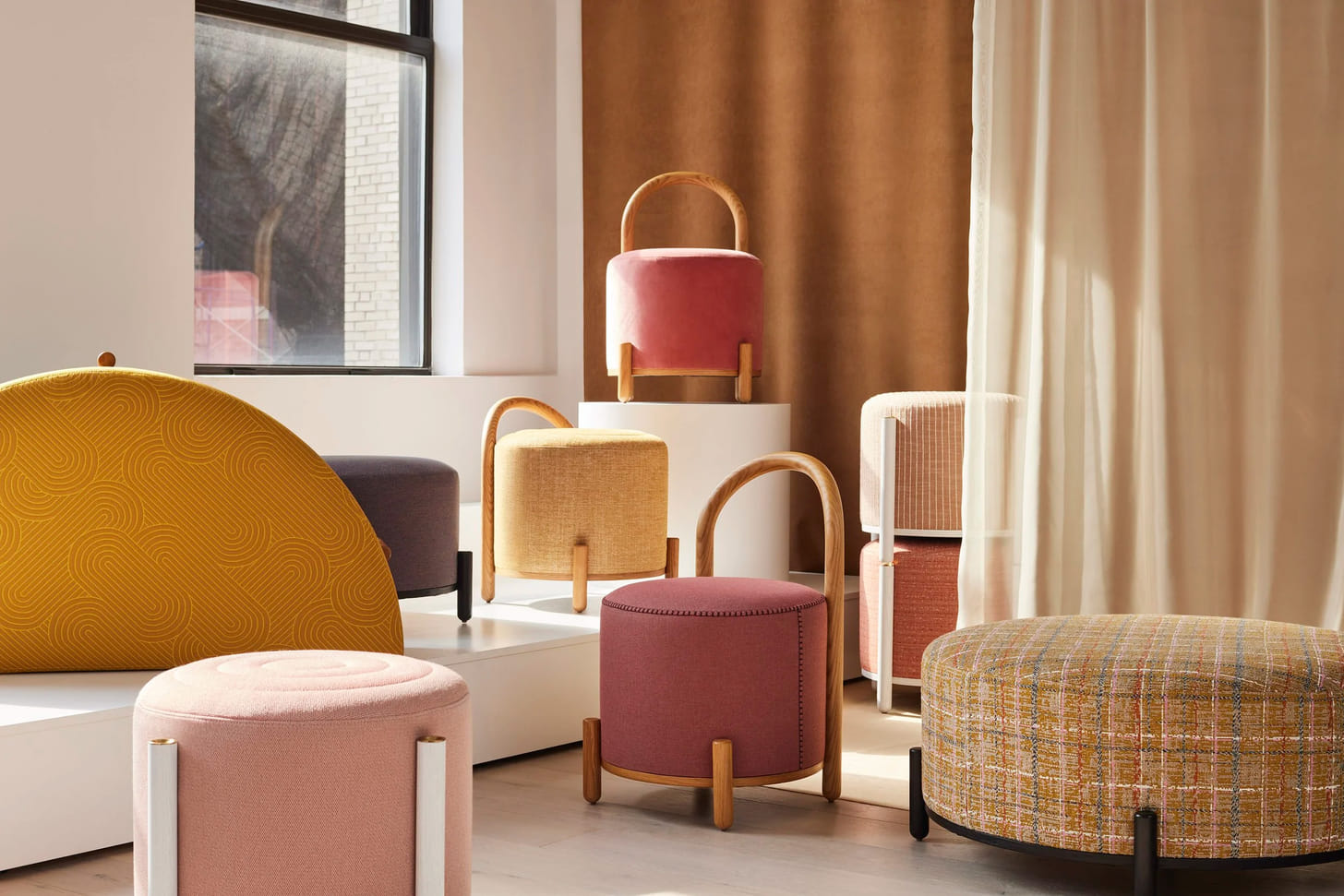
Bao Collection. Photo: Pippa Drummond.
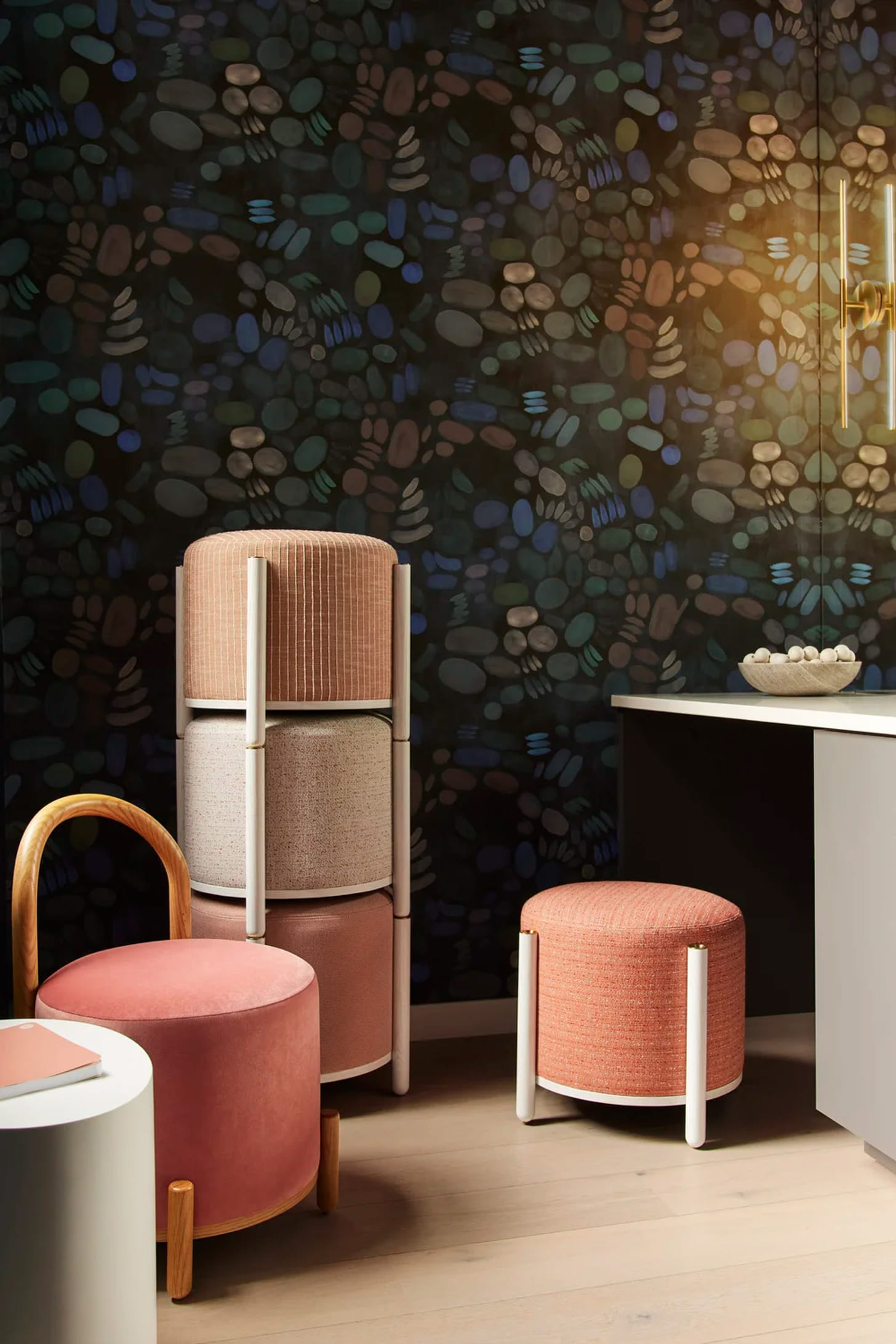
Bao Collection. Photo: Pippa Drummond.
You were an early co-founder of MASS Design Group. Which lessons from that period do you still apply to your current work?
At MASS, I learned how powerful research, listening, and community engagement can be in informing design. At ALA, we begin every project with deep user interviews, observation, and discovery phases to ground decisions in lived experience.
I’ve always wanted to get into furniture design — it’s such a nice change of pace.
ALA Studio is a certified Minority & Woman-owned Business Enterprise (M/WBE) in NYC and NY state. Which areas of the architecture industry do you feel are still most in need of improvement in this regard?
Despite my studio being a certified minority & woman-owned firm, I still see too much homogeneity in leadership and equity within larger firms and institutions. I am, however, excited by the minority and women firm owners I’ve encountered who are actively rethinking how they run their businesses. They are focusing on creating more supportive and flexible environments for their staff and exploring new design process approaches that better reflect the collaborative ways we work today.
The retention of designers from underrepresented groups is another major issue; many leave the field due to burnout, insufficient support, or work cultures that are not inclusive. The profession needs significant improvement to address this.
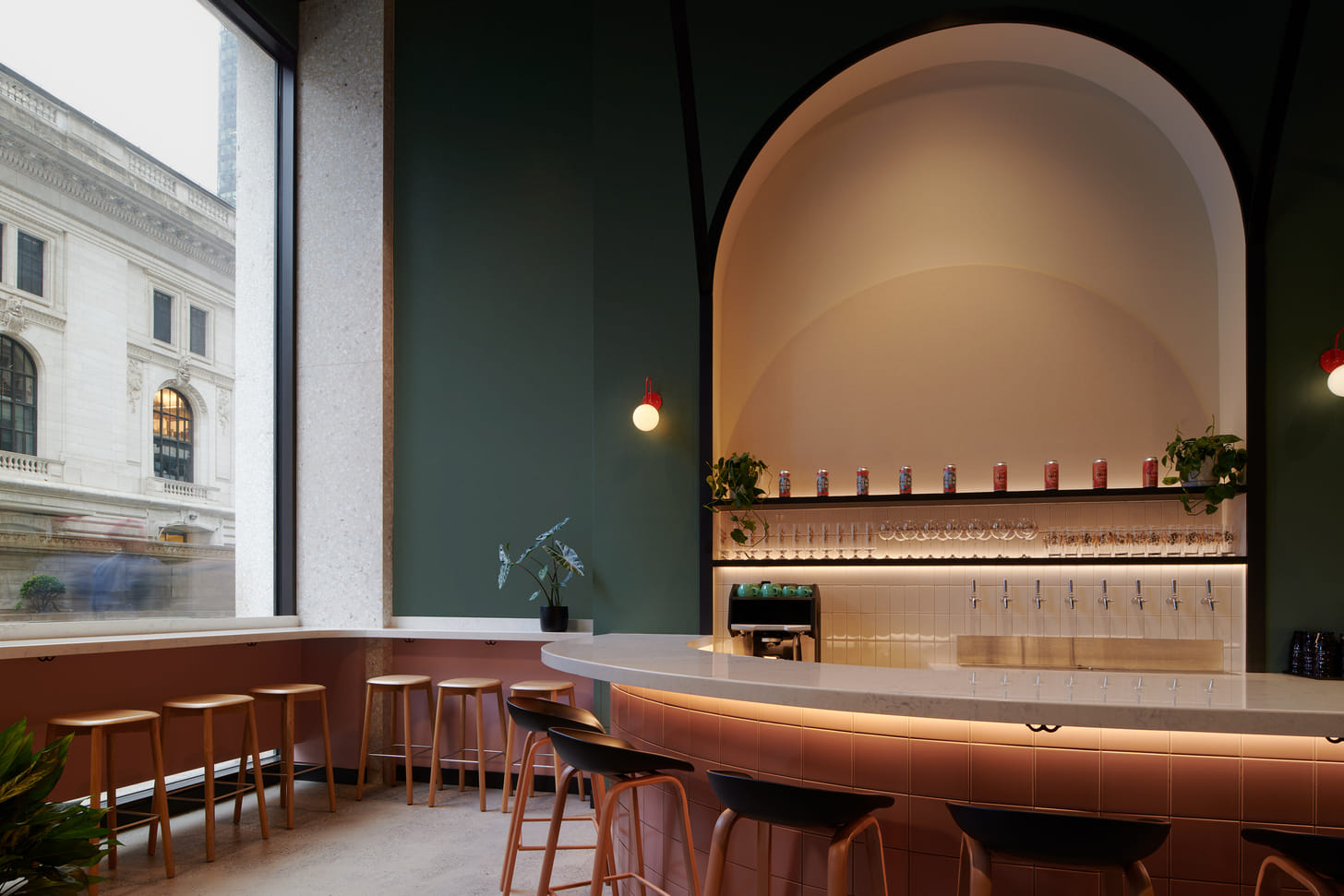
TALEA Beer Bryant Park in New York, NY. Photo: Brooke Holm.
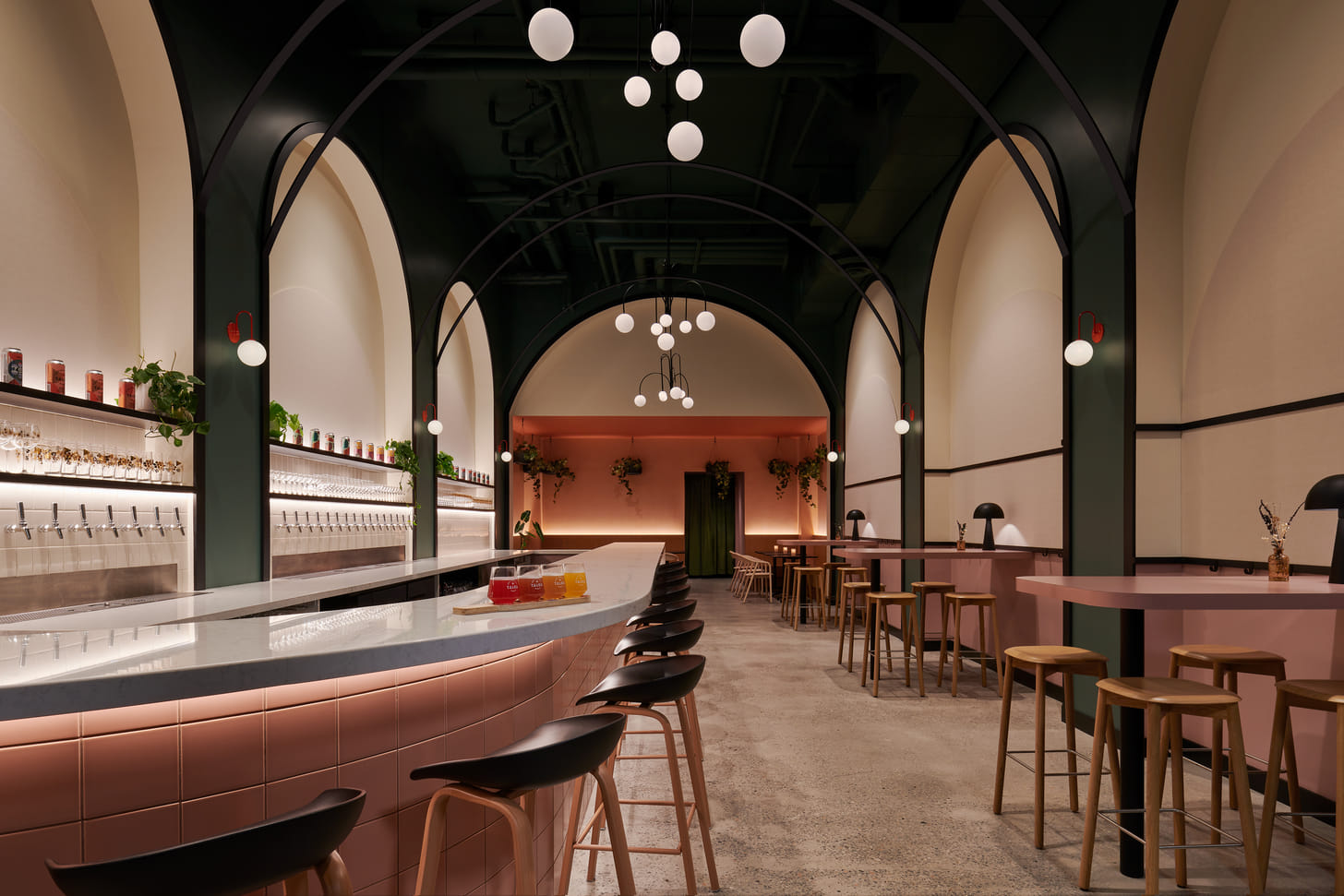
TALEA Beer Bryant Park in New York, NY. Photo: Brooke Holm.
What are some of your favorite practices you’re following in the NYC area?
There are so many wonderful NYC firms. What I appreciate most are design firms that skillfully combine color, texture, and lighting to create layered, nuanced experiences across different project types. I also pay close attention to how designers weave brand identity into their work — especially when the gestures are subtle, yet the presence of the brand feels unmistakable. Plus, I love following emerging talent in hospitality design, as I see their work as a sneak peek into where the commercial interiors industry is heading.
If you could describe your work/practice in three words, what would they be?
Thoughtful. Playful. Nimble.
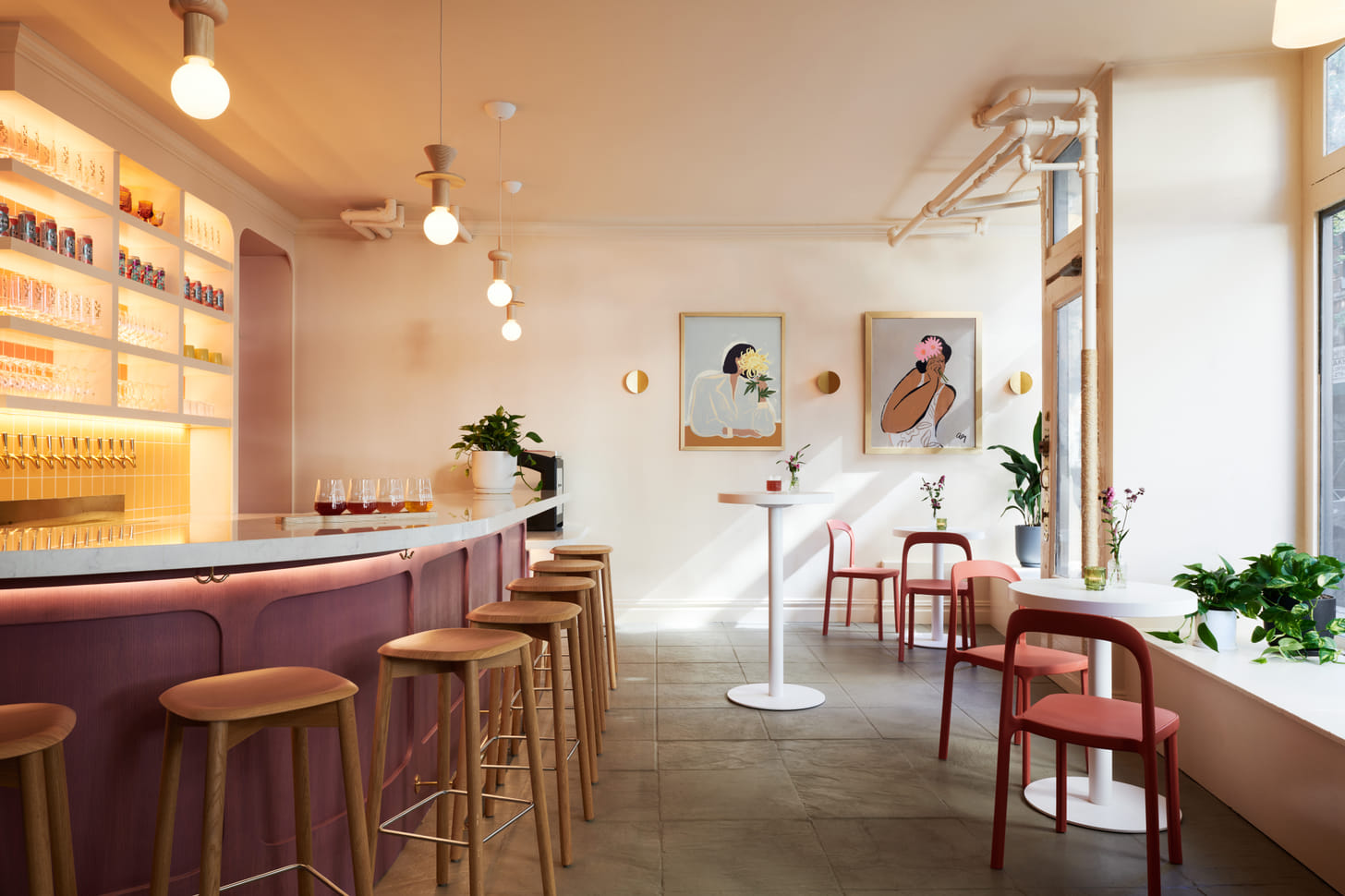
TALEA Beer West Village in New York, NY. Photo: Brooke Holm.
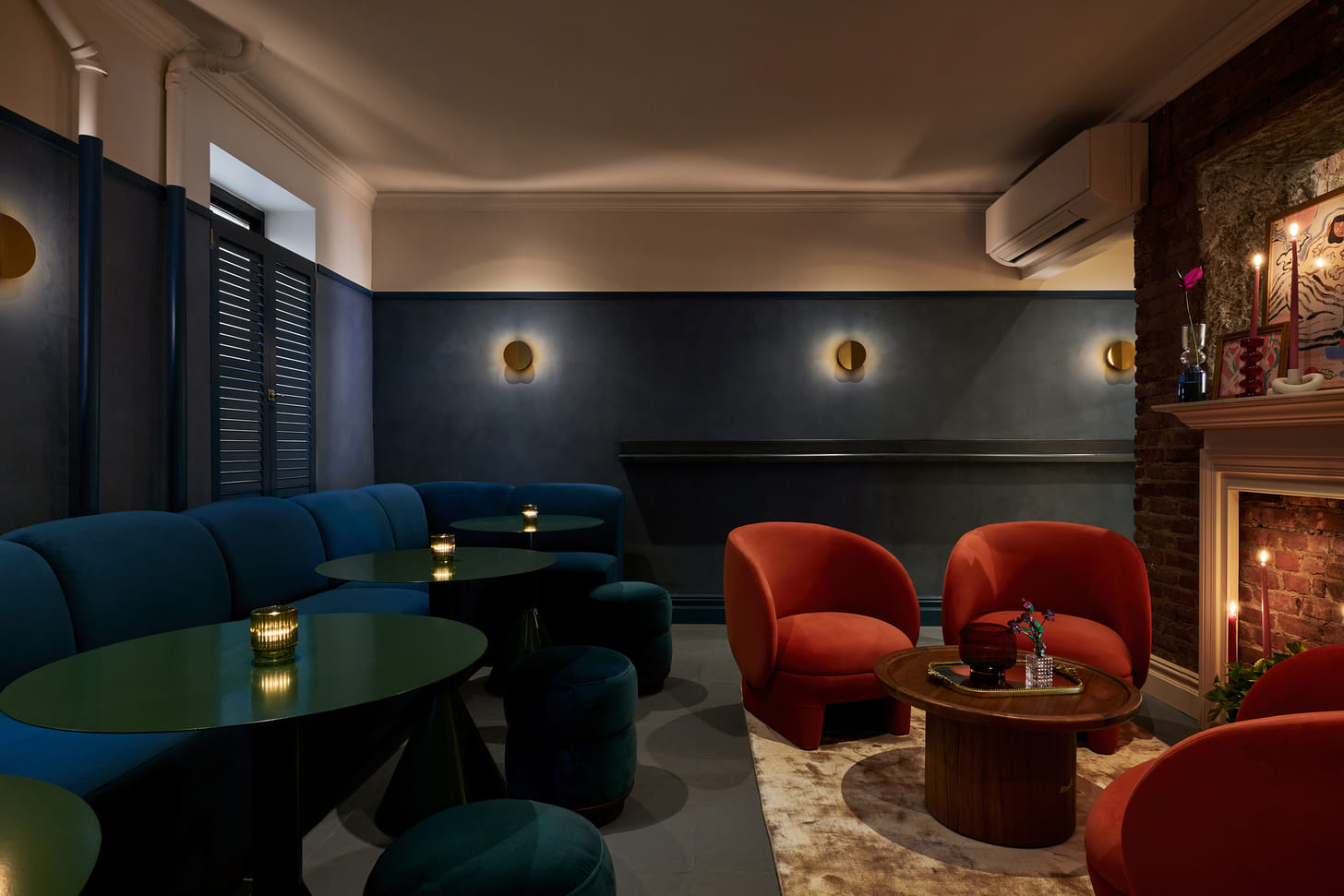
TALEA Beer West Village in New York, NY. Photo: Brooke Holm.And finally, Archinect’s “Take 5” with Alda Ly:
What music do you listen to when working?
I actually prefer silence over music. It’s a bit of a boring answer, I know. When I really need to focus on work, I’ll sometimes use noise-cancelling headphones and also listen to white noise. That way, nothing can distract me!
Favorite office lunch destination?
I generally keep lunch quick, usually grabbing a pre-made sandwich or salad from next door and eating at my desk, unless it’s a social or work lunch. My team often jokes about my predictable lunch choices, as I tend to get the same 2 or 3 items from Pret almost every day!
You never leave the office without ___?
My iPad and Pencil are my go-to tools. They’re how I get the ideas quickly out of my head and into a visual format to share with everyone. I especially love using them for sketching out initial fit plans since I can build up digital layers with options.
If you could collaborate with any architect (living or dead), who would it be?
I deeply admire the masters of interdisciplinary design — architects who moved seamlessly between architecture, interiors, furniture, products, and art. In my wildest dreams, I’d love to collaborate with and learn from figures like Ray & Charles Eames, Isamu Noguchi, and Aino & Alvar Aalto.
If you didn’t pursue architecture, what career/industry would you be working in?
I’d likely be working in production, centered on creative projects. I find enjoyment in planning and problem-solving, especially when tackling something totally new. Or I’d be a printmaker!