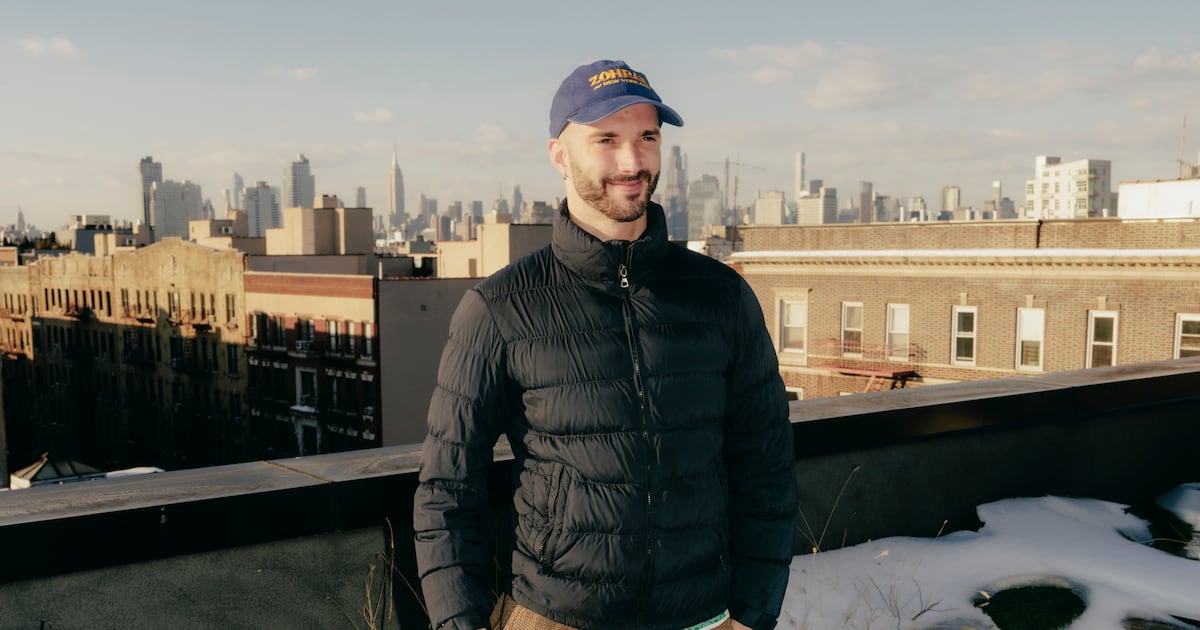
Seamus Daniel Howell has always thought his earliest memory was of his second birthday. He has an image in his mind of “a Thomas the Tank Engine cake and looking out the kitchen window”, he says.
That night, May 18th, 1991, his mother Lesley was murdered by his father, Colin Howell, and his father’s lover, Hazel Stewart.
The pair also killed Stewart’s husband Trevor Buchanan.
They left the two bodies in a garage in Castlerock, Co Derry, staging the scene to make it look as if they had taken their own lives.
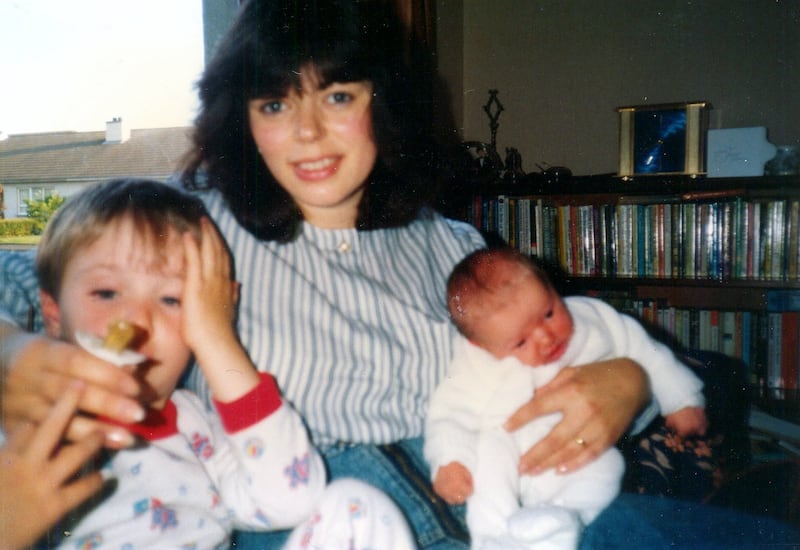 Lesley Howell with her eldest son Matthew (left) and baby Seamus. Photograph: Supplied to The Irish Times
“I have no memories of my mother,” says Howell.
Now he wonders was it really his second birthday or does he “just tie the two things together?”
For almost 20 years, the deaths of Lesley Howell and Trevor Buchanan were treated as suicides.
That was until 2009 when Colin Howell walked into a police station out of the blue and confessed to the killings. He and Stewart were convicted of their murders and jailed for a minimum of 21 years and 18 years respectively.
“There’s something healing to know your mum didn’t kill herself on the night of your second birthday,” says Howell, now 36.
“That had always been a rejection and an abandonment I’d grown up with, so that was a positive aspect of it.
He says that “one of the beautiful things” that later happened was his contact with her friends from whom he learned of her being a “charismatic, friendly, fun woman” and “how much she enjoyed motherhood”.
Old photographs of Lesley Howell show a smiling young woman with dark, curly hair who clearly delighted in her children. Recently discovered home videos were the first time Howell had seen him and his mother together.
“It was really special. You could just feel that love,” he says.
Howell is speaking to The Irish Times from his apartment in New York, where he is now a consultant in a public hospital specialising in pulmonary and critical care medicine and population health.
Medicine “saved his life”, he says. Even as a teenager, studying to secure a place in medical school was his “way out” of a home life where religion was used to control. It kept him going even through thoughts of suicide.
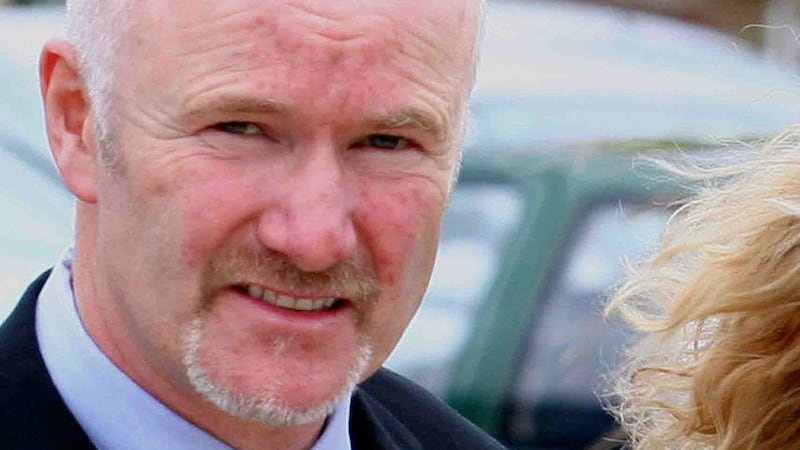 Colin Howell: killed his wife and the husband of his lover
 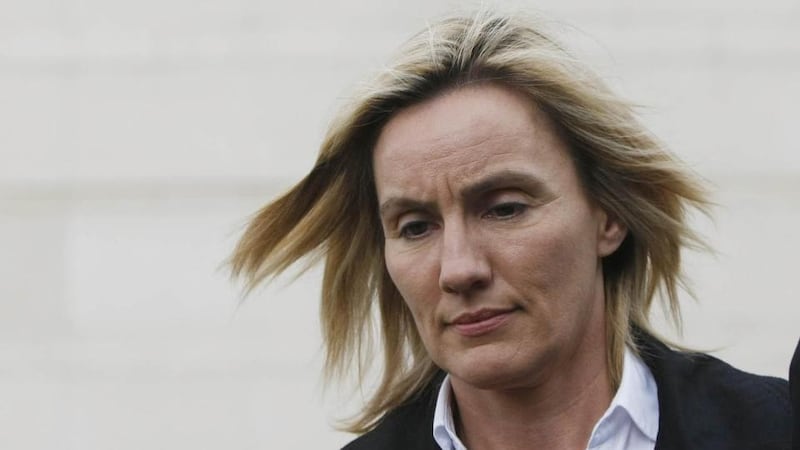 Hazel Stewart: The former lover of Colin Howell is serving a minimum 18 years in prison for the killing of Trevor Buchanan and Lesley Howell. Photograph: Niall Carson/PA
He says he “held on” to the idea that there was “a better life ahead for you if you just focus on medicine”.
He and his siblings – older brother Matthew, sister Lauren and younger brother Jonathan – were always led to believe their mother died by suicide – “ it was just always a thing that I knew,” he says.
They were also aware growing up of his father’s affair with Hazel Stewart; his father would tell the family that “he had sinned but he had repented”, says Howell.
He says he gravitated towards Stewart “in want of a mother” and remembers how his father “loved to goof around with us – he would play his guitar and do singalong little Bible songs”.
In 1997 Colin Howell married Kyle Jorgensen, a single mother from the United States who had come to Northern Ireland to study Irish. He had met Jorgensen at a prayer meeting in their home.
They always referred to the umbrella of their authority, and you step outside of that and you’re out of the family
— Seamus Howell
Howell says his father loved her “from the outset”.
“When you first meet her, she’s very warm and fun; she loved to cook and bake and I loved to be part of that,” he says.
The house was dominated by Colin Howell and his evangelical Protestant beliefs, with “everything framed in a very religious but punitive way”.
Family life, his son recalls, was “just so cold”.
After dinner, one of the children would be “summoned”.
“Often there would be shouting and screaming, there would be smacking – for some sort of terrible way we had rebelled against God’s authority,” he says.
When, at the age of 16, he wanted to attend a prayer meeting in a nearby town to “hang out with some other kids from the church”, he was told he was trying to sow division and that he was going against God’s plans to “plant” a church in Castlerock.
“The smallest little things were these huge fallouts from the Lord,” he says.
“They always referred to the umbrella of their authority, and you step outside of that and you’re out of the family.”
He says from the age of 10 or 11 he saw his father “as a fake or a fraud”.
He felt an overwhelming “sense of injustice” when his American stepmother taught him about the Famine. It changed him. He rejected his family’s unionist-British identity and “very much felt Irish”. He later converted to Catholicism.
He was also gay, though he would have “adamantly” rejected this as a teenager.
“I thought I was straight and the Devil put gay thoughts into my head every now and again as a temptation,” he says of how he thought then.
An offer to study medicine in Newcastle upon Tyne “led to a month of repeated discipline” at home; he was hit across the face and told he was “falling out of God’s will”.
Studying in Newcastle, converting to Catholicism and living with girls at university “came with the threat of being completely estranged and never [being] allowed to speak to anyone else in the family”, he says.
This left him with “a very low sense of self-worth”.
“The message was, you’re worthless without us and if you have any independent thought, this is rebellion,” he says.
In 2007 Howell’s older brother Matthew died in a freak accident. While studying Russian and international relations in St Petersburg, he fell down a stairwell. Howell says he was “super close” with his brother, who was “thriving” at university.
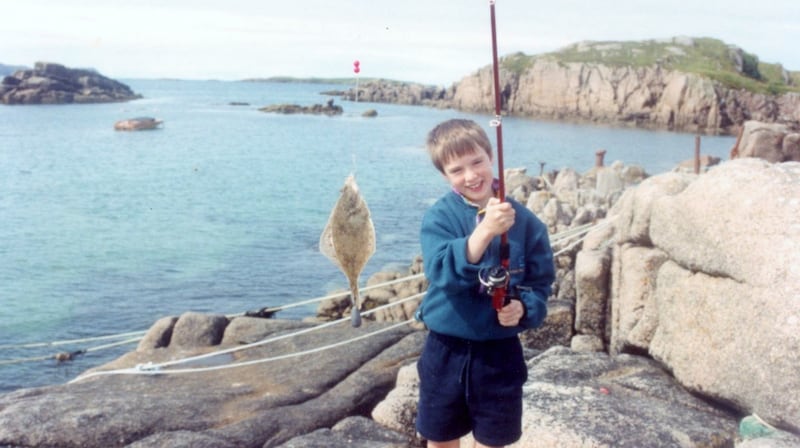 Seamus Daniel Howell’s older brother Matthew. Photograph: Supplied to The Irish Times
 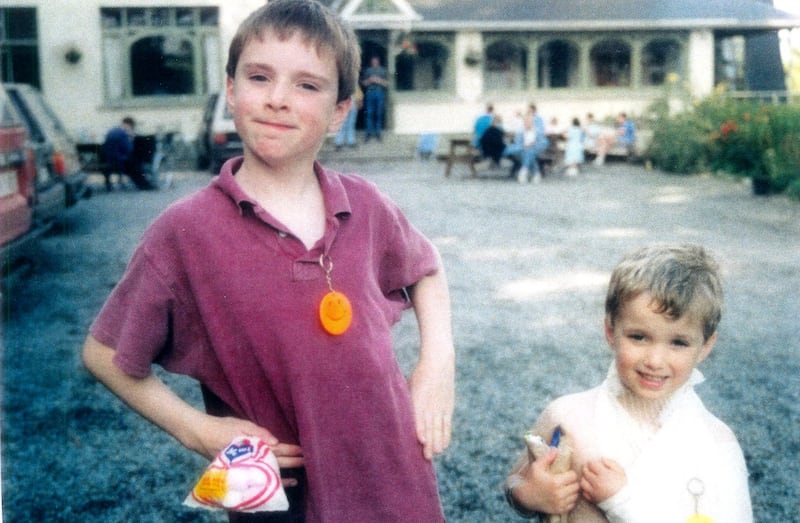 Seamus Daniel Howell (right) with his older brother Matthew. Photograph: Supplied to The Irish Times
“He just loved the freedom of being away from our parents, especially Colin. It was a monumental tragedy,” he says of Matthew’s death.
It marked the start of Colin Howell’s unravelling, ultimately leading to his confession to the 1991 murders. His son says he was “obsessed” with the biblical King David and felt he was being punished as God punished David.
Seamus says his brother had “very deep, profound” memories of their mother and was “deeply hurt” by her death.
“One of the terrible injustices that can never be undone is that he went to his grave not knowing the truth, and that’s very … that’s tough,” he says.
Friends from church told Howell of his father’s arrest, pulling him aside at Belfast International Airport, one telling him, “Colin has said he’s responsible for the death of your mum and Trevor Buchanan,” and clarifying that it was, in fact, a murder.
[ The Secret: Coleraine murder drama causes hurt but ultimately does goodOpens in new window ]
“It’s kind of a million feelings at once – total shock, horrified – but there was also a new connection to my mother,” he says.
Howell and his siblings learned Colin Howell had confessed to Kyle Jorgensen back in 1998.
“That was a complete mind f**k … at the time our family was falling apart,” he says.
Although he considers his stepmother “a victim” too, he says she “100 per cent bought into the Kool-aid of the authoritarianism, the control in the house”.
He questions now how she could “justify a lot of her behaviour – the way my mum, Lesley, was treated as like a dirty word in the house”.
I would really love to hear that he had learned the freedom that comes with being honest and also a little bit of humility
— Seamus Howell
“We weren’t really allowed to speak of her; we weren’t allowed to visit the grave,” he says.
Jorgensen returned to Florida with her children and divorced Colin Howell. Seamus says she cut off contact with him in 2012, ending his contact with his step-siblings.
This was “incredibly painful”, though the “really good news story” is that he and his siblings are back in contact.
Though there are “struggles every day”, Howell says he is able now to acknowledge his successes and says “remembering to have fun, and being present … is a real, valuable lesson for me.”
He says he received “some cringe letters” from his father after he was detained in 2009 following his confession but that he has not talked to him or visited him in prison – although he adds, “I feel like I need to,” and that it is his “intention to”.
“I don’t know what it means to forgive him, however; I aspire to forgive him. I don’t wish any harm on him,” he says.
“I would really love to hear that he had learned the freedom that comes with being honest and also a little bit of humility.”
He notes that Hazel Stewart’s repeated attempts to appeal her sentence for the murders “goes nowhere”.
“It would be a good idea to Hazel to have a think as to whether it’s maybe just time to accept this and accept your part in it and say sorry.”
He would like his father and Stewart to apologise, but at the same time he’s not sure what he would do with an apology.
“It’s more than just for me. On a personal level, it’s not going to make a big material difference in my life, but I’m talking about things from the perspective of my mother, and there’s a whole other person there: Trevor Buchanan,” he says.
He says the “ripples” of their actions – the double murder plot executed by Howell and Stewart – on people’s lives have been “incredible”.
“I think there could be a value to the community,” he says of a potential apology from them.
Howell ˙has returned to his mother’s grave and thinks of her often, and always on his birthday. He thinks of how young she was – “only 31, four kids” – and the “crushing feeling she must have had” as her husband – “this kind of star in her life” – pulled apart that life and then murdered her.
“You think about those final moments,” he says.