“Number one, no nuclear. And number two, stop killing protesters,” the US president said, adding that there are a “lot of very big, very powerful ships sailing to Iran right now”.
Tensions continue to simmer between Washington and Tehran, sparking concerns that Mr Trump will decide to renew the conflict between the US and Iran following tit-for-tat strikes last summer.
Iran earlier warned it will retaliate to any US attack “instantly” and that its response would not be limited. A response would likely see it attack the US military bases stationed in Gulf countries.
Iranian brigadier general Mohammad Akraminia said the bases are “within the range of our medium-range missiles”.
He added: “If such a miscalculation is made by the Americans, it will certainly not unfold the way Trump imagines – carrying out a quick operation and then, two hours later, tweeting that the operation is over.”
Mr Trump earlier said he plans to speak with Iran but did not elaborate on the nature or timing of the dialogue.
Iran is prepared for the resumption of talks with the United States, but they should be fair and not include Iran’s defence capabilities, Iran’s chief diplomat said yesterday, as regional powers work to prevent military conflict between the two foes.
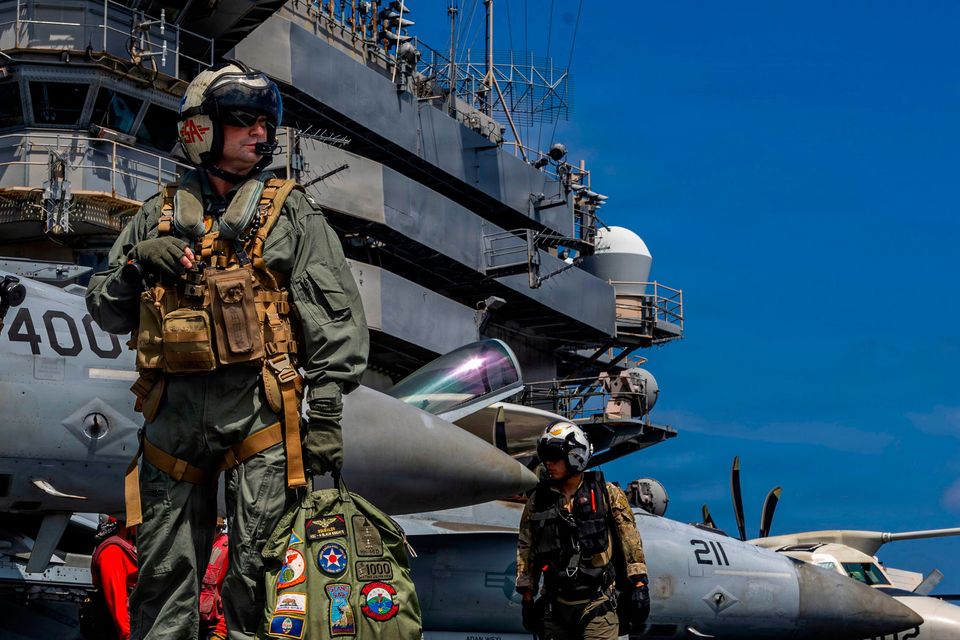
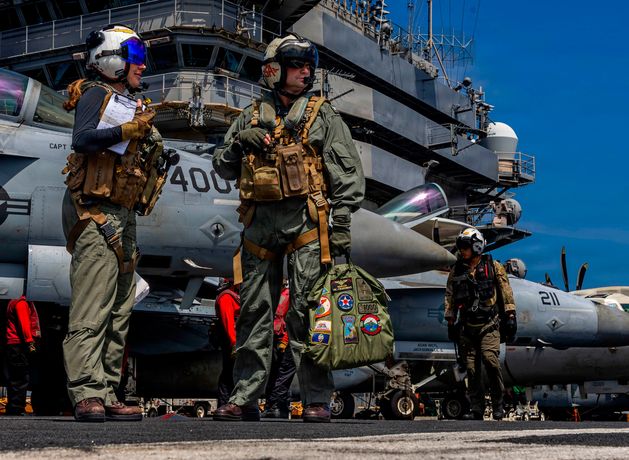
Commanding officer of US aircraft carrier USS Abraham Lincoln Captain Daniel Keeler prepares to fly a Sea Hawk helicopter in the Indian Ocean. Photo: AP
News in 90 seconds – Saturday, January 31
US-Iranian tensions have soared in recent weeks after a bloody crackdown on protests across Iran by its clerical authorities.
One of the main US demands as a condition for resuming talks with Iran is curbing its missile programme, a senior Iranian official told Reuters last week. Iran rejects that demand.
Speaking at a press conference in Istanbul after talks with his Turkish counterpart, foreign minister Abbas Araghchi said Iran was ready to participate in “fair and equitable” negotiations, but added there were currently no meetings with US officials arranged.
“Iran has no problem with negotiations, but negotiations cannot take place under the shadow of threats. They must certainly set aside their threats and change their approach toward a fair and equitable negotiation, as Mr Trump himself said in his post,” he said.
“I should also state unequivocally that Iran’s defensive and missile capabilities – and Iran’s missiles – will never be the subject of any negotiations.
“We will preserve and expand our defensive capabilities to whatever extent is necessary to defend the country.”
Regional allies, including Turkey, the United Arab Emirates and Saudi Arabia, have been engaging in diplomatic efforts to prevent a military confrontation between Washington and Tehran.
In response to US threats of military action, Mr Araghchi said Tehran was ready for either negotiations or warfare, and also ready to engage with regional countries to promote stability and peace.
Mr Araghchi and Turkish foreign minister Hakan Fidan said they had been speaking to each other almost every day to discuss the tensions.
Earlier yesterday, Turkish president Recep Tayyip Erdogan told his Iranian counterpart Masoud Pezeshkian in a call that Ankara was ready to play a “facilitator” role between the sides.
Speaking alongside Mr Araghchi, Mr Fidan said he had long discussions on the issue with US special envoy Steve Witkoff on Thursday and would keep lines open with Washington to avoid conflict and the isolation of Iran.
Mr Fidan said US-Iran nuclear negotiations must restart and would pave the way to lifting sanctions on Iran.
“We call the parties to the negotiating table” to address the issues “one by one”, he said.
US officials say Mr Trump is reviewing his options but has not decided whether to strike Iran.
Mr Trump has repeatedly threatened to intervene if Iran continued to kill protesters in its crackdown on the countrywide demonstrations over economic privations and political repression, but the protests have since abated.
A US Navy destroyer made a port visit yesterday to the southern Israeli city of Eilat on the Gulf of Aqaba, video footage showed, as the US surges military forces to the region.
The footage showed it was the USS Delbert D Black, one of six US destroyers now in the Middle East, along with an aircraft carrier and three other littoral combat ships.
Israeli media reported that the arrival of the destroyer at the Red Sea city, near Israel’s borders with Egypt and Jordan, was pre-planned and part of ongoing co-operation between the US and Israeli militaries. Pentagon chief Pete Hegseth said the US military was prepared to carry out whatever course of action the president decided.
Israel’s chief of the general staff said last week the military was prepared for a range of scenarios and was continuously improving its capabilities.
The commander of US Central Command, Admiral Brad Cooper, visited Israel last week in a trip the Israeli military said was aimed at deepening strategic ties and strengthening defence co-operation between the two allies.