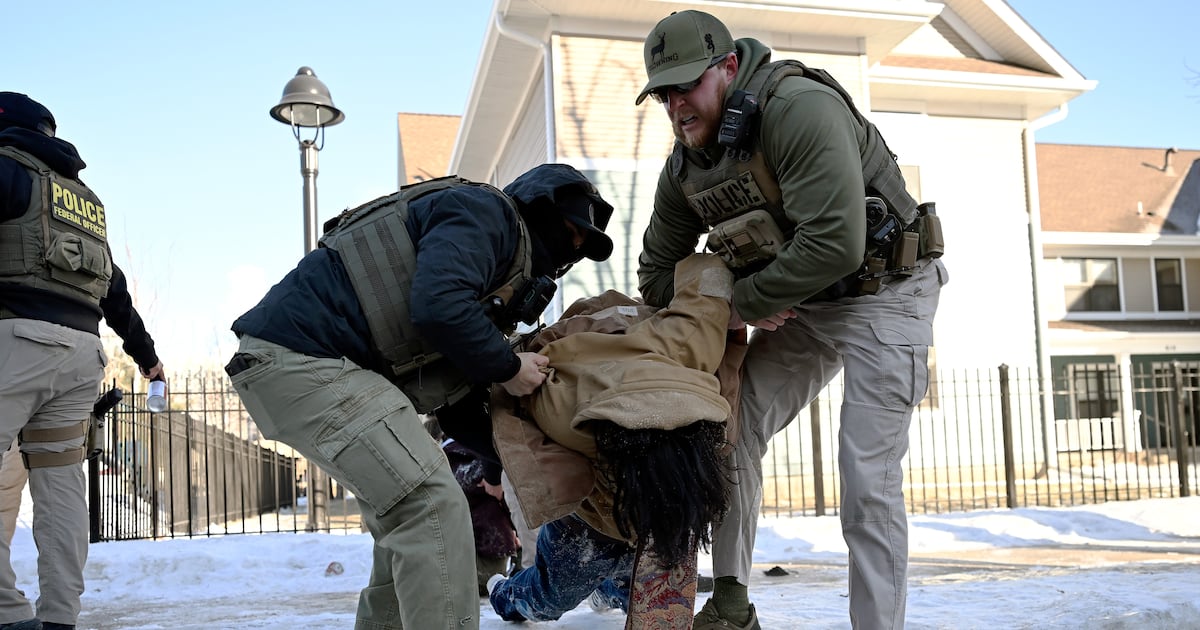
There’s much talk about corporate America finally finding its voice under Donald Trump, following criticism of the killing of Alex Pretti by Immigration and Customs Enforcement (Ice) agents in Minneapolis. Such talk is overstated.
Yes, more than 60 Minnesota CEOs signed a joint letter urging “an immediate de-escalation of tensions” after the shooting. Yes, Apple’s Tim Cook is “heartbroken” by Pretti’s death, Anthropic’s Dario Amodei is concerned about “preserving democratic values and rights at home”, and OpenAI’s Sam Altman is criticising Ice for going “too far” and urging transparent investigations.
In general, however, what looks like a newfound willingness to speak out is mostly carefully hedged, consequence-free speech.
Cook, who attended a private White House screening of an Amazon documentary about Melania Trump, made sure to refer to having a “good conversation” with the president. Altman went further, telling staff that “President Trump is a very strong leader” and would hopefully “rise to this moment”.
It is striking when set against Altman’s language in 2016, when he described Trump as “erratic, abusive”, as an “unprecedented” threat to America, and a “real threat to the safety of women, minorities and immigrants”.
It’s easy to complain about corporate cowardice today, but one sees why executives and analysts are intimidated. Economic historian Adam Tooze, who recently interviewed US commerce secretary Howard Lutnick at Davos, described the Maga presence as feeling like his body was “absorbing a heavy hit”, akin to being caught in an “abusive dynamic”.
ExxonMobil CEO Darren Woods learned the cost of plain speaking when he recently described Venezuela as “uninvestable”, prompting Trump to threaten retaliation.
Similarly, when Deutsche Bank analyst George Saravelos suggested European holdings of US assets gave Europe potential leverage, US treasury secretary Scott Bessent complained about “fake news” and how Deutsche Bank’s CEO had called to say it “does not stand by that analyst”.
Corporate leaders will probably continue to play it safe, saying enough to try to reassure staff, but not enough to risk retaliation.