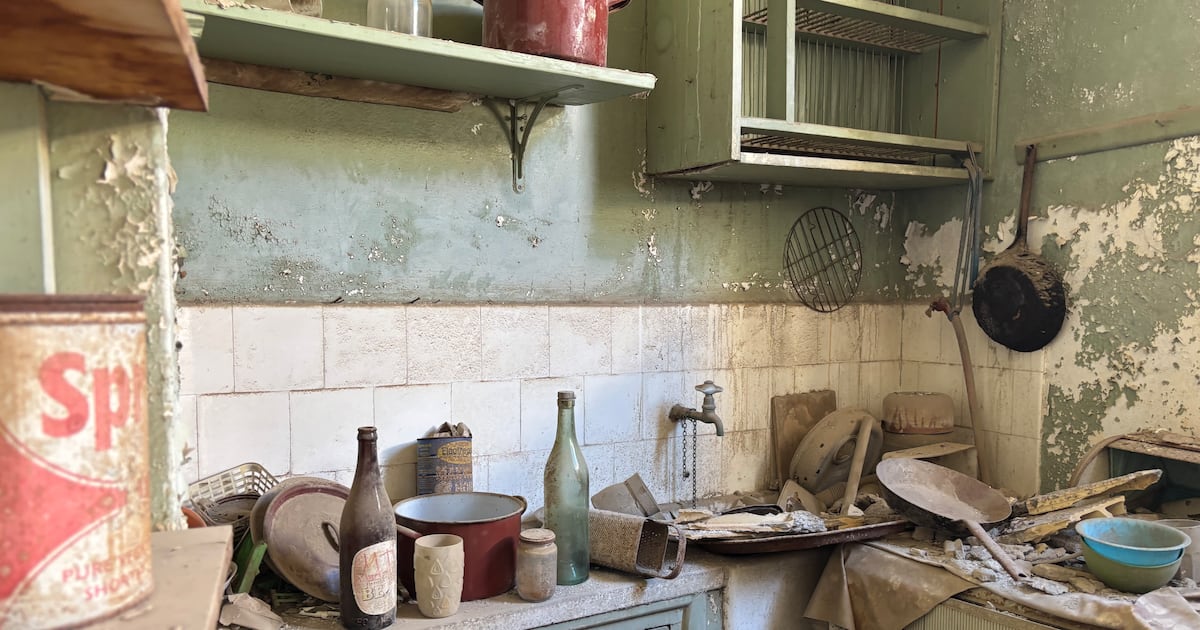
Abandoned homes in the centre of Nicosia still bear the bullet holes from the worst of the fighting. The belongings of the people who lived here are, decades later, scattered around the floor where they were left behind as they fled: a blue and white shirt, a child’s shoe, papers and magazines, all covered in a thick layer of dust. Unopened tins of food are still on the kitchen shelves.
The families who lived here have not stepped foot inside their homes since the day they left in 1974.
These apartments in the capital of Cyprus have been frozen in time, inside a demilitarised ceasefire line that divides the Mediterranean island in two, in a conflict that began more than 60 years ago but remains unresolved today.
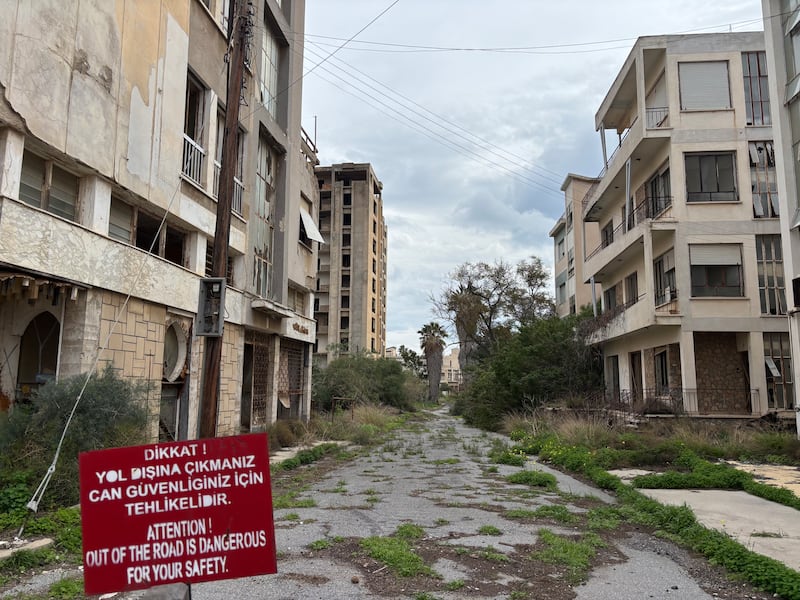
In the street below, the rusted shutters of deserted shops have faded in the sun from brownish-red to white. Vast vegetation grows up the walls of crumbling buildings. Forty-eight Toyota cars sit in an abandoned underground dealership, gathering dust.
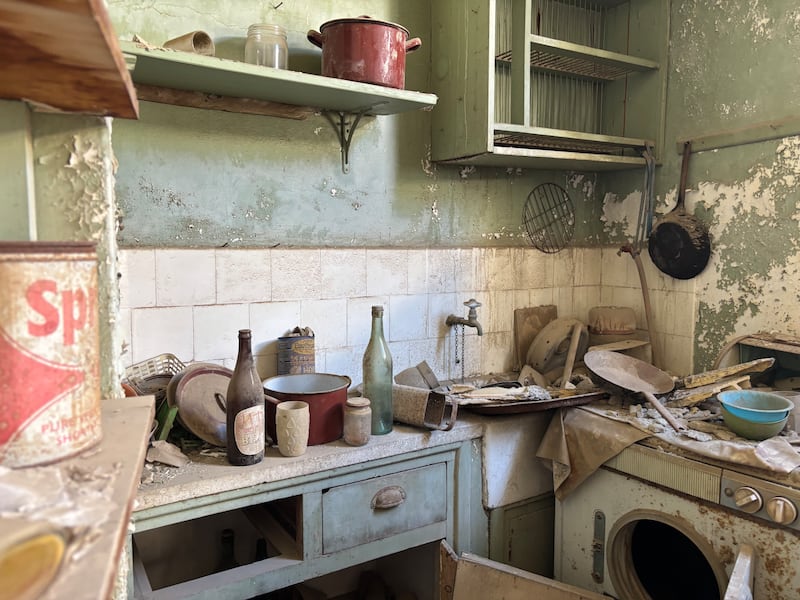 The kitchen of a Nicosia apartment abandoned during the conflict in 1974, now frozen in time inside a demilitarised buffer zone controlled by UN peacekeepers. Photograph: Jack Power
 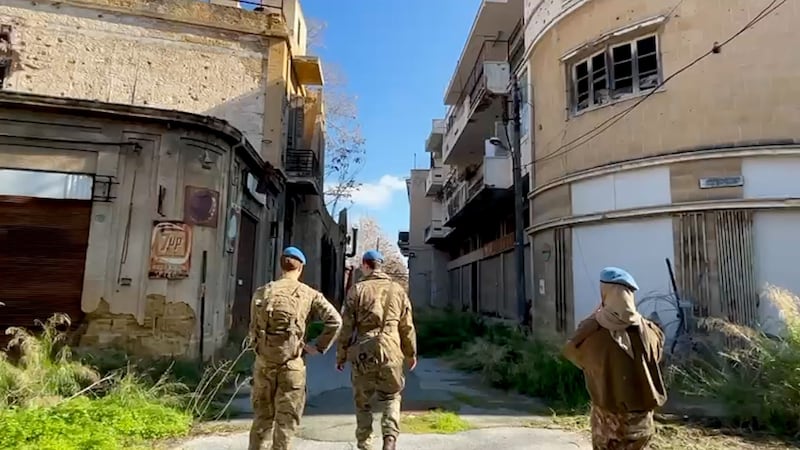 Members of the UN forces patrol a demilitarised zone in Cyprus. Photograph: Jack Power
This “dead zone” separating the military forces of Greek Cypriots in the south and Turkish Cypriots in the north, is patrolled by United Nations peacekeepers, and the occasional stray cat.
The Green Line, as the buffer zone is known, has not moved since a ceasefire halted the fighting, after a short but brutal invasion of the northern third of the island by Turkey in 1974.
The name comes from the green wax pencil used to plot a line through a map of the capital, during earlier efforts to end vicious ethnic violence between the two communities in 1963.
Life continues as close to normal as it can today. A woman on the Turkish Cypriot side of the divide is hanging her washing on a balcony in the sun, opposite an uninhabited apartment inside the buffer zone pockmarked by bullet holes.
[ Cyprus’s frozen conflict holds lessons for any Ukraine peace dealOpens in new window ]
The 1974 invasion was launched by Turkey to protect the Turkish Cypriot minority, days after a coup backed by the Greek military junta seized power in Nicosia, with the intention of uniting Cyprus and Greece.
Atrocities committed by the invading Turkish forces and militias left deep scars. Huge numbers of Greek Cypriots fled from their homes, towards the south of the island.
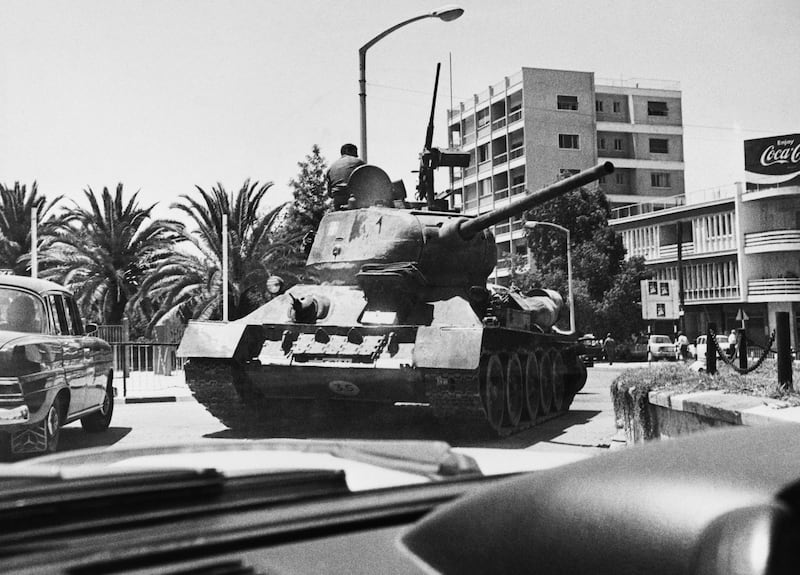 A Greek tank in a streets on July 22nd, 1974 in Nicosia, following Turkey’s invasion of Cyprus. Photograph: Xavier Baron/AFP via Getty
 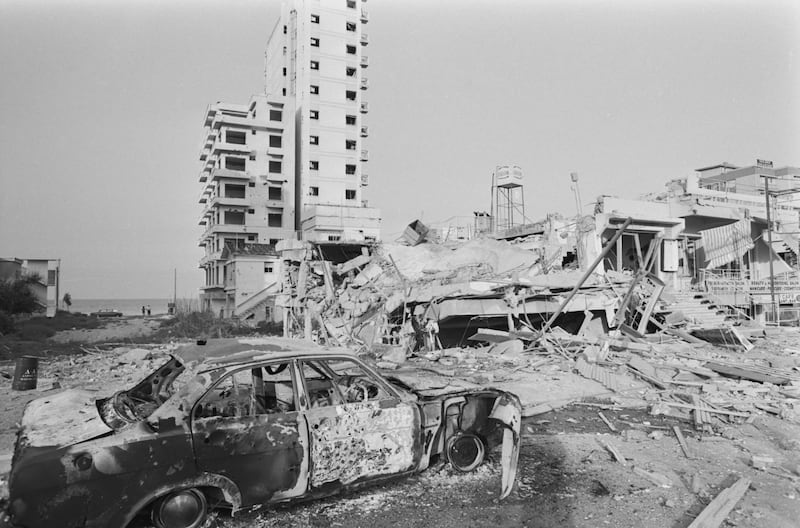 Destruction of cars and buildings during the unrest. Photograph: Harry Dempster/Express/Hulton Archive/Getty
Turkish Cypriots living in southern villages and cities fled in the other direction, fearful of reprisals at the hands of Greek national guard forces and militias.
Several thousand people were killed. A further 2,000 people were reported missing – 1,500 Greek Cypriots and 490 Turkish Cypriots – between the 1974 invasion and the intercommunity violence of the 1960s.
In many cases remains were only recovered from mass graves decades later. Work to locate and identify the bones of the missing is ongoing.
“I have a challenge with the words ‘frozen conflict’, because it’s not a frozen conflict … it’s an ongoing conflict,” says Magda Zenon, a founding member of Hands Across the Divide, an island-wide women’s organisation.
Half a century of “nationalist” narratives pushed by both sides, underscoring the crimes of the other, had driven the two communities further apart, Zenon says.
Using the 1974 invasion to mark the start of the conflict erased the ethnic violence targeting the Turkish Cypriot minority that took place a decade beforehand. “Start in 1963,” she says.
Her uncle, a Greek Cypriot, was killed in the second phase of the Turkish invasion. “His remains were discovered in 2006. In the meantime my aunt was left with two little kids, four and five. No support,” Zenon says. “All these women whose husbands were missing lived in limbo.”
Her uncle had been visiting a village in the north at the time. “The Turkish militia came in with a list of eight names, and his name was on the list. They took them to a mixed village in the north and they put them in the square and ordered the villagers to stone them to death. The ones that didn’t die were shot point blank.”
It’s really difficult to come back to a marriage after 50 years apart
— Harry Tzimitras, a professor of international relations
Mistrust has calcified over the years, rather than softened.
The two communities were entirely sealed off from each other until 2003, when some crossing points were opened up.
The Republic of Cyprus joined the European Union in 2004 as a divided state under partial occupation. The Turkish Republic of Northern Cyprus is recognised only by Turkey. Negotiations to resolve the conflict failed in the early 2000s, and again in 2017.
Most sketch out a federal system as a possible solution, where both communities – north and south – would run their own affairs, underneath a loose powersharing administration responsible for foreign policy.
Getting there is the hard part.
Relations had been at a low point for the past five years. A hardline Turkish Cypriot leader, Ersin Tatar, showed no interest in talks. Backed by Turkish president Recep Tayyip Erdogan, he advocated a two-state solution recognising the current divide, something no republic of Cyprus government would countenance.
Elections last October saw a moderate, pro-federal politician, Tufan Erhurman, elected by a large margin. The result was taken as a clear signal that Turkish Cypriots, tired of living in the limbo of an unrecognised state, want negotiations to restart.
Nikos Christodoulides, president of the republic of Cyprus, has said his government is happy to talk. However, his supporters are resistant to any compromise, which nearly all observers view as crucial to a peace deal. Greek Cypriots are nervous that powersharing will mean constant political deadlock in practice.
Christodoulides has suggested tying future Nato membership for Cyprus and movement on Turkey’s stalled EU membership ambitions into any agreement, which risks complicating an already complicated picture.
Future negotiations would probably be held in an old airport inside the buffer zone, built when the island was under British rule, where the UN’s political team are based.
The last fatality from an enemy bullet was in 1996, but emotions are still raw.
“When the sides are not negotiating at the political table, quite often that translates into increased tensions and insecurity inside the buffer zone,” says Aleem Siddique, spokesman for the UN peacekeeping force.
“There are thousands of armed Turkish mainland army troops in the north and there are thousands of National Guard led by the Greek military in the south,” he says.
Both had been expanding military fortifications and border posts, to observe the movements of the other.
In between the two armies there are about 800 UN peacekeeping troops patrolling the 184km Green Line. “Our job is to keep the peace, it’s the job of the politicians to make the peace,” says Siddique.
The demilitarised strip is only three metres wide at its narrowest point in Nicosia, but in rural parts of Cyprus it stretches up to seven kilometres across, accommodating farmland and a small number of inhabited villages.
One of those villages, Pyla, is a rare example of a neighbourhood where Greek Cypriots and Turkish Cypriots live together.
“I never divided Cyprus in my heart, in my mind,” says Dr Okan Dagli, a Turkish Cypriot doctor who works in Pyla.
The pharmacy in the town is run by a Greek Cypriot, the butcher is a Turkish Cypriot.
“I don’t see any problem,” he says. “Maybe it will be a good example in the future, showing how can again Turkish Cypriots and Greek Cypriots and others will live together.
“I was born in the one Cyprus, I was 10 years old in ’74. I didn’t accept the borders.”
The task of smoothing potential flashpoints falls to a contingent of UN police, which includes several gardaí.
“Our community policing approach allows us to get involved with people so that we can – if tensions rise – de-escalate and return things to normal,” says Garda inspector Paul Slattery, the mission’s second-in-command.
“The smallest scenario can have a ripple effect. We’re very much in the middle … Nothing has happened because we’re here.”
The mechanics of how a united federal state might work is just one issue politicians would need to agree on. Other points, such as questions about justice for those killed during the conflict and confiscated property, are incredibly contentious.
Chrysanthos Zannettos says he was born a refugee in his own country, three years after the invasion. His mother and father separately lived in Famagusta, a city on the northeastern coast of Cyprus.
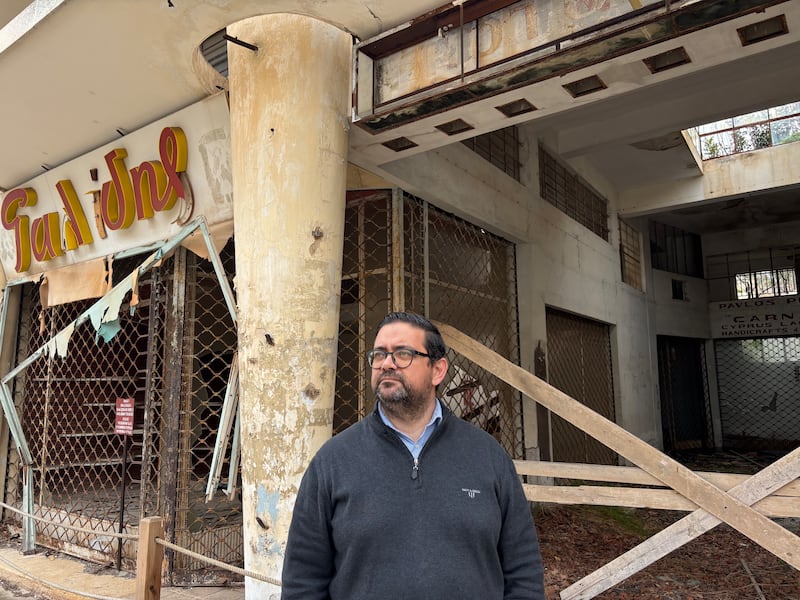 Chrysanthos Zannettos, deputy mayor of Famagusta city council, a sort of local administration in exile that represents the displaced Greek Cypriot community, pictured in Varosha. Photograph: Jack Power
 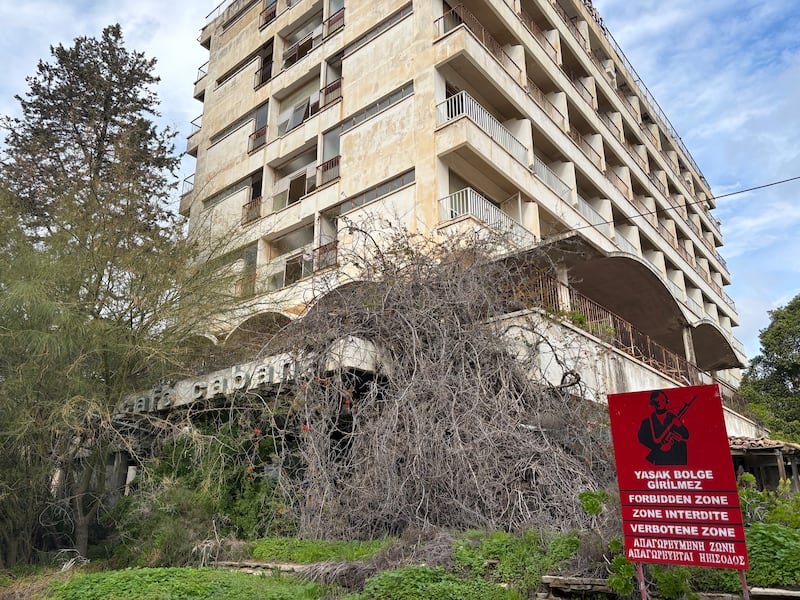 Varosha, a seaside town in Famagusta, emptied out as Greek Cypriots fled Turkish troops in 1974 and remains a ghost town today. Photograph: Jack Power
The large Greek Cypriot population emptied out of the city, in anticipation of coming Turkish troops. The seaside resort Varosha became a ghost town.
People left with just the clothes on their backs and small bags of belongings, thinking they would be returning in a matter of days, Zannettos says.
Then the ceasefire line hardened into a permanent border. Their property remains confiscated.
Authorities in the south also took charge of homes Turkish Cypriots had abandoned to house refugees from Famagusta and elsewhere. “I was born in a Turkish Cypriot house in Larnaca,” Zannettos says.
In the days immediately after the invasion, his aunt Athena and her husband tried to return to collect more of their belongings, believing it was safe enough to make the short journey.
The couple were stopped by Turkish troops, who separated the men from the women and elderly. “Her husband, it was the last time she saw him,” Zannettos says.
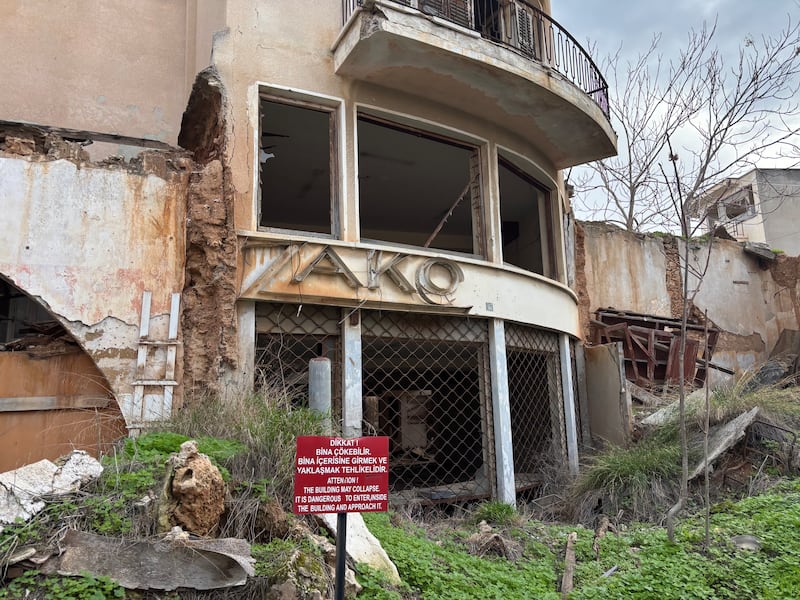 Varosha, a seaside town in Famagusta, emptied out as Greek Cypriots fled Turkish troops in 1974 and remains a ghost town today. Photograph: Jack Power
Driving towards Famagusta city, Zannettos stops the car at a small junction very close to a checkpoint crossing from the north into the south, the spot where his aunt was forcibly separated from her husband as they tried to get back to Greek Cypriot controlled territory. His body was never found.
“She passed away a few years ago without knowing what happened to her husband. It’s tragic,” he says.
Zannettos is the deputy mayor of Famagusta city council, a sort of local administration in exile that represents the displaced Greek Cypriot community. A member of the leftwing opposition party Akel, he hopes Christodoulides pushes for an accord.
“I want to be part of rebuilding Famagusta,” Zannettos says. That would mean the creation of a “bicommunal city”, where Turkish Cypriots and Greek Cypriots live among each other.
The stakes are high should the current generation of politicians miss another chance to solve what locals call the Cyprus problem.
“If another 50 years passes, then separation will become the solution,” Zannettos says.
 Varosha, a seaside town in Famagusta, emptied out as Greek Cypriots fled Turkish troops in 1974 and remains a ghost town today. Photograph: Jack Power
 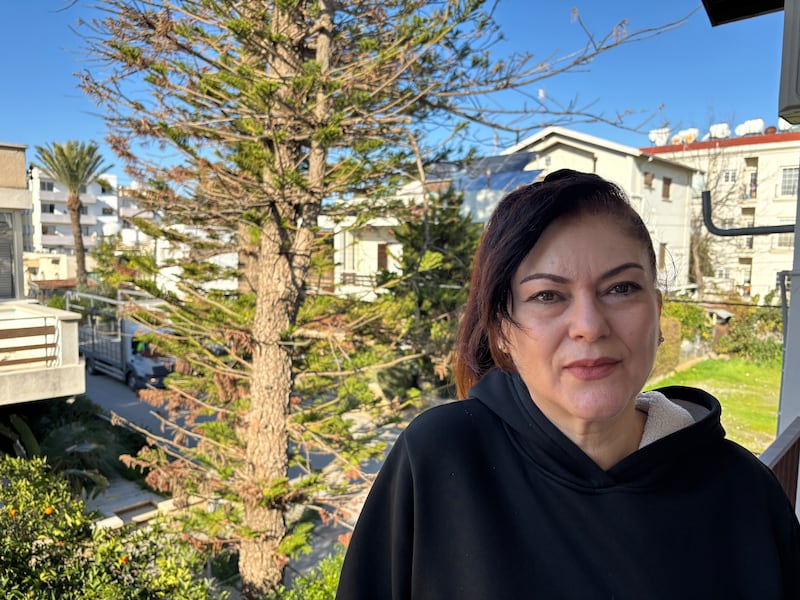 Meltem Onurkan Samani, a former adviser to a previous Turkish Cypriot leader, who now runs the Cyprus Peace and Dialogue Centre
Meltem Onurkan Samani was there the last time talks brokered by the UN collapsed in Crans-Montana, Switzerland, in 2017.
An adviser to then-Turkish Cypriot leader, Mustafa Akinci, she says his administration and Turkey were ready for a peace deal. The government of the Republic of Cyprus didn’t go for it.
“The conflict is more comfortable for them,” Samani says of the Greek Cypriots. Turkey is also content with the status quo, she says.
It was Turkish Cypriots living in the unrecognised northern state who faced barriers in their daily lives, ranging from difficulty ordering a book from Amazon or applying for a Revolut card, she says.
“One side feels more comfortable while the other side is constantly faced with the consequences,” the former senior adviser says.
An agreement resolving the conflict would not be possible if politicians sat down at the negotiating table thinking about the next election, Samani says.
The two governments are in “talks about starting talks”, a source close to Christodoulides says. His government feels Turkey will be the real block in the background. However, Erhurman, the Turkish Cypriot leader, has been adept at keeping Ankara onside so far.
“Most Turkish Cypriots want reunification. They want to get back to the table. They want a federal system. They want power sharing. Now the ball is in the court of Christodoulides,” says one UN source.
Harry Tzimitras, a professor of international relations, who works at the Peace Research Institute Oslo, fears incentives pressuring politicians to solve the “Cyprus problem” are withering away.
“It’s really difficult to come back to a marriage after 50 years apart,” he says.