Joseph Huber survived a plane crash in 2019. The Simsbury resident’s back was broken in five places, he suffered two broken ribs and sustained severe burns to 48% of his body.
Huber, 54, who goes by J.T., said care he received at Connecticut Burn Center at Bridgeport Hospital helped him recover and eventually helped him return to his job and being a volunteer firefighter again.
“It’s one of the greatest places that you never want to go to,” Huber said. “My experience was bittersweet. It was the worst experience of being burned, but I was helped by the most amazing people and was given great treatment.”
The Connecticut Burn Center, established in 1974, is the only verified burn center in Connecticut and one of just 80 nationwide, according to the American Burn Association.
Annually, the Connecticut Burn Center treats 260 inpatients and 1,100 outpatients from Connecticut, western Massachusetts and upstate New York.
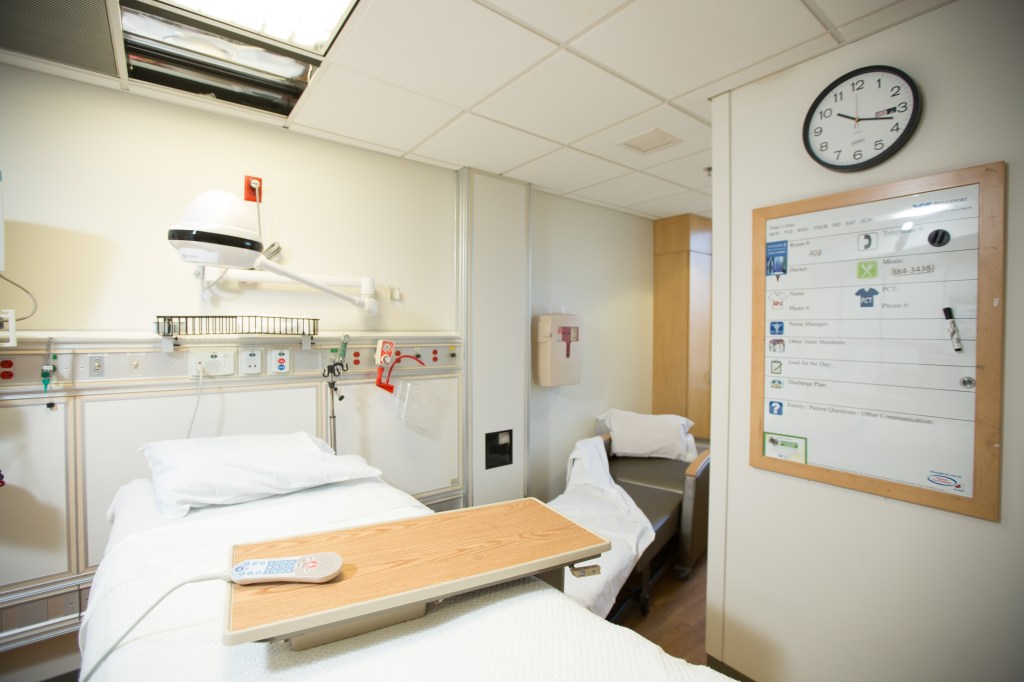
The burn center, which offers advanced grafting, dermal substitutes, advanced skin technologies and comprehensive wound care is located on the fourth floor of Bridgeport Hospital and provides 24/7 consultation, triage and support in its nine-bed unit with five ICU-capable rooms as well as a dedicated therapy gym as well as a family suite so families have a place to stay with loved ones.
As National Burn Awareness Week kicked off on Sunday, Huber was happy to share his experience. In his two-month stay at the Connecticut Burn Center, Huber had “several surgeries” and “a ton of skin grafting done.”
“I guess you could say it was the worst pain you can imagine and then it was worse than that,” Huber said. “The nurses and the doctors were crazy good. You’re on so much medication and your body goes through so much and you’re hallucinating a lot. I strangely enough can recall a lot of it.
“When half of your body’s burned you can’t really focus on where the pain’s coming. You’re on all kinds of crazy pain meds. The nurses did everything, and I couldn’t believe it when I realized they were working 12- or 14-hour shifts and were smiling the whole time,” he added.
Huber said there was a time where he didn’t think he would walk again, but he credited the burn center’s physical therapy and occupational therapy for challenging him to do it. Six weeks after sustaining his injuries he was walking. After that milestone, Huber began requesting double and triple rehab sessions per day.
The plane crash had happened in October 2019 and he was back home by December 2019. He returned to work the following March 2020 and returned to the Simsbury Fire Department in August 2020.
“The body is an amazing thing and once it starts fixing itself, it’s great,” Huber said.
Huber credited the leadership of Dr. Alisa Savetamal, director of the Connecticut Burn Center, for collaborating and valuing the opinions of her staff “that were with me all day long.”
“They collaborated right in front of me and then asked me lots of questions and I think that that really helped me, as a patient, feel very important,” Huber said. “To this day, the doctor told me she didn’t do anything and that I did it and I fixed myself. It’s mind over body. She was amazing. All of the nurses were amazing, especially the core of nurses that were there through the night with me. The level of care was top notch from my entire time there.”
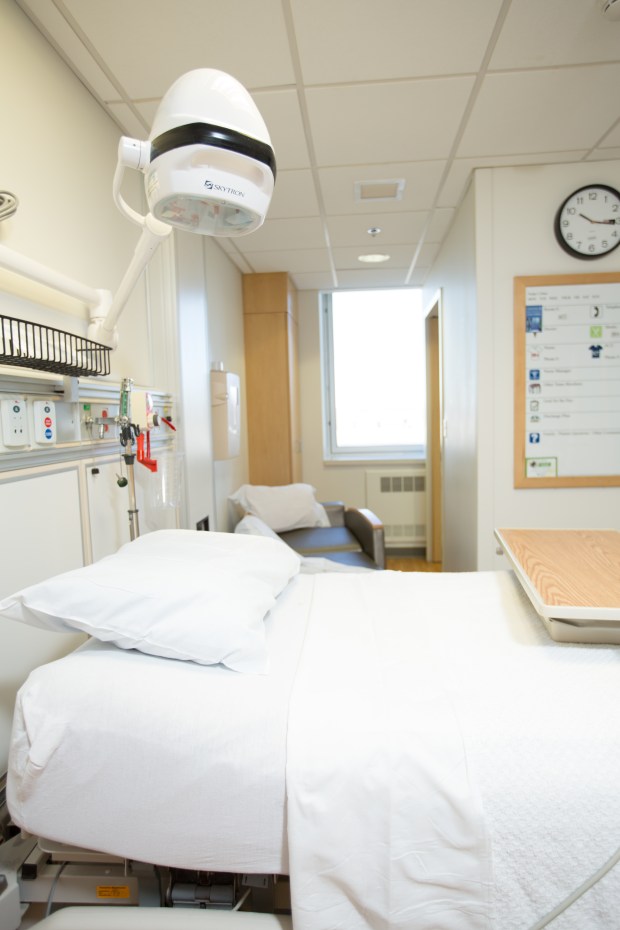
Kelly Jensen/Yale New Haven Health
Connecticut Burn Center treats 260 inpatients and 1,100 outpatients annually. The center treats patients throughout Connecticut, western Massachusetts and upstate New York. (Kelly Jensen/Yale New Haven Health)
New advancements
Savetamal has worked at Bridgeport Hospital for 20 years and has served as director of the burn center for the last 13 years. She noted that the advancements during her tenure at the burn center have been vast.
“There’s been a lot of growth in the area of skin substitutes. Finding ways to cover and slowly replace the patient’s skin,” Savetamal said. “Another way is to expand the skin by being able to use the patient’s own skin and process it into a spray so you can cover a larger area of the patient with a tiny bit of skin. There’s been real advances in closing the patient’s wounds faster.”
Savetamal said if a patient first enters its burn center from a house fire, the first area they check on the patient is breathing because it’s common for those in a fire breathing in smoke. The burn center will decide if a breathing tube or a ventilator is necessary. The doctors and nurses then get to work to access, clean the wounds and then apply dressings.
“It’s a big team that comes in and that’s just the first couple of hours,” Savetamal said “As the days go on, the dressings are changed. Some patients may go back and forth to the operating room several times. We try to start physical and occupational therapy early so that the patients don’t lose function.”
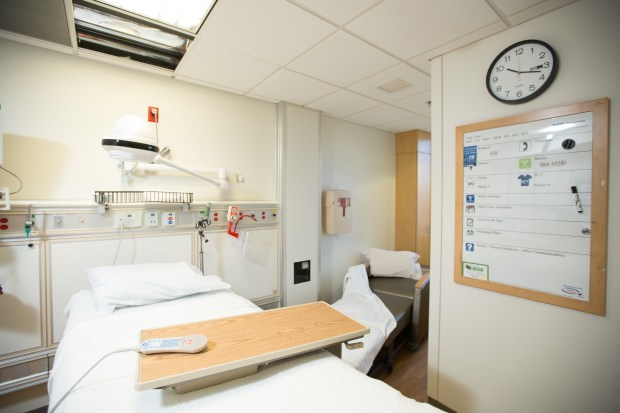
Kelly Jensen/Yale New Haven Health
Experts estimate 40% of Connecticut burn center patients are involved in structure fires or outdoor fires that include grills or fire pits and another 40% are due to scald burns. (Kelly Jensen/Yale New Haven Health)
Savetamal said her staff do everything possible to keep the patients joints mobile and keep the patient from losing strength.
“All of that happens in the first couple of days that a patient gets here,” Savetamal said. “It’s a huge team that goes into supporting patients and then when they get over the critical phase a lot of patients need psychosocial support as well burn injury isn’t just about the physical injury alone. There’s a psychological component to it.
“Burn care is about the care of the whole patient and not just caring specifically about the burn. It’s a team sport and you need everyone from the respiratory therapist, dietitian, social worker, occupational therapist, surgeons and nurses. You need everybody to make that patient completely whole again as much as we can. That’s our goal is to care for them inside and out and not just until their wounds are healed,” she added.
Savetamal said most patients that come to the burn center are not “large dramatic burns,” and most patients are there five days are less.
“The rough rule of thumb is one day per percentage of your body that’s been burned, it doesn’t usually work out that way perfectly,” Savetamal said.
Savetamal said the burn center is always ready. “We never know when the emergencies are going to come in. Our busiest times are Thanksgiving and the Fourth of July. We have a steady stream of injuries that occurred during the year but those are the peaks,” Savetamal said.
Savetamal estimated about 40% of Connecticut burn center patients are involved in structure fires or outdoor fires that include grills or fire pits. Another 40% are scald burns, she said these are mainly for the elderly or children. One example of this is an older person falling in the shower, not being able to get up and being scalded by hot water. Another example of scald burns includes a baby having a bath in the kitchen sink and then someone in the apartment next door flushes the toilet and all of the cold water goes out, and suddenly hot water is hitting the child.”
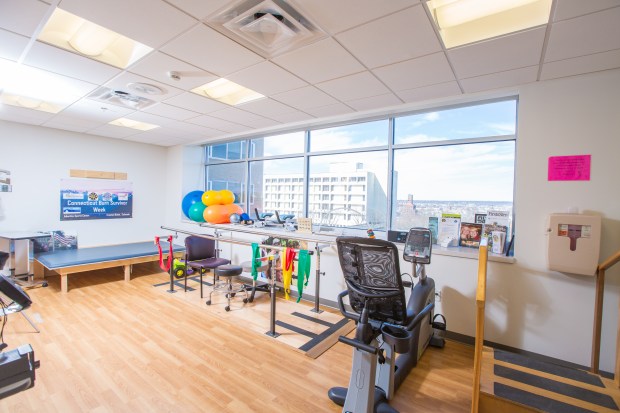
Kelly Jensen/Yale New Haven Health
The Connecticut Burn Center said most patients are from Hartford, Bridgeport, New Haven, Stamford, Middletown, New Britain, Waterbury and Norwalk. (Kelly Jensen/Yale New Haven Health)
Costly care
Anne Diamond, president of Bridgeport Hospital, said the burn center is a source of pride for Bridgeport Hospital. She said to provide that quality of care is expensive, and she is calling on lawmakers for help for the upcoming legislative session.
“Over 40% of our patients depend on Medicaid for their healthcare. There is a small patient population that don’t have insurance for a variety of reasons. We take care of everyone equally but it’s an expensive endeavor,” Diamond said. “The care is excellent, and I can say that because I had that external validation from the American Burn Association.”
Advanced skin technologies such as ReCell cost $7,500 per use and cultured grafts are $25,000 per application. According to the Connecticut Burn Center, patients average four trips to the operating room at a cost of roughly $57,600 operating room time alone. Supplies for major burns are also expensive. Allografts are more than $50,000 and dermal substitutes more than $10,000.
Diamond noted that there is just one specialized operating room is that is dedicated just to burn surgery and cannot be used for anything else because of different physical environment. The temperature is different in a burn operating room than a regular operating room.
“There’s other things related to the heating the ventilation the cooling again that goes back to you no longer have your skin as your first level of defense. You don’t want dust or anything falling on the wounds. It’s just a very, very different type of environment within an operating room,” Diamond said.
Diamond it is important, and costly, that the center has a dedicated surgical space next to the burn center. “That way the patient is able to complete care in one place instead of moving between floors which is the situation that we have right now. I’ve got all of these experts teed up, and they may not be used, but that’s kind of the name of the game when you have a burn center like this you have to be at the ready all the time and that costs money,” she said.
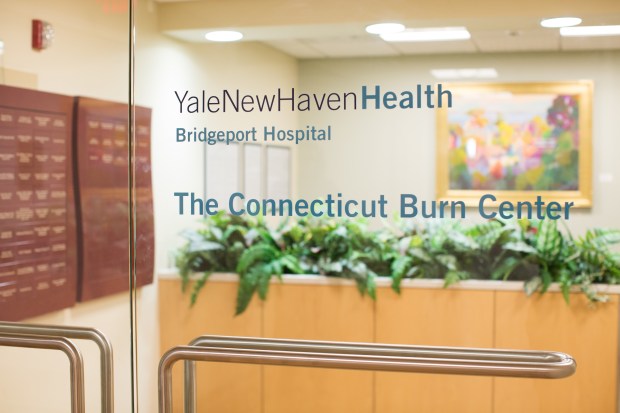 The Connecticut Burn Center, established in 1974, is the only verified burn center in Connecticut. (Kristin Hynes/Yale New Haven Health)
“If you think about it, it’s like firefighters, they might be in the firehouse they’re waiting, and you can’t send people home because it’s a quiet day. You never know when the fire is going to erupt and it’s really the same for us,” Diamond said.
“When they come, they’re not coming one at a time. It’s a house fire with nine people,” she added. “You have to be ready. We have to have the correct doctors with the right certifications and experience including trauma surgeons, plastic surgeons and anesthesiologists. Everybody is specialized in taking care of a unique burn patient.”
Diamond said most patients come from Hartford, Bridgeport, New Haven, Stamford, Middletown, New Britain, Waterbury and Norwalk.
“Two hundred and sixty patients a year doesn’t seem like a lot. But again, remember, many are here 50 to 100-plus days and then they come back as outpatients. We have 1,100 different outpatients that aren’t not sick enough to actually be admitted, but they have serious burns and we might see them for a month or two on an outpatient basis,” Diamond said.
“I will never do justice capturing that dedication and that energy that all of the doctors and nurses and the rest of the clinical team shares, it is really something beautiful to see,” she added. “And it’s so heartwarming the caring that they have for each and every patient that that comes through passes through our burn center.”