
Amazon is cracking open its ad infrastructure to AI agents.
At IAB’s Annual Leadership Meeting on Monday, the company announced the open beta of its Amazon Ads Model Context Protocol (MCP) Server, a new way for advertisers and ad tech partners to connect AI agents to Amazon Ads through a single integration—rather than building custom connections for every workflow.
The MCP server allows advertisers to hook their agents into Amazon’s ad software in minutes, Paula Despins, VP of ads measurement at Amazon Ads, told ADWEEK.
Instead of stitching together bespoke integrations, advertisers can rely on a shared protocol that translates natural language prompts into structured API calls—essentially acting as a middle layer between AI agents and Amazon’s ad systems. Built on the Model Context Protocol—an open standard originally developed by Anthropic—the server sits between AI agents and Amazon Ads’ APIs. Once connected, agents can handle tasks like setting up campaigns, adjusting budgets, managing products and pulling reports.
“Advertisers’ get a connection point and a translator that lets agents or AI tools talk and communicate in a standard way to our systems, instead of requiring custom codes for every integration,” Despins said.
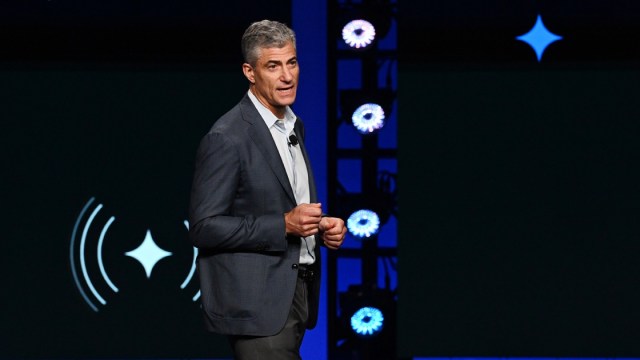
A core part of the rollout is what Despins called a “tool for common actions.” Advertising workflows often span multiple steps and systems, but MCP tools bundle those steps together so agents can execute them through a single conversational prompt.
“In almost any ad system, multiple actions are required,” she said. “With tools, you can simplify the common actions down to a single conversational prompt. It simplifies taking the multi-step actions that are common in advertising.”
That simplification is meant to solve a familiar problem with agentic AI: reasoning overload. Agents typically need to understand what an API does, how it works and which version to use—decisions that can slow things down or lead to the wrong outcome.
“Agents today need context of what an API does, how it operates—that creates a lot of load in reasoning for the agent,” Despins said.
She pointed to early internal testing as an example: In one prototype, Amazon asked an agent to generate a path-to-conversion report showing all ad touchpoints before a purchase. Instead of pulling from an existing API, the agent wrote its own code and ran it through Amazon Marketing Cloud, processing more than three years of data. In other cases, agents defaulted to technically correct but outdated API versions—choices a human developer likely wouldn’t make. MCP tools are designed to prevent those missteps by giving agents explicit instructions for common workflows.
“It’s a lot of heavy lifting to teach the agent how all of this works,” Despins said. “The difference with MCP is you’re going to start from the language in which it operates, and then when you add tools, you take common multi-step workflows and you give an instruction manual to it. Then it’s going to spend its time reasoning on things that matter rather than reasoning—and sometimes getting it wrong—on the basics.”
The open beta follows Amazon’s closed MCP pilot announced last year and mirrors similar efforts across ad tech, including AdCP which was announced last year, as platforms push toward standardizing how AI agents interact with ad systems. It also comes as the ad industry shakes off its old habits–breaking away from rigid, manual ad workflows toward agent-led automation. Meanwhile, Amazon has hinted at leaning further into agentic commerce. In Q3 of last year, CEO Andy Jassy said AI agents could expand how consumers shop online, as the company’s ad business grew 24% year over year to $17.7 billion.
Despins noted that Amazon’s ad partners had been asking for this kind of protocol, though she declined to say how many advertisers participated in the closed beta.