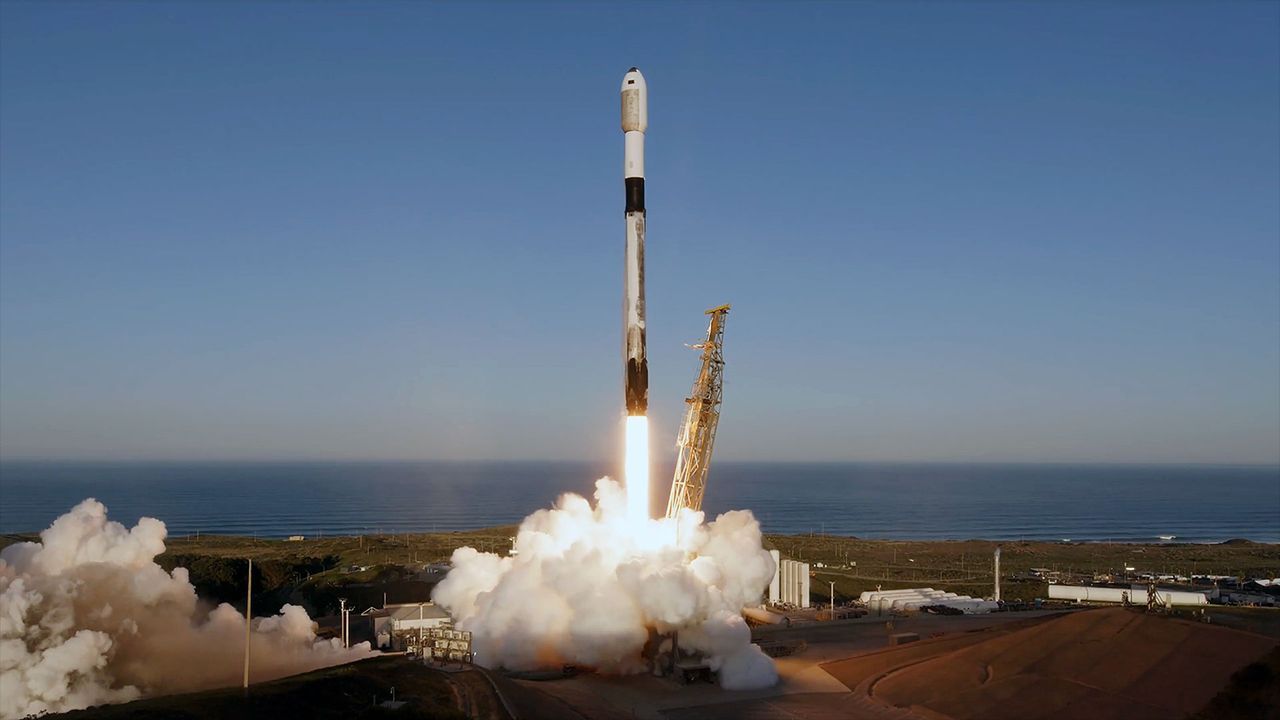
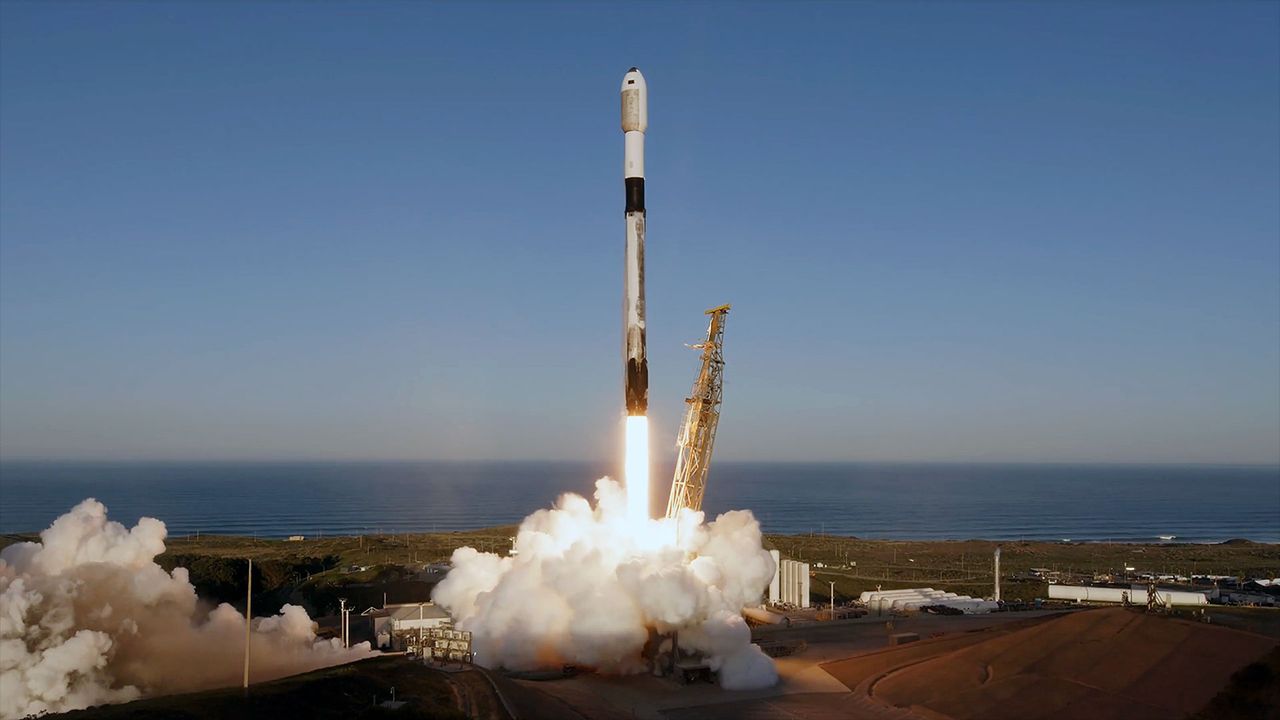
 A white and black rocket launches into a clear blue sky backdropped by a large body of water.
In a repeat of many, many (many) days past, a SpaceX Falcon 9 rocket has yet again delivered a batch of Starlink satellites into low Earth orbit.
The launch on Monday (Feb. 2, Groundhog Day) began at Space Launch Complex 4 East from Vandenberg Space Force Base in California. Just like Punxsutawney Phil this year, the rocket “saw” its shadow, flying into a sunny blue sky at 10:47 a.m. EDT (1547 GMT or 7:47 a.m. PDT local time).
About nine minutes after leaving the ground (and all groundhogs) behind, the Falcon 9 upper stage reached its preliminary orbit. It was set to deploy the 25 Starlink satellites (known as Group 17-32) about an hour into the flight.
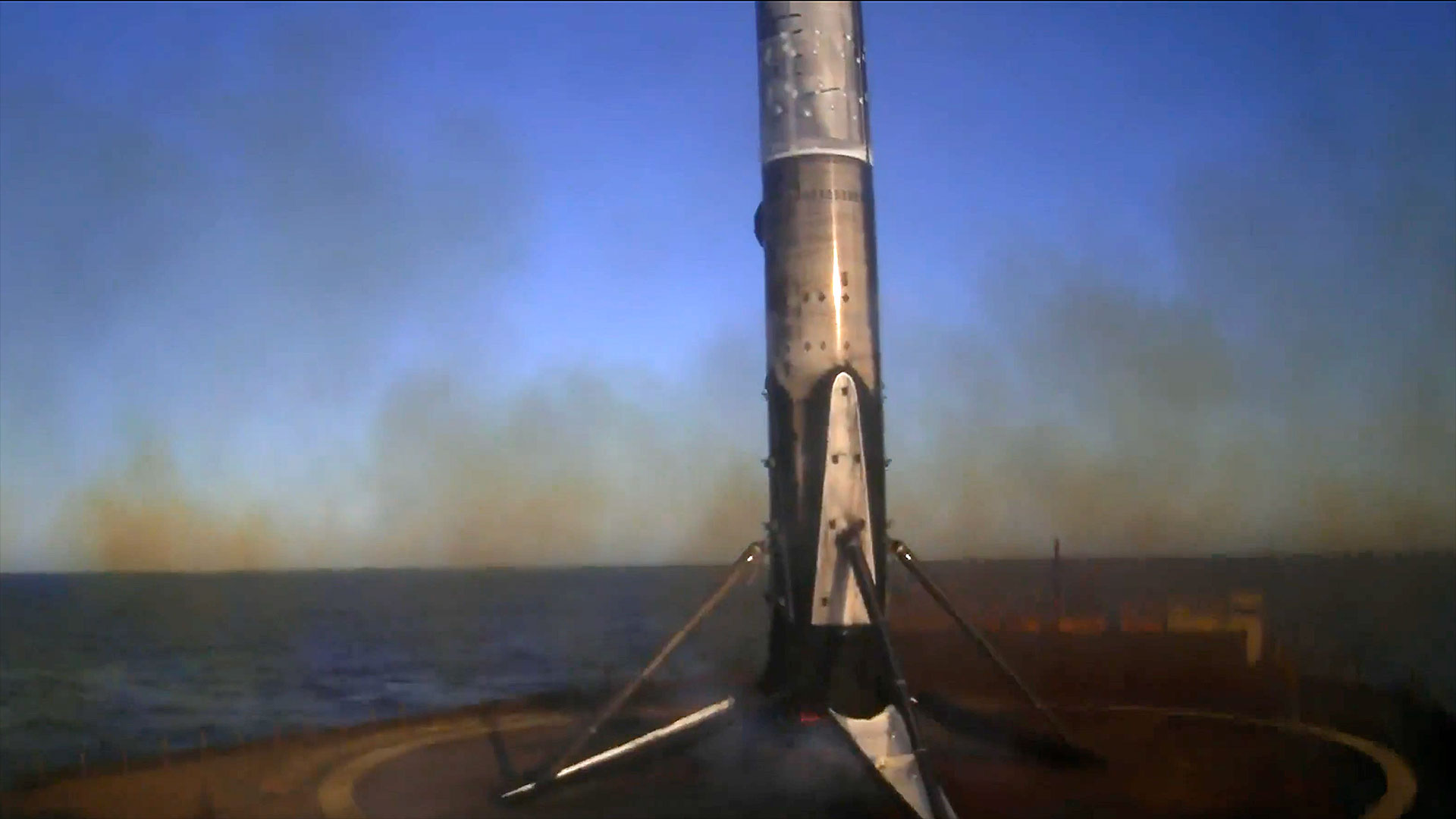 The upper stage of a SpaceX Falcon 9 rocket stands on its landing legs atop the ocean-based droneship “Of Course I Still Love You” on Monday, Feb. 2, 2026. (Image credit: SpaceX)
Previous Booster 1071 missions
The rocket’s first stage, meanwhile, receded back to Earth (much like Phil), landing on the droneship “Of Course I Still Love You” stationed in the Pacific Ocean. The flight was the 31st for the booster, which is designated B1071. That’s just one short of SpaceX’s reuse record, which was set by the booster 1067 in December 2025. (By comparison, this was the 110th time that the groundhog has seen his shadow since 1887, according to various sources.)
SpaceX’s Starlink service provides broadband internet service to areas around the world where connectivity is sparse or non-existent. The network can be used to look up the winter weather forecast on some airlines and from smart phones on select carriers.
Monday’s launch was SpaceX‘s 14th launch of the year. The Starlink megaconstellation now numbers 9,628 active satellites, according to tracker Jonathan McDowell.