A rare sighting of two deep-ocean dolphin species off the coast of Port Macquarie has left both marine experts and wildlife photographers buzzing. On a recent birdwatching tour, two dolphins were spotted much closer to shore than they usually venture, providing a rare opportunity for research and awe-inspiring photos.
Typically found far from the coastline in deep ocean waters, these marine mammals don’t often make an appearance in coastal areas. The recent sightings have raised eyebrows and sparked excitement in the marine science community.
A Surprise Encounter for the Books
Jodie Lowe, a seasoned ocean photographer, was out on a pelagic birdwatching tour in late January when she had an unexpected encounter with not one, but two pods of Risso’s dolphins. The dolphins’ large, round heads and distinctive white markings set them apart from the more familiar bottlenose dolphins, and Lowe was quick to identify them.
“I’ve never seen Risso’s dolphins during a whale-watching tour, simply because they’re deep-ocean dolphins,” she said. “They don’t usually come this close to shore.”
According to ABC News, she was stunned by the sight, particularly because of how rare it is for such deep-water species to appear so close to the coast. To add to the excitement, the creatures were accompanied by the smaller, more delicate pantropical spotted dolphins. These dolphins are known for their characteristic spots that become more pronounced as they age.
A Glimpse Into the Deep Ocean
Risso’s dolphins are not your typical coastal creatures. They can grow up to 4 meters in length and weigh up to 500 kilograms. Their skin, a dark grey that’s marked with white, squiggly scars, is the result of social interactions within their pods, often due to tooth raking during conflicts or dominance displays. It’s these very scars that make the oceanic mammals instantly recognizable.
“They have quite a lot of scarring from social interactions and conflicts with others in their species,” Lowe explained, comparing their markings to the lines of a scribbly gum tree.
Pantropical spotted the cetaceans, on the other hand, are much smaller, growing to about 2.6 meters in length and weighing just 120 kilograms. Unlike the Risso’s dolphins, these creatures are more delicate in build, with their spots gradually covering their bodies as they mature.
Despite their different appearances, both species are deep-water dwellers, spending most of their time far from the continental shelf, which in the Port Macquarie area sits about 25 kilometers off the coast. This continental shelf is typically home to species found in shallower, coastal waters, but the deeper ocean, where they reside, is often less explored and more mysterious.
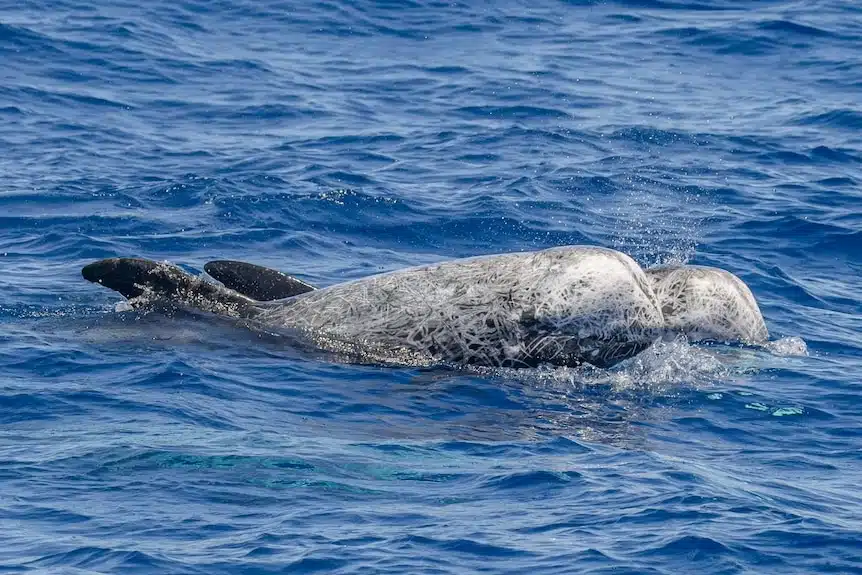 Two Risso’s dolphins swimming together, showing their distinctive scars. Credit: Jodie Lowe
A Small Step for Science, A Big Leap for Knowledge
The photographs captured by Lowe and other wildlife photographers on the tour will be archived for scientific research. According to Macquarie University’s wildlife scientist Vanessa Pirotta, sightings like this are incredibly valuable for researchers.
“We don’t have much information about these species in Australian waters, so any sighting is a win for the science world,” she said. “These photographs provide important insight into the diversity of marine life in our waters.”
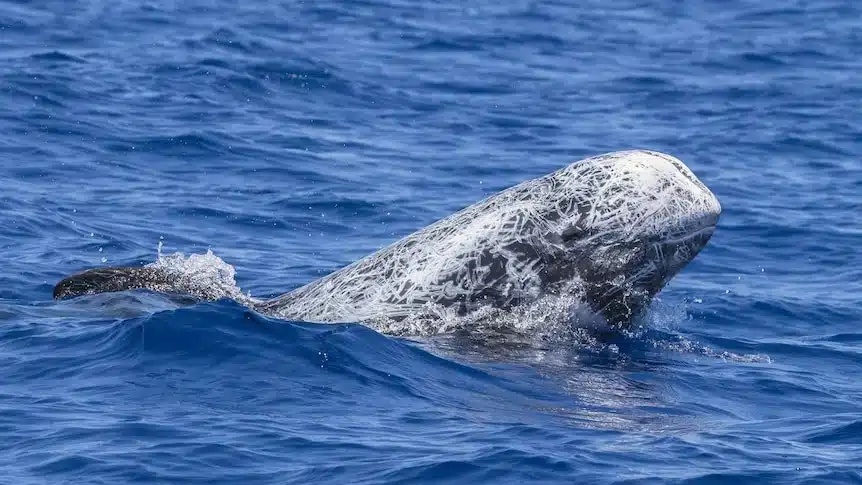 A Risso’s dolphin breaks the surface of the water, showcasing its distinctive, scarred skin pattern. Credit: Jodie Lowe
Social Dolphins? Rare Sighting Reveals All!
While sightings like this are rare, they help scientists build a clearer picture of the species’ distribution and behaviors. Pirotta pointed out that sightings from the public and wildlife photographers play an important role in marine science.
“Social media reports and public sightings are invaluable in expanding our knowledge,” she said. “It all adds to the puzzle.”
Moreover, these sightings also shed light on the social dynamics of dolphins, especially the Risso’s dolphins. The scars on their bodies, often mistaken for signs of aggression, are actually a result of social interactions. Male dolphins, in particular, use their teeth to assert dominance, creating the distinct scarring patterns.
“These animals are very family-based and can live in pods of up to 100 or more,” Pirotta explained. The scars are just part of their social structure, not a sign of hostility.