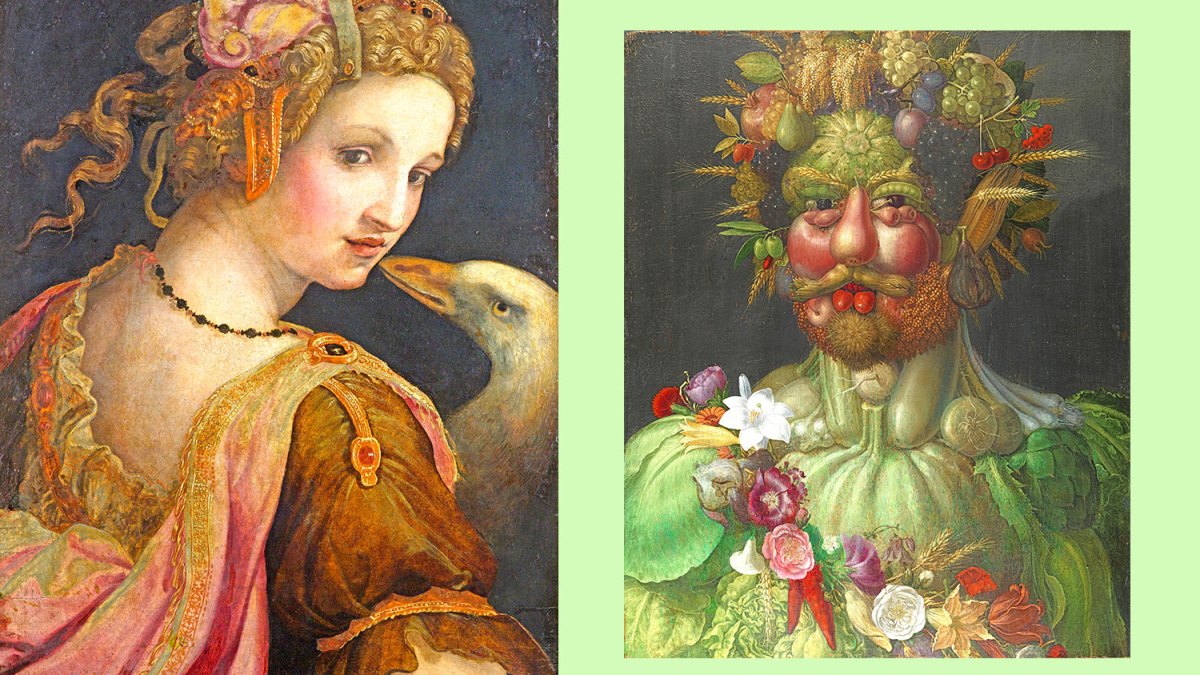
The epic poem Metamorphoses, written more than 2,000 years ago by the Roman poet Ovid, has inspired writers and artists for centuries, from Chaucer and Shakespeare to Caravaggio and Rubens.
Ovid’s work, despite its pagan subject matter and erotic overtones, has been described as the “Bible for artists” as it is perhaps second only to the holy text in its influence upon western literature and art.
Now the poem is the subject of an exhibition of more than 80 masterpieces inspired by the text, which have defined the golden ages of art and literature.
The show will open at the Rijksmuseum in Amsterdam, in co-operation with Rome’s Galleria Borghese, and will feature an audio guide narration of Ovid’s stories and how artists have interpreted his work, compellingly relayed by Sir Stephen Fry.
Listen to Stephen Fry’s audio commentary
The exhibition includes works from sculptors such as Bernini, Brancusi, Cellini and Rodin, as well as painters including Titian, Correggio, Caravaggio, Rubens and Magritte.
• Why do artists keep coming back to Ovid’s Metamorphoses?
“Over 2,000 years ago, the Roman poet Ovid wrote his Metamorphoses about what happens if gods touch mortals, human beings,” said Taco Dibbits, the director of the Rijksmuseum.
“Ovid’s mythic retelling of the encounters between gods, humans and nature, and the transformations to which they gave rise, capture our imagination today as much as ever — despite being penned over 2,000 years ago in what is no longer a living language.
“They can do this because they are so vivid, imaginative, comprehensive and, above all, universally human.”

The exhibition opens at the Rijksmuseum this week
RIJKSMUSEUM ALBERTINE DIJKEMA
Ovid (43BC-17AD) finished the poem while he was in exile for upsetting Emperor Augustus on the edge of the civilised world at Tomis, on what is now the Romanian coast of the Black Sea.
The exhibition, which will be showing at the Rijksmuseum from February 6 to May 25 before moving to the Galleria Borghese, relays the message from Ovid that “all things change but nothing dies” as gods, men and women are transformed into animals, plants or rocks by their earthly passions.
• The best art exhibitions to book for 2026
As a pagan text, Ovid’s poetry, with stories in which human creativity rivalled or surpassed that of the gods — even if punishment followed — was considered risqué in a Christian world. However, the church would use his examples of the scandalous behaviours of the Roman gods as allegories for heathen beliefs.
His tales of Jupiter’s rapes, Athena’s jealousy and Arachne’s pride, Narcissus and Echo, Daedalus and Icarus, Pygmalion’s triumph over nature with his sculpture of perfect woman — and many more — have been a lodestone for western culture.

Sleeping Hermaphroditus by Bernini
ALBERTINE DIJKEMA/RIJKSMUSEUM
“Ovid talks about fears and passions, joys and sorrows, jealousy and revenge, lust and pain,” Dibbits said. “The myths describe this mystery of being touched by the divine, a magical inspiration also for artists. Because when artists touch their material, be it stone or paint a canvas, they transform the material into being, into a being with a soul.”
In 1497 the first printed edition of Ovid’s masterpiece appeared in Italian translation, followed by many other languages, and by the turn of the 1600s it had become the “Bible of artists”, according to the Flemish painter and writer Karel van Mander.
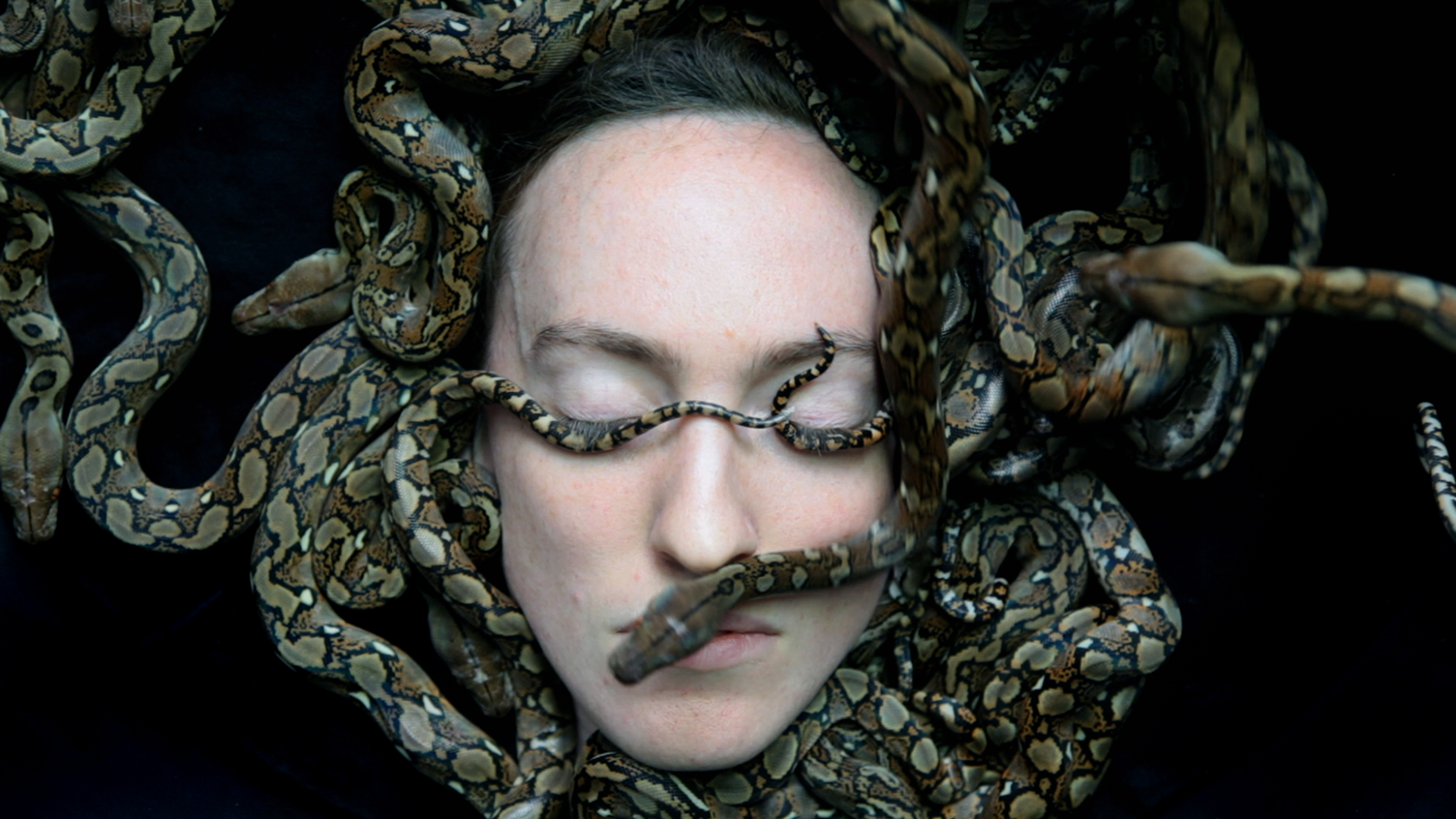
Spawn by Juul Kraijer
COURTESY OF JUUL KRAIJER STUDIO
In Spawn, a film installation by Juul Kraijer, 56, snakes slowly glide across the face of a woman invoking Ovid’s Medusa. Nearby, Benvenuto Cellini’s scale model for his heroic 16th-century statue in Florence shows Perseus standing elegantly on Medusa’s body, holding her severed, bleeding head aloft.
In Narcissus by Caravaggio, the son of a river god and nymph bends over the water, hopelessly in love with his own reflection.
“By failing to see that it is only a fleeting image, this becomes his undoing and he is transformed into a flower [a daffodil],” Frits Scholten, the exhibition’s curator and head of sculpture at the Rijksmuseum, said. “In painting this illusion, Caravaggio offers us the astute commentary on the idea that painting itself is merely a two-dimensional.”

Narcissus (c 1597) by Caravaggio
PALAZZO BARBERINI
Scholten noted that for Ovid “while the individual is finite, mutable and mortal, the collective endures in ever-changing forms”.
He believes this eternal principle is, perhaps, under threat due to the environmental or geopolitical forces at play in the modern world. “What if the Earth’s own soul were to move on? Is our present crisis merely another metamorphosis? Or worse, proof that Ovid was wrong?”