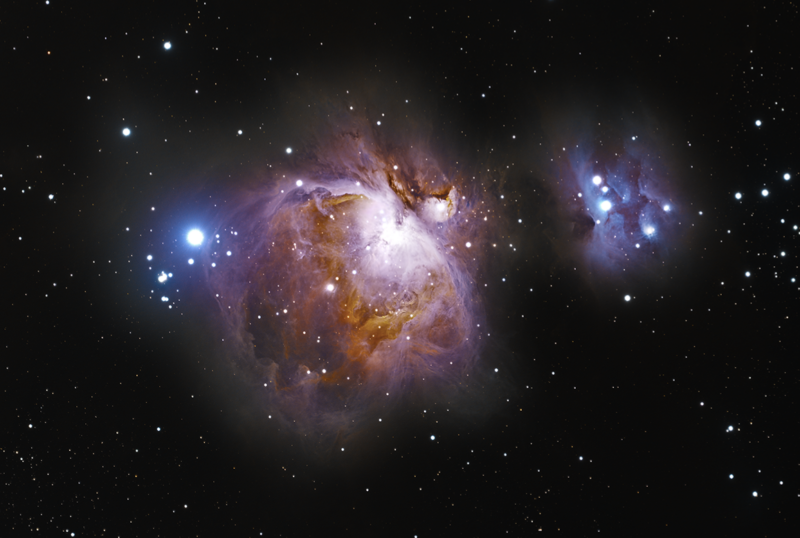
 View at EarthSky Community Photos. | Paul Wilson in Paso Robles, California, captured the Orion Nebula on January 10, 2026. See more deep-sky photos from January 2026 below.
Stunning deep-sky photos from our community
The EarthSky community has many talented astrophotographers who capture stunning images of the deep sky. We gathered some of our favorite deep-sky photos we received in January 2026 for you to enjoy. Do you have some of your own images to share? You can submit them to us here. We would love to see them!
The Orion Nebula
View at EarthSky Community Photos. | Mario Rana in Hampton, Virginia, captured this image of the Orion Nebula on January 12, 2026. Thank you, Mario!
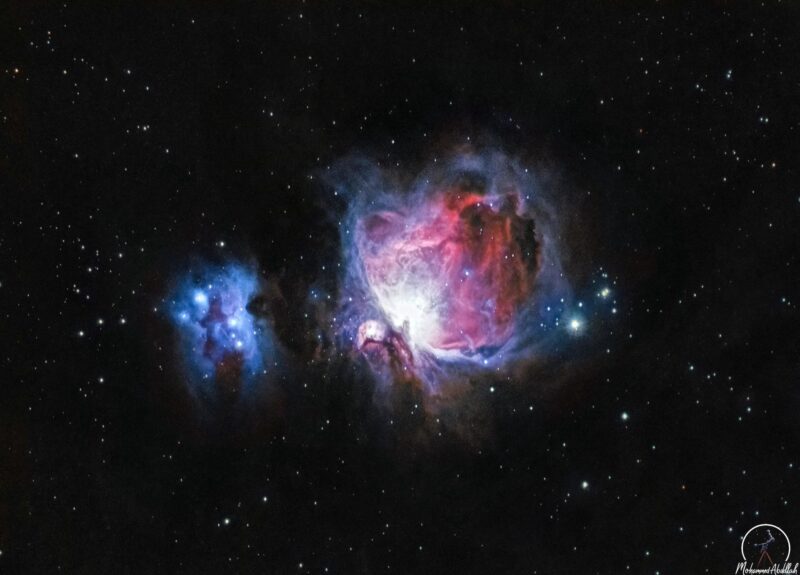 View at EarthSky Community Photos. | Mohammed Abdallah in Suez, Egypt, captured the Orion Nebula on January 7, 2026. Mohammed wrote: “I saw Orion back in 2014 with a telescope for the first time in my life. And since then, it’s been something to look up to. This is my first shot of 2026. Orion remains the most beautiful – yet the easiest – nebula to shoot in the winter sky.” Thank you, Mohammed!
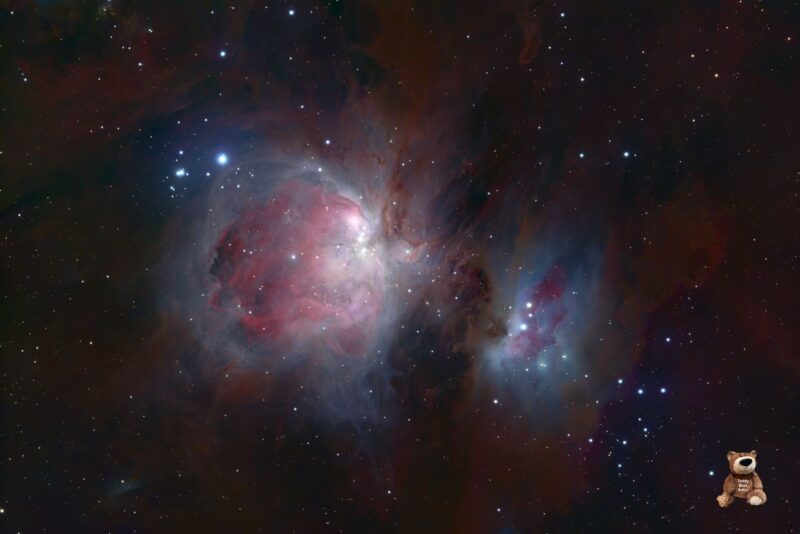 View at EarthSky Community Photos. | EarthSky’s own Marcy Curran in Cheyenne, Wyoming, captured the Orion Nebula on January 20, 2026. Marcy wrote: “Messier 42 (M42) and Messier 43 (M43) are parts of the magnificent Great Orion Nebula. It’s a massive stellar nursery in the Orion constellation. M42 is the main, brightest nebula, while M43 is a smaller, teardrop-shaped section right by it. They are both emission nebulae glowing from intense radiation from young stars.” Thank you, Marcy!
The Rosette Nebula
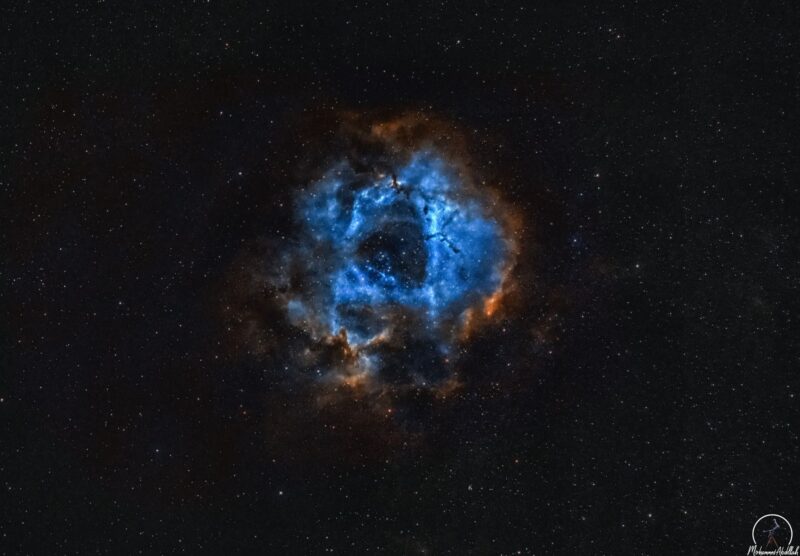 View at EarthSky Community Photos. | Mohammed Abdallah in Suez, Egypt, captured the Rosette Nebula on January 30, 2026. It’s in the constellation Monoceros. Mohammed wrote: “I processed this data in SHO color palette. This data is from 2025 but the editing is completely new showing the contrast between blue and gold.” Thank you, Mohammed!
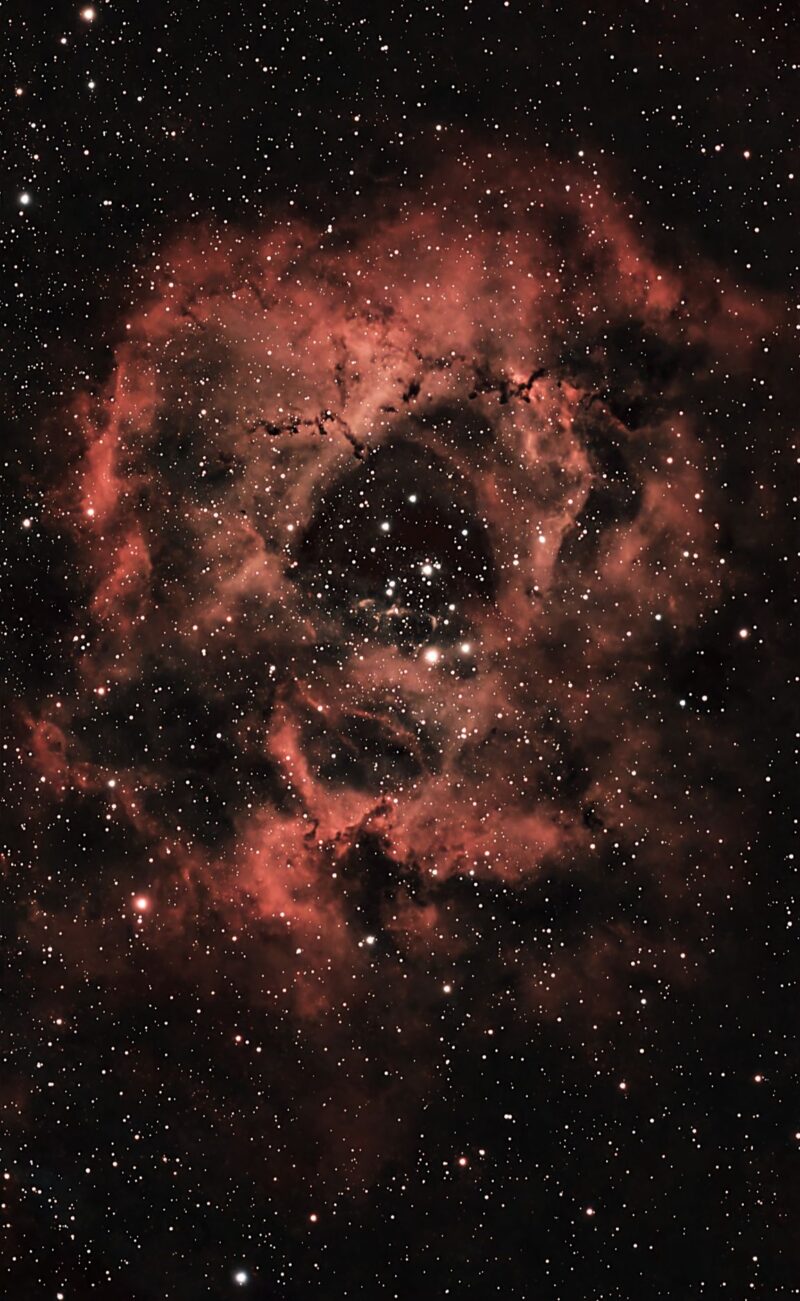 View at EarthSky Community Photos. | Anthony Faulkner in Tucson, Arizona, captured the Rosette Nebula on January 30, 2026. Thank you, Anthony!
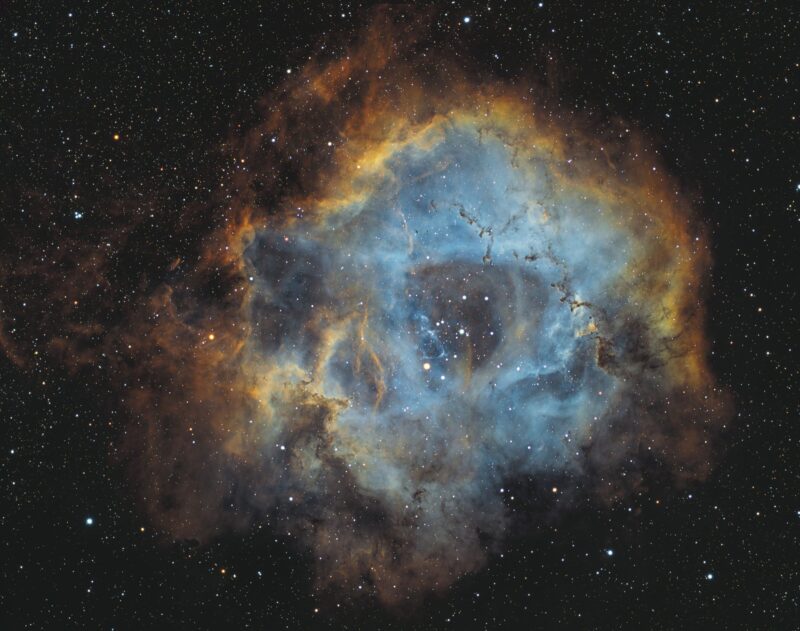 View at EarthSky Community Photos. | Steven Bellavia in Smithfield, Virginia, captured the Rosette Nebula on January 20, 2026. Steven wrote: “The Rosette Nebula is a large spherical HII region located in a giant molecular cloud. It’s in the Monoceros region of the Milky Way Galaxy. The open cluster NGC 2244 is closely associated with the nebulosity. The cluster and nebula are 5,000 light-years from Earth. They measure roughly 130 light years in diameter. The radiation from the young stars excites the atoms in the nebula, causing them to emit radiation themselves producing the emission nebula we see. The mass of the nebula is estimated to be around 10,000 solar masses.” Thank you, Steven!
More diffuse nebulae
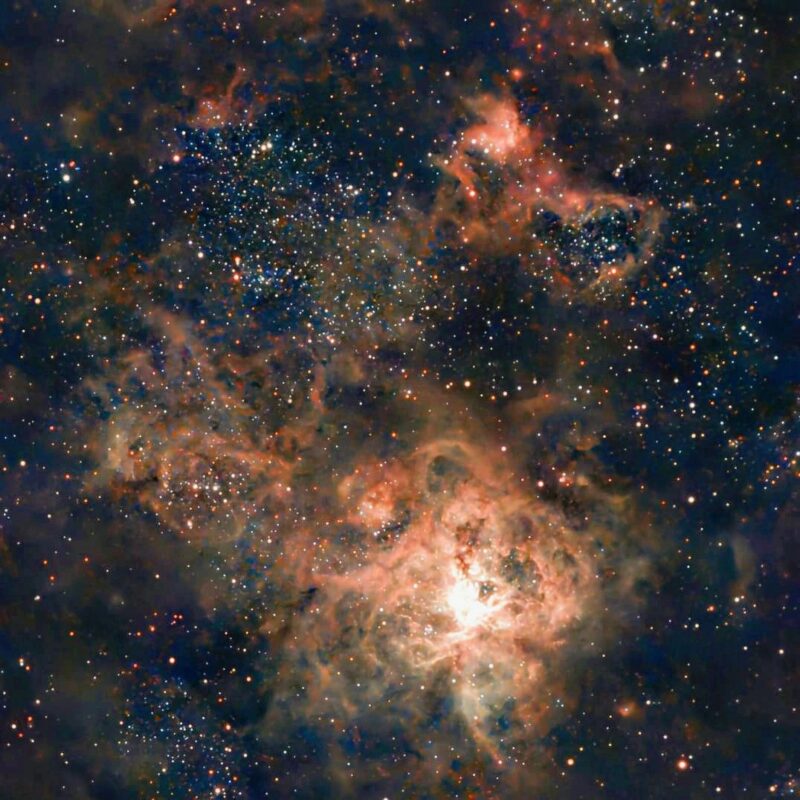 View at EarthSky Community Photos. | Helio de Carvalho Vital in Saquarema, Rio de Janeiro, Brazil, captured the Tarantula Nebula on January 12, 2026. Helio wrote: “The Tarantula Nebula (NGC 2070) is an HII region located in the Large Magellanic Cloud. It’s approximately 160 thousand light-years away. It’s the most active star-forming complex in the Local Group and its luminosity is driven by the central star cluster, which contains some of the most massive stars known. It irradiates the nebula, ionizing its hydrogen clouds and creating its characteristic glow. The nebula’s structure is shaped by intense stellar winds and supernova shocks that compress the interstellar gas.” Thank you, Helio!
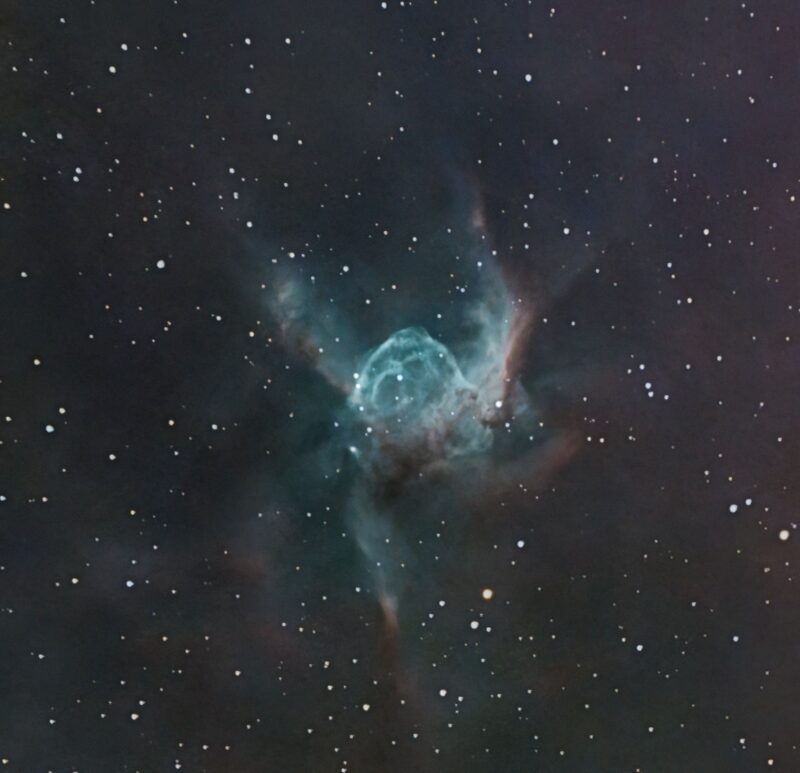 View at EarthSky Community Photos. | Kris Hazelbaker in Grangeville, Idaho, captured NGC2359, Thor’s Helmet in the constellation Canis Major, on January 14, 2026. Kris wrote: “I love this little nebula — it’s got a great mix of colors and an interesting structure. It’s low in the sky for me, so I can only shoot for a couple of hours at a time — well worth the effort!” Thank you, Kris!
Deep-sky photos of star clusters
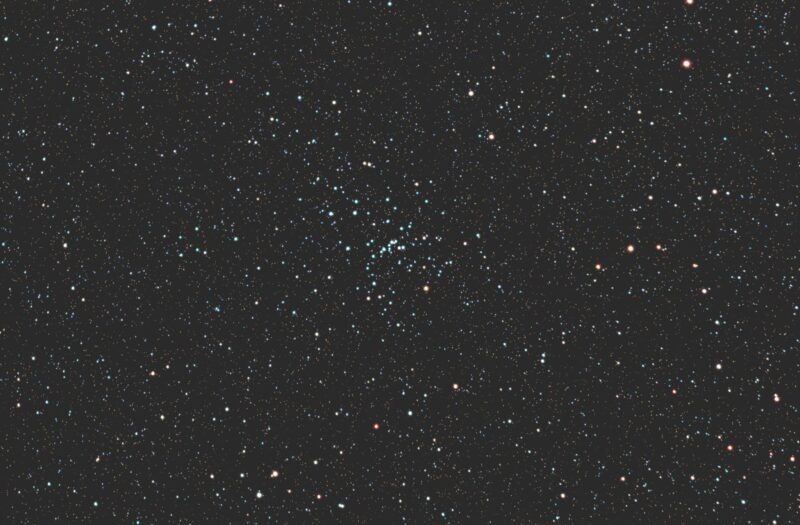 View at EarthSky Community Photos. | David Hoskin in Halifax, Nova Scotia, Canada, captured the open cluster Messier 48 on January 20, 2026. David wrote: “Messier 48 is an open star cluster in the constellation Hydra. This intermediate-aged cluster is about 2,500 light years from Earth.” Thank you, David!
Deep-sky photos of distant galaxies
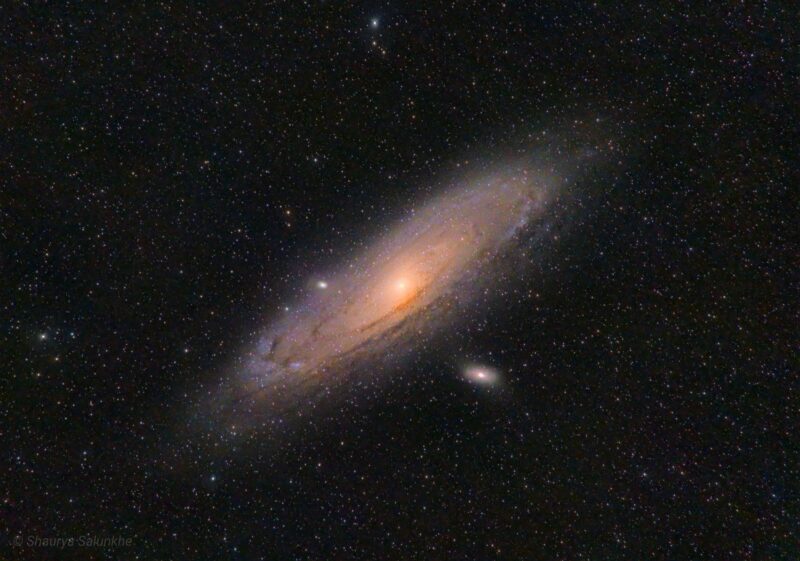 View at EarthSky Community Photos. | Shaurya Salunkhe in Velhe, Maharashtra, India, used a telephoto lens to capture this view of Messier 31, the Andromeda Galaxy, on January 11, 2026. Shaurya wrote: “I captured the Andromeda Galaxy, the Milky Way’s closest neighbor and the largest galaxy of the Local Group. This is the farthest object that is visible to the unaided eye. It’s 3 times larger than the Milky Way and is approximately 2.5 million light-years away. It’s a fascinating target with stunning colors not to mention the bonus little galaxies (M32 and M110) near it.” Thank you, Shaurya!
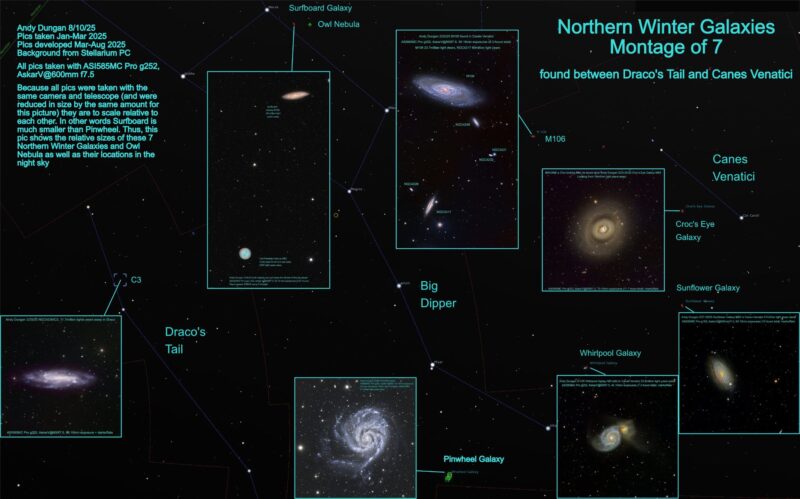 View at EarthSky Community Photos. | Andy Dungan near Cotopaxi, Colorado, sent us this montage of 7 northern winter galaxies on January 1, 2026. Andy wrote: “This montage was built in August of 2025. All the photos themselves were completed from January to March of 2025 and were developed from January through August of 2025. If you look carefully at the photo you will see the Big Dipper. It is upside down and the dipper wraps around the pic of the surfboard galaxy. Whether you use a telescope or binoculars for viewing or photography, this is the time of year to see/photograph the winter galaxies.” Thank you, Andy!
Bottom line: Without a doubt, you’ll enjoy this gallery of deep-sky photos for January 2026 from our EarthSky community. Plus, if you have a great photo to share, send it in, too. Naturally, we love to see them!
Share your recent Earth or sky photo at EarthSky Community Photos.
Armando Caussade
View Articles
About the Author:
Armando is known primarily as an astronomy educator, after 30+ years of extensive public outreach and 10 years teaching in colleges. As one of only a handful of science communicators in Puerto Rico during Comet Halley’s last visit, he assumed a pioneering role starting in 1985 when science was just beginning to enter the collective mindset. Over the years, his work as a teacher, speaker and writer, inspired people to pursue interests in science and brought enduring change to Puerto Rican culture. After being accepted into the 2014–2015 Antarctic season of PolarTREC, Armando was assigned to the Amundsen-Scott South Pole Station, where in 2015 he successfully conducted 10 days of work at the IceCube Neutrino Observatory. His affiliations include Ana G. Méndez University, Cupey campus (2014 to 2021), the University of Puerto Rico, Aguadilla campus (2015 to 2017), NASA JPL’s Solar System Ambassadors (2004 to 2006), and NASA Space Grant (2017 to 2019) where he served as an affiliate representative.