Ireland
  • Europe
    • FR
    • DE
    • IT
    • ES
    • BE
    • NL
    • LU
    • CH
    • DK
    • PL
    • UK
  • Headlines
  • Ireland
  • World
  • Business
  • Technology
  • Entertainment
  • Sports
  • Science
  • Health
  • Artificial intelligence
  • Arts and design
  • Books
  • Business
  • Celebrities
  • Computing
  • Economy
  • Entertainment
  • Entrepreneurship
  • Environment
  • Fitness
  • Gadgets
  • Genetics
  • Headlines
  • Health
  • Healthcare
  • Internet
  • Ireland
  • Jobs
  • Markets
  • Medication
  • Mental health
  • Mobile
  • Movies
  • Music
  • Nutrition
  • Personal finance
  • Physics
  • Science
  • Space
  • Sports
  • Technology
  • TV
  • Virtual reality
  • Wildlife
  • World
Ireland
  • Europe
    • FR
    • DE
    • IT
    • ES
    • BE
    • NL
    • LU
    • CH
    • DK
    • PL
    • UK
  • Headlines
  • Ireland
  • World
  • Business
  • Technology
  • Entertainment
  • Sports
  • Science
  • Health

Browsing Tag

Cell Death

25 posts
SScience
Evolutionary mutation in cGAS enhances naked mole-rat DNA repair
Read More

Chromosome abnormalities may help cancer cells resist treatment and spread

  • May 8, 2026
A new study led by NYU Langone Health researchers found that cancer cells are better able to resist…
HHealth
Study forces a textbook rewrite on cell division
Read More

Exploiting a new weakness in ‘zombie-like’ cells to treat senescence-associated diseases

  • April 24, 2026
A new set of drugs exploit a recently-revealed weakness in ‘zombie-like’ – or senescent – cells that could lead to new treatments for cancer and age-associated diseases. The study from the…
HHealth
Researchers identify molecular link between autoimmune disease and lymphoma risk
Read More

APC-deficient cancer cells rely on single enzyme for survival

  • April 21, 2026
A newly published study reports that APC-deficient cancer cells may depend on a single metabolic enzyme for survival,…
HHealth
Tumor microenvironment drives resistance to ferroptosis in pancreatic cancer
Read More

Tumor microenvironment drives resistance to ferroptosis in pancreatic cancer

  • April 3, 2026
Tumors driven by cancer-driving KRAS mutations are often susceptible to ferroptosis, a type of cell death that can…
HHealth
Amino acid metabolism shapes the tumor immune microenvironment and therapy response
Read More

Vitamin B2 metabolism helps cancer cells resist ferroptosis

  • March 14, 2026
A lack of vitamin B2 makes tumor cells more susceptible to a unique form of cell death. This…
HHealth
Researchers identify new molecular switch involved in programmed cell death
Read More

Dietary fat ratios impact the strength of immune cells and ability to fight disease

  • March 4, 2026
The types of fats we consume directly impacts the survival and strength of the body’s immune cells and…
HHealth
New 3D eye model reveals causes of steroid-related glaucoma
Read More

Chlamydia pneumoniae found in the eye may aggravate Alzheimer’s disease

  • February 2, 2026
Chlamydia pneumoniae—a common bacterium that causes pneumonia and sinus infections—can linger in the eye and brain for years…
HHealth
Amino acid metabolism shapes the tumor immune microenvironment and therapy response
Read More

Bacterial toxin shrinks tumors, enhances immune response in colorectal cancer study

  • January 14, 2026
A toxin secreted by cholera bacteria can inhibit the growth of colorectal cancer without causing any measurable damage…
SScience
Study forces a textbook rewrite on cell division
Read More

Dual pathways found for centromere specification, ensuring accurate chromosome segregation

  • January 8, 2026
  Despite the immense amount of genetic material present in each cell, around three…
HHealth
Lactylation drives tumor progression and immune evasion in triple negative breast cancer
Read More

Study reveals a therapeutic vulnerability in aggressive subtype of triple-negative breast cancer

  • December 27, 2025
Dec 26 2025 A new study published today in Science Translational Medicine by researchers at The University of…
HHealth
Amino acid metabolism shapes the tumor immune microenvironment and therapy response
Read More

Reframing the role of MCL1 in cancer signaling and metabolism

  • December 23, 2025
A study by the Mildred Scheel Early Career Center group led by Dr. Mohamed Elgendy at the TUD…
HHealth
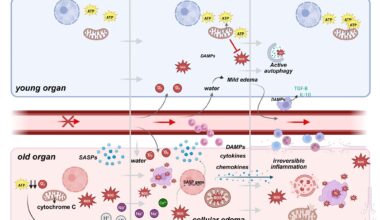
Cellular responses to ischemic reperfusion injury in young vs older donor organs. During ischemia, the deprivation of oxygen and nutrients leads to mitochondrial dysfunction and energy loss. In young cells, mitochondrial resilience helps sustain ATP production, ameliorating damage. Old cells, in contrast, experience significant ATP depletion, relying heavily on anaerobic metabolism, which leads to lactate buildup, pH reduction, and cellular stress. Upon reperfusion, the restoration of blood flow triggers oxidative stress as mitochondria generate excessive reactive oxygen species (ROS). Young cells compensate for those events through robust antioxidant systems, maintaining cellular integrity. Conversely, in old cells, impaired antioxidant defenses result in unregulated ROS production, furthermore damaging membranes, organelles, and DNA. Additionally, old cells release pro-inflammatory genes, amplifying local inflammation. Consequences are particularly severe in aged vascular endothelial cells, with ion pump dysfunction (e.g., Na⁺/K⁺ ATPase) causing ionic imbalances and cellular edema. This disruption exacerbates ischemic injury, progressing to irreversible damage. In contrast, young cells effectively resolve edema and inflammation through mechanisms that include macrophage945 mediated clearance of Damage-Associated Molecular Patterns (DAMPs) and anti-inflammatory cytokine release (e.g., IL-10 and TGF-β), allowing recovery and tissue repair. In old cells, persistent ROS generation, unresolved inflammation, and DAMP accumulation lead to irreversible inflammation, organelle collapse, and eventual cell death. Created in BioRender. Kayumov, M. (2025) https://BioRender.com/m23u7ro .
Read More

Scientists outline how organ rejuvenation strategies could solve the donor shortage

  • December 12, 2025
New insights into cellular aging, perfusion technologies, and senescence-targeting treatments show how aging organs could be revived, turning…
Ireland
www.europesays.com