Ireland
  • Europe
  • Headlines
  • Ireland
  • World
  • Business
  • Technology
  • Entertainment
  • Sports
  • Science
  • Health

Categories

  • Artificial intelligence
  • Arts and design
  • Books
  • Business
  • Celebrities
  • Computing
  • Economy
  • Entertainment
  • Entrepreneurship
  • Environment
  • Fitness
  • Gadgets
  • Genetics
  • Headlines
  • Health
  • Healthcare
  • Internet
  • Ireland
  • Jobs
  • Markets
  • Medication
  • Mental health
  • Mobile
  • Movies
  • Music
  • Nutrition
  • Personal finance
  • Physics
  • Science
  • Space
  • Sports
  • Technology
  • TV
  • Virtual reality
  • Wildlife
  • World
Ireland
  • Europe
  • Headlines
  • Ireland
  • World
  • Business
  • Technology
  • Entertainment
  • Sports
  • Science
  • Health

Browsing Tag

Cytokine

2 posts
HHealth
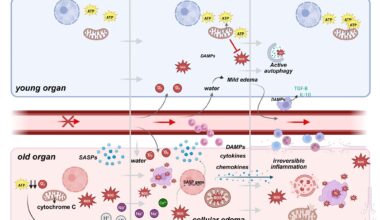
Cellular responses to ischemic reperfusion injury in young vs older donor organs. During ischemia, the deprivation of oxygen and nutrients leads to mitochondrial dysfunction and energy loss. In young cells, mitochondrial resilience helps sustain ATP production, ameliorating damage. Old cells, in contrast, experience significant ATP depletion, relying heavily on anaerobic metabolism, which leads to lactate buildup, pH reduction, and cellular stress. Upon reperfusion, the restoration of blood flow triggers oxidative stress as mitochondria generate excessive reactive oxygen species (ROS). Young cells compensate for those events through robust antioxidant systems, maintaining cellular integrity. Conversely, in old cells, impaired antioxidant defenses result in unregulated ROS production, furthermore damaging membranes, organelles, and DNA. Additionally, old cells release pro-inflammatory genes, amplifying local inflammation. Consequences are particularly severe in aged vascular endothelial cells, with ion pump dysfunction (e.g., Na⁺/K⁺ ATPase) causing ionic imbalances and cellular edema. This disruption exacerbates ischemic injury, progressing to irreversible damage. In contrast, young cells effectively resolve edema and inflammation through mechanisms that include macrophage945 mediated clearance of Damage-Associated Molecular Patterns (DAMPs) and anti-inflammatory cytokine release (e.g., IL-10 and TGF-β), allowing recovery and tissue repair. In old cells, persistent ROS generation, unresolved inflammation, and DAMP accumulation lead to irreversible inflammation, organelle collapse, and eventual cell death. Created in BioRender. Kayumov, M. (2025) https://BioRender.com/m23u7ro .
Read More

Scientists outline how organ rejuvenation strategies could solve the donor shortage

  • December 12, 2025
New insights into cellular aging, perfusion technologies, and senescence-targeting treatments show how aging organs could be revived, turning…
HHealth
Amino acid metabolism shapes the tumor immune microenvironment and therapy response
Read More

Engineered CAR T cells show promise against solid tumors

  • October 3, 2025
Chimeric antigen receptor (CAR) T cell therapy, which uses a patient’s own immune cells to fight cancer, has…
Ireland
www.europesays.com