
Defending his decision to accept a US-brokered ceasefire with Hezbollah in mid-April, Prime Minister Benjamin Netanyahu argued that the threat posed by the terror group had been largely eliminated. Over the past two and a half years Israel had removed the threat of infiltration and anti-tank fire from the group and eliminated roughly 90% of its rocket arsenal, he boasted.
Yet the prime minister also hedged, promising that the campaign against the terror group was far from over.
A savvy political operator, Netanyahu likely had no illusions about the popularity of the decision to halt fighting against Hezbollah. By all accounts, he had not entered the ceasefire willingly, but rather under intense pressure from Washington.
Washington had leaned on Netanyahu after Iran insisted that it would only hold talks with the US on ending the war there if Israel halted its attacks in Lebanon. After initially resisting calls for it to pull back its campaign against Hezbollah — the terror group had begun firing at Israel in response to the US-Israeli joint strikes on Iran — Israel agreed to silence the guns on its northern border.
Faced with the unenviable task of defending the ceasefire, Netanyahu tried to give it a positive spin, framing it as a strategic opening for both diplomacy and continued military pressure.
Get The Times of Israel’s Daily Edition
by email and never miss our top stories
By signing up, you agree to the terms
The ceasefire has since largely unraveled, though fighting remains at a lower pitch than before the truce was announced in mid-April, and the IDF has continued to limit the areas in which it carries out strikes.
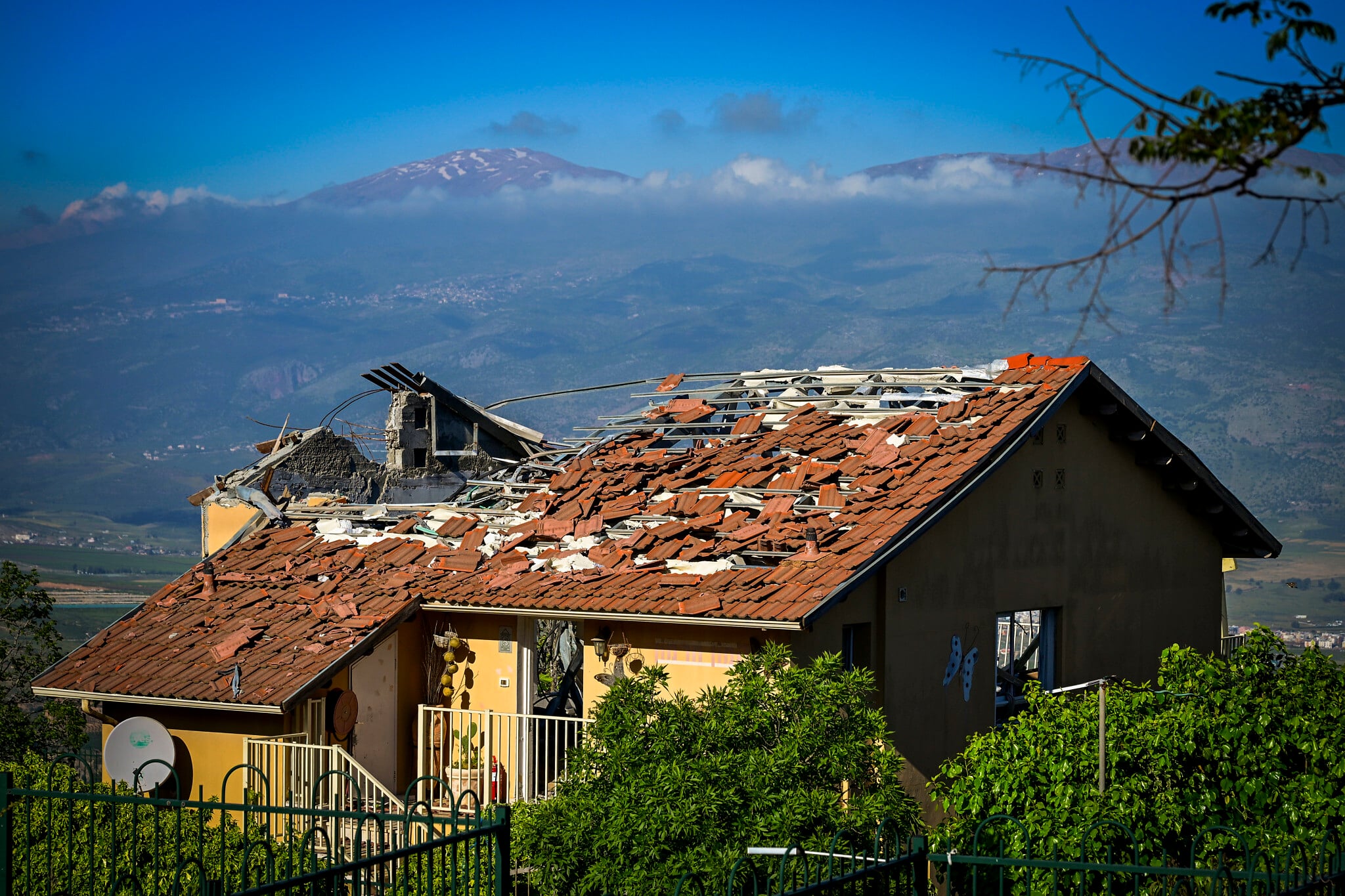
A view of a house damaged by a missile fired by Hezbollah from Lebanon in Misgav Am in northern Israel, May 1, 2026. (Michael Giladi/Flash90)
For many in the north who remain under fire, the fighting exposed as hollow the claims that Hezbollah’s capabilities were significantly degraded, while the ceasefire, albeit paper-thin, undermined the idea that Netanyahu could withstand pressure from US President Donald Trump and make decisions in Israel’s best interests.
Rising anger among northerners over how the war is being handled has the potential to weaken Netanyahu and his Likud party’s standing in a region normally considered a bastion of support.
Looming on the horizon are Knesset elections, which many already see as a referendum on the government’s response to October 7 and the subsequent wars in Lebanon and Iran.
Widespread disappointment
The north has traditionally been a Likud stronghold, with the party taking 49.47 percent of the vote in Kiryat Shmona, 42.49% in Afula, and 38.47% in Nahariya in 2022. Overall, parties belonging to Netanyahu’s bloc were supported by 74.77%, 69.27%, and 57.23% of voters in these cities, respectively, during the last election.
According to a mid-April poll by the Israel Democracy Institute, almost half (48%) of those in the north said that they were unhappy with the ceasefire, with 79% expressing support for “continuing the fighting even at the cost of friction with the United States.”
A separate poll conducted by Hebrew University’s Agam Labs researcher Nimrod Nir on April 23-24 found 41.1% of Israelis nationwide opposed to the ceasefire in Lebanon. Fewer than one-quarter supported the ceasefire, and among Jewish respondents, only 15% backed it.
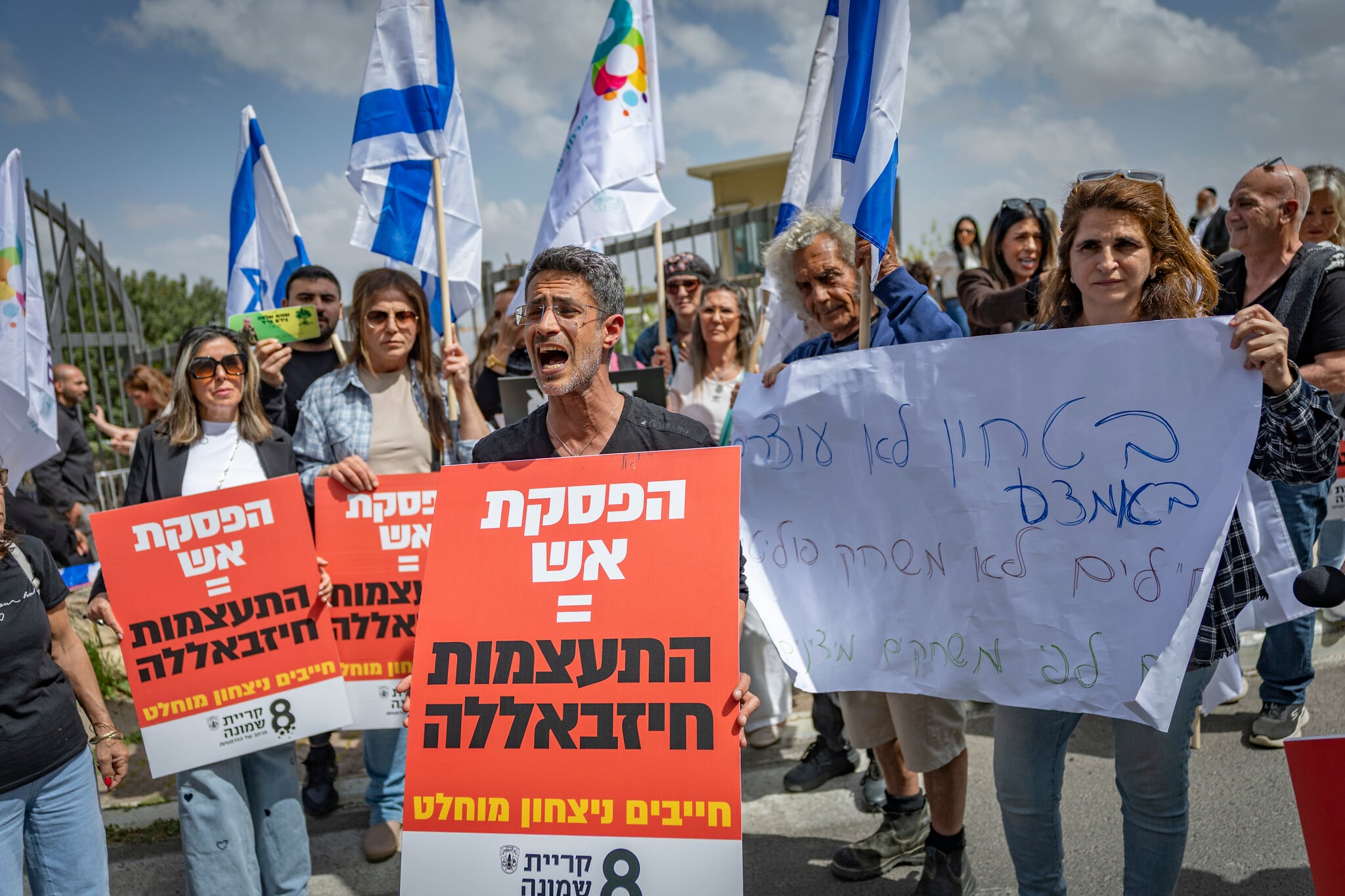
Residents of Kiryat Shmona protest against the ceasefire with Hezbollah outside the United States embassy in Jerusalem, April 19, 2026. (Yonatan Sindel/ Flash90)
According to the survey, 66.1% of the 1,325 Israelis polled were either somewhat (18%) or very (48.1%) dissatisfied with Netanyahu’s performance during the military campaigns in Iran and Lebanon. Among coalition voters, 30% were dissatisfied with Netanyahu’s performance.
“This is the first time we see that the Israeli public has the levels of pessimism we saw after October 7,” Nir told The Times of Israel. “Things have changed completely. Now 66% are pessimistic, while only about a third are optimistic. People have the sentiment that this war is a failure.”
The study found that “only about half of Israelis believe Iran has weakened as a result of the campaign.”
The situation in Lebanon “will be a key issue for the people of the north” in the upcoming vote, which is scheduled for October, said Dahlia Scheindlin, a political analyst and fellow at The Century Foundation.
“If elections were held today, it would not reflect particularly well” on Netanyahu, she told The Times of Israel.

Pollster and analyst Dahlia Scheindlin. (Oren Ziv)
Who they support will ultimately end up depending on the diplomatic and security situation going into October, she predicted.
“Even more than the rest of the country, the north thinks that the best way to deal with the situation is to keep fighting and keep fighting more strongly,” Scheindlin said following a visit to Kiryat Shmona.
The city, which sits in the Galilee Panhandle just a few kilometers from the Lebanon border, has been among the hardest hit in both the recent round of violence and the year of hostilities in 2023-2024. Many evacuated from the hardscrabble town during that initial conflict and large numbers have yet to return.
Following the announcement of the ceasefire, hundreds of residents protested outside the Prime Minister’s Office and the United States embassy in Jerusalem — while Kiryat Shmona Mayor Avichai Stern, a member of Likud, accused the government of selling out the north’s security.
“We elected our government… full-on right wing for full-on security,” Stern told the Kan national broadcaster. “In practice, we see that our security is up for a negotiation that isn’t even ours.”
Despite the ceasefire, ongoing Hezbollah drone attacks have continued to kill IDF troops and forced residents of the north back into shelters even as life across the rest of the country has largely returned to normal.
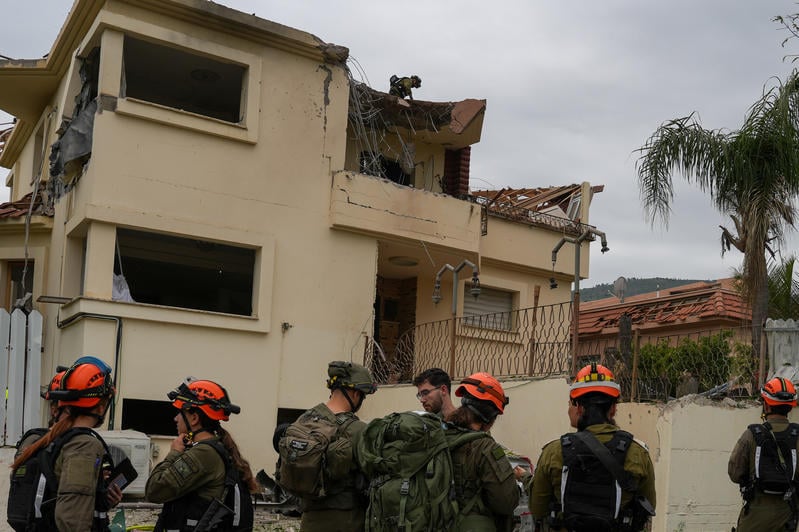
Israeli security and rescue forces at the scene of damage caused by a missile attack from Lebanon in the northern city of Kiryat Shmona, April 1, 2026. (Ayal Margolin/Flash90)
Council chiefs in the north have also recently fiercely criticized the government over what they call an inadequate effort to protect the citizens, and have protested a recent decision (since somewhat ameliorated) to cut programs intended to strengthen frontline communities.
‘A strong brand’
Despite the growing disillusionment, a potential loss of support for Netanyahu in the north might not benefit his rivals in their effort to oust the Likud-led right-wing government from power.
Instead, voters could shift further to the right, backing hardline factions like Otzma Yehudit, led by Itamar Ben Gvir, said Scheindlin, despite the fact that Ben Gvir is also part of the government.
But she reiterated that it was too early to accurately predict how the handling of the conflict would play out on election day.
Electoral polls broken down by region have yet to be published, but surveys predict a near-stalemate between Likud and its presumptive partners and a bloc of opposition-aligned Zionist parties led by former prime minister Naftali Bennett’s Together venture with Opposition Leader Yair Lapid and Gadi Eisenkot’s new Yashar party.
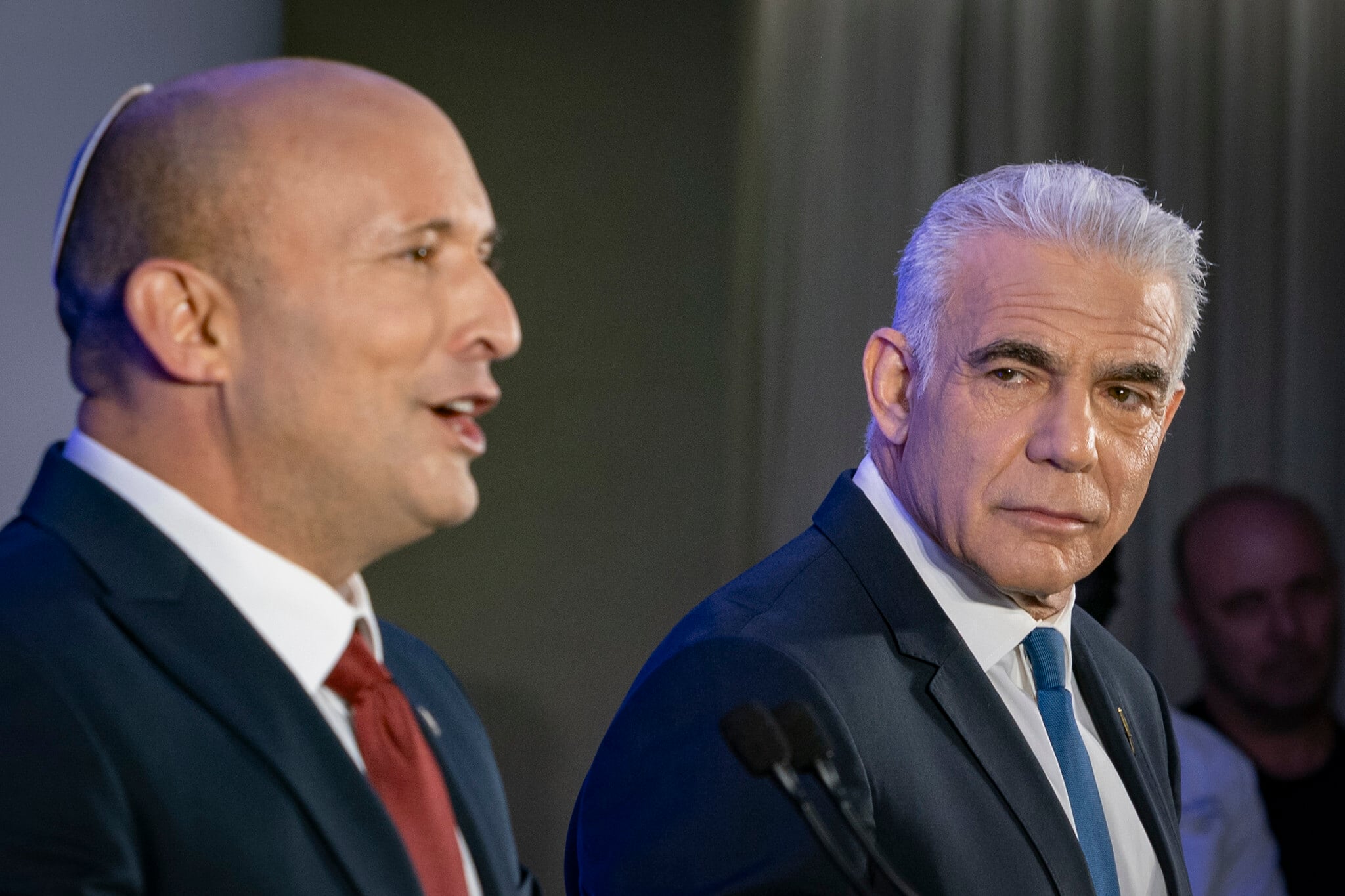
Opposition Leader Yair Lapid (right) and former prime minister Naftali Bennett at a press conference announcing their joint run in the coming elections, in Herzliya, central Israel, April 26, 2026. (Chaim Goldberg/Flash90)
According to a Channel 12 poll released late last month, if elections were held today, Netanyahu’s right-wing bloc would only garner 50 out of 120 Knesset seats while the Zionist opposition parties would receive 60. Arab factions, which are seen as unlikely to partner with either group, would get 10 seats.
Shaul Cohen, a Likud activist from Kiryat Shmona, told The Times of Israel that while he and his neighbors have suffered a lot, he does not see the prospect of a mass exodus from Netanyahu’s party.
“Just a week or two ago, I had a Katyusha rocket land behind my house. The solar water heaters were smashed, and the roof tiles were broken. All the neighbors here were hit, cars too. In a place like this, there’s no nearby hospital, no trains. It’s hard,” Cohen complained.
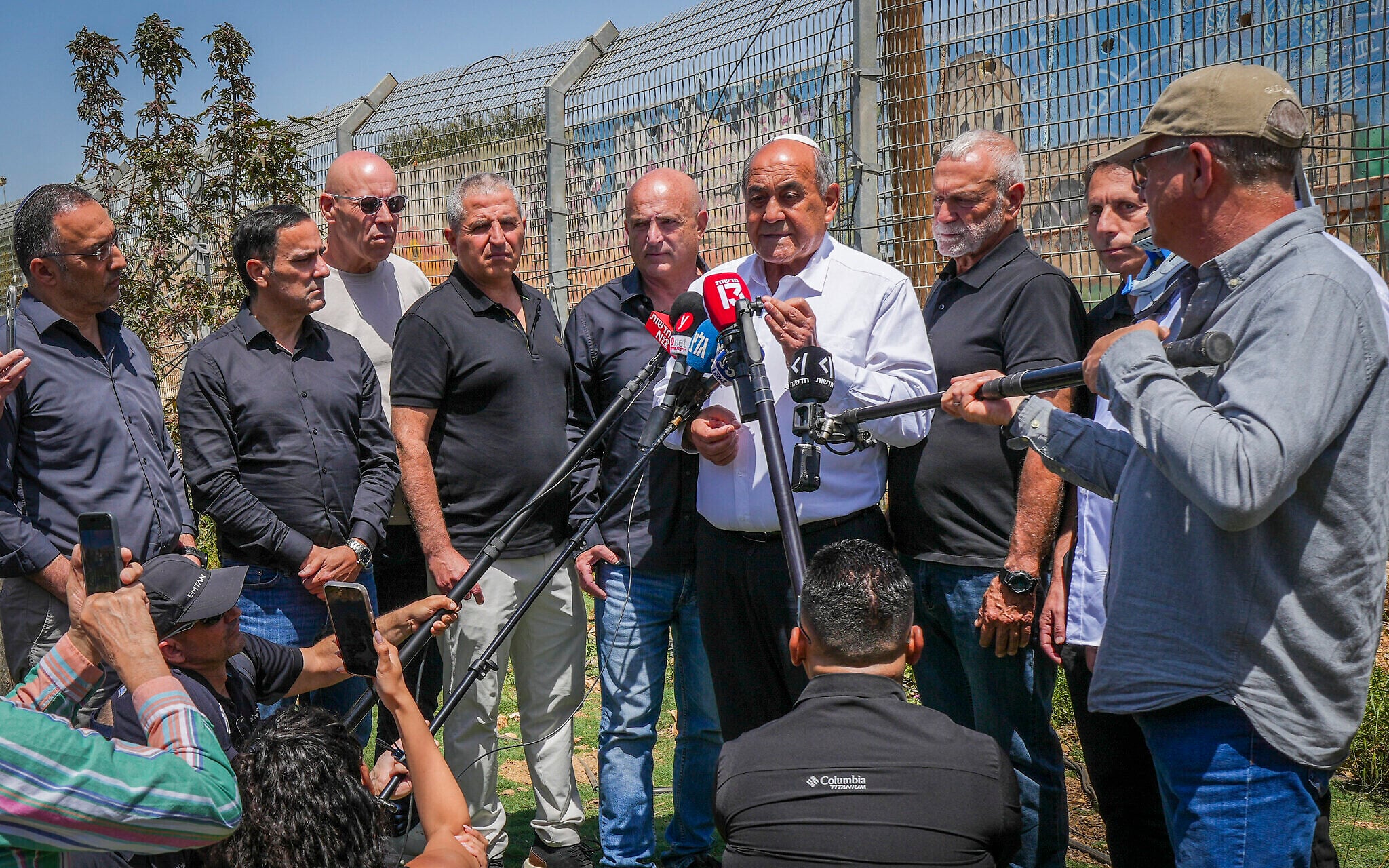
Local authority heads in northern Israel hold a press conference in Moshav Shtula near the Israeli border with Lebanon, April 27, 2026. (Ayal Margolin/Flash90)
But at the end of the day, “Likud is strong, it’s a strong brand. It’s a family and people are crazy about Bibi! They love Bibi,” he said.
Even if some votes go to Ben Gvir, he predicted, they will be offset by disillusioned “leftists” from the Gaza border region who will shift to the right.
Even if Netanyahu doesn’t lose major support, there seems little chance that the war will produce a popularity bump for the prime minister, which many beleive he had been angling for.
Speaking with The Times of Israel shortly after Israel and the US launched the war with Iran on February 28, a coalition insider said that Netanyahu was hoping that a “narrative of a win over Iran would boost the PM’s reelection chances and shift the narrative away from October 7.”
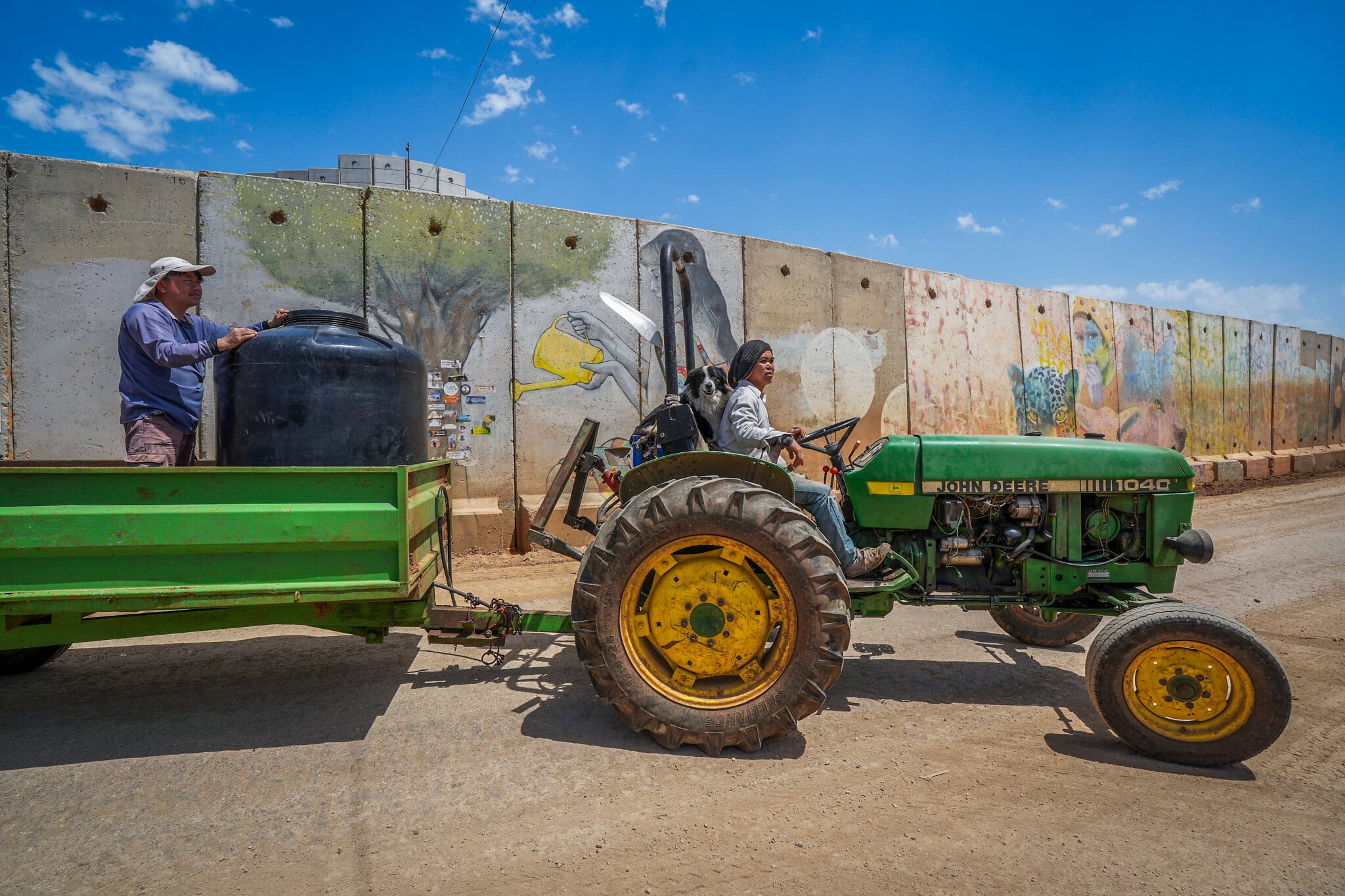
A farmer drives a tractor past the concrete wall in Moshav Shtula, along the Israeli border with Lebanon in northern Israel, during a ceasefire, April 27, 2026. (Ayal Margolin/Flash90)
According to Nir, this does not appear to have worked.
“Seventy percent of the Israeli public do not believe they get an accurate and reliable description of reality from their leadership,” he said. “They told us Hezbollah would take years to rehabilitate itself and Iran [received] a strike that would also take years to rebuild from. No one really believes these statements anymore. Hence, a lot of pessimism.”
“If the strikes on Iran don’t resume and the full-on war with Lebanon does not proceed [and] the Israeli public feels that we didn’t really finish the job… I think it’s a gamechanger,” Nir added. “And there’s not enough time [until] the election… to make it spinnable.”
Diana Bletter and Stav Levaton contributed to this report.