
With 50 to 60 percent of Israeli adults now categorized as overweight or obese, acting Knesset Health Committee chair MK Tsega Melaku of the Likud party called on Wednesday for an immediate investment of NIS 100-200 million ($35 million to $70 million) for the prevention and treatment of obesity.
During the hearing, lawmakers and health officials said that a lack of government investment in prevention and treatment already costs the economy NIS 30 billion ($10 billion) per year.
The current budget for obesity programs is NIS 17 million ($6 million).
In Arab society, obesity rates are higher than among Jews. Among Ethiopian immigrants there has been a dramatic increase in diabetes diagnoses, from 0.4% in 1991 to 14% today.
While 18.8% of first graders are classified as overweight or obese, that number jumps to 31.4% by the seventh grade.
Get The Times of Israel’s Daily Edition
by email and never miss our top stories
By signing up, you agree to the terms
Officials said that the sharp uptick in overweightness is due to the high cost of medications, inadequate health services in the country’s peripheral regions and in low-income areas, and the lack of linguistically and culturally accessible educational materials on obesity prevention and treatment.
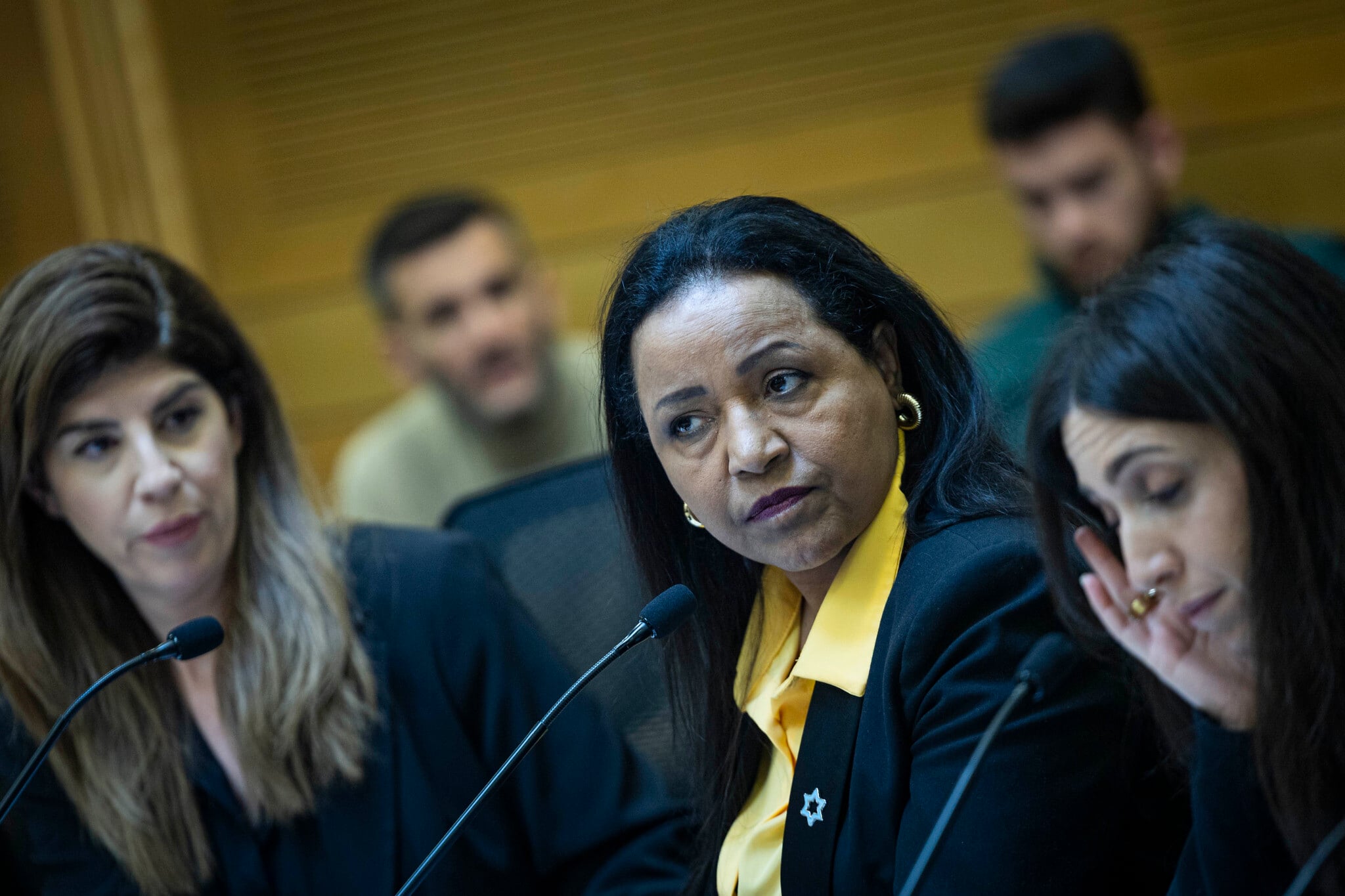
MK Tsega Melaku leads the Special Committee for the Communications Law at the Knesset on February 24, 2026 (Yonatan Sindel/Flash90)
According to the World Health Organization, in 2022, one in eight people in the world were living with obesity. Worldwide adult obesity has more than doubled since 1990, and adolescent obesity has quadrupled.
A 2022 Health Ministry survey found that the rate of obesity and excess weight in Israel is high compared to the rest of the world.
Being overweight or obese increases the risk of heart disease and stroke, type 2 diabetes, and various cancers.
Sugar tax
Prof. Aron Troen of Hebrew University addressed the committee on Finance Minister Bezalel Smotrich’s cancellation of the sugar tax in February 2023, which the previous government had introduced as part of a drive to reduce the consumption of unhealthy beverages.
“There was already evidence that the experiment was working, a reduction of 10-22% in consumption,” he said.
The Maccabi Health Fund “sees obesity treatment and prevention as a strategic goal,” said Limor Tal Poni, a dietitian at Maccabi, saying that the fund is investing “significant resources in both treatment and prevention.”
She said that Maccabi has established eight clinics for treating obesity in adults, two specialized clinics for adolescents, 20 clinics for children, and face-to-face and online workshops.

The gym at the beach in Jaffa, January 13, 2025 (Yossi Aloni/FLASH90)
Meanwhile, the chairman of the Patients’ Rights Association, Shmulik Ben Yaakov, warned that “obesity deepens social gaps in Israel, and economic and bureaucratic barriers prevent residents of the periphery from receiving basic treatment.”
He argued that obesity “is not a matter of personal choice but a recognized chronic disease,” and said that the high costs of drug treatments along with the shortage of multidisciplinary clinics for treating obesity in the periphery “make it difficult for many patients to receive medical treatment.”
Ben Yaakov said the association urged the government to adopt a multi-year national plan to examine financing medicines within the framework of the national health basket, a move he said would “reduce inequality” and ensure equal medical treatment for every citizen with obesity.
Launching public awareness campaigns
Officials called on the Health Ministry to work on making information about obesity prevention more accessible, to launch a public awareness campaign about the importance of maintaining a healthy lifestyle, and to promote legislation that will limit the advertising of harmful foods.
In addition, the committee called on the ministry to incentivize health maintenance organizations to open additional clinics for treating obesity in the periphery. It also called on the Health Ministry and the Finance Ministry to promote additional measures such as taxing harmful food products while subsidizing healthy food.
“It is impossible to talk about equality when health depends on the level of income or the place of residence,” the Knesset Health Committee’s Melaku said.
Which gorgeous bird do you prefer?

THIS MONTH ONLY: Join our reader support group for as little as $6/month and receive an exclusive tote bag featuring one of Israel’s native birds.
Choose between the Duchifat (orange), Israel’s national bird, or the Shaldag (blue), a beloved symbol of the Israeli landscape.
As a member of the Times of Israel Community, you’ll also enjoy:
An ad-free experience of our site and podcasts.
Exclusive access to award-winning films via DocuNation.
Weekly letters from founding editor David Horovitz.
Join ToI Community & claim my bag
Already a member? Sign in to stop seeing this
You appreciate our wartime journalism

You clearly find our careful reporting of the Iran war valuable, at a time when facts are often distorted and news coverage often lacks context.
Your support is essential to continue our work. We want to continue delivering the professional journalism you value, even as the demands on our newsroom have grown dramatically during this ongoing conflict.
So today, please consider joining our reader support group, The Times of Israel Community. For as little as $6 a month you’ll become our partners while enjoying The Times of Israel AD-FREE, as well as accessing exclusive content available only to Times of Israel Community members.
Thank you,
David Horovitz, Founding Editor of The Times of Israel
Already a member? Sign in to stop seeing this