
LONDON — The hard-right, anti-immigrant Reform party was the major success in Britain’s local elections, held on Thursday and counted through Friday and into Saturday. Underlining a shift in British politics away from a broadly two-party system, the UK’s Sky News projected that Reform would be the biggest party in the British parliament were general elections to be held today.
Prime Minister Keir Starmer’s Labour Party took a battering, but he said he would not resign. “The right lesson is to listen to voters,” but it “doesn’t mean tacking right or left,” Starmer said Saturday.
There was also considerable success for the far-left, anti-Israel Green Party, which won the mayoralty from Labour in two London boroughs, won control of four councils, and gained hundreds of council seats in urban centers, including in London, Manchester, Sheffield and Newcastle, as well as university towns such as Cambridge.
The Greens have been engulfed in antisemitism scandals during the campaign, at a time when Jews in the UK are under increasing threat. The party’s Jewish leader, Zack Polanski, made anti-Israel and pro-Palestinian politics a centerpiece of his party’s platform.
Nigel Farage’s Reform UK made gains across England, Scotland and Wales — though Scottish and Welsh parties took the biggest share of seats in those elections. With almost all votes tallied, the results were grim for Labour, particularly in Wales, where it lost control of the devolved government for the first time since the parliament in Cardiff was established 27 years ago.
Get The Times of Israel’s Daily Edition
by email and never miss our top stories
By signing up, you agree to the terms
The nationalist Plaid Cymru, which wants Welsh independence in the long-term, is now the biggest party, with Reform second and Labour third. In Scotland, the Scottish National Party remains the biggest party but failed to get a majority — winning six fewer seats than in 2021.
In England, Reform picked up nearly 1,500 of the 5,000 council seats available. The Greens also fared unprecedentedly well, winning some 500 seats.
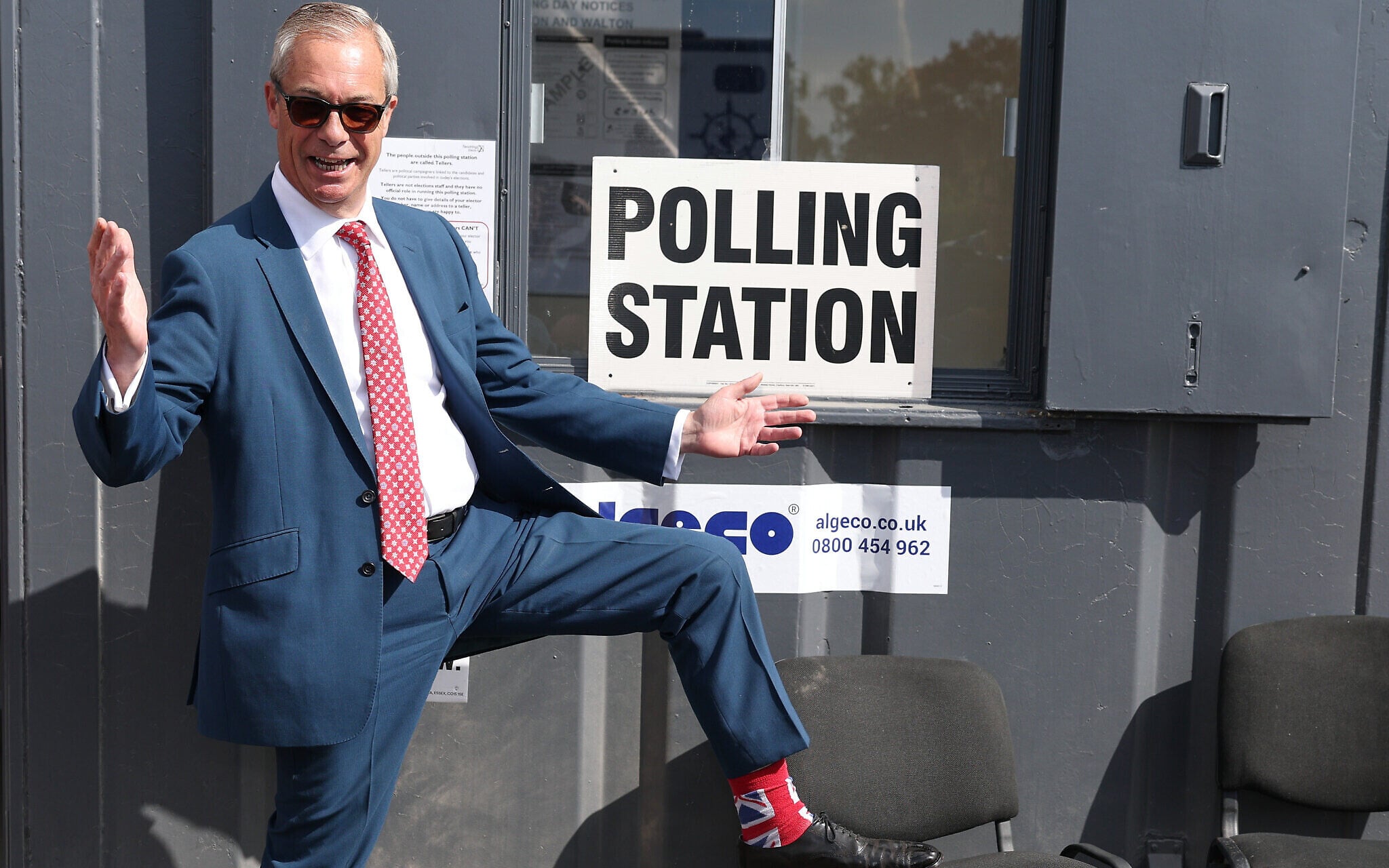
Britain’s Reform Party leader Nigel Farage shows his socks as he arrives at a polling station in Walton on the Naze, England, May 7, 2026, to cast his vote in the local elections. (AP Photo/Richard Pelham)
Labour lost almost 1,400 council seats and ceded control of several local authorities — though results in London were not as bad as predicted.
The local and regional elections were widely seen as an unofficial referendum on Starmer, whose popularity has plummeted since he led the center-left Labour Party to power by ousting the Conservatives less than two years ago. Starmer said he took responsibility for the “very tough” results, which saw his party lose more than half the seats it was defending, but would not quit.
“The voters have sent a message about the pace of change, how they want their lives improved,” he said. “I was elected to meet those challenges, and I’m not going to walk away from those challenges and plunge the country into chaos.”
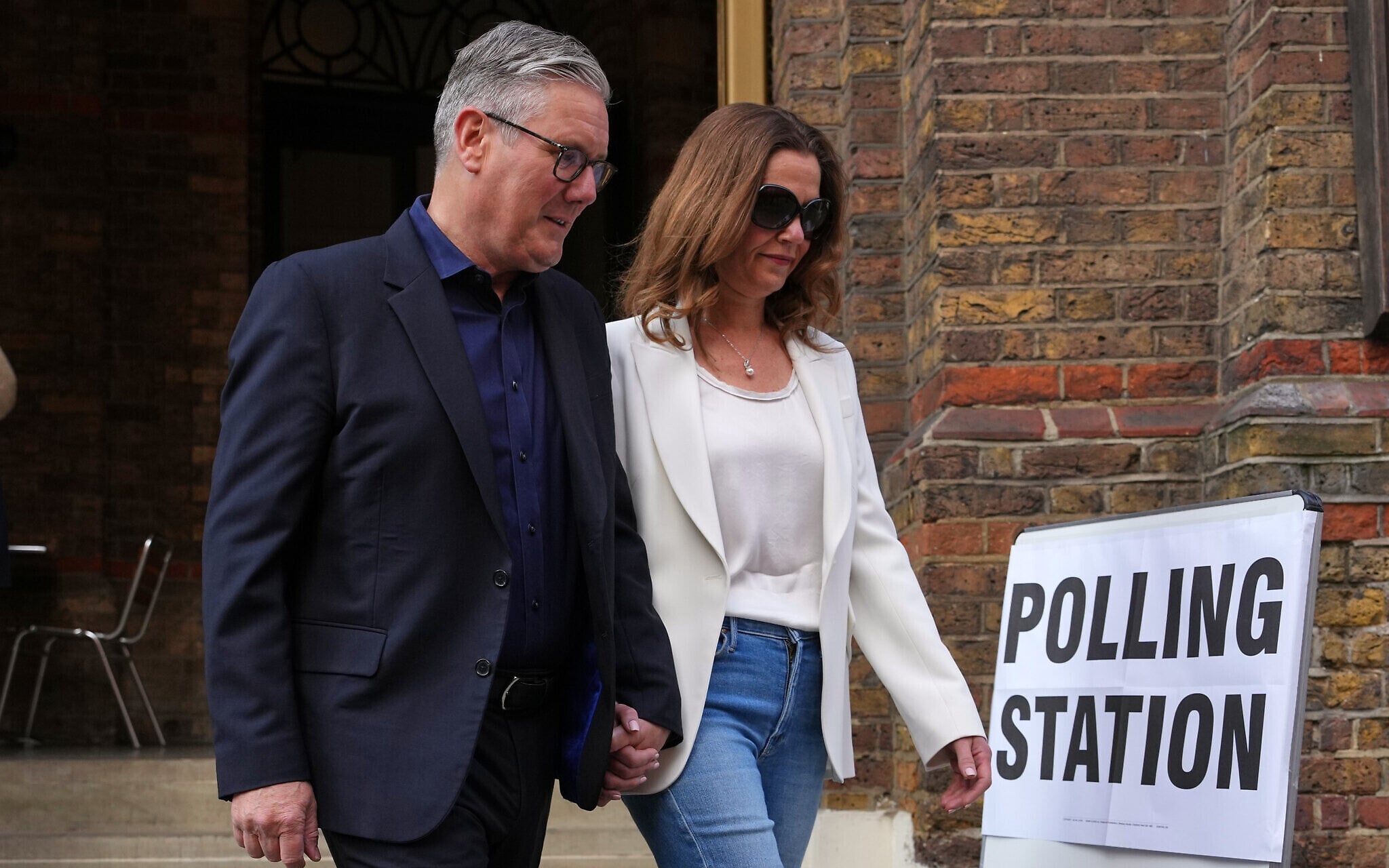
Britain’s Prime Minister Keir Starmer and his wife Victoria leave a polling station in central London, May 7, 2026, after casting their votes in the local elections. (AP Photo/Kirsty Wigglesworth)
The rise of the Greens
The Green Party won its first directly elected mayoralty in traditionally Labour-supporting Hackney in east London, where councillor Zoë Garbett will fill the role. Later Friday, the Greens’ Liam Shrivastava won the mayoralty in Lewisham, southeast London.
A completed count showed the Greens winning overall control of Hackney Council, which is responsible for the Stamford Hill neighborhood, home to tens of thousands of ultra-Orthodox Jews. The Greens also gained control of London’s Waltham Forest council, as well as Hastings on the south coast of England and Norwich in the east.
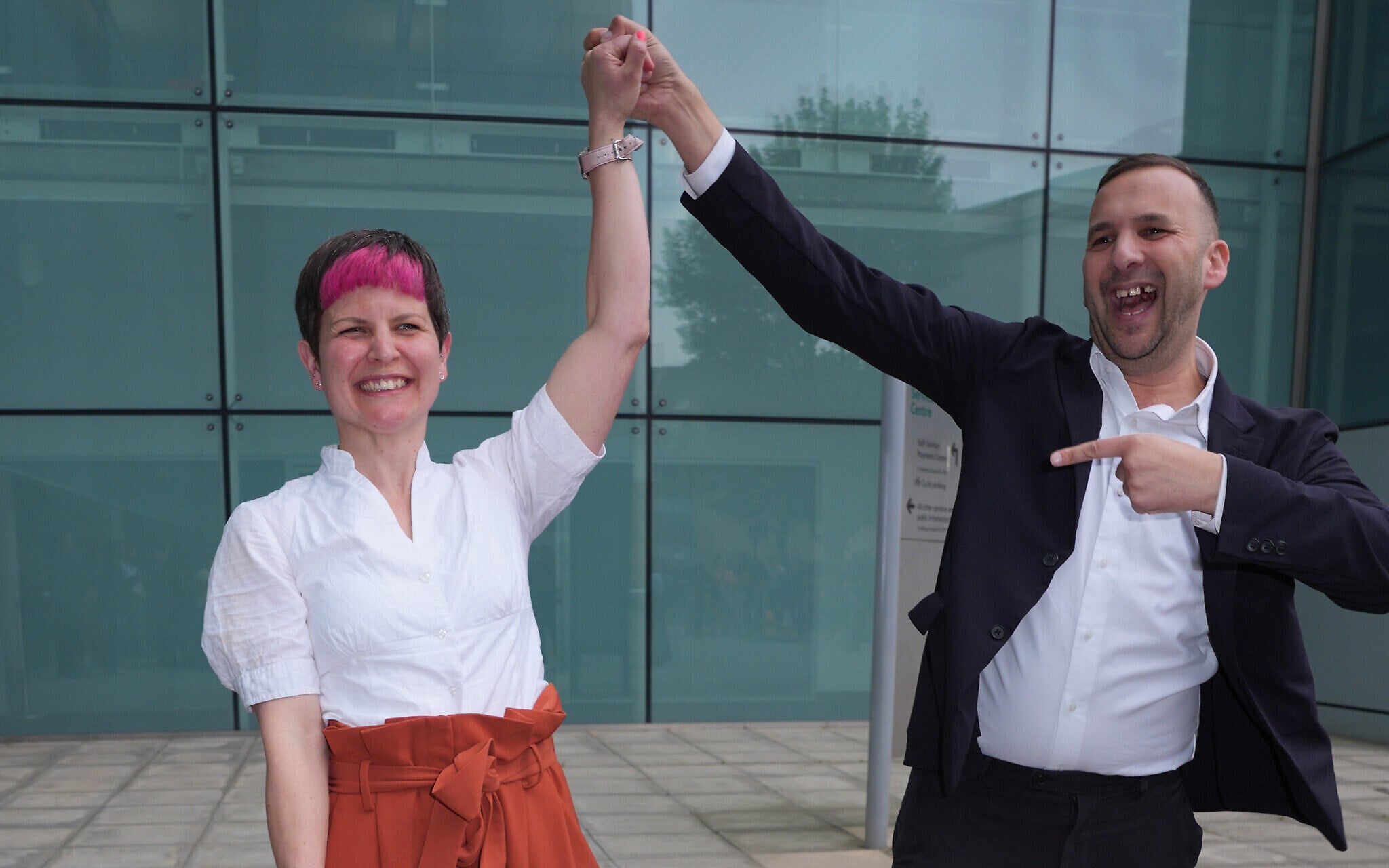
Green Party leader Zack Polanski (right) celebrates with the Greens’ Zoe Garbett after she was declared the winner in the 2026 London Borough of Hackney mayoral election at Hackney Service Centre, east London, May 8, 2026. (Reuters via PA)
Speaking outside the Hackney vote count, Polanski hailed the “historic victory” and declared “two-party politics is no longer dying; it is dead and buried.”
“My message to Keir Starmer is that he needs to go. But I don’t think that’s my message; I think that’s the country message,” said Polanski. “We’ve seen for a long time now his popularity has been going, and he’s lost the trust of the country.”
British media have reported that the issue of the war in Gaza was high on the agenda for voters in Hackney. Garbett said last week that voters in Hackney, where Labour had been the biggest party on the council since the 1970s, were dissatisfied with Labour for a range of reasons, from local housing issues to their stance on the Gaza war.
Garbett, who will now serve as Hackney’s mayor, reportedly blocked a letter praising London’s Metropolitan Police for their response to the antisemitic terror attack in Golders Green last month.
Polanski himself criticized the police for their use of force in detaining Essa Suleiman, the suspect charged with the Golders Green stabbings. His comments prompted a swift rebuke from police chief Mark Rowley.
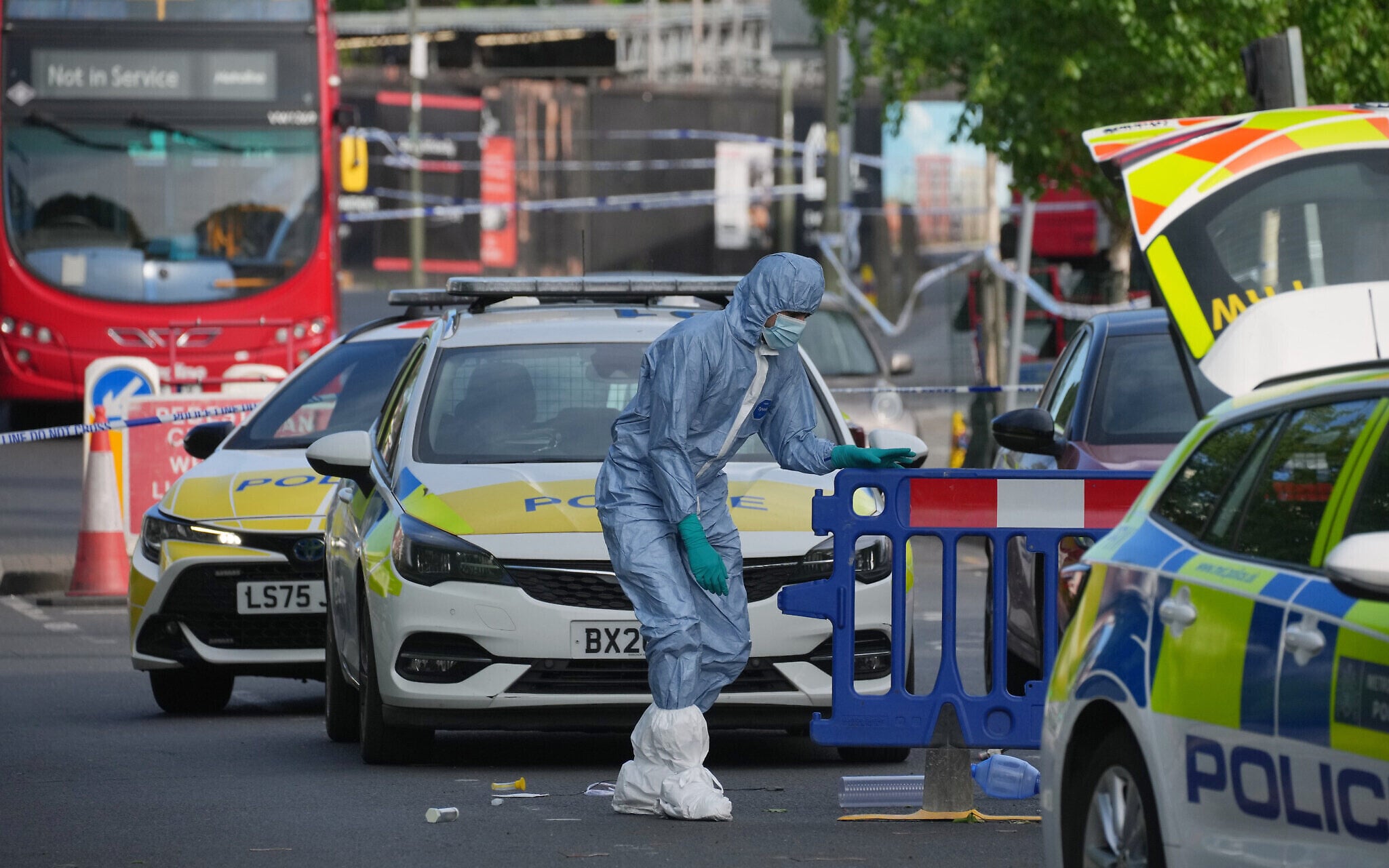
Forensic officers search the area after two people were stabbed in north London’s Golders Green neighborhood on April 29, 2026. (AP Photo/Kin Cheung)
Newly elected Greens councillor in Hackney Downs, Laura-Louise Farley, has called for the IDF to be designated as a terrorist organization, the Jewish Chronicle reported.
In Hackney’s Stoke Newington, Ifhat Shaheen, who posted on the day of the Hamas attack on Israel on October 7, 2023, that it was the Palestinians trying to “defend themselves,” was elected a councillor. Shaheen has also reposted claims that no women were raped despite UN findings of multiple instances of sexual violence, and suggested in a social media post that Israel is harvesting organs from Arabs to try to alter the DNA of “Zionists to claim land.”
The voters of Stoke Newington should perhaps know more about Shaheen before they make up their minds.
✍️ Andrew Gilligan https://t.co/87oEtp1e4R
— The Spectator (@spectator) April 12, 2026
In Sheffield, in northern England, a victorious Greens councillor, Mustafa Ahmed, raised a Palestinian flag when the result was announced and chanted “Free Palestine.”
The count in Sheffield has been briefly held up as victorious Green Party candidate in Burngreave, Mustafa Ahmed raised the Palestine flag after his vote number was announced and began chanting “free Palestine”, my colleague @rose_mason. pic.twitter.com/F28lYpuvr5
— Ralph Blackburn (@RalphBlackburn) May 8, 2026
Farage hails shift
Reform UK, led by the veteran nationalist politician Nigel Farage, won hundreds of local council seats in working-class areas in England’s north, such as Sunderland, that were solid Labour turf for decades, and also made gains from the Conservatives in areas like the county of Essex, east of London. Reform, which ran on an anti-establishment and anti-immigration message, did particularly well in areas that backed the UK to leave the European Union in the historic Brexit vote in 2016.
In many Jewish areas, Reform did not do as well as some had predicted, with support for the Conservative party strong in Golders Green and Hendon. In Barnet, the UK’s biggest Jewish constituency, no party won overall control, with Labour and the Conservatives winning 31 seats each, and the Greens one seat.
Farage said the results in England, as well as those in Scotland and Wales, where elections to their semiautonomous parliaments were held, marked a “historic change in British politics.”
Farage, 61, and his populist party have long been accused of flirting with racism, something which both have denied. Former classmates have alleged that Farage made a Nazi salute, joked about gas chambers and said, “Hitler was right,” among other expressions of support for Nazism.
Related: Far-right UK lawmaker Nigel Farage denies saying ‘Hitler was right’ as a schoolboy
Labour also lost ground to the Green Party, and the Conservative Party also lost ground, with the centrist Liberal Democrats making some gains.
A handful of Labour lawmakers urged Starmer to quit, but cabinet ministers cautioned the party not to topple the prime minister, while acknowledging the results were a wake-up call for the party.
Results reflect fragmentation of UK politics
Tony Travers, professor of government at the London School of Economics, said the elections show established parties struggling “to respond to populists on the left and right who appear to provide painless and simple solutions to intractable political and economic problems.”
The results reflect a fragmentation of British politics after decades of domination by Labour and the Conservatives, and make the outcome of the country’s next national election hard to predict.
John Curtice, professor of politics at the University of Strathclyde, said Britain is entering a new political era.
“Even Reform are probably not quite at 30% of the vote, so the fracturing of British politics is underlined by these results,” he told the BBC.
Scotland and Wales go their own way
In Scotland and Wales, nationalist parties came first in elections to the Parliaments in Edinburgh and Cardiff, which have an array of powers, including on health and tax.
In Scotland, the Scottish National Party, which has governed since 2007 and campaigned on a promise to hold another referendum on Scotland leaving the UK, won the most seats. Because it fell short of a majority, analysts said it’s less likely it will push for one during the coming five-year parliamentary term. With just a handful of seats remaining to be allocated, Labour is vying with Reform for second.
And in Wales, Plaid Cymru secured a historic breakthrough, bringing an end to Labour’s unbroken 27-year run in power since the legislature was formed. The party, which has an ambition for Wales to leave the UK but no plan to do so anytime soon, fell short of a majority but will likely form the new government.
The huge reverse for Labour in Wales, which saw its leader lose her seat and the party drop to third behind Reform, is perhaps the party’s most striking reverse and the one that may hurt the most.
“Welsh Labour has today suffered a catastrophic result,” said outgoing Welsh First Minister Eluned Morgan. “It ends a century of Labour winning in Wales and the party will have to take a really hard look at itself.”
Starmer’s future is under threat
Starmer’s popularity has plunged after repeated missteps and policy U-turns such as welfare reform. His government has struggled to deliver promised economic growth, repair tattered public services and ease the cost of living — tasks made harder by the US-Israeli war with Iran, which has choked off oil shipments through the Strait of Hormuz.
The prime minister has been further hurt by his disastrous decision to appoint Peter Mandelson, a scandal-tarnished friend of Jeffrey Epstein, as Britain’s ambassador to Washington.
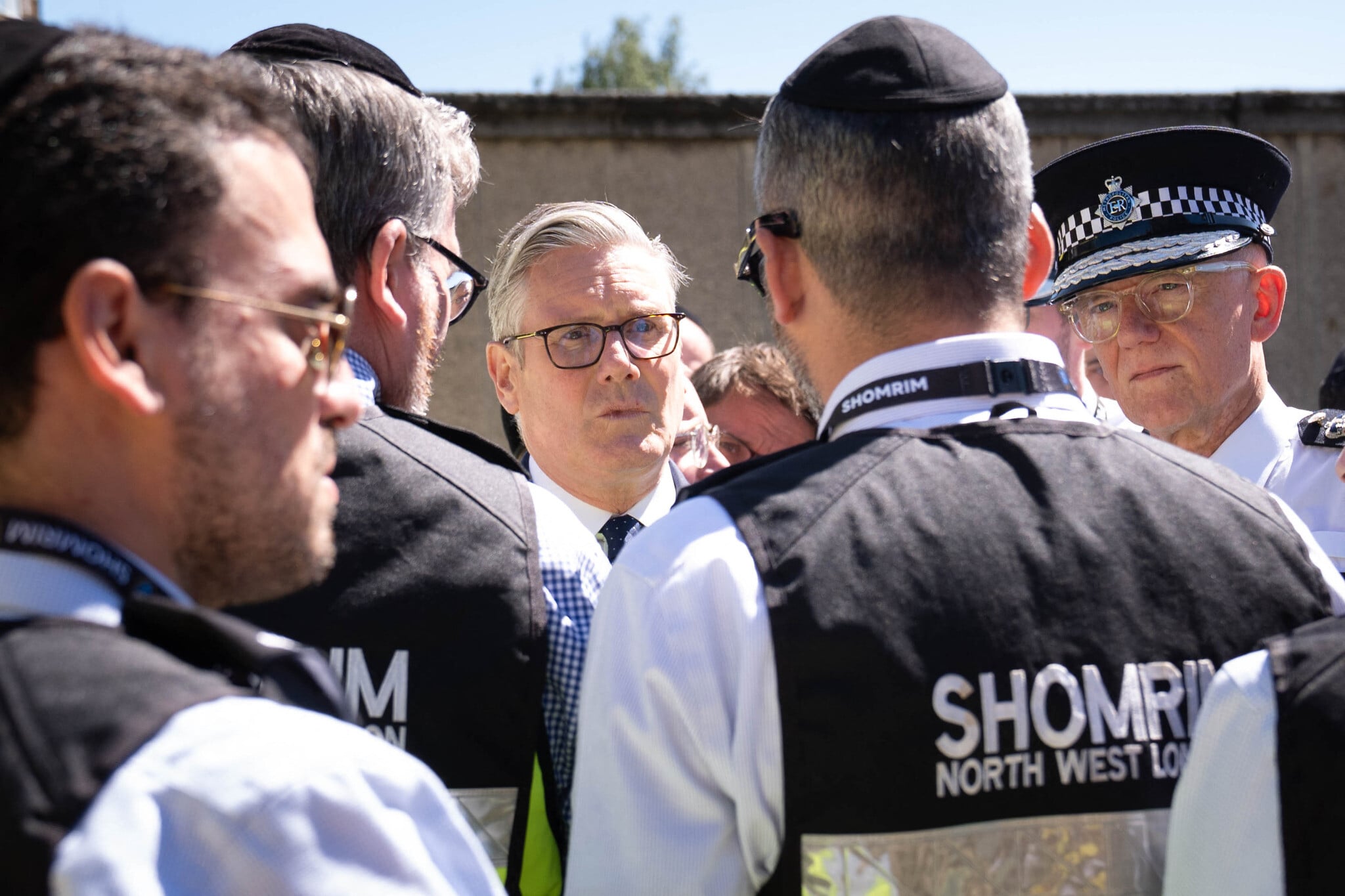
Britain’s Prime Minister Keir Starmer, left, meets first responders from Shomrim North West London during a visit to Golders Green, northwest London, April 30, 2026, following an attack the previous day in which two Jewish men were stabbed. (Stefan Rousseau/Pool via AP)
The election results could trigger a challenge from a high-profile rival such as Health Secretary Wes Streeting, former Deputy Prime Minister Angela Rayner or Greater Manchester Mayor Andy Burnham. Alternatively, Starmer could face pressure from the party to set a timetable for his departure.
“I don’t think Keir Starmer should survive these results,” said Labour lawmaker Jonathan Brash, who represents Hartlepool in Parliament. “We have to be bolder, and we have to go further. And quite frankly, we need new leadership in order to achieve that.”
Even if Starmer survives for now, many in the party doubt he will lead the party into the next national election, which must be held by 2029.