
WASHINGTON — Talks between the US and Iran on a deal permanently ending the war between them hit another dead end over the weekend after Tehran submitted a proposal that sought to push off concessions it would make regarding its nuclear program, a US official and two diplomats from mediating countries told The Times of Israel on Tuesday.
The US had been waiting for a week and a half for Iran to respond to its proposal that envisioned Tehran agreeing to have its stockpiles of enriched uranium transferred out of the country and agreeing not to enrich uranium for an extended period of time, the three sources said.
But when that response finally came on Sunday, the US saw that it didn’t include any concessions regarding Iran’s nuclear program. Instead, it offered an Iranian commitment to immediately hold talks on the nuclear file once a permanent ceasefire was in place that would include the reopening of the Strait of Hormuz, the sources said, offering details on the breakdown of talks that had not been published to date.
Iran’s response, bucking US demands that it make up-front concessions regarding its nuclear program, demonstrated how emboldened the Islamic Republic feels after weathering nearly six weeks of US and Israel strikes followed by an American blockade of its ports, one of the diplomats said. “It thinks it’s in the driver’s seat.”
While the US proposal effectively envisioned an extension of the temporary ceasefire already in place since April 8, Iran’s proposal detailed a permanent end of hostilities between the countries that included guarantees not to restart the war, according to the three sources.
Get The Times of Israel’s Daily Edition
by email and never miss our top stories
By signing up, you agree to the terms
Both proposals did envision follow-up, technical negotiations on the nuclear file, but the US sought some concessions up-front pertaining to Iran’s stockpiles of over 400 kilograms of highly-enriched uranium, which are thought to be buried deep underground, below at least one of the three nuclear facilities struck by American bombers in June 2025.
The United States has also long demanded that Iran agree to never again enrich uranium, though US President Donald Trump indicated earlier this week that he would have been satisfied with a commitment from Tehran not to enrich for a very extended period.
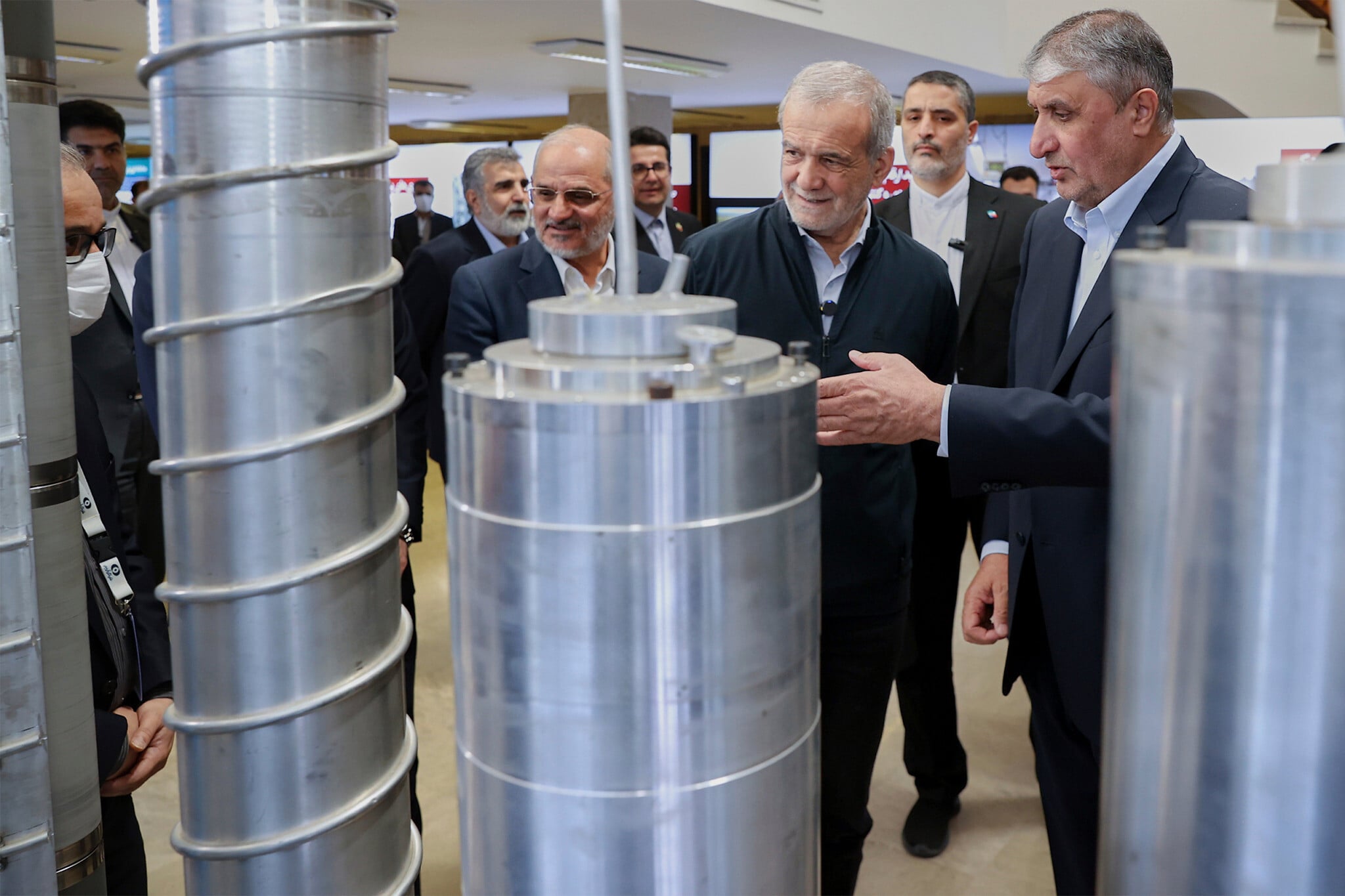
In this photo released by the Iranian Presidency Office, President Masoud Pezeshkian, second right, listens to the head of Atomic Energy Organization of Iran Mohammad Eslami as he visits an exhibition of Iran’s nuclear achievements, in Tehran, Iran, on April 9, 2025. (Iranian Presidency Office via AP)
While the Trump administration desperately seeks to end Iran’s disruption of maritime shipping lanes that has wreaked havoc on the global economy, Washington views Tehran’s response as an attempt to drag out the nuclear issue indefinitely, the US official said.
Trump on Monday called Iran’s response “garbage,” suggesting that it put the fragile ceasefire currently in place at risk.
He also claimed that Iranian negotiators had told their American counterparts that they were prepared for the US to retrieve Tehran’s stockpiles of highly-enriched uranium, but then refrained from putting that concession in the response paper submitted over the weekend.
Iran has offered no public indication that it is prepared to make such a concession.
“Two days ago, they said, ‘You’re going to have to take it.’ We were going to go with them. But they changed their mind because they didn’t put it in the paper,” Trump told reporters.
He also claimed that Iranian negotiators had also “guarantee[d that they wouldn’t obtain] nuclear weapons for a very long period of time,” only to leave that out of Tehran’s official proposal as well.
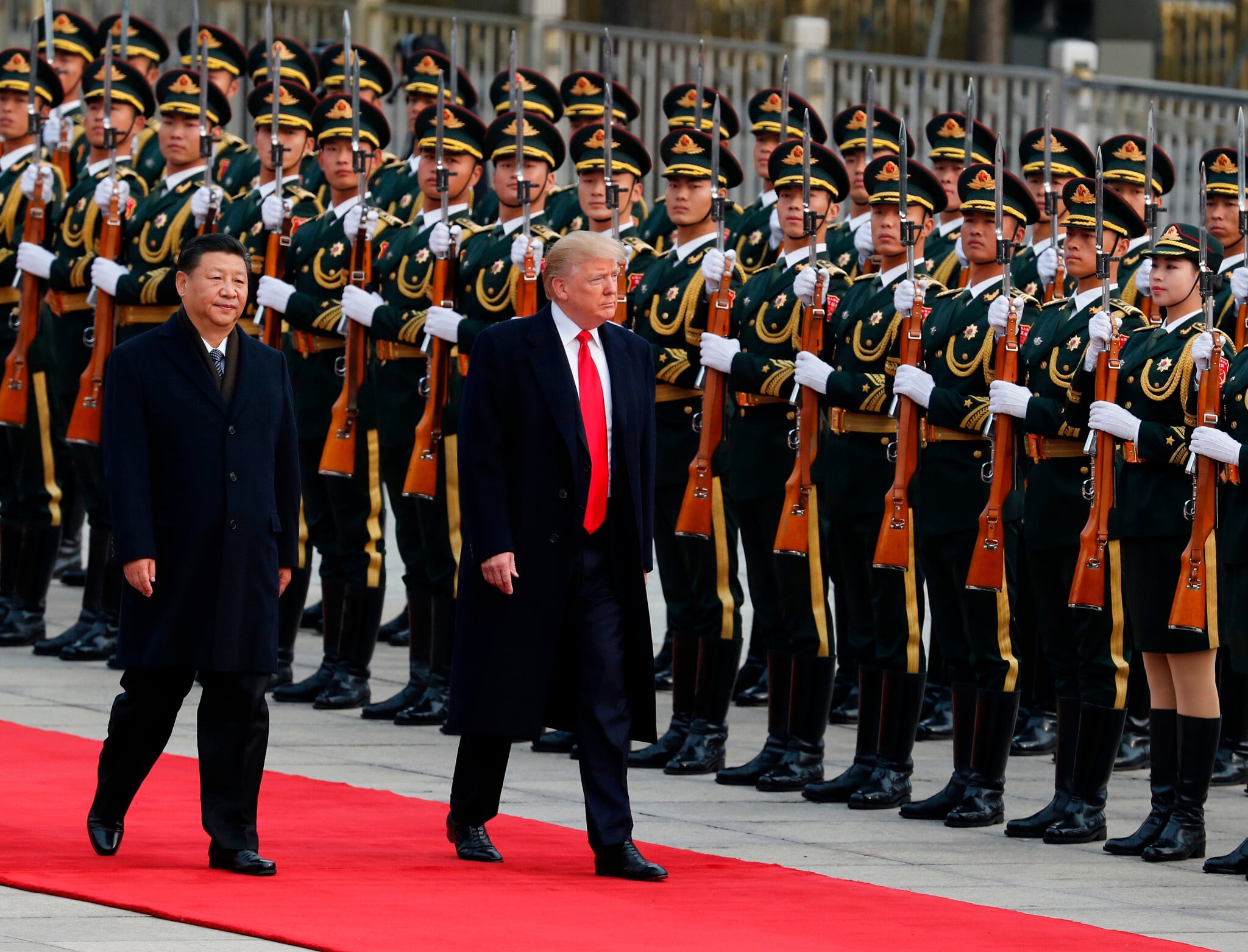
US President Donald Trump, right, and Chinese President Xi Jinping inspect an honor guard during a welcome ceremony at the Great Hall of the People in Beijing, November 9, 2017. (AP Photo/Andy Wong, File)
The fact that Trump indicated he would have accepted such a guarantee, even though it was not indefinite, appeared to be out of step with his longstanding insistence that he intends to ensure Iran can never obtain a nuclear weapon.
Addressing criticism that he has no coherent plan in dealing with Iran, Trump insisted, “I do have a plan. The plan is that Iran cannot have a nuclear weapon.”
The two diplomats from mediating countries said that the talks are largely on hold until Trump returns from his trip to China on Friday.
Before departing, Trump huddled with his national security team on Monday to discuss potential military operations that could be launched against Iran to coax Tehran into making nuclear concessions, the US official said.
Trump has said he is considering resuming Project Freedom, which sought to guide stuck ships out of the Strait of Hormuz before it was halted after just one day last week.
But the second diplomat from one of the mediating countries questioned the utility of such an operation in reopening the straits, given that mere verbal threats by Tehran to continue disrupting Hormuz are likely to keep many international shipping firms away.
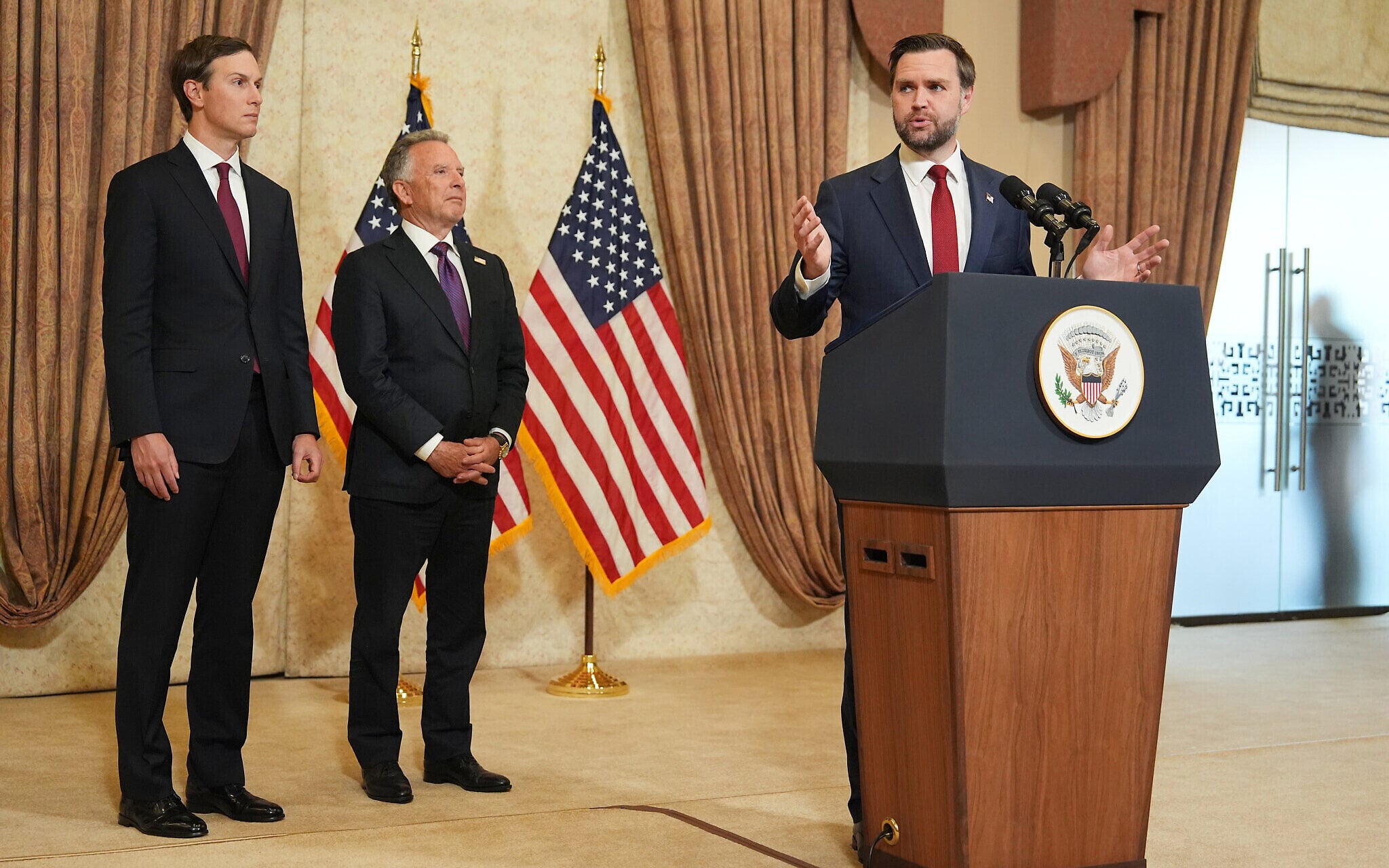
US Vice President JD Vance, right, speaks during a news conference after meeting with representatives from Pakistan and Iran as Jared Kushner, left, and Steve Witkoff, Special Envoy for Peace Missions, listen, on April 12, 2026, in Islamabad, Pakistan. (AP Photo/Jacquelyn Martin)
Further complicating efforts to reach an agreement has been the intensifying criticism in the US of Pakistan’s mediation efforts.
After CBS News reported on Monday that Pakistan allowed Iranian military aircraft to park at its airfields, Republican senator and Trump ally Lindsey Graham berated Pentagon chiefs at a congressional hearing over Washington’s continued use of Islamabad’s mediating services.
However, Trump, before leaving for China on Tuesday, told reporters that the Pakistanis have been “great.”
But the second diplomat speculated that the criticism could lead Islamabad to shrink its role in talks to merely passing along messages, rather than actively pushing the sides toward compromise, to avoid coming under fire from the more hawkish wing of the Republican party that is skeptical of any deal with Iran.
That style of more passive mediation has been the preferred approach of Qatar, Egypt, Turkey and several other countries in the region that have periodically passed along messages between the US and Iran over the past several months.
You’re a dedicated reader

That’s why we started the Times of Israel – to provide discerning readers like you with must-read coverage of Israel and the Jewish world.
So now we have a request. Unlike other news outlets, we haven’t put up a paywall. But as the journalism we do is costly, we invite readers for whom The Times of Israel has become important to help support our work by joining The Times of Israel Community.
For as little as $6 a month you can help support our quality journalism while enjoying The Times of Israel AD-FREE, as well as accessing exclusive content available only to Times of Israel Community members.
Thank you,
David Horovitz, Founding Editor of The Times of Israel
Already a member? Sign in to stop seeing this