
Three Israeli civilians were wounded, two seriously, in a Hezbollah drone attack Thursday in the Rosh Hanikra area, the military and hospital officials said, as clashes with the Iran-backed terror group continued hours ahead of another planned round of talks between Israeli and Lebanese officials.
The drone struck a parking lot close to the border with Lebanon, injuring the civilians. No sirens sounded in the area, indicating that the drone was not detected by the military.
The Galilee Medical Center in Nahariya said it was treating two people in serious condition and one person who was lightly hurt.
The Israel Defense Forces said that the drone attack was a “blatant violation of the ceasefire understandings by the Hezbollah terror organization.”
The drone was one of several projectiles that Hezbollah launched at Israel and at IDF troops stationed in southern Lebanon on Thursday, including an anti-tank guided missile and several mortars that exploded near soldiers in the late morning. No injuries were caused as a result of those strikes.
Get The Times of Israel’s Daily Edition
by email and never miss our top stories
By signing up, you agree to the terms
Several other drones launched by the group were intercepted by IDF air defense systems, the army said.
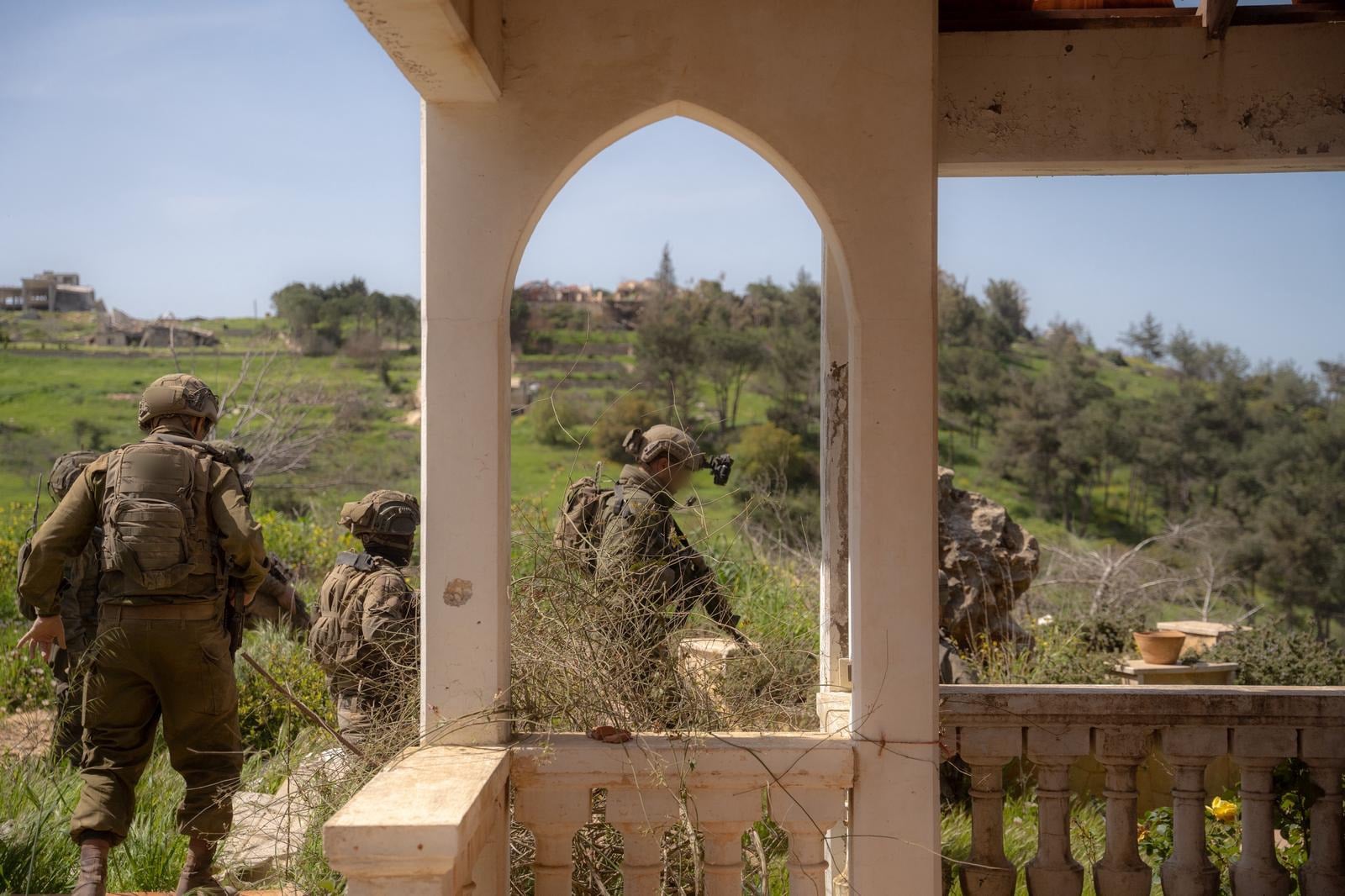
IDF troops of the 91st ‘Galilee’ Regional Division operate in southern Lebanon in a handout photo published May 13, 2026. (Israel Defense Forces)
Meanwhile, the IDF said it launched a wave of airstrikes on Hezbollah infrastructure sites in southern Lebanon, after it issued evacuation warnings for eight villages in the area.
Residents of Libbaya, Sohmor, Tefahta, Kfar Melki, Yohmor al-Beqaa, Ain al-Tineh, Houmine al-Faouqa and Mazraat Sinay were instructed to evacuate at least a kilometer away.
“In light of the Hezbollah terror organization’s violations of the ceasefire agreement, the IDF is forced to act against it with force and does not intend to harm you,” warned army spokesman Col. Avichay Adraee ahead of the strikes.
The IDF has been implementing plans for a “security zone” in southern Lebanon, which involves demolishing Lebanese villages near the border and setting up army posts several kilometers inside the country in order to protect Israeli border villages and distance the threat posed by Hezbollah.
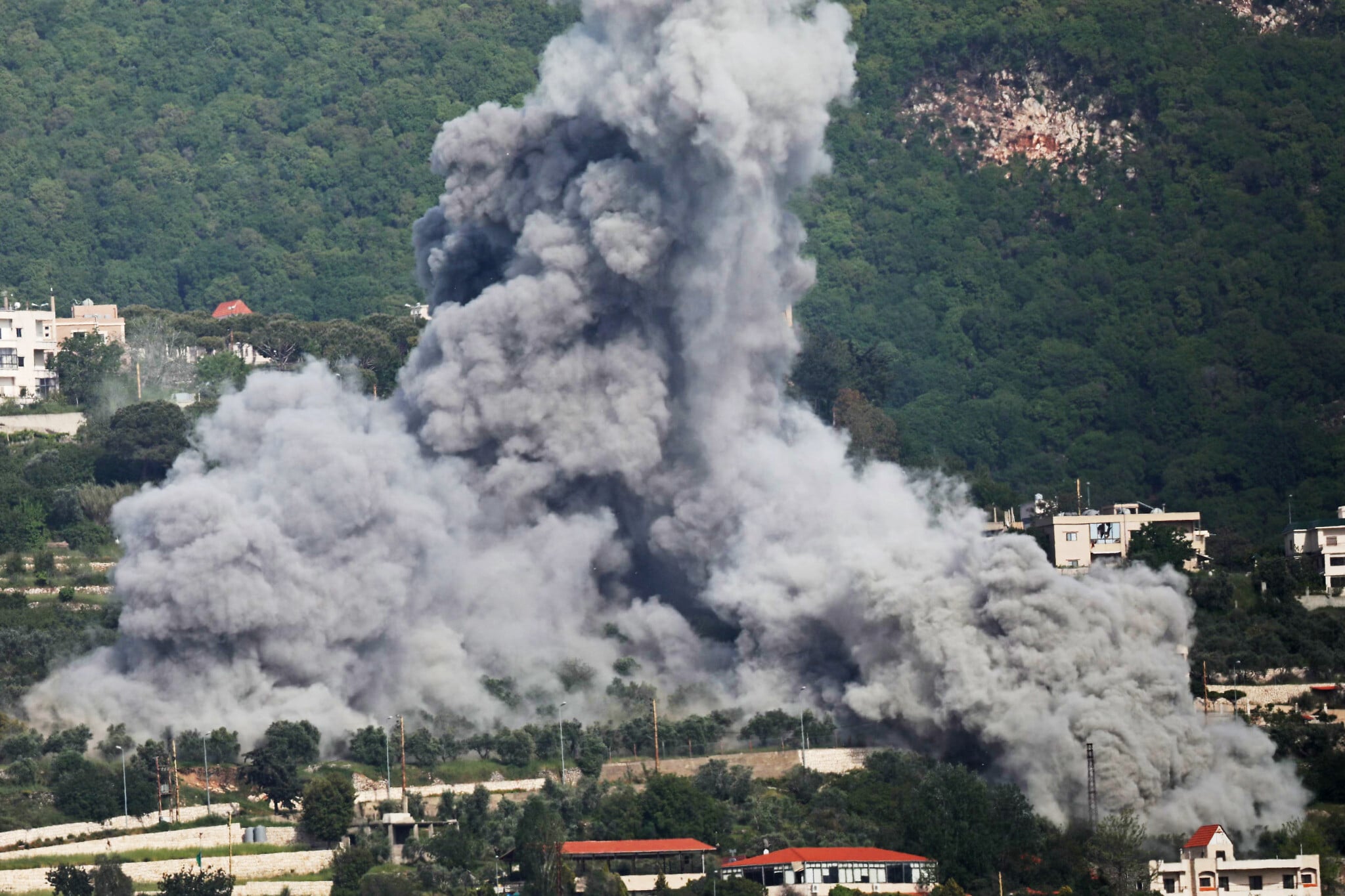
Smoke rises from the site of an Israeli airstrike that targeted the southern Lebanese village of Jarjouaa on May 13, 2026. (Kawnat HAJU / AFP)
According to the Lebanese government, the demolition operations have razed or damaged more than 10,000 homes since the ceasefire took effect last month.
“Since the current ceasefire… we have witnessed 5,386 housing units that were completely destroyed, and 5,246 housing units damaged,” Chadi Abdallah, the head of the Lebanon’s National Council for Scientific Research told a news conference broadcast by local media Thursday.
Delegations for 3rd talks broaden as Israel said set to reject full ceasefire
Amid the clashes, Israeli and Lebanese envoys were preparing for a third round of talks in Washington later Thursday, during which the two sides were expected to discuss Hezbollah’s disarmament and a pathway to broader peace between the two countries.
While two rounds of talks have been held over the past two months, Thursday’s negotiations will mark the highest-level contact between Lebanon and Israel in decades, as the two sides were broadening their delegations for this round.
In addition to Israel’s ambassador to the US Yechiel Leiter and Lebanon’s envoy to the US Nada Hamadeh Mouawad, who have represented their countries in the previous rounds, Lebanese Presidential Special Envoy Simon Karam and Israel’s Deputy National Security Adviser Yossi Draznin will participate in the talks, as well as senior Israeli military representatives, a US State Department official said Thursday.
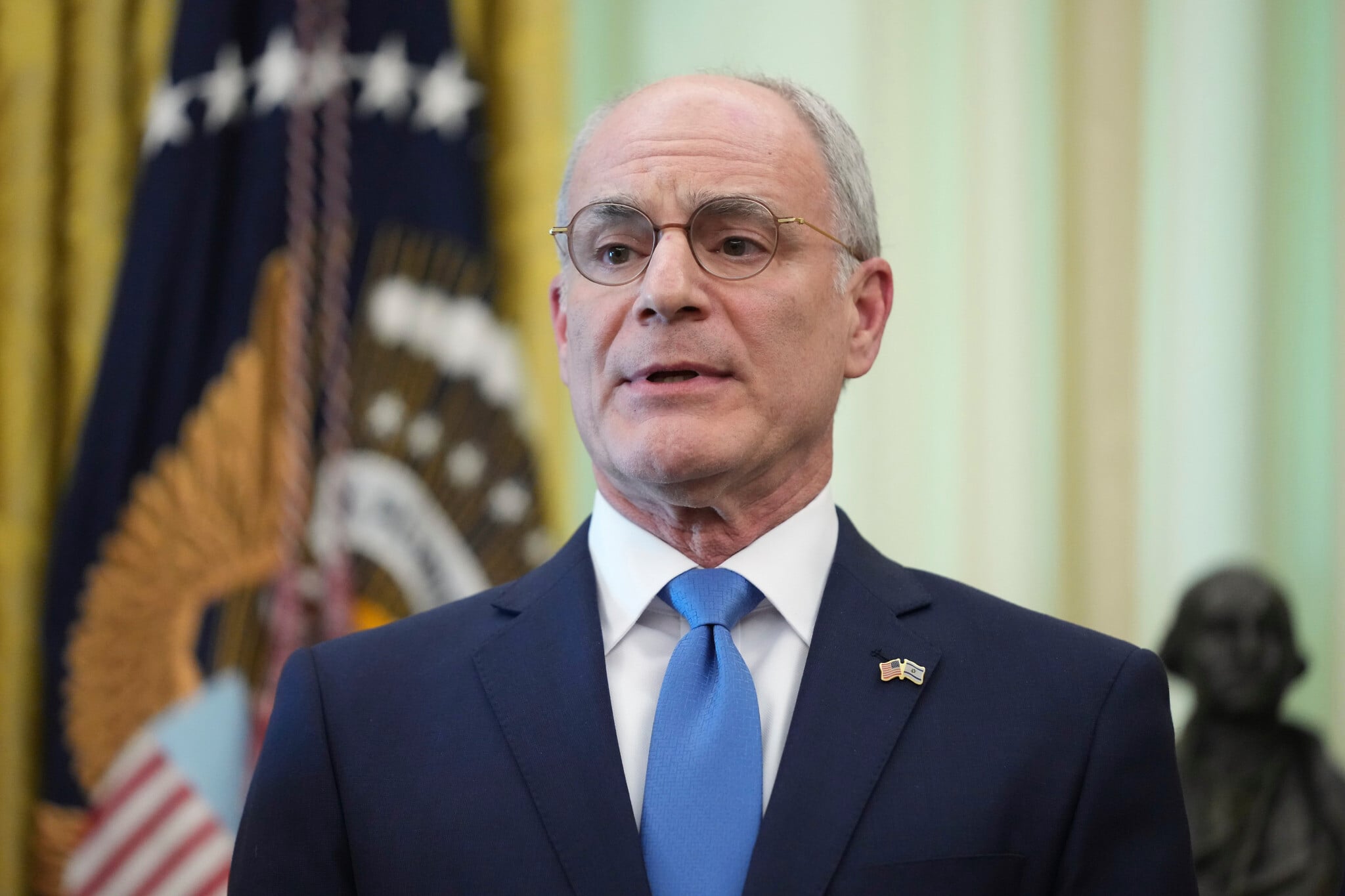
Israeli Ambassador to the US Yechiel Leiter speaks during a meeting between the ambassadors of Israel and Lebanon in the Oval Office at the White House, April 23, 2026, in Washington. (AP/Mark Schiefelbein)
Regarding Thursday’s talks, Leiter said that Israel will present Beirut with a framework to gradually disarm Hezbollah and expand political ties.
Speaking to the Walla news site, the envoy said that, despite Beirut’s declarations that southern Lebanon is being cleared of Hezbollah weapons, the Iran-backed terror group remains armed. Given that reality, Israel is hoping to advance a framework through which both countries can ensure its disarmament, he said.
Since Hezbollah began attacking Israel in support of Iran in March, “we have found 8,000 rockets, missiles, and weapons in southern Lebanon. Tunnels and armaments. There are Hezbollah bases in southern Lebanon despite the declarations,” the envoy said. “We came and said: this game is over. We need to see, in practice, how the Lebanese government strengthens the Lebanese Army and acts concretely.”
According to Leiter, Israel is proposing a gradual on-the-ground process: “We will jointly define a specific area and plan with them how that area will be cleared, and afterward continue onward.”
He added that Israel is prepared to pursue a broader diplomatic track contingent on the success of disarmament efforts: “We are prepared for two tracks. One track is to conduct negotiations for full peace as though Hezbollah does not exist — borders, embassies, visas, tourism, everything. An agreement like that could be reached within a few months. But it would be contingent on the success of the second track — dismantling Hezbollah.”
Linking the efforts against Hezbollah to US talks with Iran, Leiter said he stressed to US President Donald Trump and other senior US officials in the last round of talks that any agreement with Tehran “must include an end to [Iran’s] support for [regional] proxies.” In the same meeting, Leiter says that Lebanese Ambassador to the US Nada Hamadeh told Trump “that if the agreement with Iran does not include a total cessation of support for Hezbollah, there will be no future for Lebanon.”
The envoy said the current shaky ceasefire in Lebanon, announced shortly after the first round of talks last month, “is a ceasefire in aspiration…but we will protect our soldiers and our civilians under all circumstances, and under no condition will we agree to stop and allow Hezbollah to rearm.”
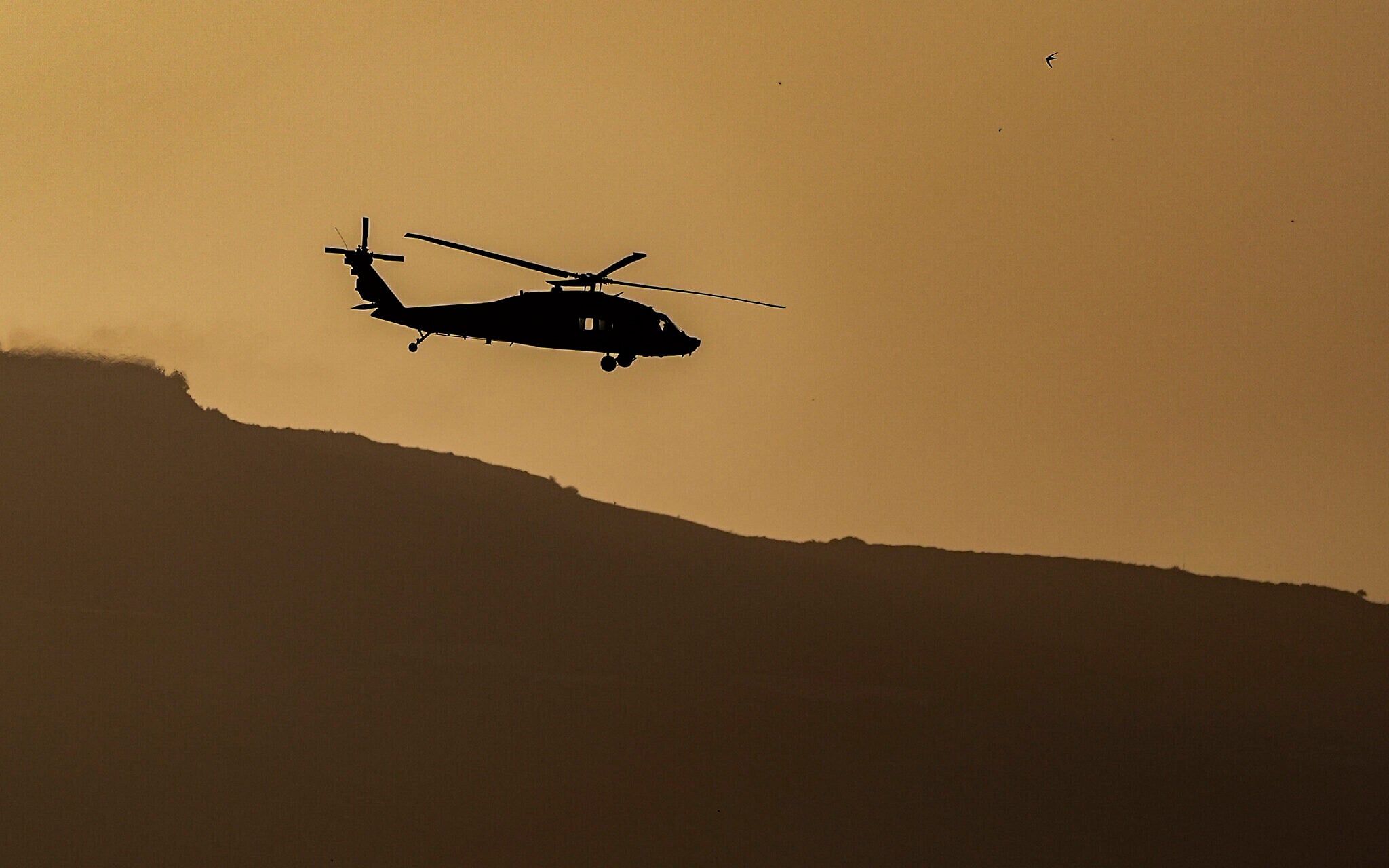
An Israeli military helicopter flies near the Israeli border with Lebanon, May 12, 2026 (Ayal Margolin/Flash90)
For its part, Lebanon said that it will demand Israel cease its fire on the country before any further discussions on peace deals are held.
According to a senior Lebanese official, the Lebanese delegation will seek “a ceasefire that Israel implements.”
They are unlikely to get such assurances, the Saudi channel Al Arabiya reported Thursday, saying that Israel’s envoys were planning on telling their Lebanese counterparts that it will not commit to a full ceasefire.
Citing sources, the report said that the US supports Israel’s position. However, Israel may offer to reduce its military operations alongside the ongoing negotiations, the report suggested.
In addition, Israel was expected to inform the US that it supports arming and assisting the Lebanese army in its efforts to disarm Hezbollah, the report said.
The US has said it endorses Beirut’s commitment to disarm the group, while pressing it to take more action.
The US believes “comprehensive peace is contingent on the full restoration of Lebanese state authority and the complete disarmament of Hezbollah,” a State Department statement said.
“These talks aim to break decisively from the failed approach of the past two decades, which allowed terrorist groups to entrench and enrich themselves, undermine the authority of the Lebanese state, and endanger Israel’s northern border,” it said.
Israel and Lebanon have technically been at war since Israel was established in 1948.