
A ship anchored off the east coast of the United Arab Emirates has been seized and was heading toward Iranian waters, the British military said Thursday, while India said a cargo ship was sunk amid the volatile, simmering battle for control of the Strait of Hormuz.
The United Kingdom Maritime Trade Operations Center said it received reports that the vessel was taken by unauthorized personnel while anchored 38 nautical miles (70 kilometers, or 44 miles) northeast of the UAE port of Fujairah, near the Strait of Hormuz.
Fujairah is an important oil export terminal and the UAE’s main port outside of the Persian Gulf. It has been repeatedly attacked during the war with Iran.
UKMTO did not name the ship and said it is investigating. There were no immediate claims of responsibility for the seizure.
Meanwhile, an Indian cargo vessel carrying livestock from Africa to the United Arab Emirates was sunk in waters off the coast of Oman.
Get The Times of Israel’s Daily Edition
by email and never miss our top stories
By signing up, you agree to the terms
India condemned the attack and said all 14 crew members had been rescued by the Omani coastguard. Vanguard, a British maritime security advisory firm, said the vessel had been hit by a missile or drone which caused an explosion.
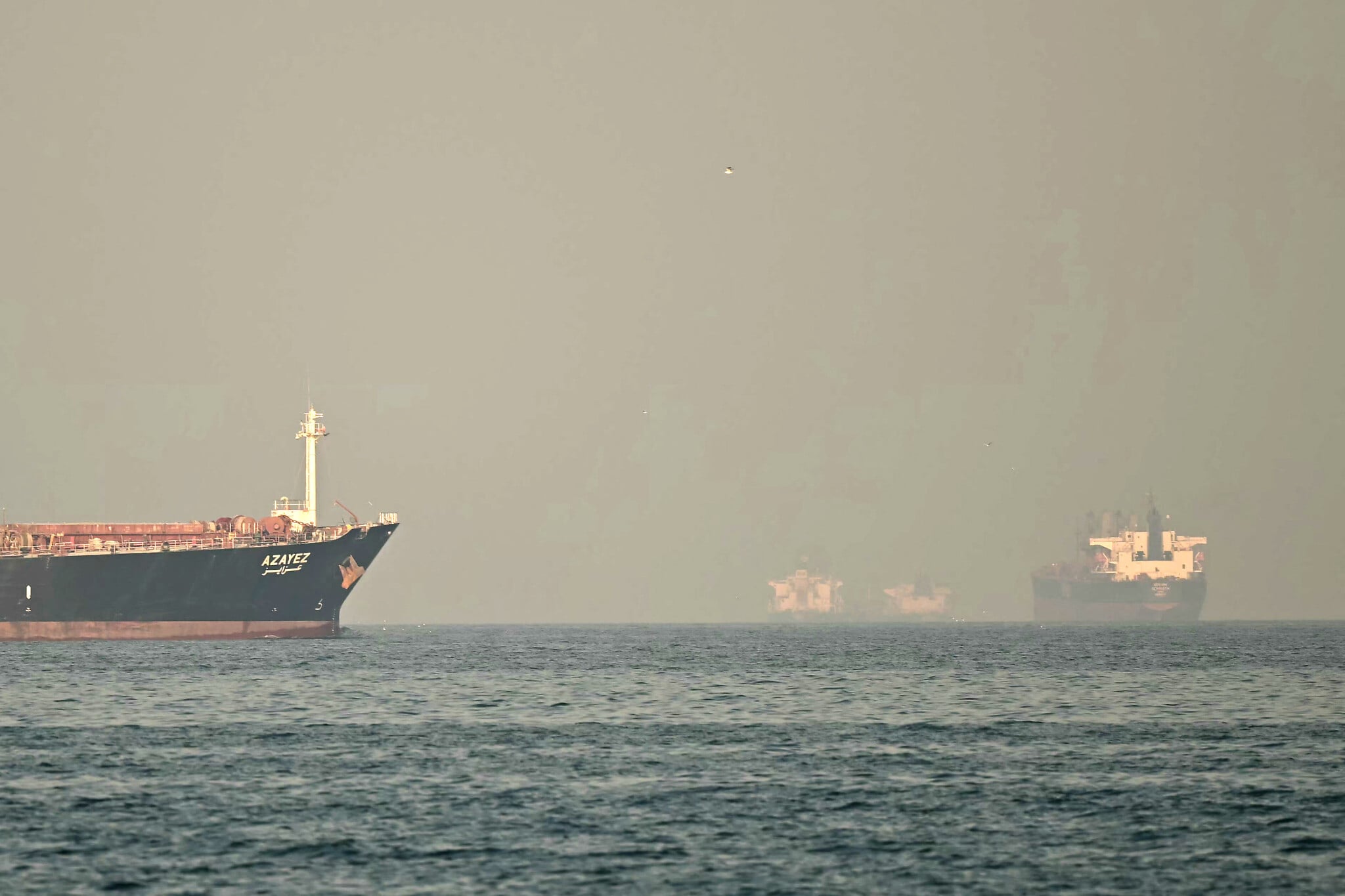
Cargo ships and tankers are seen off coast city of Fujairah, in the Strait of Hormuz in the northern Emirate on February 25, 2026. (Giuseppe CACACE / AFP)
Iran’s foreign minister, meanwhile, accused the UAE of direct involvement in military operations against his country, during a BRICS meeting in New Delhi, according to Iran’s semi-official Mehr news agency.
“I didn’t name the UAE in my statement for the sake of unity. But the truth is that the UAE was directly involved in the aggression against my country. When the attacks started, they didn’t even issue a condemnation,” Araghchi said, according to Mehr news, in response to comments made by the Emirati representative.
Earlier this week, a report said that the UAE, which has been repeatedly attacked by Iran since the start of fighting, carried out strikes on Iran, though it has not publicly acknowledged taking such action.
The accusation came hours after Israel said Prime Minister Benjamin Netanyahu had quietly visited the UAE during the Israeli-US war with Iran, though the UAE swiftly denied that any secret visit had occurred.
Araghchi also called on BRICS member states – which include Brazil, Russia, India, China, South Africa, Egypt, Ethiopia, and Indonesia – to condemn what he said were violations of international law by the United States and Israel, and to prevent the politicization of international institutions, in a statement on his Telegram account.
“The West’s false sense of superiority and immunity must be shattered by all of us,” he wrote.
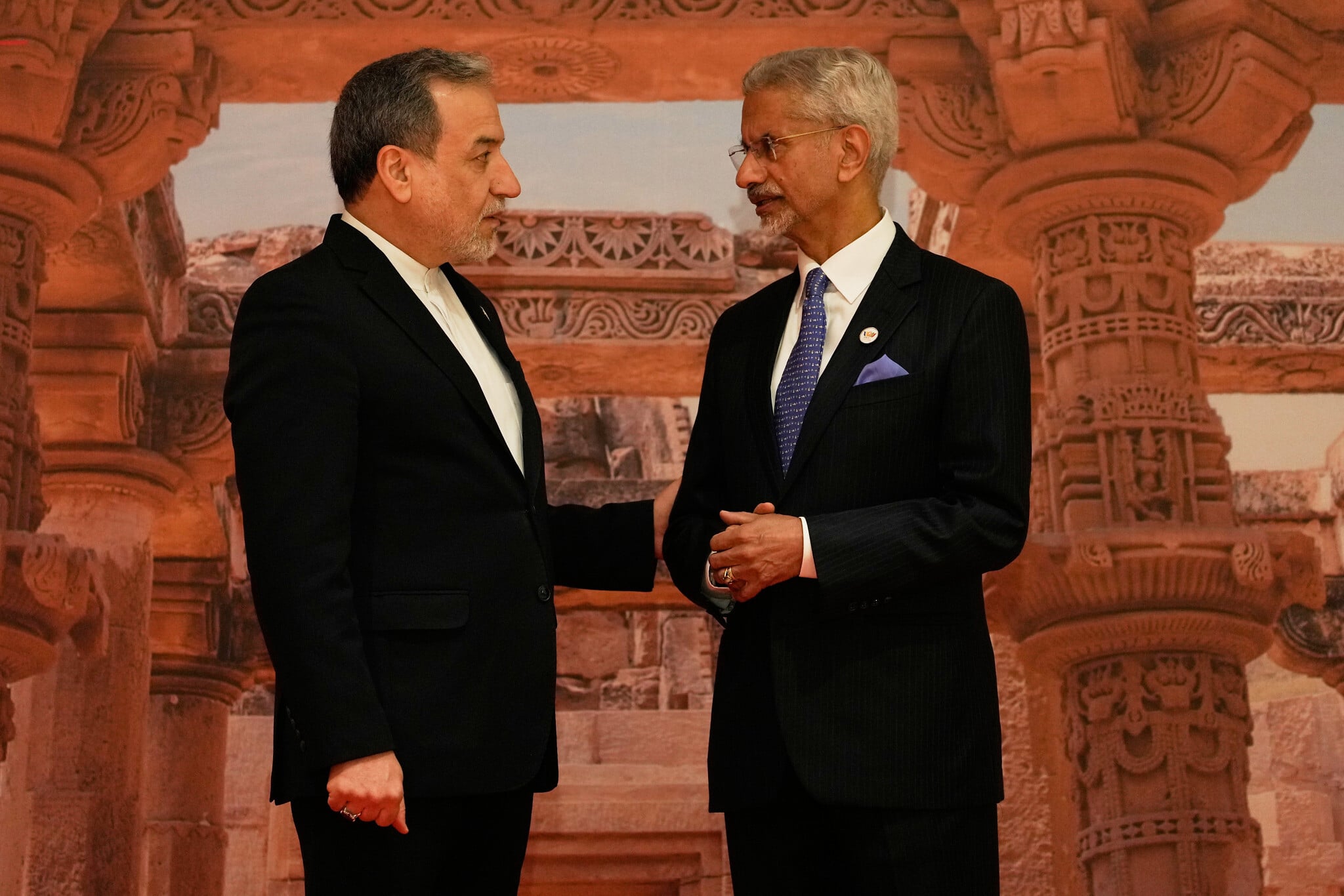
India’s Foreign Minister S. Jaishankar, right, speaks with Iranian Foreign Minister Abbas Araghchi as he arrives for a two-day BRICS nations meeting in New Delhi, India, on May 14, 2026. (AP Photo/Manish Swarup)
Iran’s semi-official Fars news agency, meanwhile, reported that the Islamic Republic has begun allowing some Chinese vessels to transit through the Strait, following an understanding over Iranian management protocols for the waterway.
The news came as US President Donald Trump was in Beijing to meet with leader Xi Jinping on a much-anticipated visit. The leaders’ talks were expected to focus, among other things, on the war with Iran, which has seriously disrupted trade in oil, gas, and other products and rattled the global economy.
A White House statement issued as the two were meeting said the sides “agreed that the Strait of Hormuz must remain open to support the free flow of energy,” and that “Iran can never have a nuclear weapon.”
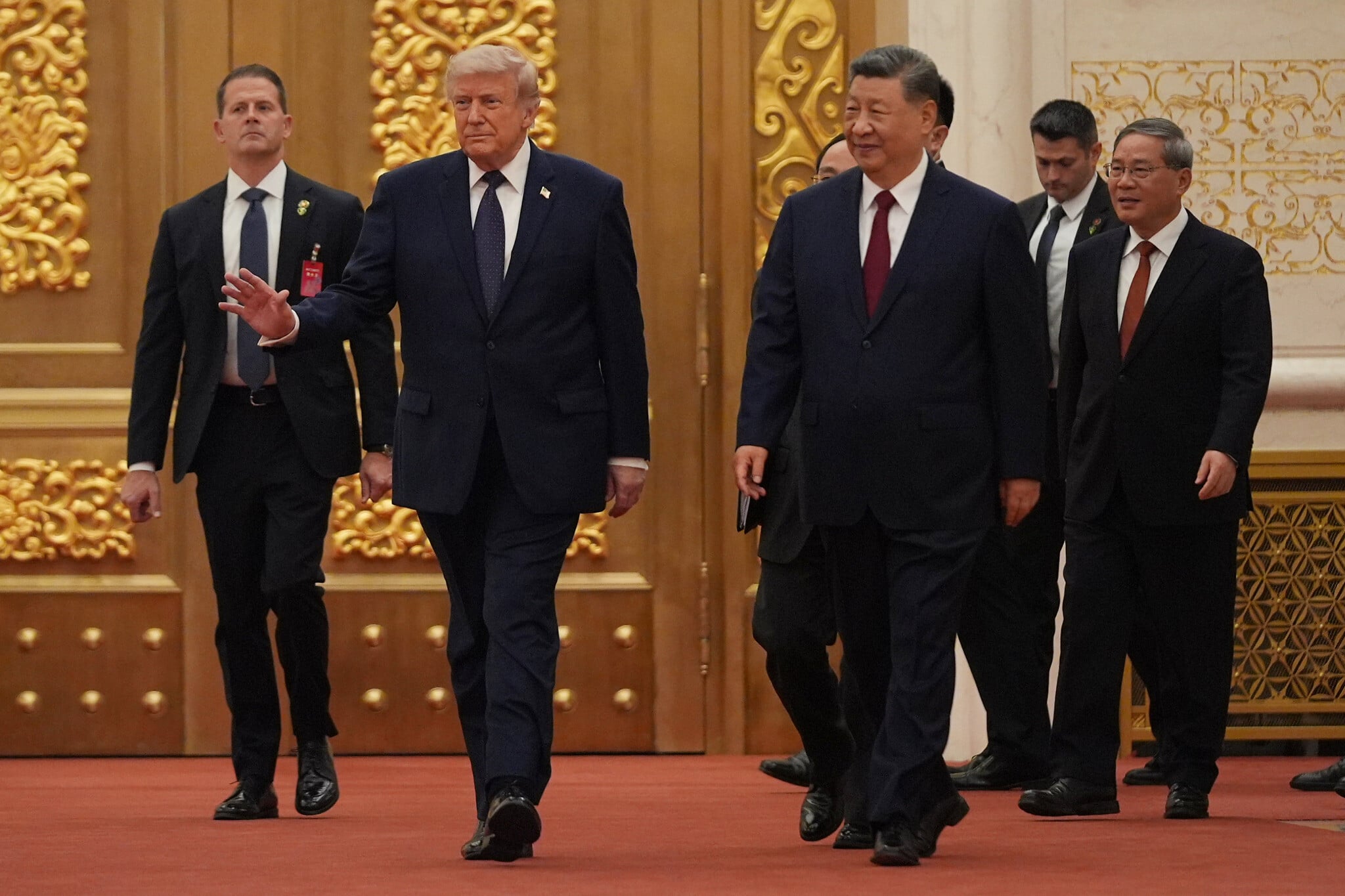
US President Donald Trump, left, and Chinese President Xi Jinping, center, arrives during a state dinner at the Great Hall of the People on May 14, 2026, in Beijing. (AP Photo/Mark Schiefelbein)
US Treasury Secretary Scott Bessent said that reopening the Strait of Hormuz is in China’s best interests and he believes Beijing will do what it can to reopen the waterway.
“I think they’re going to do what they can,” Bessent said in an interview with CNBC from Beijing. “China, it’s very much in their interest to get the strait reopened, and I think they will be working behind the scenes to the extent anyone has any say over the Iranian leadership.”
In an earlier interview from Air Force One, US Secretary of State Marco Rubio had made a similar argument to Fox News’ Sean Hannity, noting that China has ships in the Gulf, one of which was struck by Iran over the weekend.
“I’m sure Iran didn’t do it deliberately but they did it, it happened,” Rubio said. “And so that’s why these Chinese ships are stuck in there.”
He added that Iran’s behavior is “a huge source of instability. It threatens to destabilize Asia more than any other part of the world because it’s heavily reliant on the straits for energy.”
Rubio also argued that China has an economic interest in getting shipping to flow through the Strait of Hormuz again, as if other countries are struggling, “they are going to be buying less Chinese product and the Chinese exports are going to drop precipitously. So it’s in their interest to resolve this.”
But diplomacy to end the war has been on hold since last week when Iran and the United States each rejected the other’s latest proposals, sticking to initial demands that each considers to be “red lines.”
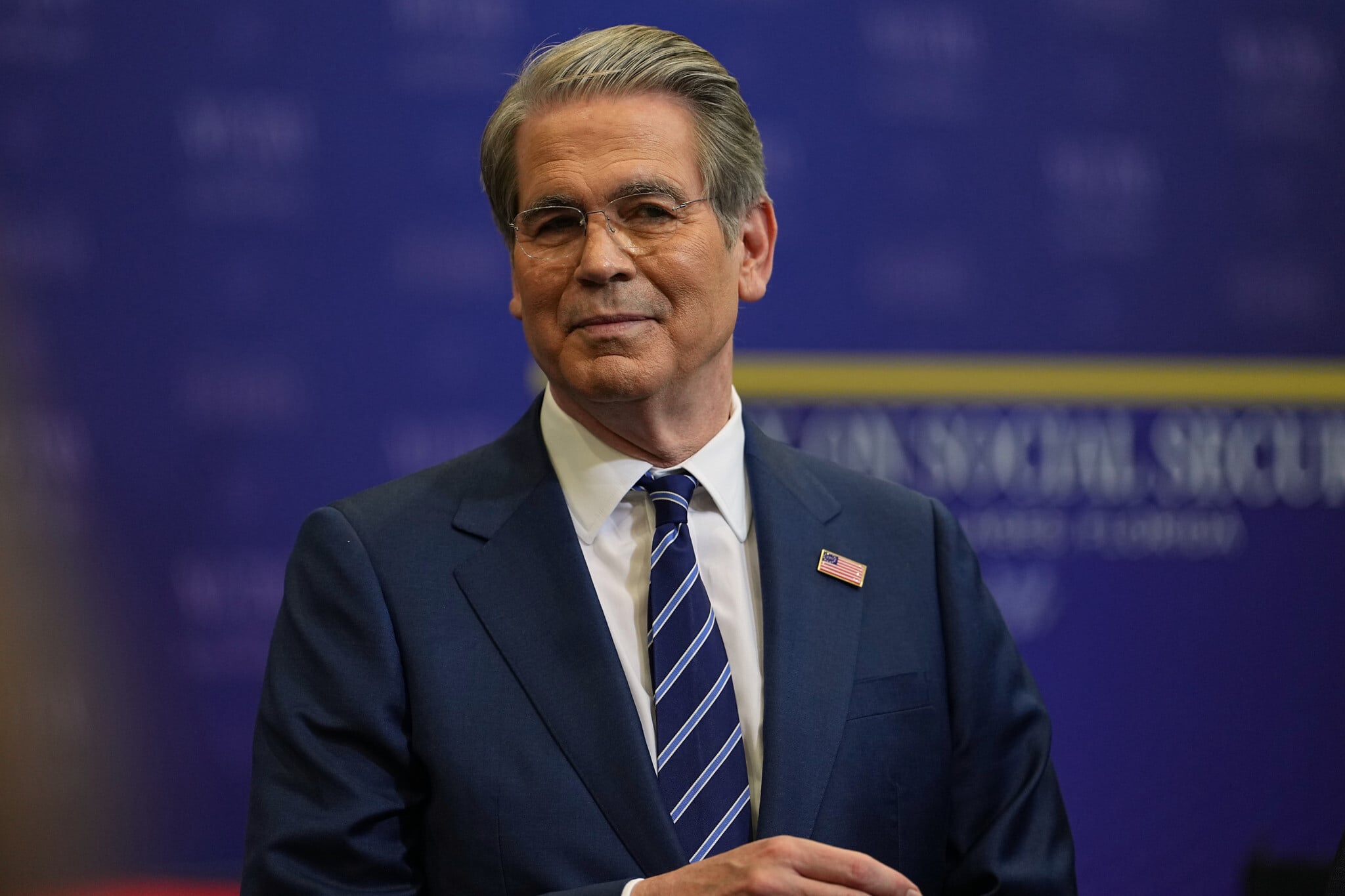
US Treasury Secretary Scott Bessent listens as President Donald Trump speaks at a charter school in The Villages, Florida, May 1, 2026. (AP Photo/ Matt Rourke)
Iran has largely shut the Strait of Hormuz to ships apart from its own since the United States and Israel launched their bombing campaign two-and-a-half months ago, causing the biggest ever disruption to global energy supplies. The US paused the bombing last month but added a blockade of Iran’s ports.
Still, Iran appears to be making more deals with countries to allow some ships to pass through the strait – if they accept Tehran’s terms.
A Japanese tanker crossed on Wednesday after Japan’s prime minister announced that she had requested help from the Iranian president. A huge Chinese tanker also crossed on Wednesday.
Iran’s Revolutionary Guards said 30 vessels had crossed the strait since Wednesday evening, still far short of some 140 that typically crossed daily before the war, but a substantial increase if confirmed.
Israel and the US launched their campaign against Iran on February 28 in a bid to destabilize the regime and destroy its nuclear and ballistic missile capacities. Iran has responded with missile and drone strikes across the region.
The pause in bombing that began on April 8 was to allow for what Trump said were promising peace talks. But after a single round of talks in Pakistan last month, there has been little progress and no further face-to-face meetings.