
When the 2025 Maccabiah Games were canceled last summer due to Israel’s 12-day war with Iran, then-CEO of the Maccabi World Union Amir Gissin envisioned that the competition, pushed back to 2026, would be “bigger than the Olympics.”
“Holding the largest sporting event in the world in Israel [would be] the proper Zionist response to everything we have gone through,” Gissin told The Times of Israel at the time, ostensibly under the assumption that Israel’s wars with its neighbors would be over by now.
But with nuclear talks between the United States and Iran at an impasse, fears of an imminent renewal of fighting make planning anything in Israel difficult these days.
“We didn’t want to be in this situation again, but that’s the reality in Israel now,” said Roy Hessing, who replaced Gissin as the CEO of the Maccabi World Union earlier this year. “This year’s competition isn’t going to be our biggest, but the message we are giving is that the Maccabiah Games are going to go ahead this year.”
Despite concerns and cancellations from delegations from several countries, about 5,000 participants from more than 40 countries are still expected to compete in the two-week international competition that starts on June 30. That’s fewer than the 8,000 athletes that were planning to arrive from 55 countries last year, but a significant competition nonetheless.
Get The Times of Israel’s Daily Edition
by email and never miss our top stories
By signing up, you agree to the terms
Some countries, including Canada, have pulled delegations due to safety concerns, and some of the less-popular sports competitions, like futsal, have been canceled, sources told The Times of Israel.
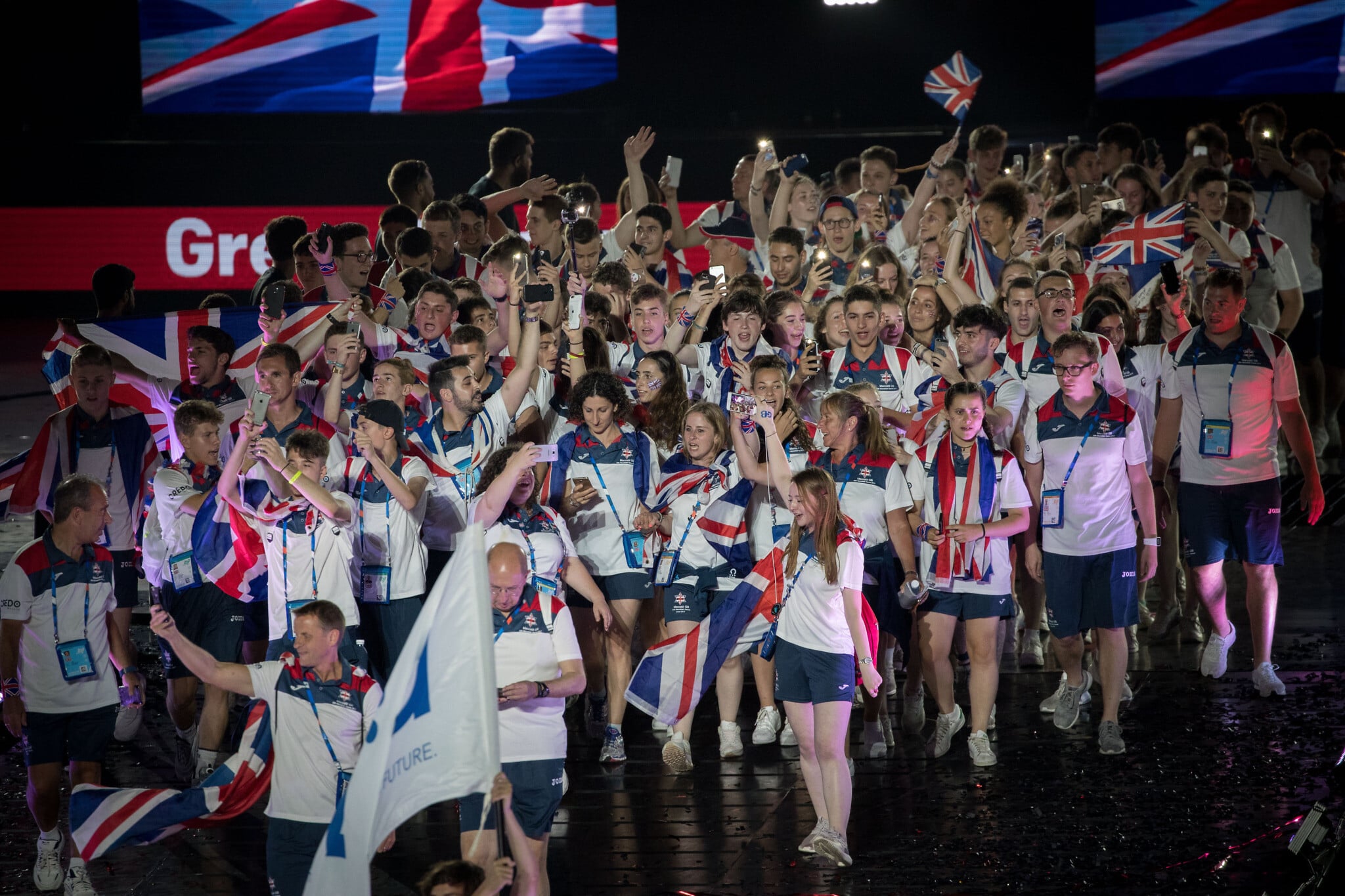
The British delegation takes part in the opening ceremony of the 20th Maccabiah Games in Jerusalem, July 6, 2017. (Yonatan Sindel/Flash90)
Travel to Israel is expected to be sharply down this summer, with several airlines, such as Germany’s Lufthansa, saying they are only now preparing to gradually resume flights to and from Tel Aviv’s Ben Gurion Airport from June 1.
But the international Jewish sports competition is still expected to see athletes of all ages compete in 30 different sports at stadiums across the country, in what organizers say is a source of Jewish pride for communities throughout the Diaspora. And for Israelis, the free tickets to all events could make it a great summertime activity.
“For those that come, this will be a very meaningful experience,” Hessing said.
A competitive sport
It might not attract as much international attention as, say, the World Cup, but the idea that a Jewish sports competition could vie to become the largest sports event in the world isn’t as far-fetched as it might sound. The 2022 Maccabiah Games in Israel attracted about 10,000 athletes, making it second only to the Olympics in terms of the number of participants. (For comparison, 10,714 athletes competed in the 2024 Summer Olympics in Paris.)
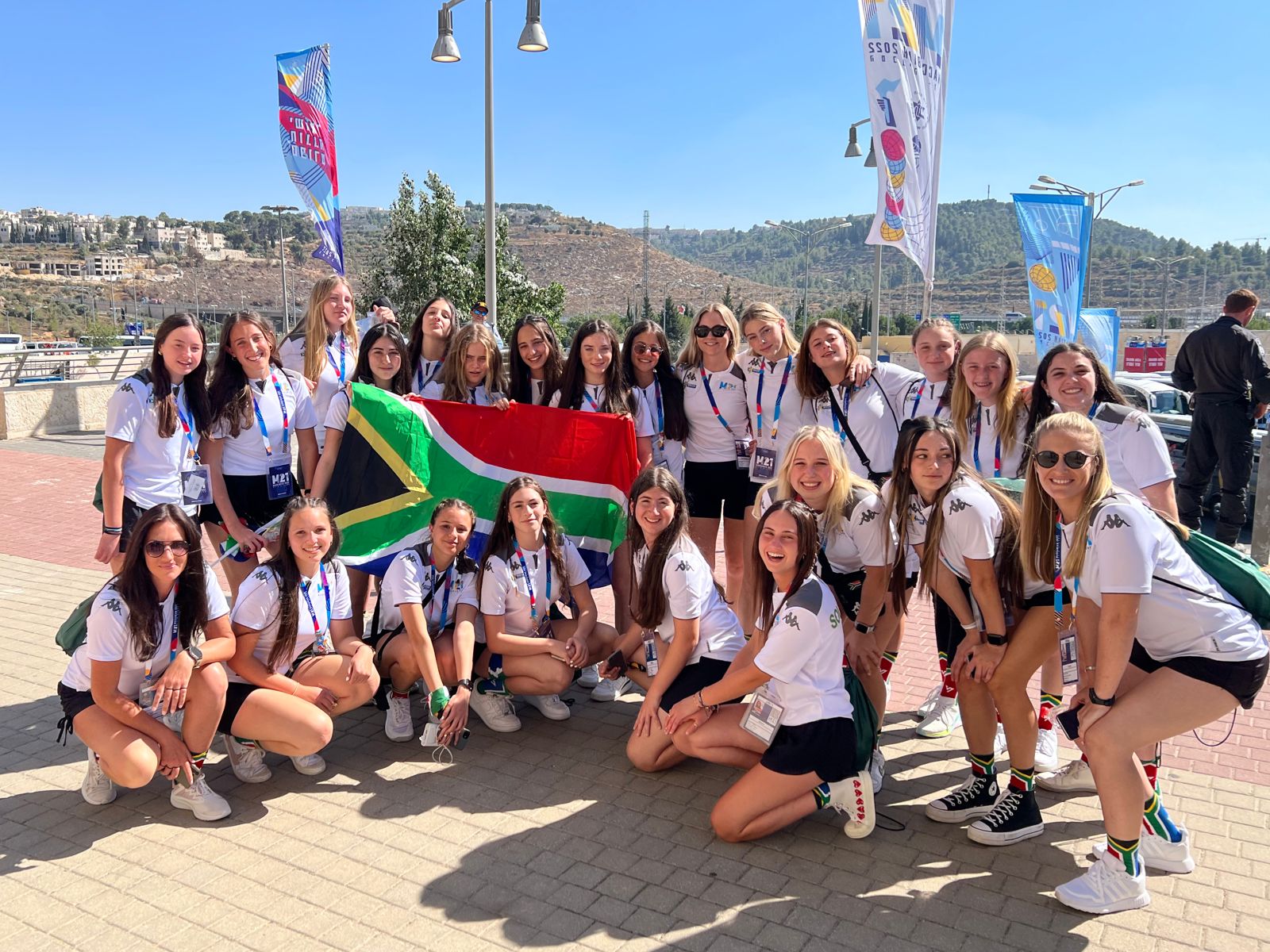
South Africa’s junior netball team at the Opening Ceremony of the 2022 Maccabiah Games (Maccabi South Africa)
It’s a Zionist tradition that predates the Jewish State. The first Maccabiah took place in Tel Aviv in March 1932, drawing over 390 athletes from 18 countries despite opposition from the British Mandate. After the second competition, several years later, the games were paused until 1950 under the shadow of the Holocaust. Since 1957, the games had been held every four years, with the exception of the 2021 games, delayed to 2022 due to the coronavirus pandemic.
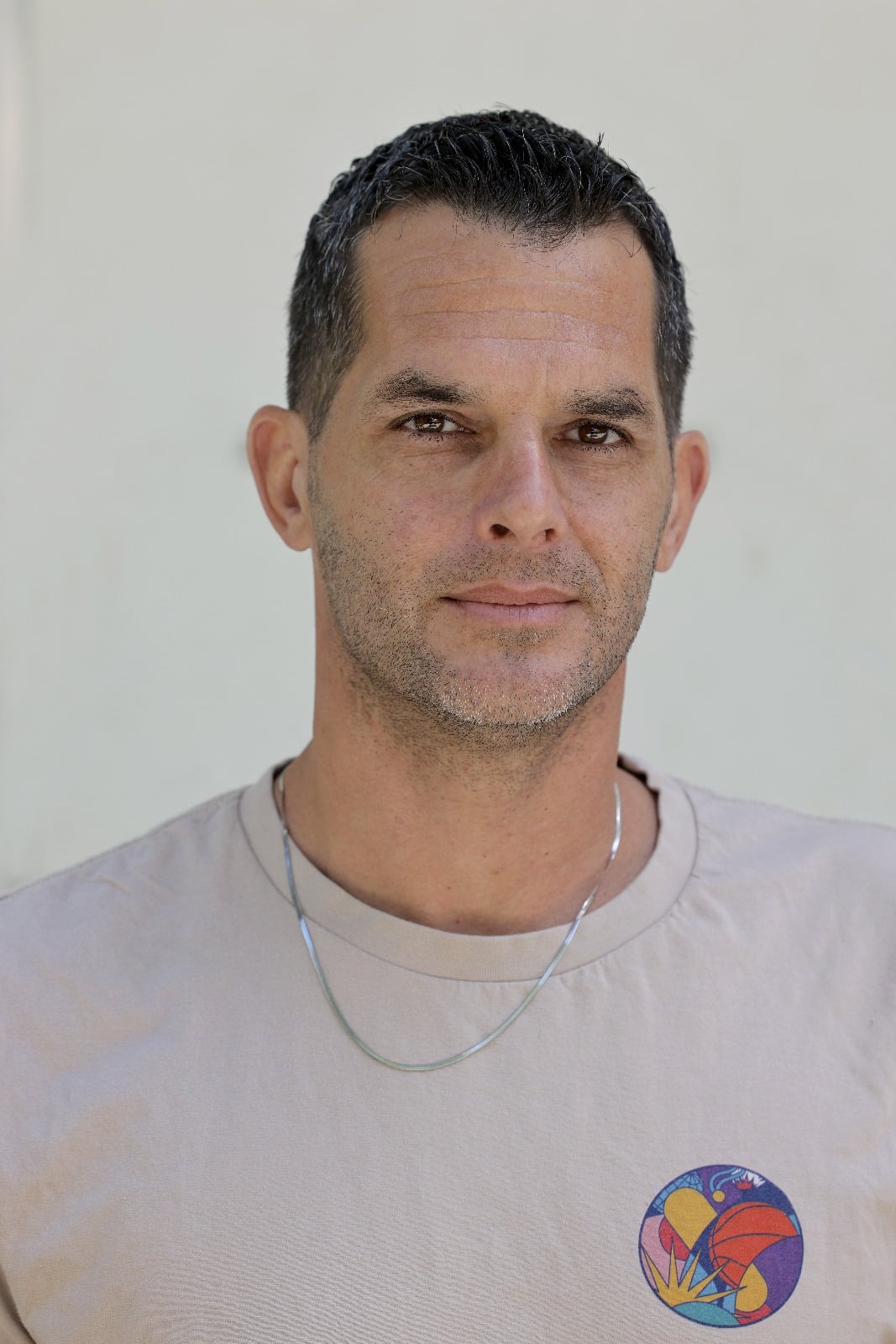
Maccabi World Union CEO Roy Hessing (Courtesy/Ronen Topelberg)
Last year, some 8,000 Jews from 55 countries were set to compete in the “Jewish Olympics” until Israel launched its surprise attack on Iran on June 13. With Israeli airspace virtually closed at the time and no clear timetable for how the war would unfold, Maccabiah’s leadership and Israel’s Sport and Culture Ministry had no choice but to postpone the games. They announced that the competition would be held a year later with the “Same values. Same vision. Just a little more time.”
Cancelling last year’s events, organized by more than 500 workers and 1,000 volunteers, cost about $6 million and thousands of man-hours, Hessing said.
Organizers said last year that setting up the opening ceremony in Jerusalem would require at least three weeks of preparation, and that most participants from abroad arrive a week before the games to tour the country and train.
“It’s possible the same thing could happen again, but I don’t want to think about it,” he added.
The disruption is also harmful for the prestige of the entire event, noted David Wiseman, who runs the Follow Team Israel account on social media.
“The fact that this event was postponed, after the previous one was also delayed due to COVID, is bad for the momentum of the competition,” Wiseman said. “This event is needed now more than ever to help encourage young Jewish athletes who are fighting antisemitism in their countries, and it’s a shame for this to take away from the excitement.”
Hessing, meanwhile, is filled with optimism and excitement for the competition and thousands of youth who have spent years training for it.
“We really want to celebrate with everyone in Israel,” he said. “The games should be a source of pride and happiness for everyone.”
You’re a dedicated reader

That’s why we started the Times of Israel – to provide discerning readers like you with must-read coverage of Israel and the Jewish world.
So now we have a request. Unlike other news outlets, we haven’t put up a paywall. But as the journalism we do is costly, we invite readers for whom The Times of Israel has become important to help support our work by joining The Times of Israel Community.
For as little as $6 a month you can help support our quality journalism while enjoying The Times of Israel AD-FREE, as well as accessing exclusive content available only to Times of Israel Community members.
Thank you,
David Horovitz, Founding Editor of The Times of Israel