
In response to an outcry and accusations of “blood libel” over a recent opinion column detailing alleged systematic sexual abuse of Palestinian security prisoners in Israeli detention, The New York Times on Thursday defended the article, with the newspaper’s opinion editor saying it was “built upon a growing body of evidence.”
In an extensive response to “your questions” published in the outlet’s opinion section, the column’s author, Nicholas Kristof, and Times Opinion head Kathleen Kingsbury, defended the piece amid mounting backlash, including criticisms from the Times’ readership, denials and condemnations from Israeli officials, and an announcement by the Israeli government that it intends to sue the newspaper for defamation.
Kingsbury wrote that Kristoff’s reporting was rigorously fact-checked before publication “to ensure that every testimony and anecdote he personally reported was supported by independent sources.” After publication, she added, “We reviewed the factual challenges that readers and others raised… Editors found no errors.
Prime Minister Benjamin Netanyahu and Foreign Minister Gideon Sa’ar said in a joint statement issued days after the op-ed’s publication that it was “one of the most hideous and distorted lies ever published against the State of Israel in the modern press.” The Israel Prison Service called the allegations “false and entirely unfounded.”
The column, titled “The Silence That Meets the Rape of Palestinians,” published on May 11, alleged “a pattern of widespread Israeli sexual violence against men, women and even children — by soldiers, settlers, interrogators in the Shin Bet internal security agency and, above all, prison guards.”
Get The Times of Israel’s Daily Edition
by email and never miss our top stories
By signing up, you agree to the terms
Among the incidents Kristof referenced was the alleged 2024 sexual abuse of a Gazan detainee at the Sde Teiman prison. He also cited testimony from Palestinians who said they were routinely stripped naked in detention, groped and forcibly penetrated with various objects.
Related – ‘Blood libel’: Israel rejects NYT column alleging widespread rape of Palestinian inmates
One of the most controversial testimonies featured in the piece came from a Gaza journalist detained in 2024, who alleged that Israeli security personnel trained dogs to mount and rape prisoners. A canine training expert said the allegations of dog-rape were implausible if not completely impossible.
The allegation, which has circulated in anti-Israel media for some time, was recently amplified by the Euro-Mediterranean Human Rights Monitor, a key source cited in Kristof’s report.
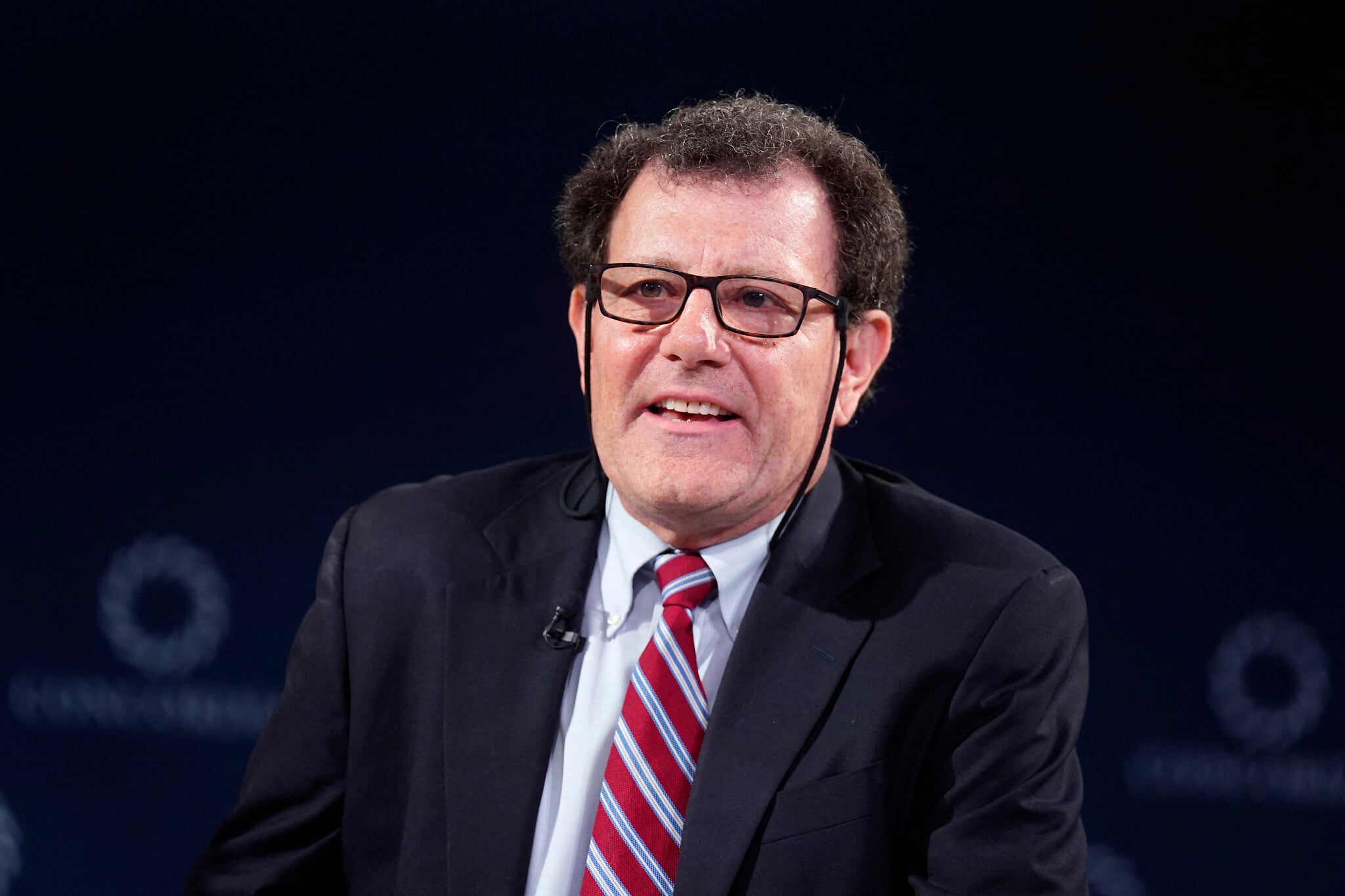
New York Times columnist Nicholas Kristof speaks onstage during the 2024 Concordia Annual Summit on September 25, 2024, in New York City. (Riccardo Savi / Getty Images via AFP)
“This passage provoked the most disgust and disbelief,” Kristof wrote on Thursday, acknowledging that he debated whether to include it.
“In the end, I did because he had told his account previously and because what he described has happened before,” he charged, pointing to a similar account published in a BBC article last December.
Euro-Med has shared conspiracy theories about the October 7, 2023, attack, alleging the crime scene was “doctored” and that some of the Palestinians seen dead in Israeli territory with assault rifles after the attack were in fact civilians whose killing had been a war crime. The NGO has also described the people taken hostage by Hamas during the attack as having been “arrested and moved to the Gaza Strip.”
Denouncing the Times’ piece shortly after its publication, Israel’s Ambassador to the US, Yechiel Leiter, charged that two leaders of the NGO “have been repeatedly found to have links to Hamas,” and posted a 2011 picture of the pair in a group photo with then-Hamas leader Ismail Haniyeh.
The @nytimes and @NickKristof count on you not pulling the curtain back on their lies.
Don’t buy into their blood libels – watch and find out who’s really behind this narrative. pic.twitter.com/Rf94hYlIFw
— Ambassador Yechiel (Michael) Leiter (@yechielleiter) May 12, 2026
In Thursday’s response, Kristof also defended his reporting process, saying he “traveled to the West Bank and interviewed 14 survivors of rape or other sexual assaults,” and “cited three surveys that illuminated the scale of this violence, backed by the work of nine organizations and two Israeli lawyers who have worked on these topics.”
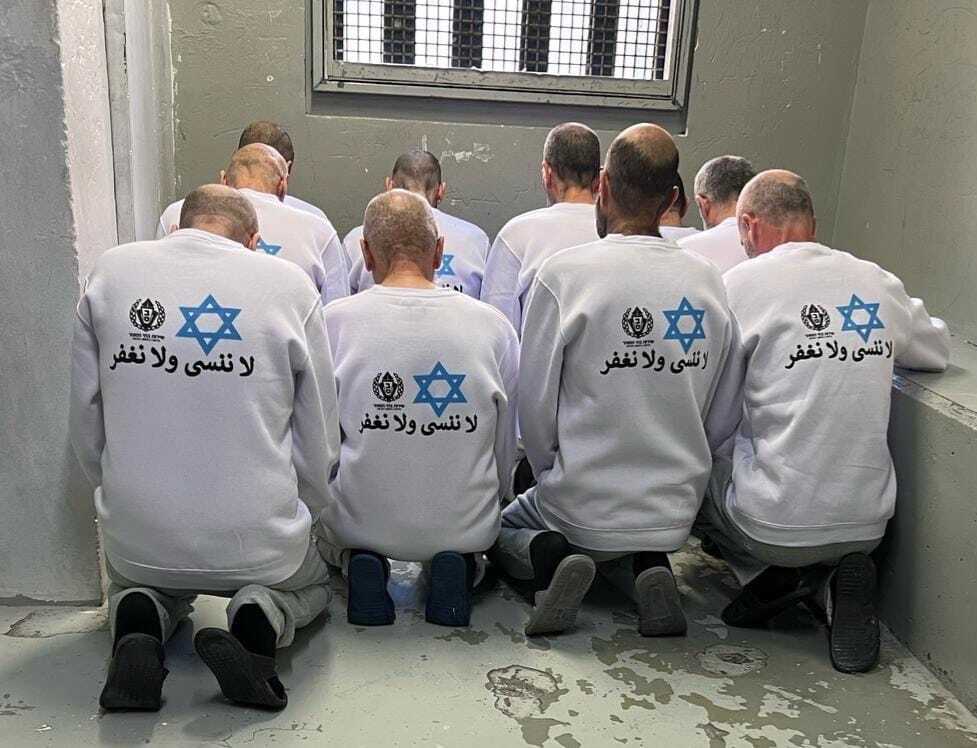
The Israel Prison Service dresses Palestinian prisoners set for release in shirts featuring its logo, a Star of David and the sentence in Arabic: ‘We will not forget or forgive,’ February 15, 2025. (Israel Prison Service)
He added that he corroborated each testimony by speaking “either to a witness to the abuse; to a family member, lawyer, or social worker the person had confided in; or I backed up the individual’s story with public comments the person made previously.”
At the same time, Kristof acknowledged that “rapes are difficult to document, and they are often contested,” but argued that “it serves no one to automatically discount people’s accounts because of their identity or beliefs.”
“The Times doesn’t rule out interviewing people or considering them credible because they were in prison or detained,” Kingsbury said.
The column also drew criticism over its reliance on the Euro-Mediterranean Human Rights Monitor, whose chairman, Ramy Abdu, has been found to have ties with Hamas leadership and wrote on October 8, 2023 — a day after the terror group’s onslaught in southern Israel — that footage from the attacks on Ofakim and Magen showed “Hollywood-like amazing scenes.”
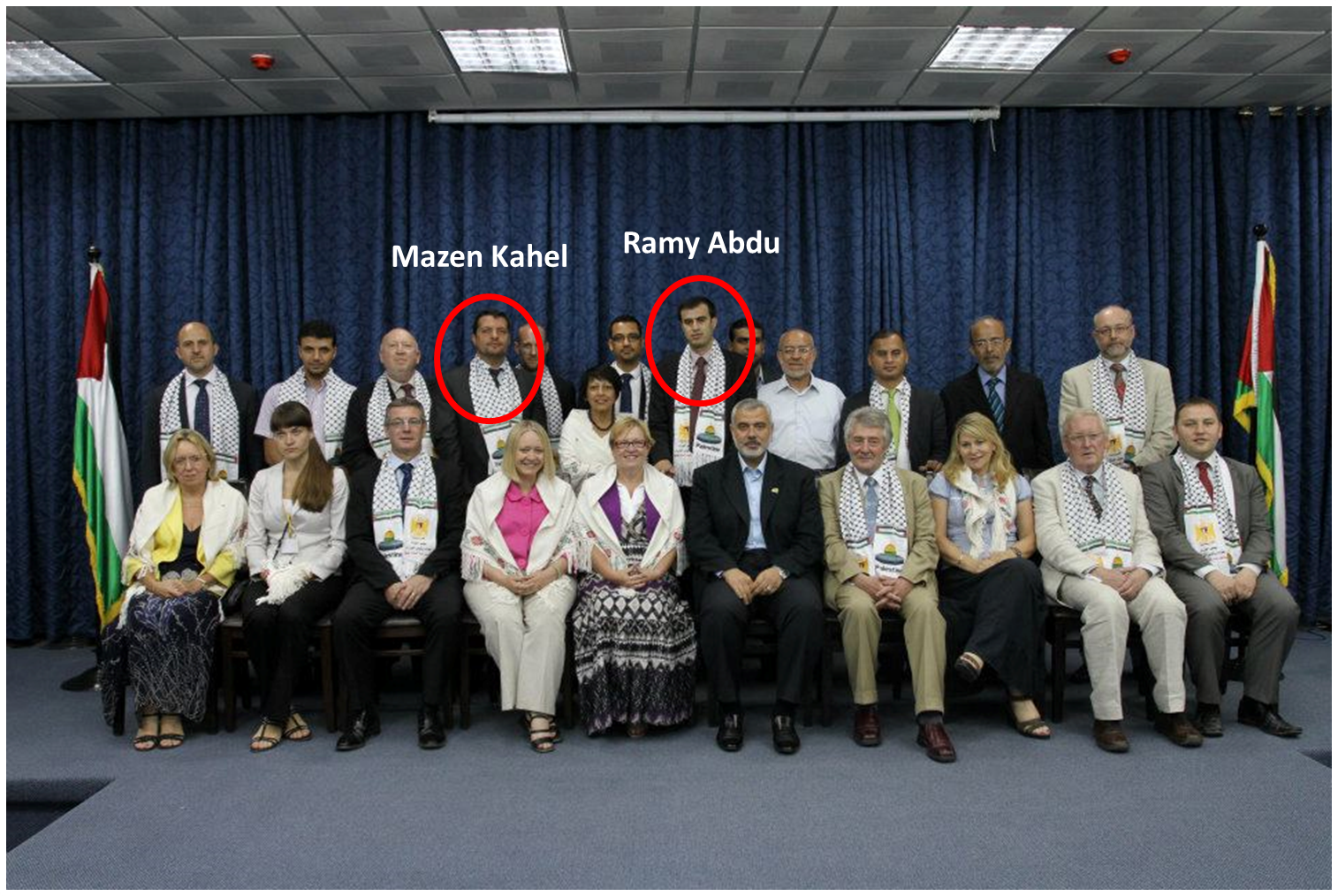
Mazen Kahel and Ramy Abdu, among the leadership of the Euro-Mediterranean Human Rights Monitor NGO, are seen posing with Hamas officials, including Ismail Haniyeh, in Gaza in 2011. (NGO Monitor)
Kristof said Abdu’s comments “can’t be taken lightly,” but added that “citing a source does not constitute an endorsement of its leadership’s political views, or social media activity.”
Addressing why the original article appeared in the opinion section rather than as a news report, Kingsbury said it was because Kristof is a Times Opinion columnist “with decades of experience reporting on sexual abuse in conflict zones, and his columns run in the Opinion section.”
“An Opinion column offers a proposition that the writer is asking readers to consider,” Kingsbury explained. “Newsroom articles and investigations, by contrast, unearth and confirm newsworthy facts and information to share with readers, not to make an argument.”
You’re a dedicated reader

That’s why we started the Times of Israel – to provide discerning readers like you with must-read coverage of Israel and the Jewish world.
So now we have a request. Unlike other news outlets, we haven’t put up a paywall. But as the journalism we do is costly, we invite readers for whom The Times of Israel has become important to help support our work by joining The Times of Israel Community.
For as little as $6 a month you can help support our quality journalism while enjoying The Times of Israel AD-FREE, as well as accessing exclusive content available only to Times of Israel Community members.
Thank you,
David Horovitz, Founding Editor of The Times of Israel