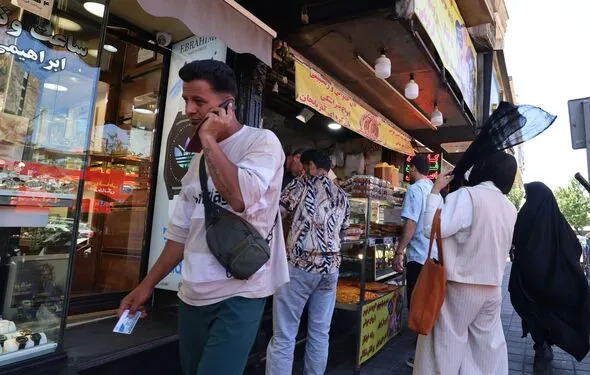
Iranian state media reported that internet access in the country reopened Monday after an 88-day ban (Image: AFP via Getty Images)
The Iranian government announced Tuesday that it’s ending an 88-day internet blackout that has been in effect since February, following the U.S. and Israel strikes on Iran.
While the government claims the longest internet blackout in Iran‘s history has been brought to an end, internet monitors report that the shutdown remains in effect, according to The Guardian. It’s unclear what has caused the delay.
Iranian officials say Gmail is accessible in the country, a sign that international internet access has reopened.
President Masoud Pezeshkian lobbied for security officials to lift the restrictions on internet access after fears of mass unemployment and commercial bankruptcy were raised, The Guardian reported.
According to global internet monitor NetBlocks, as of Tuesday, May 26, internet access remains cut in Iran.
“Internet connectivity remains cut in #Iran with the digital blackout now having entered its 88th day, surpassing 2088 hours of isolation from the outside world,” NetBlocks posted on X early Tuesday morning. “Metrics confirm the shutdown currently remains in effect despite the president’s order yesterday to restore access.”
A formal announcement of the reopening of the internet blackout followed a vote by the special task force for cyberspace management.
Iran’s communications minister, Sattar Hashemi, noted the ramifications of the internet blackout in Iran, saying it would be a gradual process to restore access, according to the Guardian.
“Internet restrictions in recent months have caused significant damage to the digital economy, online businesses, and the country’s service industries,” Hashemi said, as reported by the outlet. “The continuation of this situation could, in addition to the economic damage, have led to the weakening of investment, the emigration of elite human resources, and the expansion of communication patterns outside the framework of the country’s official governance.”
Iranian authorities imposed the blackout on January 8 in response to anti-government protests, and the restrictions partially eased in February before Iran tightened the blackout again after the U.S. and Israel launched strikes against Iran on February 28.
The global internet in Iran is typically heavily restricted, with many websites, such as Instagram, X, and YouTube, blocked in normal times.
Millions of Iranians who rely on internet access to make a living have been devastated by the nearly three-month-long internet blackout.
]]>