
The percentage of Israeli adults who smoke cigarettes has climbed over the past year from 20% to 24%, according to data released by the Israel Cancer Association on International No Tobacco Day, observed on May 31.
About 37% of smokers said they have started, resumed, or increased the frequency of smoking recently due to stress, anxiety, or the security situation, including during the US-Israel military campaign against Iran, which was launched on February 28.
A third of the general public knows someone who has started or resumed smoking due to the situation. And among smokers, the number rises to about 50%.
The national survey also revealed the rising numbers of young people who have tried e-cigarettes, or vaping, and spotlighted the continued exposure to secondhand smoke in public places and increased smoking rates among men, now at 34%.
Among people aged 16-34, e-cigarette use rose sharply to 24%. E-cigarette use stands at 15% overall. Hookah smoking has increased from 11% last year to 15%, and cigar use has climbed from 2% to 5%.
“We are very concerned about the survey results indicating an increase in the smoking phenomenon, especially among young people,” Moshe Bar-Haim, CEO of the Israel Cancer Association, said in a statement.
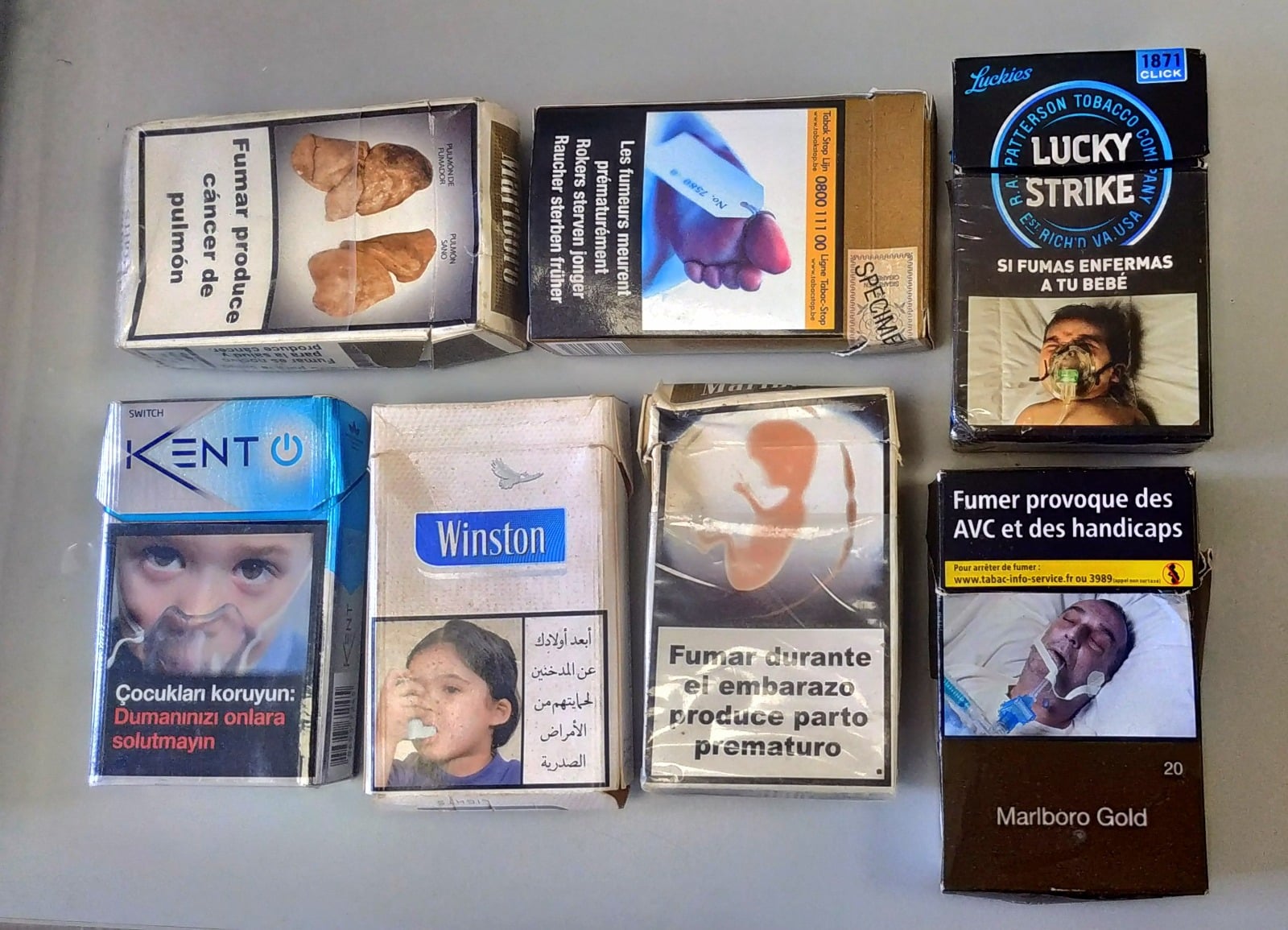
Graphic warnings on cigarette packages from around the world. (Courtesy/Israel Cancer Association)
Graphic warnings on all smoking products
The increase in smoking comes despite public campaigns, educational activities, and warnings on cigarette packs.
In contrast, the United States, Australia, New Zealand, Canada, and the UK have a 13% smoking rate.
Across OECD countries, 14.8% of people aged 15 and over smoked daily in 2023. The proportion of daily smokers was highest in Turkey, Hungary, and Greece.
On August 6, an Israeli law will come into effect requiring graphic warning images to be printed not only on packages of regular cigarettes but also on electronic cigarettes, tobacco-heating devices, rolling papers, and loose tobacco.
Of those surveyed, however, less than half believe that these new graphic warnings will have an effect.
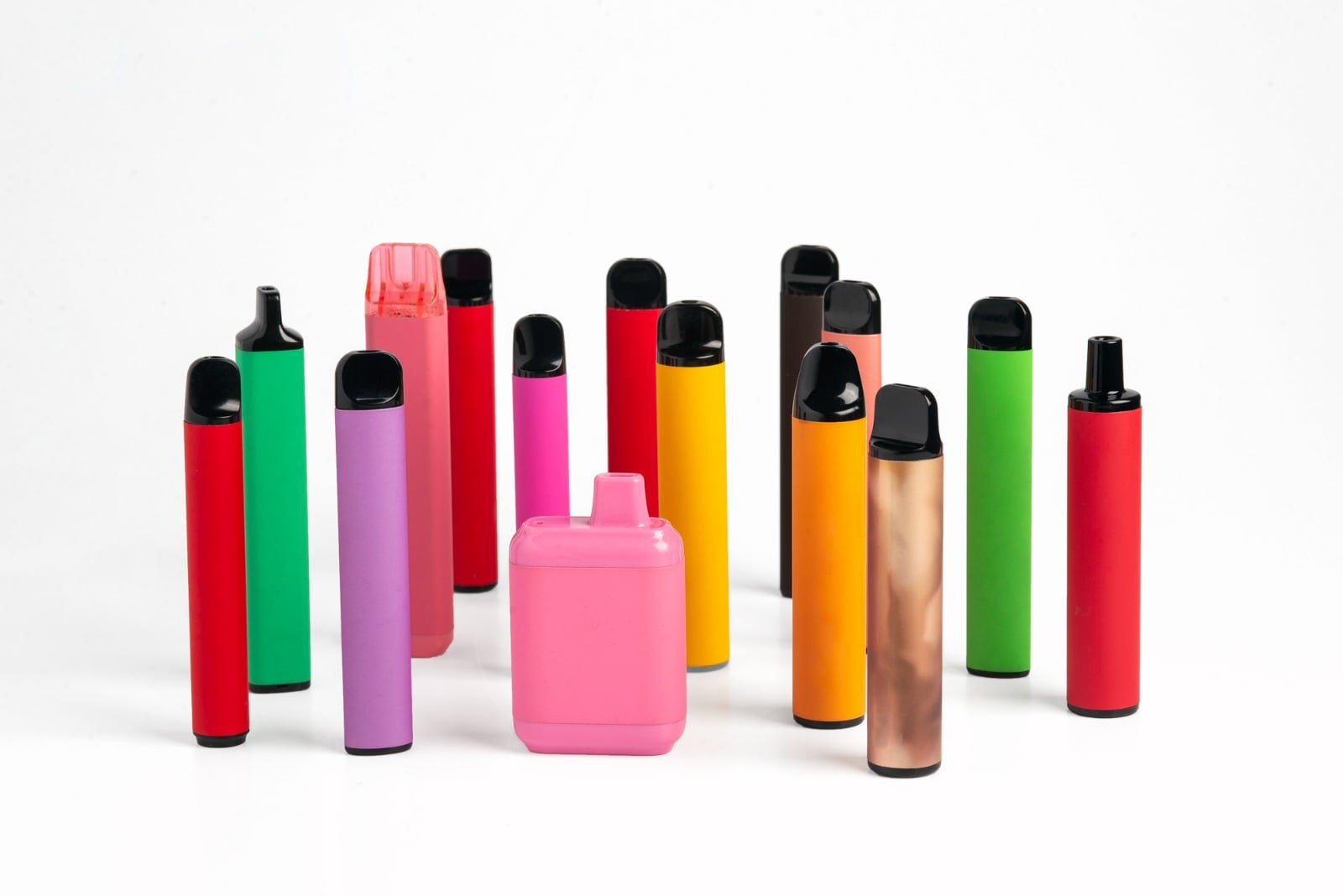
Disposable e-cigarettes (vapes). (Courtesy of the Israel Cancer Association)
Breathing in other people’s smoke
Almost the entire population — 93% — is exposed to passive smoking in public places. Forty percent of the respondents reported exposure to passive smoking in the workplace.
In addition, 43% reported exposure to secondhand smoke at bus stops and on the beach, 40% in event halls, and 49% in restaurants and cafes.
According to the survey, about 80% of the public would like to see no-smoking policies enforced in public places.

Moshe Bar-Haim, CEO of the Israel Cancer Association (Courtesy/Israel Cancer Association)
At the same time, the law prohibiting smoking in public places is somewhat better known and understood by the public this year, with awareness increasing from 37% to 44%.
The respondents understood that it is forbidden to smoke cigarettes, electronic cigarettes, hookahs, cigars, and other smoking products in public places defined by the law.
In the Arab sector, however, a higher percentage believes that it only applies to cigarettes (46%).
Bar-Haim said that the association is “very concerned” about the “continued exposure to passive smoking in public places.
“The law exists and is clear. The fight against smoking is a national goal and must be expressed in vigorous and effective enforcement measures of the law regulating the ban on smoking in public places,” said Bar-Haim.
Gradual abolition of tax exemption on tobacco imports
The government is also moving ahead with abolishing the exemption of import taxes on smoking products.
Currently, there is an exemption of up to 250 grams (.5 pounds) of tobacco or 200 cigarettes for each person over the age of 18, which is granted upon entry into the country. For electronic cigarettes, the exemption limit is up to 10 ml (.33 oz.) of liquid for refilling, or five disposable cigarettes.
The exemption limit will be halved as of January 16, 2027, to 100 cigarettes or 125 grams (.25 pounds) of tobacco, and 5 ml. (.7 oz.) of liquid for refilling, or three disposable cigarettes for electronic cigarettes. As of June 1, 2028, the tax exemption will be completely abolished.
Trying to quit
About 76% of all smokers want to quit, and 86% among the Arab sector, while 72% regret starting at all.
About half of the public (46%) know smokers who want to quit but are unable to, and 55% of those who smoke themselves know even more would-be quitters.
The barriers to quitting include a sense of fun, habit, pressure, and real unwillingness. Incentives for quitting include financial benefits or pressure from family.

Ultra-Orthodox Jewish children smoke a cigarette in Jerusalem’s Mea Sharim neighborhood on March 2, 2018, during the holiday of Purim. (AFP Photo/Thomas Coex)
The myth of ‘clean’ e-cigarettes
E-cigarettes are sometimes perceived as a “cleaner” or safer alternative to regular cigarettes, especially among young people, the association said. This is a fallacy: Electronic cigarettes may cause damage to brain development in adolescents and young adults, leading to attention problems, learning problems, emotional instability, depression, and anxiety.
Evidence has been found that e-cigarette use may also increase the risk of developing cancerous tumors in the lungs, bladder, and oral cavity.
The Israel Cancer Association survey was conducted this month among 565 women and men, with a representative sample of the population, including 20% from the Arab sector.
“We must work to increase taxation” on smoking products, Bar-Haim said. “We need to carry out information campaigns, limit advertising, and completely ban the sale of flavored smoking products, which are designed to entice youth to join the circle of addicts.”