
When artist Farideh Golbahar was growing up in Tehran, her family often slept outside in their spacious, verdant garden during the hot summer months.
That lush backyard and the memory of it remain with Golbahar, now 84, who later became known for her meticulous oils of gardens and their myriad details.
“I’ve painted since I was a child, on all the walls and doors and all kinds of things,” said Golbahar. “I didn’t paint flowers, though. That came later.”
The floral obsession began around 1966, when Golbahar was living in Germany, where her husband, Eli Said Golbahar, now 86, was studying economics.
They were visiting Munich when they came upon a lush painting of flowers at a street exhibition.
“I said to Farideh, ‘Let’s buy this painting,’” said Eli Golbahar. “She said, ‘What? I’ll make one just like it.’”
“I knew that’s what she would say,” continued Eli, during a recent conversation with the couple in their Jerusalem apartment. “And we went out to buy supplies, and that was the beginning of it all.”
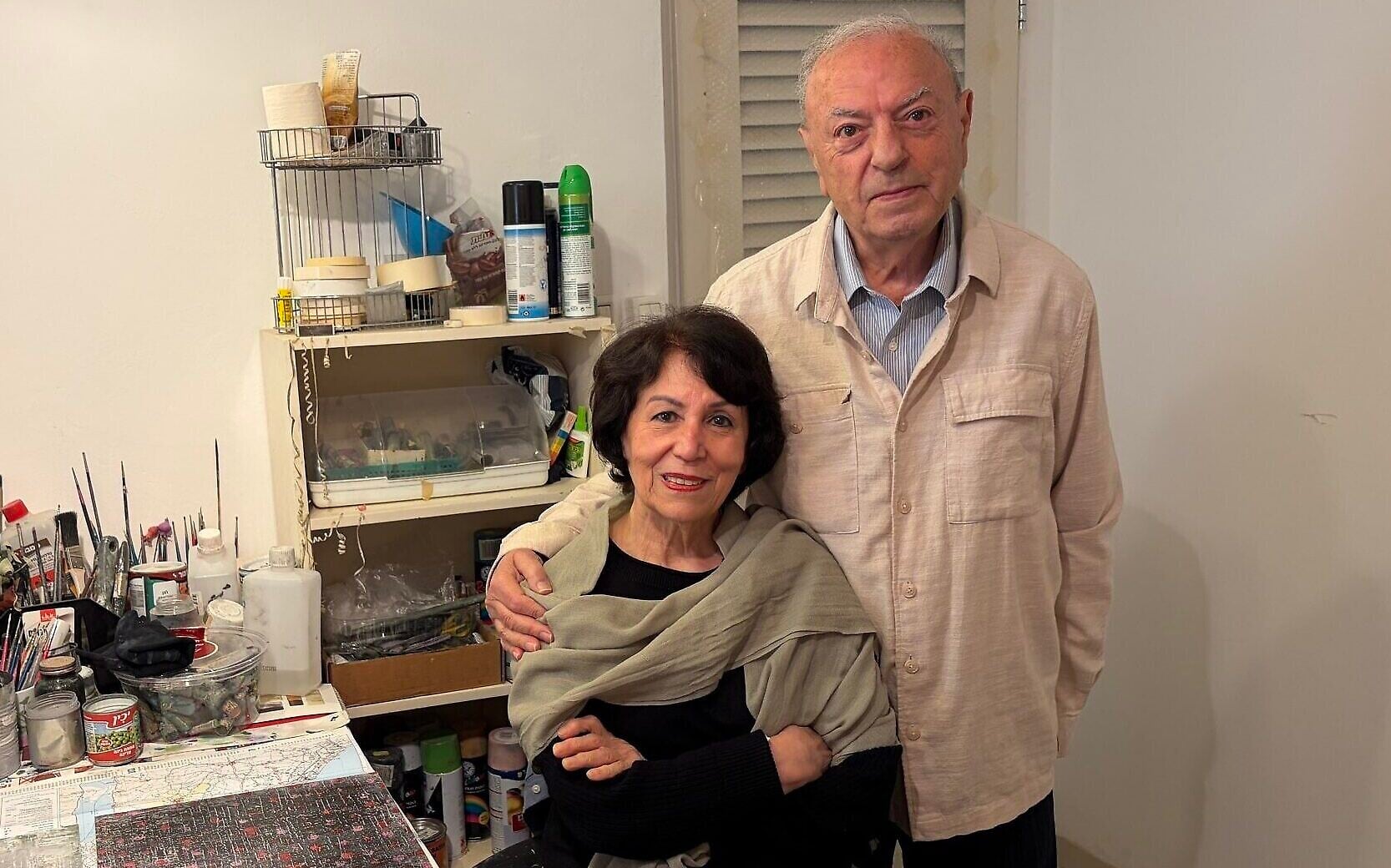
Artist Farideh Golbahar with her husband, Eli Said Golbahar, in her Jerusalem studio, May 2026 (Jessica Steinberg/Times of Israel)
Golbahar’s latest exhibit, “Beyond Garden,” is now open at Tel Aviv’s Artists House and will run through July 11, showing works from the last years and decades of this fruitful painter.
It’s the latest in a long series of museum exhibits and gallery showings for Golbahar, including her inaugural 1957 display at the Iran-Italy Biennale of Art in Tehran, group exhibits at the Israel Museum, and solo showings at the Ramat Gan Museum of Art and other institutions.
Golbahar has been painting her version of gardens for decades, usually breaking an arboretum into four or six sections on her paper canvas, each one showing elements of a garden from different angles, both microscopic and magnified.
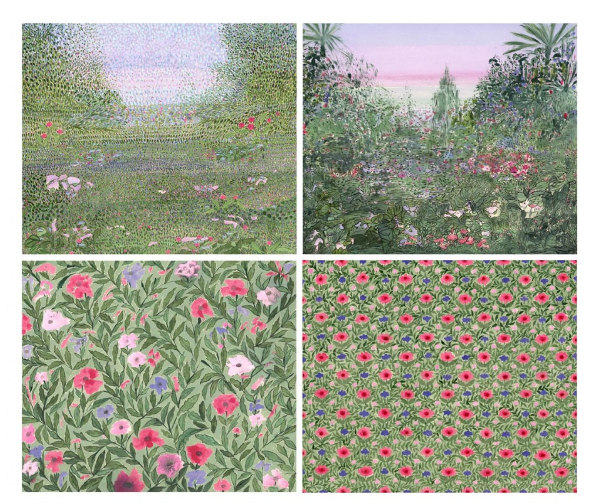
From artist Farideh Golbahar’s work, ‘About Landscape,’ oil on paper (Courtesy)
One section might show a magnified flower, while another could be filled with dozens of blossoms in a Persian rug-like pattern. A larger rectangle may stretch across the top half of the painting, showing a small lake dotted with lily pads.
There are often palm trees as well, the date palms that Golbahar never saw before she moved to Israel, and the presence of the strong Israeli sun, whose light saturates everything in its path.
Coincidentally, their last name, Golbahar, means spring flower in Persian.
“They have the look of Monet and Tehran, but they’re mine,” said Golbahar, showing paintings at her apartment storeroom, located in the maze of rooms surrounding the underground parking lot. “It’s all of my worlds together.”
‘It’s all of my worlds together’
Her studio is situated in another nearby storeroom, set up with a table, her paints and brushes, and a radio so she can listen to the news and music as she paints.
Golbahar began taking painting lessons as a child in Tehran, where she first painted oils on paper, a combination that has stayed with her all these years.
“I loved paper,” said Golbhar. “I never switched to canvas. The paper absorbs the color.”
There is something fantastical about Golbahar’s gardens, a seemingly Persian symbol of her Tehran childhood. Yet Golbahar says her mystical gardens draw from many parts of her life, including her years spent in Europe and Israel, in addition to Tehran.
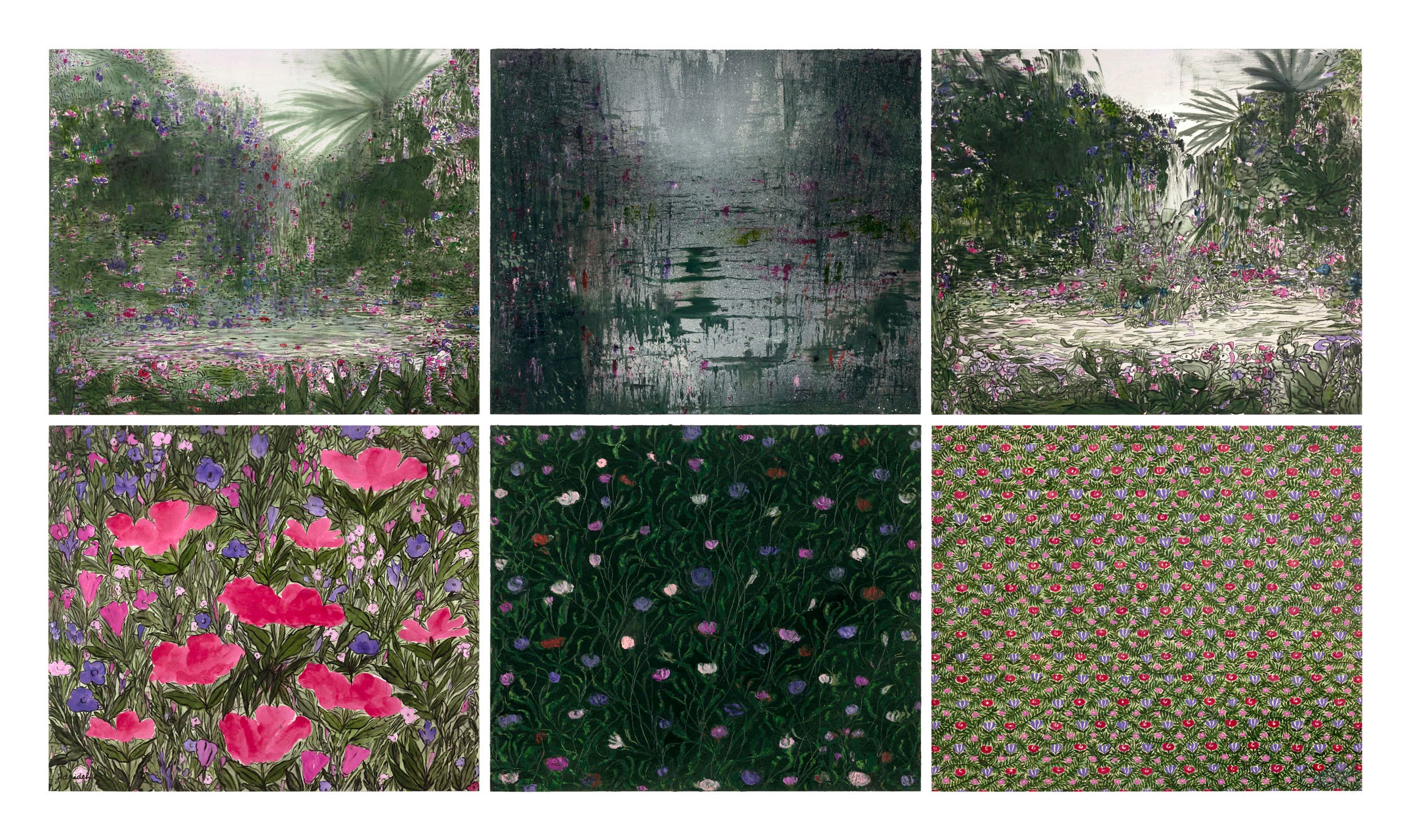
From artist Farideh Golbahar’s work, ‘About Landscape,’ oil on paper (Courtesy)
She was the eldest daughter of five, her father a lawyer, their Jewish family well-to-do and secular.
They sometimes said the blessing over wine on Friday nights and always bought some matzah on Passover. Golbahar remembers her mother making marzipan, an almond delicacy, for the holiday.
She also remembers being one of two Jews in her school class and studying the Quran along with the rest of the students.
Working as an artist wasn’t an acceptable career option in her family, where she and her siblings were expected to become white-collar professionals, like their father.
Iran’s democracy was already failing in the late 1960s, with the country suffering from great poverty and strife.
The Golbahars were living in Germany in 1967, and Israel’s Six Day War made an impression upon them. They returned to Iran in 1969 with their baby daughter and began thinking about Israel as an option.
“We were proud that there was an Israel, that we were Jews, and we wanted to live somewhere where we wouldn’t be a minority,” said Eli. “Tehran’s Jewish community felt like a ghetto to us.”
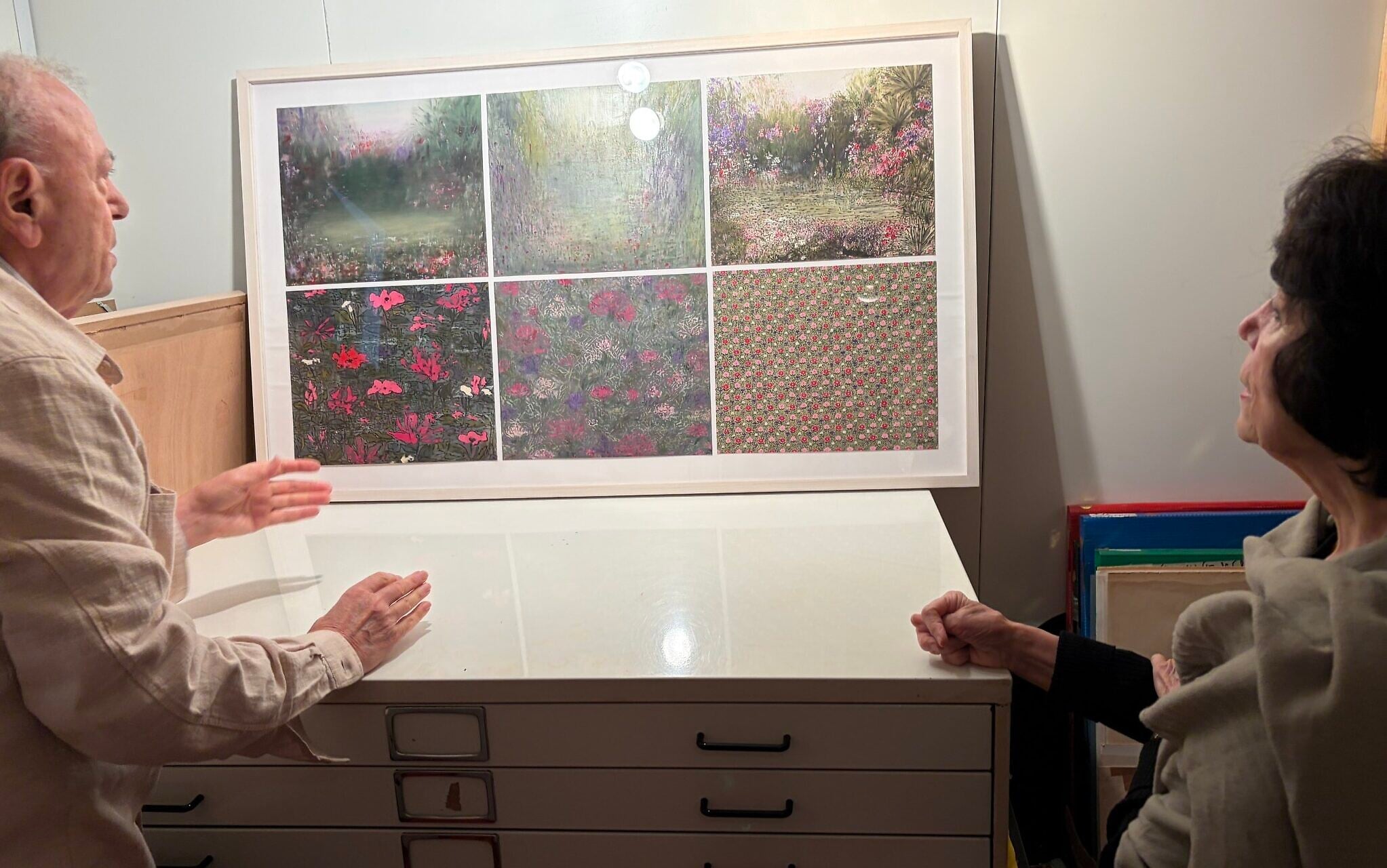
Artist Farideh Golbahar with her husband, Eli Said Golbahar, May 2026 (Jessica Steinberg/Times of Israel)
They came to Israel in 1971 and settled in Jerusalem, where they have lived ever since.
Their family members dispersed to London and the United States following the Islamic Revolution in 1978 and the fall of the shah the next year.
The Golbahars no longer have family or friends in Tehran, but during Israel’s recent wars with their homeland, they think about the Iranian people and the regime they’ve suffered under for nearly the last five decades.
When Golbahar was getting her new start in Israel, she immediately felt that her art and artistic process were welcomed.
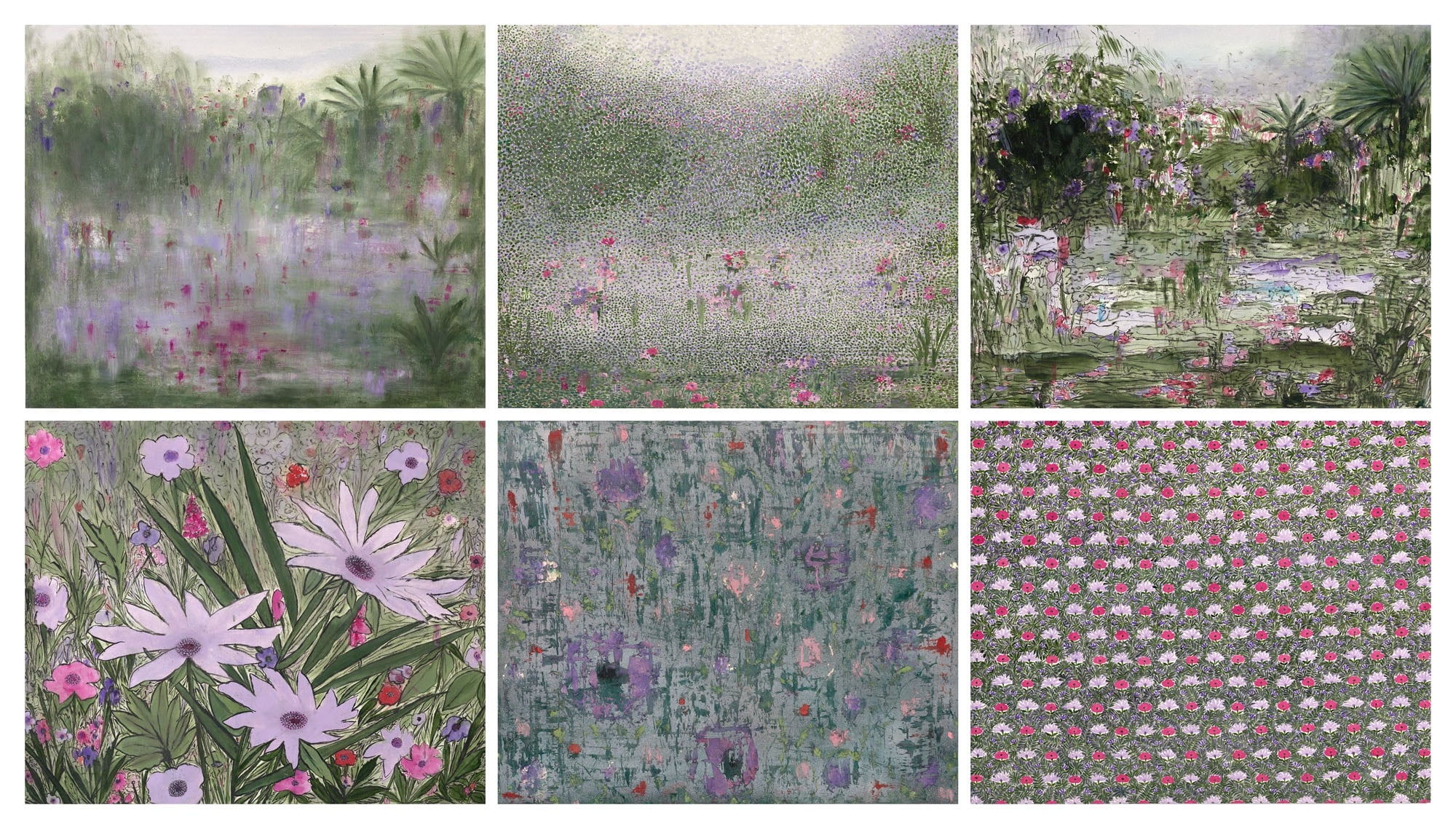
From artist Farideh Golbahar’s work, ‘About Landscape,’ oil on paper (Courtesy)
“From the beginning, we felt that people here really love art. Really,” she said. “They have a culture of buying art for their walls, and they decide for themselves what to buy.”
The Golbahars ran a local gallery for nearly 20 years, Gallery Gimmel in Jerusalem, featuring works by Pinhas Cohen-Gan, Rafi Lavie, Yair Garbuz, Gabi Klezmer and Moshe Kupferman.
And Golbahar continues painting to this day.
“Every time I paint something, I say, ‘Did I do this?’ and I couldn’t necessarily do it again,” said Golbahar. “I finish each piece, and that’s it. It’s difficult even for me to explain what I do. It’s as if the flowers and things were inside me and returning to me from my very beginning.”