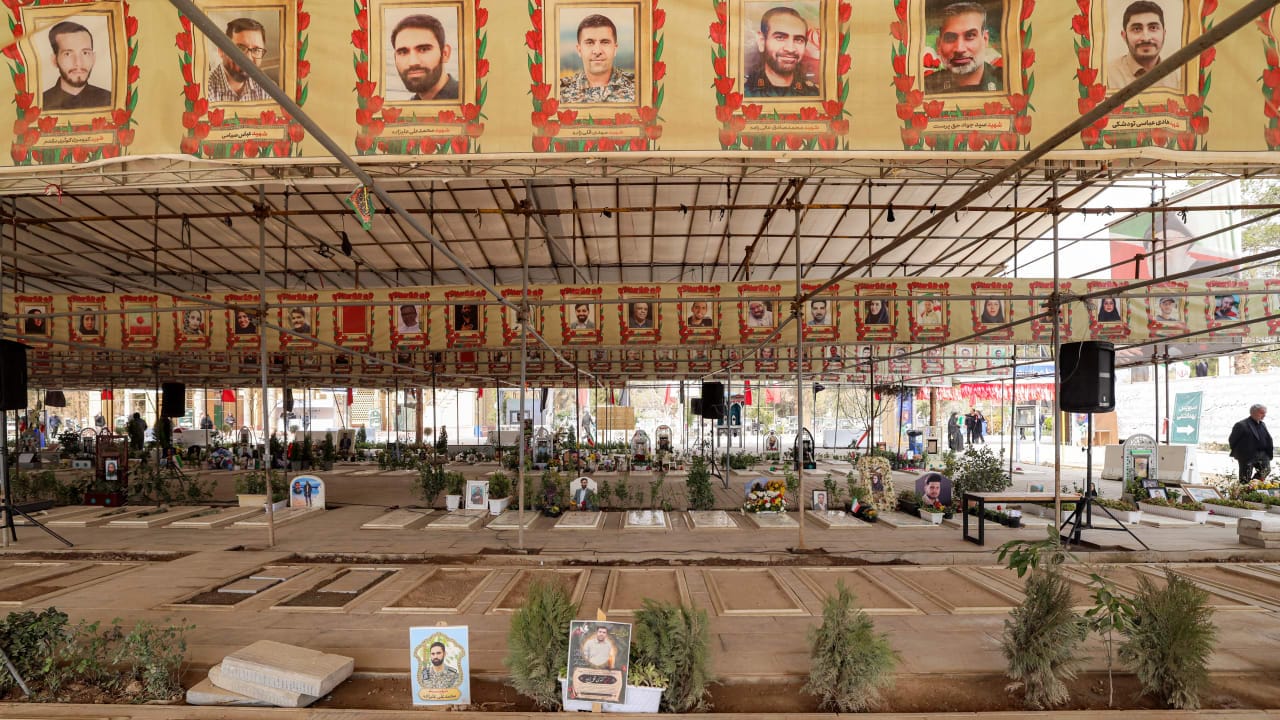
Funeral-related services at the famous Behesht-e Zahra cemetery have increased by up to 50% after the Tehran City Council adopted new tariffs, according to a report by the Iranian newspaper Donya-ye Eqtesad.
The new tariff will see families pay a 50% increase in the fee for transporting their deceased loved ones.
For a 10 km journey, families will now need to pay 9.75 million rials, not including the costs of ritual washing, the shroud, cold storage before burial, and gravestone installation.
The report also noted that the cost of renting items necessary for funeral services, such as canopies and chairs, has increased between 30-50%.
“Living conditions in Tehran have taken a turn for the worse, and the high cost of living has no mercy on the dead. Now, not only is life difficult in the expensive capital of Iran, but death has also become difficult,” Donya-ye Eqtesad published.
The cemetery is notable not only for Ayatollah Khomeini’s Mausoleum, but for Plot 41, where the bodies of thousands of executed dissidents were buried in unmarked graves after the Islamic Revolution and after the Iran-Iraq war.
More recently, the cemetery has become the burial site for protesters murdered during the January demonstrations, though Iran International reported that the regime has removed names from Behesht-e Zahra’s database in a suspected effort to erase evidence of its atrocities.
Earlier reports received by the media site have also reported that gravesites of demonstrators were vandalized, naming the resting places of Majidreza Rahnavard, Siavash Mahmoudi, Kian Pirfalak, Zakaria Khial, and Aylar Haghi as the primary victims of such damage.