
Two weeks after Prime Minister Benjamin Netanyahu said Israel would sue the New York Times over an article alleging systematic rape of Palestinian detainees, there is little indication that legal action is moving forward.
Precedence shows that such a suit would have little chance of succeeding, if it could be filed at all, and could backfire by exposing Israel to requirements to disclose sensitive information it would rather keep under wraps.
For now, government departments responsible for advancing a lawsuit of this sort are staying silent about where the process stands.
The NY Times article, published May 11 by opinion columnist Nicholas Kristof, alleged “a pattern of widespread Israeli sexual violence against men, women and even children — by soldiers, settlers, interrogators in the Shin Bet internal security agency and, above all, prison guards.”
Kristof quoted testimony from Palestinians who said they’d been regularly stripped naked in prison and groped, forcibly penetrated with various objects, or been mounted and raped by specially trained dogs.
Get The Times of Israel’s Daily Edition
by email and never miss our top stories
By signing up, you agree to the terms
The last claim, which has circulated in anti-Israel media for some time, has recently been amplified by the Euro-Mediterranean Human Rights Monitor, a Hamas-linked group which was also a key source for Kristof’s report.
Critics called the claim a “blood libel,” and the article drew protests from both Israel and US Jewish groups.

Protesters outside The New York Times offices in New York City, May 14, 2026. (Luke Tress/Times of Israel)
On May 14, Netanyahu together with Foreign Minister Gideon Sa’ar issued a joint statement describing the column as “one of the most hideous and distorted lies ever published against the State of Israel in the modern press.” They said that instructions had been given for “the initiation of a defamation lawsuit against The New York Times.”
But no formal statements have been issued by the Foreign Ministry or the Prime Minister’s Office regarding efforts to move forward with a defamation suit, and the two offices declined to respond to requests for comment on the issue.
The Foreign Ministry’s legal department is supposedly handling the matter, but has been tight-lipped over where the process stands.

Prime Minister Benjamin Netanyahu, right, and Foreign Minister Gideon Sa’ar attend a plenum session on the state budget at the Knesset in Jerusalem, December 16, 2024. (Chaim Goldberg/Flash90)
Danielle Rhoades Ha, a New York Times spokesperson, responded to the Netanyahu and Sa’ar statement by saying the suit would not hold up in court.
“The Israeli Prime Minister has threatened to file a libel lawsuit against The New York Times regarding Nicholas Kristof’s deeply reported opinion column on sexual abuse by Israel’s prison guards, soldiers, settlers, and interrogators,” the statement said. “This threat, similar to one made last year, is part of a well-worn political playbook that aims to undermine independent reporting and stifle journalism that does not fit a specific narrative. Any such legal claim would be without merit.”
The paper has stood by the article, with opinion section head Kathleen Kingsbury saying Kristoff’s reporting was rigorously fact-checked before publication “to ensure that every testimony and anecdote he personally reported was supported by independent sources.” After publication, she added, “We reviewed the factual challenges that readers and others raised… Editors found no errors.”
Following the publication by Nicholas Kristof in The New York Times of one of the most hideous and distorted lies ever published against the State of Israel in the modern press, which also received the backing of the newspaper, Prime Minister Benjamin Netanyahu and Foreign…
— Israel Foreign Ministry (@IsraelMFA) May 14, 2026
Pursuing a defamation suit against the New York Times in the US is widely believed to be an extremely difficult task, which would also entail substantial further risk to Israel’s reputation.
In 1923, the Illinois Supreme Court ruled that the City of Chicago could not sue the Chicago Tribune for defamation because allowing government agencies to sue their critics would undermine key principles of free speech and freedom of the press.
The ruling did not exclude the possibility of government officials and public employees suing for defamation, however.
Legal scholars believe the ruling would apply to foreign states and their government agencies, just as it does to American state agencies.
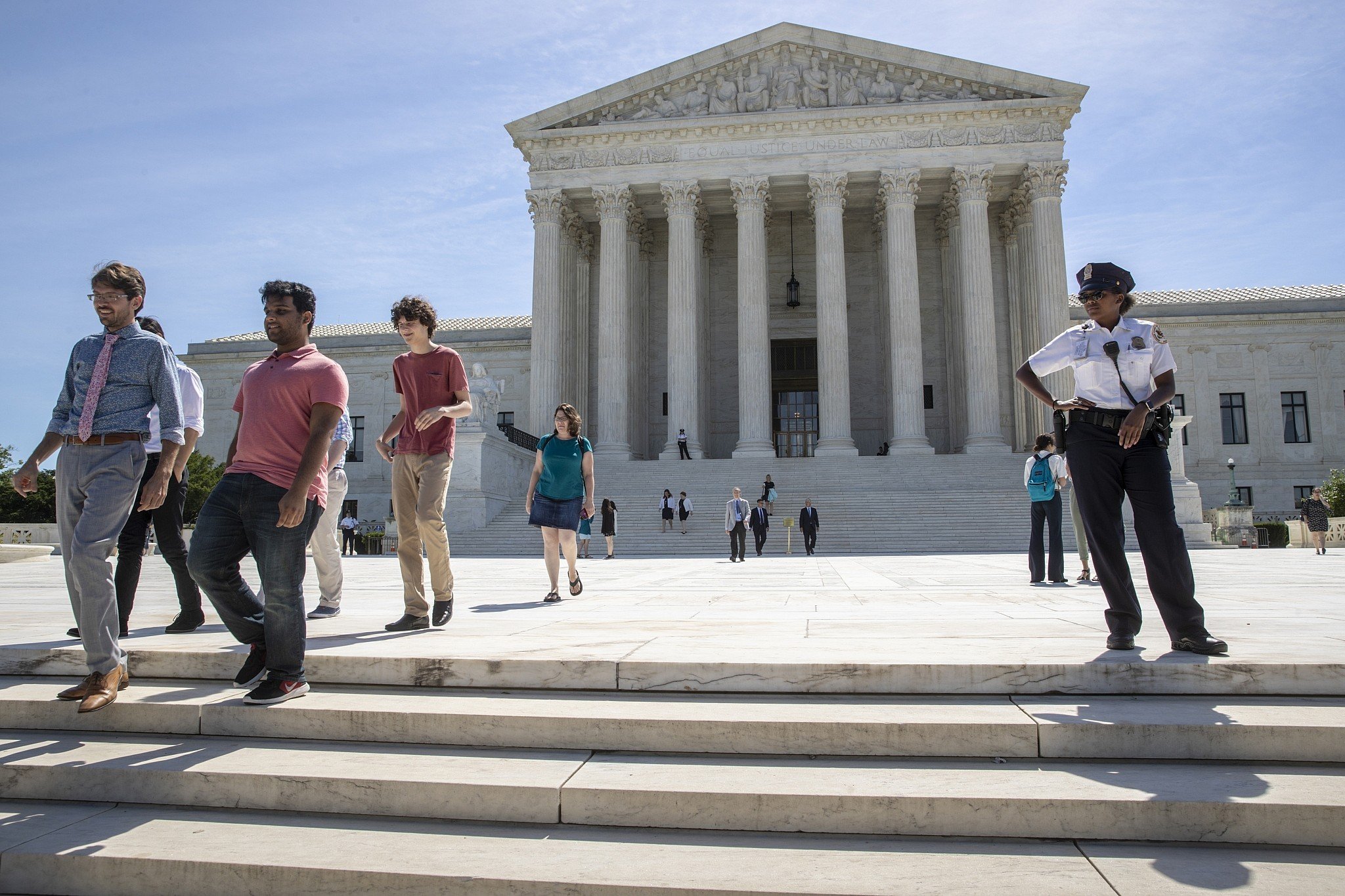
Visitors depart the Supreme Court, June 25, 2018. (J. Scott Applewhite/AP)
The Israeli government could potentially find specific officials who it says were defamed by the article and suffered economic harm as a result, such as Israel Prison Service officers, dog training personnel, and other security personnel involved in the detention and treatment of Palestinian detainees.
However, US courts have set a high bar for proving defamation claims, with most such lawsuits failing.
In 1960, the US Supreme Court ruled in New York Times Co. v. Sullivan that plaintiffs alleging libel or slander must prove that the defamation was done with “actual malice,” meaning the defendant either knew their allegation was false or recklessly disregarded the possibility that it might be false.
In a defamation suit, the New York Times would assert that its reporting was substantially true, and likely demand in court to see prison records, internal investigations, medical records, and other relevant documentation in the discovery process in order to support its claims.
If Israel were ordered to produce such material, the defamation suit could wind up bringing new evidence of abuse to light, the exact opposite of what Netanyahu and Sa’ar are trying to achieve.
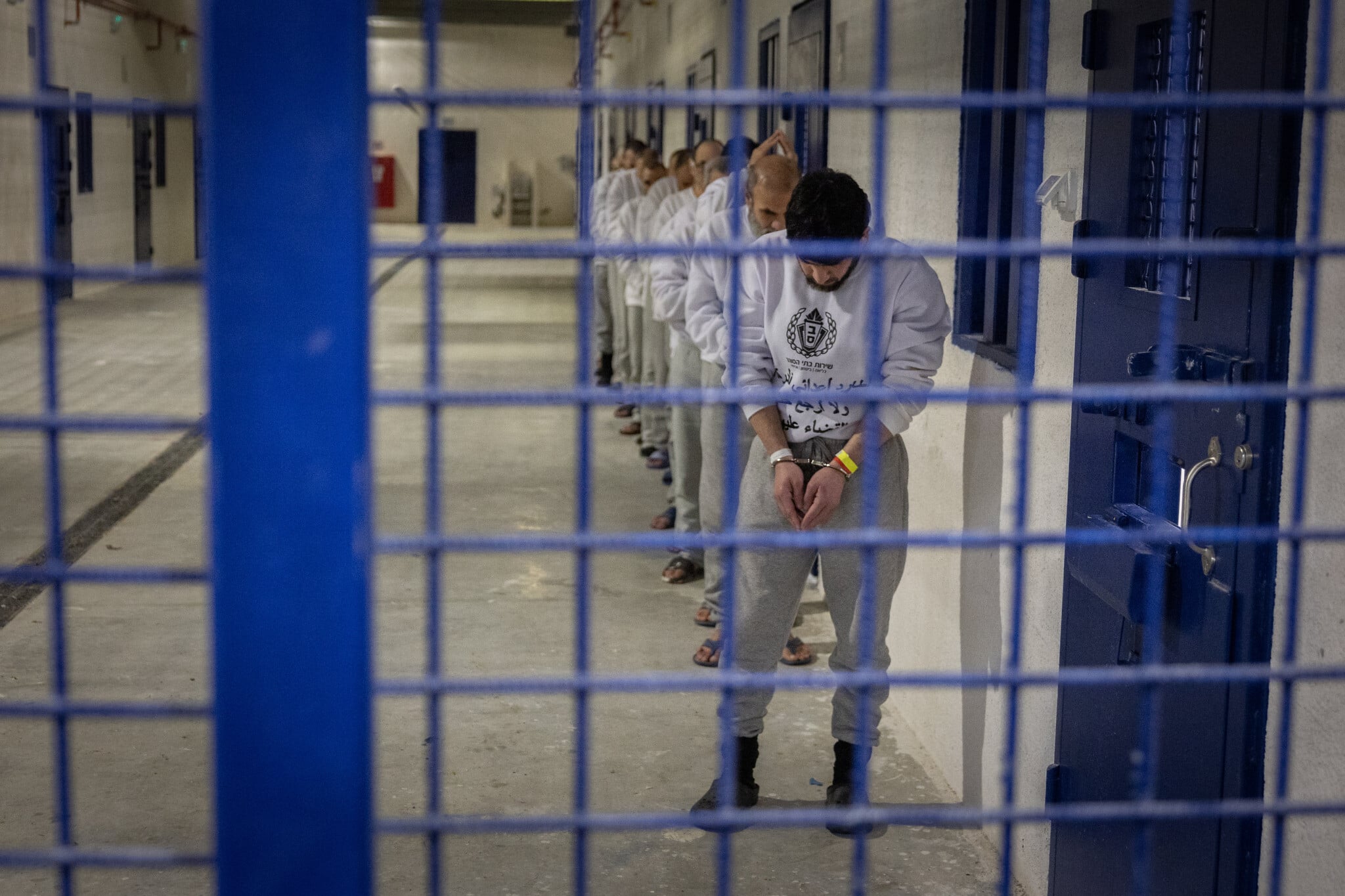
Israel Prison Service officers prepare inmates for release as part of a hostage deal at Ketziot Prison in southern Israel, on February 26, 2025. (Chaim Goldberg/Flash90)
In reports published in December 2025, Israel’s Public Defender’s Office, a department of the Justice Ministry, detailed systematic violence in Israeli detention facilities and prisons against Palestinian prisoners, and described one prison as “not fit to hold human beings.”
The reports, publicized following a Freedom of Information Act request, did not include allegations of sexual violence as claimed by the New York Times piece.
Regulations issued by the attorney general mean that specific incidents of violence are not made public in the Public Defender’s reports. Instead they are filed directly to the legal adviser of the National Security Ministry, who is then supposed to pass them on to the police unit that investigates prison guards.

Screengrabs of a video posted to National Security Minister Itamar Ben Gvir’s Telegram page on October 31, 2025, showing him next to tied-up Palestinian prisoners. (Telegram)
Far-right National Security Minister Itamar Ben-Gvir, who has authority over the police and the Israel Prison Service, has repeatedly touted the harsh treatment he has imposed on Palestinian prisoners during his tenure.
In response to the reports, prison commanders denied the Public Defender’s assertion of systematic violence in their prisons, and said prison staff violating the law would be punished.
But several human rights groups have alleged that grave abuse, including severe sexual violence, has taken place in Israeli detention centers and prisons since the October 7, 2023, Hamas invasion and massacres.
A report by the left-wing B’Tselem organization in January this year, which included testimony from released Palestinian prisoners, detailed what the organization said was “a grave pattern of sexual violence” in detention facilities and prisons “ranging from threats of sexual assault, through forced stripping, to actual sexual assaults.”

Blindfolded Palestinians captured in the Gaza Strip in a detention facility on the Sde Teiman military base in southern Israel. (Breaking The Silence via AP)
According to the report, the sexual violence included “beatings to the genitals that caused severe injuries, setting dogs on prisoners, and forced anal penetration with various objects.”
B’tselem’s report included the testimony of two released prisoners who stated that they had been raped with a hard object, one of whom was also interviewed by Kristof for his article, and one prisoner who stated he had been beaten on his genitals.
The report did not include allegations that dogs raped prisoners, as Kristof’s piece did.
A spokesperson for the IPS denied the allegations in B’Tselem’s report and stated that the service was “not aware of the claims described.”
A court would not necessarily grant every discovery request and could limit records to what it deems relevant and proportional to the case. It could also grant Israeli requests to withhold some documents on the basis of protecting national security interests.
Though the New York Times is based in the US, Israel could file suit elsewhere, including at home, where the bar for defamation claims is lower, though doing so would limit the effect of any ruling or what damages could be collected.
Libel suits in Israel are filed all the time, and are regularly successful, but are only possible if a specific person was named as the object of the alleged defamation.
However, an Israeli official who believes they were financially harmed by the New York Times article could still pursue claims against the newspaper based on “injurious falsehood” via a narrow civil tort suit rather than defamation, according to Mark Goldfeder, a legal scholar and CEO of the National Jewish Advocacy Center in the US.
Such a suit would seek damages by attempting to prove that a specific claim caused harm to a plaintiff, such as a Prison Service dog trainer suing over the allegation that dogs were trained to rape Palestinian prisoners.

Prison guards stand watch as a convoy carrying released Palestinian prisoners leaves the Ketziot Prison as part of a deal in exchange for hostages held in Gaza on February 27, 2025. (Chaim Goldberg/Flash90)
The case would still be subject to discovery, but the requirement would be limited to documentation relevant to the specific allegation only.
Goldfeder wrote in the National Review that such a narrowly focused suit could also compel the New York Times to produce its evidence for the allegation. Section 1782 of Title 28 of the United States Code allows litigants in court proceedings outside the US to apply to US courts to obtain evidence for those proceedings, he noted.
This could compel the New York Times to produce documents identifying the basis for the dog rape allegation, fact-checking notes and editorial review records, and internal discussions of reliability or corroboration, among others.
If the New York Times really did do its due diligence on the Kristof piece, then it should have no problem producing the evidence to prove it, Goldfeder said. If it did not, then Israel might have a window to score a legal victory over one particularly injurious claim.