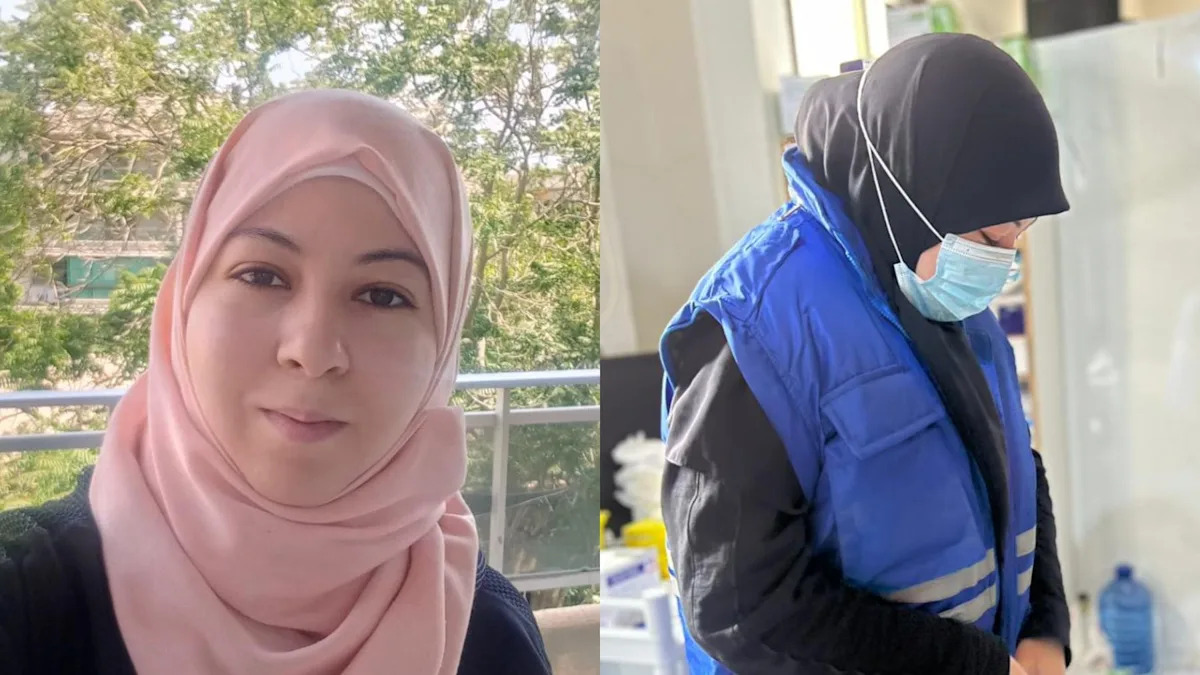
A nurse-turned-teacher has detailed the realities of life in Lebanon since the escalation of war, describing being “between body bags holding lost innocent lives at night and teaching students the very next day”.
Israa Hassan, 31, who lives in Aramoun near Beirut, said her school has moved lessons online, but she has “lost contact” with some of her students and her “mind immediately goes to the worst possibilities”.
Lebanon became directly involved in the war between Israel, the US and Iran on March 2 when Hezbollah retaliated for the killing of Iran’s supreme leader, Ali Khamenei, then Israel launched air attacks across the country and a ground invasion in the south.
In the aftermath, Israa said her school building was converted into a shelter for people who have fled their homes, and the United Nations estimates more than one million people have been registered as displaced.

Israa has more than a decade’s worth of experience in healthcare (Collect/PA Real Life)
With her school in Mount Lebanon repurposed, Israa said that the “warmth of a classroom changed into a cold colourless screen”, but she has tried to “keep education going in the middle of uncertainty”.
Israa told PA Real Life: “Suddenly, within one night, I became a responder – a health worker trying to alleviate pain – and an educator trying to hold a space for children who were afraid, displaced or emotionally overwhelmed.
“The hard part is keeping a smile and motivation, after spending sleepless nights due to sounds of drones and night strikes.
“Or telling students during the day that the future holds beautiful things, right after witnessing an injured mum losing her kid the night before.”

Israa has worked as a nurse in Lebanese hospitals (Collect/PA Real Life)
As of June 9, 3,666 people have been killed and 11,321 have been injured since the start of the conflict in March, according to the country’s ministry of public health.
Israa began nursing aged 18 in 2013 and completed further emergency medical technician training to be a medic, working in healthcare for over a decade, including during the Beirut blast in August 2020 and during the Gaza-Israel war from October 7 2023.
Then in the summer of 2024, Israa said she came across the non-governmental organisation Teach for Lebanon online, which helps ensure that all children in Lebanon have access to education, regardless of socioeconomic background.
She said: “I thought to myself, you know what, why not try something else?”

She is part of a fellowship with Teach for Lebanon (Collect/PA Real Life)
Israa started four weeks of summer training in August 2024 and was accepted for a two-year fellowship, which includes school placement for a minimum of two years in a full-time teaching position.
Starting in September 2024, Israa had about 40 students in each session, lasting about 45 minutes, teaching English to grades three and four, with students aged nine and 10.
Israa explained what a typical day looked like. “I’d have the class in teams, so we’d have the cheetahs and the eagles, and they would have to collect points.
“So, I’d be teaching them about who, what, when, where and why questions, showing them videos and asking them to create their own sentences.

She is trained as a medic (Collect/PA Real Life)
“We’d do some games, where we would see who could create the fastest sentence, with prizes and things like that.
“It was fun.”
But that fun stopped on March 2 this year when the war escalated and Israa said everything “shifted drastically”.
For the first couple of days, Israa said “teaching stopped all over Lebanon” while everyone wanted to make sure their loved ones were safe.

Before the war, Israa had classes of 40 students (Collect/PA Real Life)
And within the first week, the school was repurposed to become a shelter for displaced families.
From there, Israa said it took her school a “couple of weeks to recalibrate” and to see what options they had because they had to factor in challenges like network issues and displacement.
Israa said: “Professionally, this looked like a shift from lesson planning and activities, to trying to understand which students were safe, which families are displaced and how to keep education going in the middle of uncertainty.”
Israa said she felt “obligated” to lean on her skills as a medic to help with medical emergencies, alongside local healthcare worker friends.
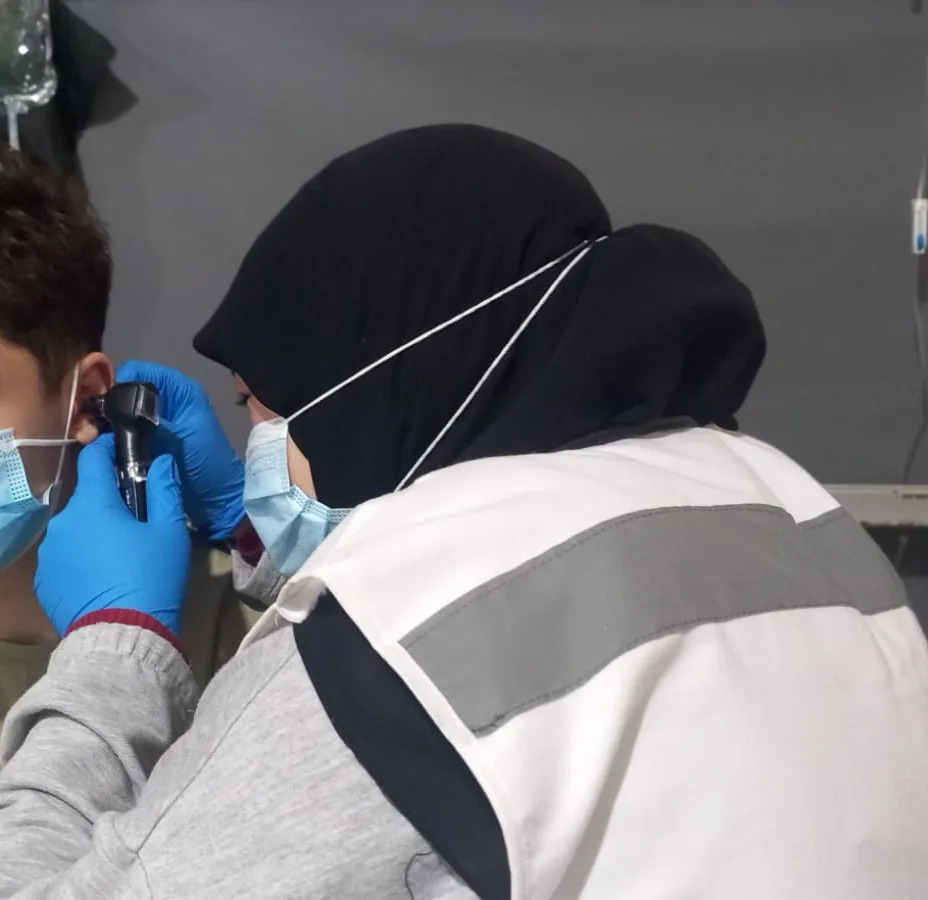
Israa checking a child’s temperature (Collect/PA Real Life)
She said she has performed “medical assistance and procedures to injured civilians” at sites of “nearby strikes”, and has helped provide devices like generators or walking assistance tools like canes and wheelchairs.
Israa said: “I remember treating people who came out of rubble, while others arrived exhausted, frightened and displaced.
“Sometimes what they needed most was not only medical care, but reassurance that someone was there to help.
“You are always expected to be calm and composed, but deep down I was worried about my family and community.

She believes children need education even more during conflict (Collect/PA Real Life)
“Self-care is really important, in order for you to help out others.”
When her school decided to resume lessons online within two weeks of the war, Israa continued to offer medical assistance at night.
She said: “Never have I thought that I’ll be between body bags holding lost innocent lives at night, and teaching students the very next day.
“It was difficult at first creating that balance between what’s going on and what you’re seeing at night, with difficult scenes sometimes, and then going back to teach.

Israa has lost contact with some of her students (Collect/PA Real Life)
“You didn’t want to spread your own emotions and fears into your students because they are already going through a lot.”
Immediately after resuming online lessons, Israa said the dropout was “drastic” and there are students she still has not heard from since before the war.
She said: “I haven’t received any confirmation that I lost a student, but I have had confirmation that some of my students unfortunately got displaced and continue to live in shelters.”
Israa said a typical day of teaching now involves regularly checking in with her students on their mental health and “telling them each and every day how proud” she is and how much she believes they are “trying as much as they can”.

She wants to ‘keep education going in the middle of uncertainty’ (Collect/PA Real Life)
She is touched by their resilience, citing one displaced boy in particular who she said “keeps insisting that he wants to learn”.
She added: “I had students who attended lessons despite having lost their normal routines completely.
“The more tragedies I saw, the more I believed that even during war, children do not stop needing education, routine and hope.
“As teachers, our role is to keep that connection alive, even in the most difficult circumstances.”
For more information about Teach for Lebanon, visit its website here: https://teachforlebanon.org/Home/S_Index.