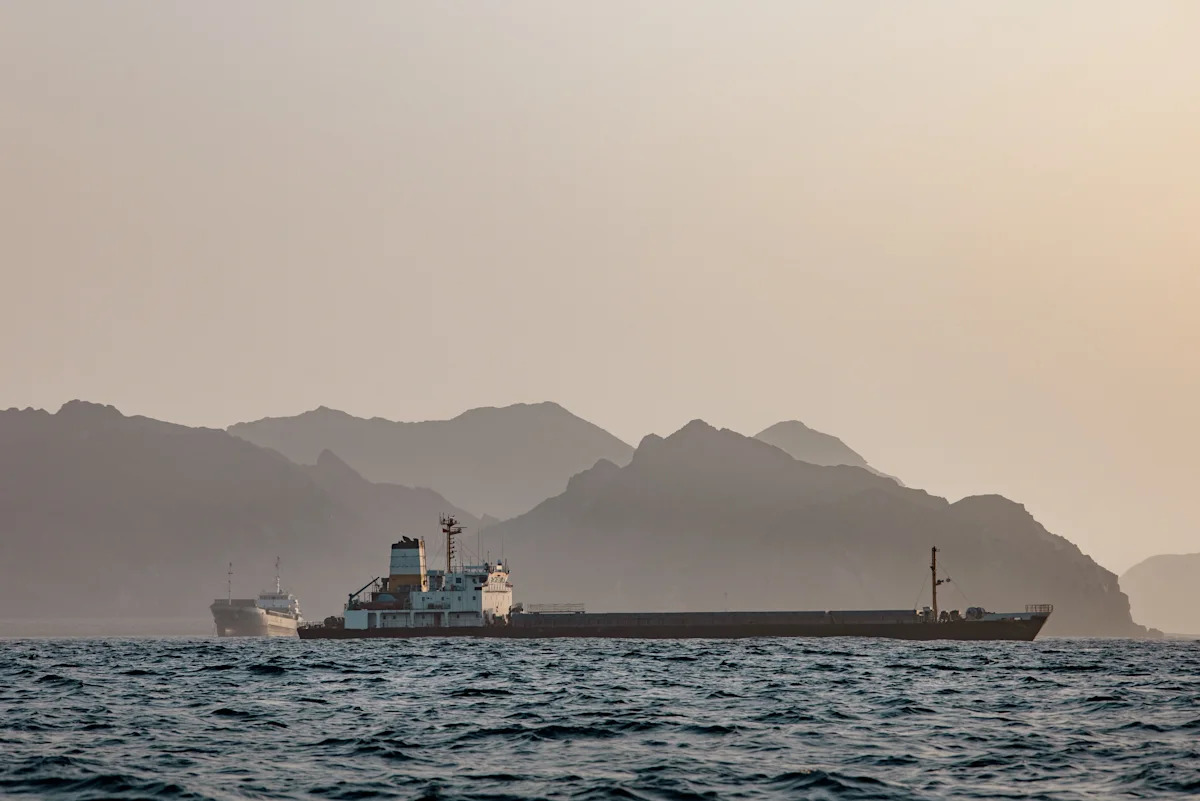
Commercial traffic through the Strait of Hormuz appears to be moving more despite volatile negotiations between the U.S. and Iran to end the conflict, along with the latter’s decision over the weekend to introduce “passing requests” for vessels transiting the oil conduit.
A full recovery for container shipping would take three months if current conditions hold, according to ocean and air freight benchmarking platform Xeneta.
More from WWD
Due to the litany of disruptions in the area since the start of the war, a recovery of ocean supply chain networks would be put at mid-September 2026 in a best-case scenario. Xeneta said in this scenario, spot rates would rise for at least another four weeks before the market peaks.
“Carriers had to act fast when the conflict escalated and the Strait of Hormuz closed in February, but the return will be far more cautious,” said Peter Sand, chief analyst at Xeneta. “A sudden deterioration in the security situation would have the most severe network-wide impact if it causes a failure on a mainhaul Asia-Europe or Asia-North America string, so carriers will start with smaller, lower-risk feeder services.”
The nature of the conflict has made current conditions volatile, thus leaving the three-month timeline up to multiple factors. Xeneta acknowledged that the 14-point memorandum of understanding aimed at ending the war and opening the Strait of Hormuz to all traffic also set a 30-day window for minesweeping operations, which “may well take much longer.”
On Friday, in the days after the U.S. and Iran signed the MoU, the Persian Gulf Strait Authority (PGSA) posted a notice saying that vessels should submit passing requests 48 hours prior to arriving in the strait area.
The Islamic republic’s attempted control over the passage also includes mandatory PGSA-approved insurance for all shipowners of vessels transiting the channel. The insurance requirement carries no fee during that period, but the authority says charges may be imposed once the MoU’s established 60‑day toll-free window closes.
The situation escalated again on Saturday after Tehran said it closed the Strait of Hormuz because of Israel’s attacks in Lebanon. In response, President Donald Trump threatened to instead impose American-administered tolls in the crucial waterway if a final deal with Iran isn’t reached in the 60-days timeframe, saying the money would be for “services rendered as the Guardian Angel to the countries of the Middle East.”
Story Continues
Ship tracking data suggests more vessels have taken chances to pass through the waterway despite the back-and-forth. Maritime intelligence company Windward AI said 25 AIS-visible transits were recorded on Monday, including French- and Qatari-linked LNG carriers.
“The next 24-to-48 hours will be decisive,” said Windward AI in a post on X Monday morning. “If neutral commercial traffic continues to transit, the renewed permit requirement has had limited operational impact. If vessels begin holding position or diverting, Iran will have succeeded in triggering a second disruption to commercial shipping.”
And according to data from ship tracking intelligence company MarineTraffic, confirmed crossings through the monitored Strait of Hormuz zone rose sharply over the Friday-to-Sunday stretch, with 71 total transits recorded. Activity peaked at 35 crossings on Saturday before easing to 17 on Sunday.
These volumes still fall below the pre-war cadence, when roughly 130 to 160 vessels were passing through the strait every day.
Low-risk vessels, which are categorized as ships that are not sanctioned by any government, accounted for the largest share of the weekend’s crossings at 44, followed by 14 “shadow” and 13 sanctioned crossings.
MarineTraffic said the implementation of a broader roadmap toward a final deal to end the war within 60 days remains fragile, citing the renewed regional fighting between Israel and Hezbollah in southern Lebanon and the wider skepticism of the agreement’s durability.
“The blockade lift has unlocked a clear rebound in crossings, yet the high use of Iranian and Dark routes, unfinished de-mining and still-fragile diplomacy mean recovery is likely to remain uneven rather than linear,” wrote Ana Subasic, trade risk analyst at MarineTraffic, in the company’s daily risk monitoring update Monday.
As operators continued waiting for clarity on transit conditions, ports in the U.A.E. including Fujairah and Khor Fakkan have remained heavily congested, according to Windward.
Fujairah surged from just five vessels on June 15 to approximately 90 vessels by June 18 in following the signage of the MoU, with the company saying Khor Fakkan remained even more congested at roughly 130 vessels. “Despite the reopening, operators have not yet begun departing in masses,” Windward said Monday. “The fleet continues to maintain a cautious holding posture while awaiting greater certainty regarding Iranian restrictions and enforcement.”
Best of WWD