
For weeks, local tech exporters and manufacturers have been warning that the overly strong shekel poses a serious risk to major growth engines of the economy, exerting pressure on the government to act.
Speaking at a Knesset plenum on Wednesday, Finance Minister Bezalel Smotrich announced that a package of assistance measures is expected to be published in the coming days to help Israeli startups and tech firms cope with the repercussions of the strong currency, which harms their profitability and makes business operations in Israel costlier and less viable.
“The strong shekel reflects a strong economy supported by a flow of foreign investments not only in the capital market but also in traditional industries, high-tech, and in defense industries,” said Smotrich. “The problem is the fast pace of the appreciation.”
“Businesses need time to adapt to the strong shekel, which we estimate is the new normal for the Israeli economy,” Smotrich cautioned.
Over the past year, the shekel, which recently reached a 33-year-high, has risen by about 20% against the dollar despite an economy strained by military campaigns in Iran, Lebanon and Gaza. The appreciation has been fueled by growing optimism about an improved geopolitical environment, global dollar weakness, and inflows of foreign capital into local companies.
Sign up for the Tech Israel Daily
and never miss Israel’s top tech stories
By signing up, you agree to the terms
Meanwhile, the strength of the local currency has been driving up operational costs, forcing tech exporters and startups to make tough decisions about sweeping layoffs, hiring abroad, and moving R&D centers out of Israel, stirring fears about future growth.
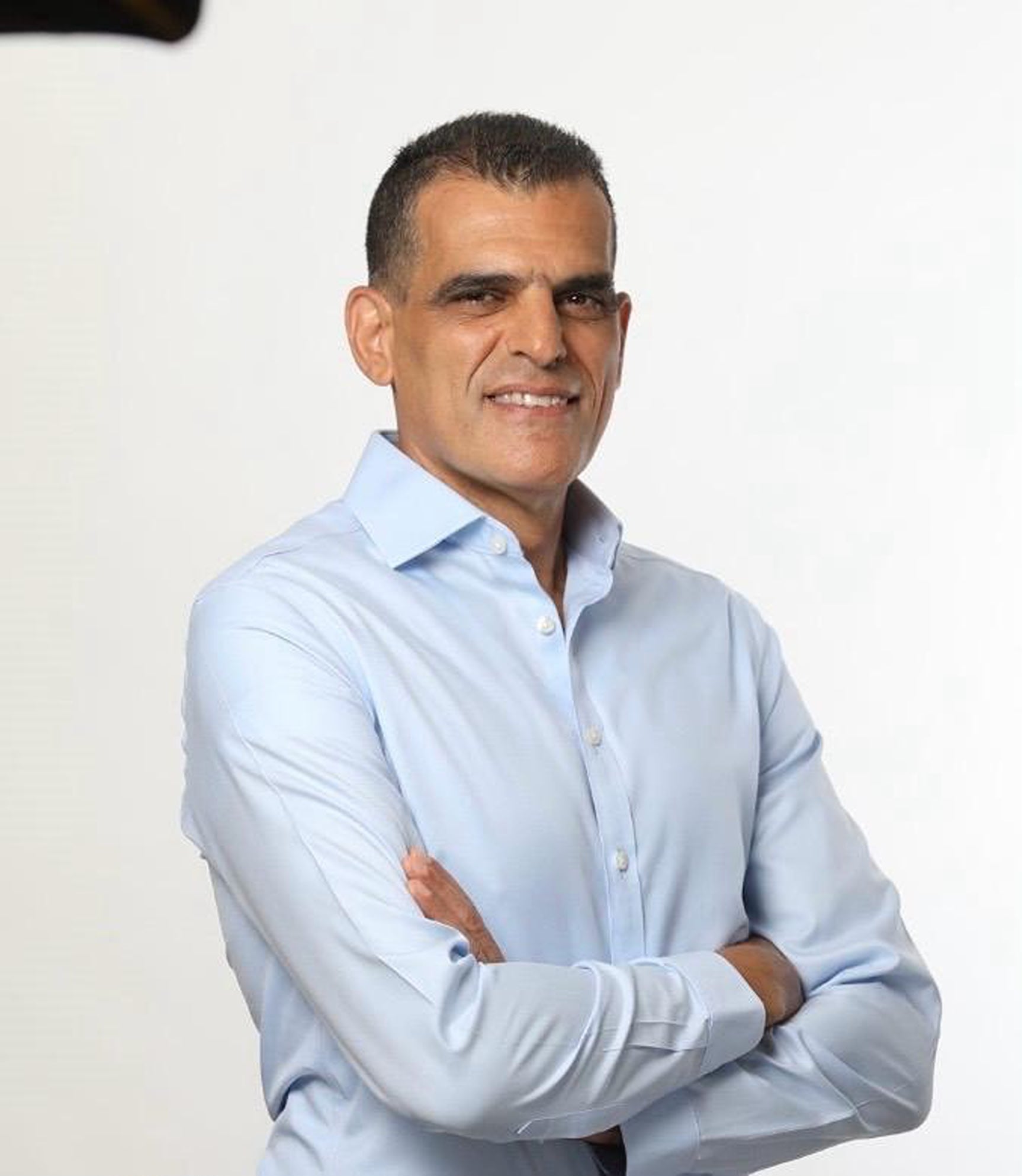
Alon Ben Zur, Chairman of the Israeli High-Tech Association and CEO of Bynet Data Communications. (Courtesy)
Tech contributed to about half of the economy’s growth in 2025, and its share of GDP reached a record high of 18.3%, cementing the sector as a major pillar of the Israeli economy.
Israel’s tech firms, traditional manufacturers, and multinational companies, earn their money chiefly outside Israel and are paid in dollars. But they pay workers’ salaries, overhead costs, taxes and other expenses in shekels, and these have all become more expensive due to the strength of the local currency.
“The norm over the past decade was that Israeli engineers are 10 to 15% cheaper than their equivalent in America, contributing to the success of tech in Israel,” RISE Israel Institute chief economist Assaf Patir told The Times of Israel. “If the shekel remains strong and over a period of time, Israeli tech and software engineers will continue to be more expensive than their counterparts, then we will have no tech here.”
“The government needs to be worried and should take at least temporary measures to make sure that the local tech sector doesn’t collapse,” Patir said.
Smotrich said the ministry was finalizing an assistance plan to help cash-strapped startups and more mature growth companies bridge the financial impasse created by the strong shekel, reduce further layoffs in Israel, and avert a relocation of tech and multinational companies to cheaper markets abroad.
Alon Ben Zur, Chairman of the Israeli High-Tech Association at the Manufacturers Association of Israel, said that after many months of fighting, there finally appears to be an understanding about the significant damage caused by the shekel-dollar exchange rate to the local tech industry.
“If we want to benefit from Israel’s unicorns and startups, we need to support them as they represent a powerful economic engine that generates substantial revenues for the State of Israel,” said Ben Zur, who also serves as CEO of Bynet Data Communications. “Businesses operate in an environment driven by expectations and therefore the timing of the assistance plan is critical as it is sending a positive signal to local and multinational companies that action is being taken, even if it is temporary.”
“We hope the assistance plan will not lose momentum because of delays or weak implementation; otherwise, the damage will be significant and irreversible, as many companies are already changing direction and moving operations outside Israel due to the current situation,” he warned.

Illustrative photo of a shekel and a US hundred-dollar bill, April 13, 2026. (Nati Shohat/Flash90)
While Smotrich said the ministry was formulating a proposal for two assistance packages, he did not elaborate on the financial magnitude or cost. One package will provide an immediate response, primarily for startups, by allocating bridging grants via tracks operated by the Israel Innovation Authority, similar to previous periods during the coronavirus pandemic.
The grants are intended to help startups cope with a shortened cash runway. Due to the rapid change in the exchange rate, many startups or early-stage companies operating on runway costs from foreign investors aren’t able to stretch that dollar-denominated funding as far as they had planned to.
“The objective is to provide bridge grants that will help startups get through this difficult period,” said Ben Zur. “Sometimes, just a few months can determine whether a startup survives or fails.”
A similar package is also planned for growth or more mature tech companies with different funding needs.

RISE Israel Institute chief economist Assaf Patir. (Courtesy of Micha Loubaton)
Smotrich disclosed that the government was particularly worried about foreign corporate boards deciding to relocate Israel operations or establish new R&D centers outside the country in light of increased local employment costs.
“The bigger challenge is the multinational companies,” said Smotrich. “We are currently evaluating mechanisms and incentives to encourage multinational corporations to expand their operations in Israel and shrink them elsewhere.”
The incentives under discussion relate to investments in Israel, taxation, and additional policy tools. Among them is a measure that would allow multinational corporations such as Nvidia or Microsoft to pay certain corporate taxes in dollars instead of converting funds into shekels.
“There is an understanding that once multinational companies leave Israel, it is difficult to bring them back,” said Ben Zur.
We can’t do this work alone.

The war with Iran has been draining for all of us in Israel. But when I heard about a high casualty incident – ballistic missile impacts in Arad and Dimona that left nearly 200 people wounded – I drank a cup of coffee, packed a bag, and headed south.
There, I spoke with Shilgit, the head of an after-school program for underprivileged youth. Standing outside her destroyed center, Shilgit said it was a miracle that no children were hurt and spoke about the community coming together in the hours since.
As a Times of Israel reporter, I’m committed to telling stories of resilience like Shilgit’s. But my colleagues and I can’t do this alone. If you value work like this, please consider joining our reader support group, The Times of Israel Community. Your financial support is essential to keep real human reporting like this going.
— Stav Levaton, military reporter
Already a member? Sign in to stop seeing this
You’re a dedicated reader

That’s why we started the Times of Israel – to provide discerning readers like you with must-read coverage of Israel and the Jewish world.
So now we have a request. Unlike other news outlets, we haven’t put up a paywall. But as the journalism we do is costly, we invite readers for whom The Times of Israel has become important to help support our work by joining The Times of Israel Community.
For as little as $6 a month you can help support our quality journalism while enjoying The Times of Israel AD-FREE, as well as accessing exclusive content available only to Times of Israel Community members.
Thank you,
David Horovitz, Founding Editor of The Times of Israel