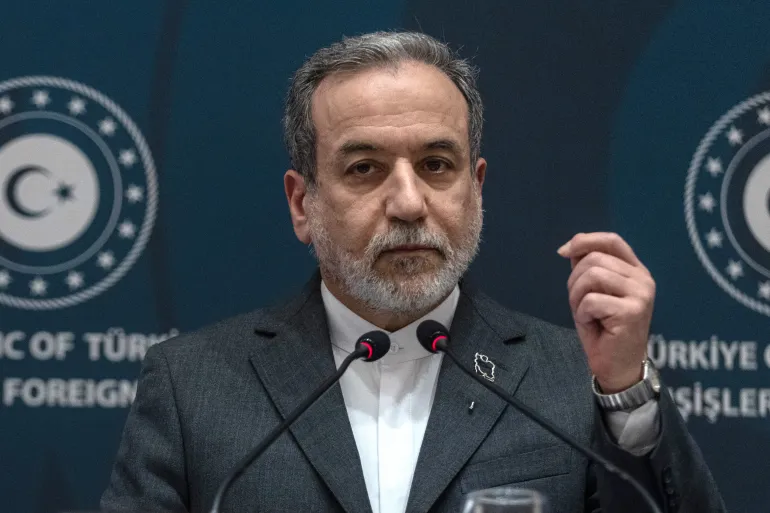
Iranian Foreign Minister Abbas Araghchi said on Sunday that the Strait of Hormuz would return to normal operating capacity under Iran’s management once Tehran removes the remaining obstacles, rejecting proposals for alternative maritime arrangements.
Speaking during a visit to Iraq, Araghchi said the recent U.S.-Iran memorandum of understanding gives Iran sole responsibility for restoring normal navigation through the strategic waterway and that no other country or international body has a role in reopening the strait, according to Iran’s state news agency IRNA.
He warned that any separate initiatives or new arrangements for shipping through the Strait of Hormuz would complicate the situation, delay the reopening process and increase regional tensions.
The remarks come days after Iran launched missile and drone strikes against U.S. military facilities in Kuwait and Bahrain in retaliation for American airstrikes on Iranian military targets along the Gulf coast and near the Strait of Hormuz. The exchanges briefly disrupted commercial shipping and renewed concerns over the security of one of the world’s busiest energy corridors before a U.S.-Iran ceasefire framework was announced.
Under that framework, Washington and Tehran agreed to halt direct military operations and restore freedom of navigation in the Gulf. The Strait of Hormuz, located between Iran and Oman, carries roughly one-fifth of the world’s seaborne crude oil exports, making its security critical for global energy markets. While Iran insists the waterway will reopen under its supervision, Oman has recently proposed an alternative shipping corridor along its territorial waters to reduce risks for commercial vessels, a proposal that Tehran has rejected.