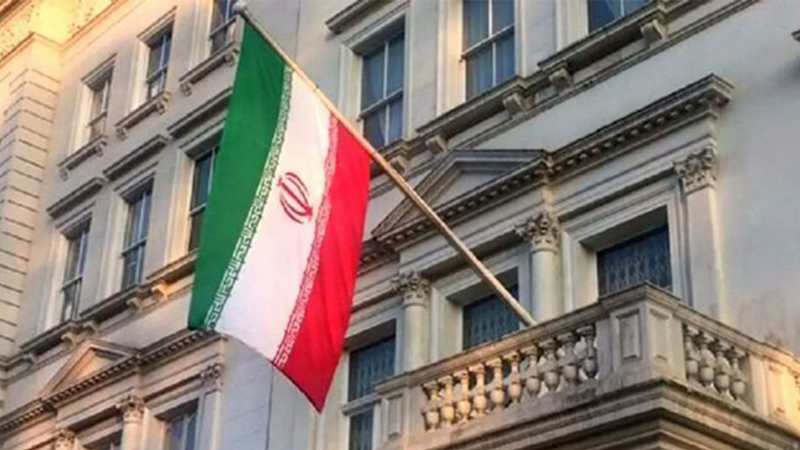
Iran has sharply escalated its rhetoric toward Bahrain after an adviser to Supreme Leader Ayatollah Ali Khamenei warned Manama against what Tehran described as actions that could provoke the Islamic Republic.
The warning comes after Iran launched strikes targeting a United States naval base in Bahrain, saying the attacks were retaliation for US military operations against Iranian territory, News.az reports.
The latest exchange highlights growing tensions in the Gulf and raises fresh concerns about the possibility of a broader regional confrontation involving Iran, the United States, and Washington’s Arab allies.
Why did Iran issue a warning to Bahrain?
Iran’s warning to Bahrain came after Tehran accused the Gulf kingdom of allowing its territory to be used for military operations against the Islamic Republic. Ali Akbar Velayati, a senior adviser to Iran’s Supreme Leader, warned Bahraini authorities to “know their limits,” saying Iran would not hesitate to take tougher measures if it concluded that Bahrain was actively facilitating hostile actions against Iranian interests.
According to Iranian officials, the warning is directly linked to recent military developments involving the United States. Tehran argues that American forces stationed at military facilities across the Gulf, including in Bahrain, have been involved in operations targeting Iran. Because Bahrain hosts one of the most strategically important US military installations in the Middle East, Iranian leaders increasingly view the country as part of Washington’s broader regional military network.
Iran maintains that if neighboring states permit their territory to be used for attacks against Iran, they could also become legitimate targets in any future confrontation. The warning therefore serves both as a political message to Bahrain and as a broader signal to other Gulf states hosting American military forces.
What exactly did the Iranian official say?
Ali Akbar Velayati delivered one of Tehran’s strongest public warnings to Bahrain in recent months. He stated that Bahrain should “know its limits” and avoid actions that could force Iran to adopt “harsh decisions.”
Although Velayati did not explicitly threaten immediate military action, his remarks suggested that Iran believes Bahrain risks becoming more deeply involved in the ongoing confrontation between Tehran and Washington. His comments reflect Iran’s longstanding position that countries hosting US military forces bear responsibility if those facilities are used in operations against Iranian territory.
Statements from senior advisers to Iran’s Supreme Leader are generally viewed as reflecting the broader strategic thinking of the Iranian leadership. While such comments are not official military orders, they often signal Tehran’s intentions and serve as warnings to regional governments about possible consequences if tensions continue to escalate.
What triggered the latest tensions?
The immediate trigger was Iran’s missile strikes against a US Navy base in Bahrain on Friday and Saturday. Tehran described those attacks as retaliation for earlier US military strikes targeting Iran.
Iran has repeatedly accused the United States of launching attacks from military bases located throughout the Gulf region. American military facilities in Bahrain, Qatar, Kuwait, the United Arab Emirates, and elsewhere play an important role in US operations in the Middle East. Tehran argues that these installations provide logistical support, intelligence, and operational capabilities for missions directed against Iran.
The United States and its regional allies reject these accusations. Nevertheless, the exchange illustrates how regional military bases have become central to the confrontation between Washington and Tehran, increasing the possibility that neighboring countries could become caught in the conflict.
Why is Bahrain important to the United States?
Bahrain occupies a strategically vital position in the Persian Gulf and has long been one of Washington’s closest security partners in the region. The country hosts the headquarters of the US Navy’s Fifth Fleet, which oversees American naval operations across the Gulf, the Arabian Sea, the Red Sea, and parts of the Indian Ocean.
The naval base serves as a critical hub for maritime security, freedom of navigation, counterterrorism operations, and the protection of international shipping routes. Thousands of American military personnel are stationed there, alongside warships, surveillance assets, and logistical support facilities.
Because of this military presence, Bahrain has become one of the most important components of the United States’ regional defense architecture. From Iran’s perspective, this makes Bahrain a significant strategic player rather than merely a neighboring Gulf state.
Why does Iran accuse Bahrain of helping the United States?
Iran believes that American military bases throughout the Gulf provide operational support for US actions against Iranian targets. Since Bahrain hosts one of the region’s most significant US naval facilities, Tehran argues that Bahraini territory contributes to Washington’s military capabilities.
Iranian officials frequently distinguish between the Bahraini government and the American military presence, but they argue that allowing foreign military forces to operate from Bahraini territory makes the country partly responsible for actions launched from those facilities.
Bahrain strongly rejects this narrative. Manama maintains that its defense cooperation with the United States is fully legitimate and aimed at preserving regional security rather than supporting offensive operations against neighboring countries.
How has Bahrain responded?
Bahrain condemned Iran’s recent strikes, describing them as violations of its sovereignty and international law. Bahraini officials argued that attacks against their territory undermine efforts to reduce regional tensions and threaten stability across the Gulf.
The Bahraini government has consistently maintained that disputes involving Iran and the United States should be resolved through diplomacy rather than military escalation. Officials have expressed concern that continued exchanges of strikes risk drawing additional countries into a wider regional conflict.
Manama also insists that protecting its territory and citizens remains its highest priority and that any attack against Bahraini soil is unacceptable regardless of the stated justification.
Why are Iran and Bahrain’s relations often tense?
Relations between Tehran and Manama have remained strained for decades due to political, security, and ideological disagreements. Bahrain accuses Iran of interfering in its domestic affairs and supporting groups seeking to undermine the country’s stability. Tehran, meanwhile, has repeatedly denied sponsoring violent activities inside Bahrain.
The relationship became especially complicated following Bahrain’s decision to normalize diplomatic relations with Israel in 2020 under the Abraham Accords. Iran strongly opposed the agreement, arguing that expanding Israeli influence in the Gulf threatens regional security.
The presence of major US military facilities, Bahrain’s close partnership with Saudi Arabia, and its alignment with Western security policies have also contributed to persistent tensions with Tehran.
Why is Bahrain’s Shia population relevant to the dispute?
Bahrain has a majority Shia population, while the country’s ruling family is Sunni. This demographic reality has long influenced both domestic politics and regional geopolitics.
Bahraini authorities have frequently accused Iran of attempting to influence segments of the country’s Shia community or maintaining links with groups allegedly involved in security-related activities. Tehran denies these allegations and insists it does not interfere in Bahrain’s internal affairs.
In recent months, Bahraini authorities have announced the arrest of dozens of individuals accused of maintaining military connections with Iran. These arrests have further complicated already fragile relations between the two countries and reinforced Bahrain’s security concerns regarding Iranian influence.
Could this increase tensions across the Gulf?
Yes. Analysts warn that rising rhetoric between Iran and Bahrain carries broader regional implications because Bahrain is closely integrated into the Gulf’s collective security architecture.
If tensions continue to escalate, there is a risk that military facilities, shipping routes, or energy infrastructure across the Gulf could become increasingly vulnerable. Given the concentration of American military bases and the strategic importance of Gulf oil exports, even limited confrontations could have consequences extending well beyond the two countries.
Regional governments have therefore continued urging restraint, emphasizing diplomacy and de-escalation to prevent a broader military crisis.
What happens next?
Much will depend on whether military exchanges between Iran and the United States continue. If hostilities intensify, Iran may maintain pressure on Gulf states hosting American military facilities, while those countries are likely to strengthen security around key installations.
Diplomatic channels also remain active. Regional governments, international organizations, and global powers are expected to continue encouraging dialogue in an effort to prevent further escalation.
Although Iran’s latest warning does not necessarily indicate that immediate military action against Bahrain is imminent, it underscores how fragile the regional security environment has become. As long as the confrontation between Tehran and Washington continues, countries hosting US military assets are likely to remain central to Iran’s strategic calculations.