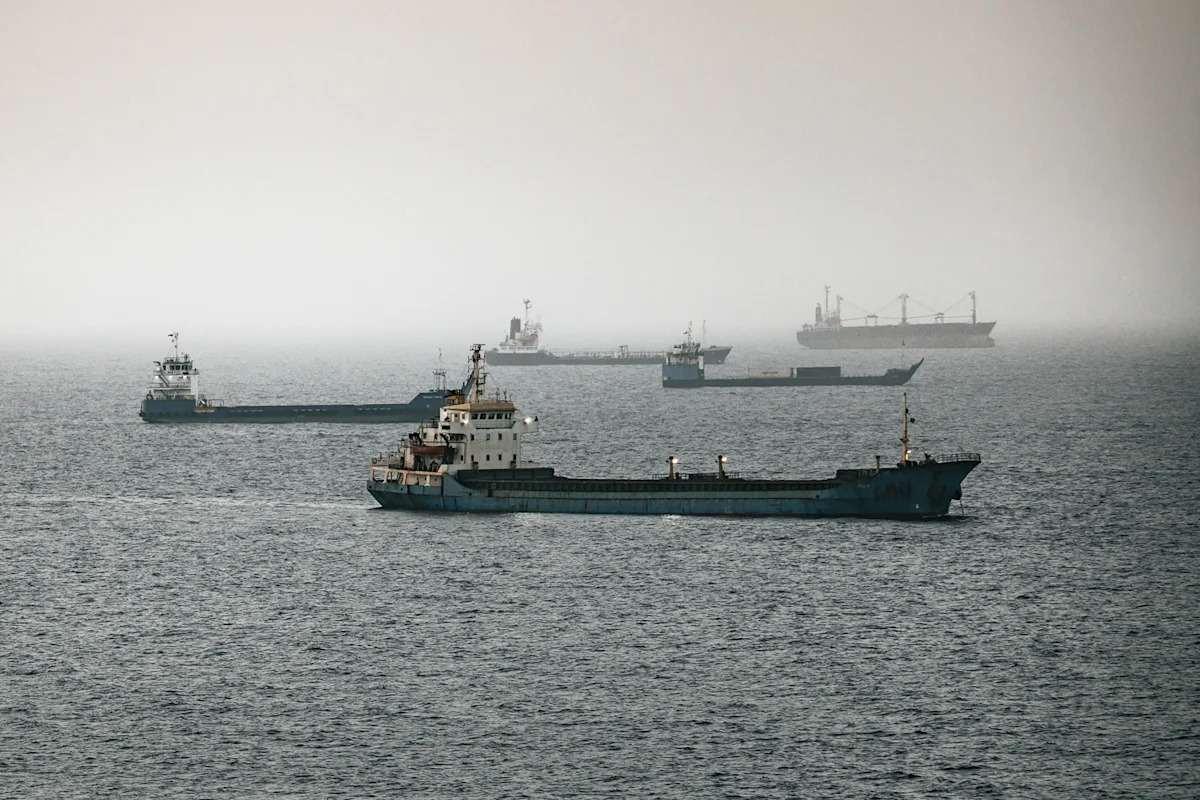
After the US and Iran traded new strikes over the weekend, shipping traffic in the crucial Strait of Hormuz has remained elevated and seems at least partially unfazed by the stop-and-start peace talks.
Independent traffic service MarineTraffic reported Monday that three container vessels entered the Persian Gulf over the weekend, a significant sign of confidence as they represent the first commercial container ships to make the journey in that direction since the start of the conflict.
One hundred and eight verified crossings were recorded in total from June 26-28, MarineTraffic reported, which was only a modest slowing from levels the week before.
“The Strait of Hormuz remained open over the weekend,” MarineTraffic said.
Positive signals like this keep adding up — even as the political headlines have been causing alarms.
 Ships sit anchor around Qaboos Port near in Muscat, Oman and the Strait of Hormuz earlier this month. (Elke Scholiers/Getty Images) · Elke Scholiers via Getty Images
Recent days of attacks have tested the fragile ceasefire before an abrupt cessation of hostilities was announced on Sunday night. President Trump confirmed on Monday that new negotiations are set for this week in Qatar.
It was a return to diplomacy for the region after an Iranian projectile hit a cargo vessel in the Strait of Hormuz last Thursday, leading to more attacks and counterattacks as both the US and Iran accused the other of breaking the ceasefire.
Up-and-down traffic in the strait, but continued shipping flows
Iran also attacked an oil tanker on Saturday, prompting what US Central Command described as strikes on 10 Iranian military targets “at multiple locations in and near the Strait of Hormuz.”
It was a clear setback for peace efforts and also came as Iran continues to claim it will manage the strait and attack ships that get out of line. The United Kingdom’s closely watched Maritime Trade Operations center advised ships to transit with caution.
Still, shipping traffic continued, though it remains well below the 100+ ships that crossed the strait daily prior to the war.
The data released Monday from MarineTraffic showed that shippers have been utilizing multiple routes and successfully crossing along both Oman’s and Iran’s coastlines.
Satellite imagery shows a broad view of the Strait of Hormuz between southern Iran and Oman’s Musandam Peninsula. (Maps4media via Getty Images) · maps4media via Getty Images
The varied routes have meant significant traffic is getting through. Bloomberg reported Monday that two empty supertankers had been recorded entering the Persian Gulf, and Saudi Arabia saw a supertanker and three carriers from the country apparently make passage on Monday with their signals off.
The White House also continued to sound optimistic. National Economic Council director Kevin Hassett predicted on CNBC on Monday that traffic will soon be “really moving [and] back to more than 100 ships a day,” which he added will ease price pressures around the world.
Ben Werschkul is a Washington correspondent for Yahoo Finance.
Read the latest financial and business news from Yahoo Finance