
SHTULA – On a recent afternoon at On The Border Café, Ori Eliyahu made a cup of strong espresso for a customer and then gazed out at the cement barricade known as the Talking Walls. Eliyahu, the 28th of 51 grandchildren of Salah Eliyahu, one of the founders of this agricultural community, pointed out the colorful murals that are just inside the border with Lebanon.
“People are still hesitant to come here even though there’s a ceasefire,” Eliyahu, 30, said. “We hope the situation will get better so that people will come back.”
Despite the danger of missiles from the Hezbollah terror group in Lebanon, the government began a social media and television campaign on Sunday, advertising new homes being built in 28 frontline communities to encourage more people to live in Shtula and other places in northern Israel.
The campaign is part of an NIS 18 billion ($6 billion) allocation for communities up to nine kilometers (six miles) from the Lebanese border, including Shtula. The project, run by Tnufa LeTsafon (Northern Momentum, in Hebrew), aims to accelerate the construction of new neighborhoods and improve transportation, employment, and health services in the area that residents dub “the periphery of the periphery.”
In Shtula, 15 prefabricated houses, known in Hebrew as caravillas, with specially built rooms that protect against rocket and missile attacks, will be offered to families to rent on a trial basis. The rental price, set by the government, has not yet been announced.
“We have the resources, we’re working hard to help the residents, and our goal is to double or even triple the population in Shtula in the next few years,” David Cohen, the director general of Ma’ale Yosef Regional Council, told The Times of Israel. Shtula is one of 22 communities in the council’s jurisdiction in the Upper and Western Galilee. “That’s the answer to terrorists.”
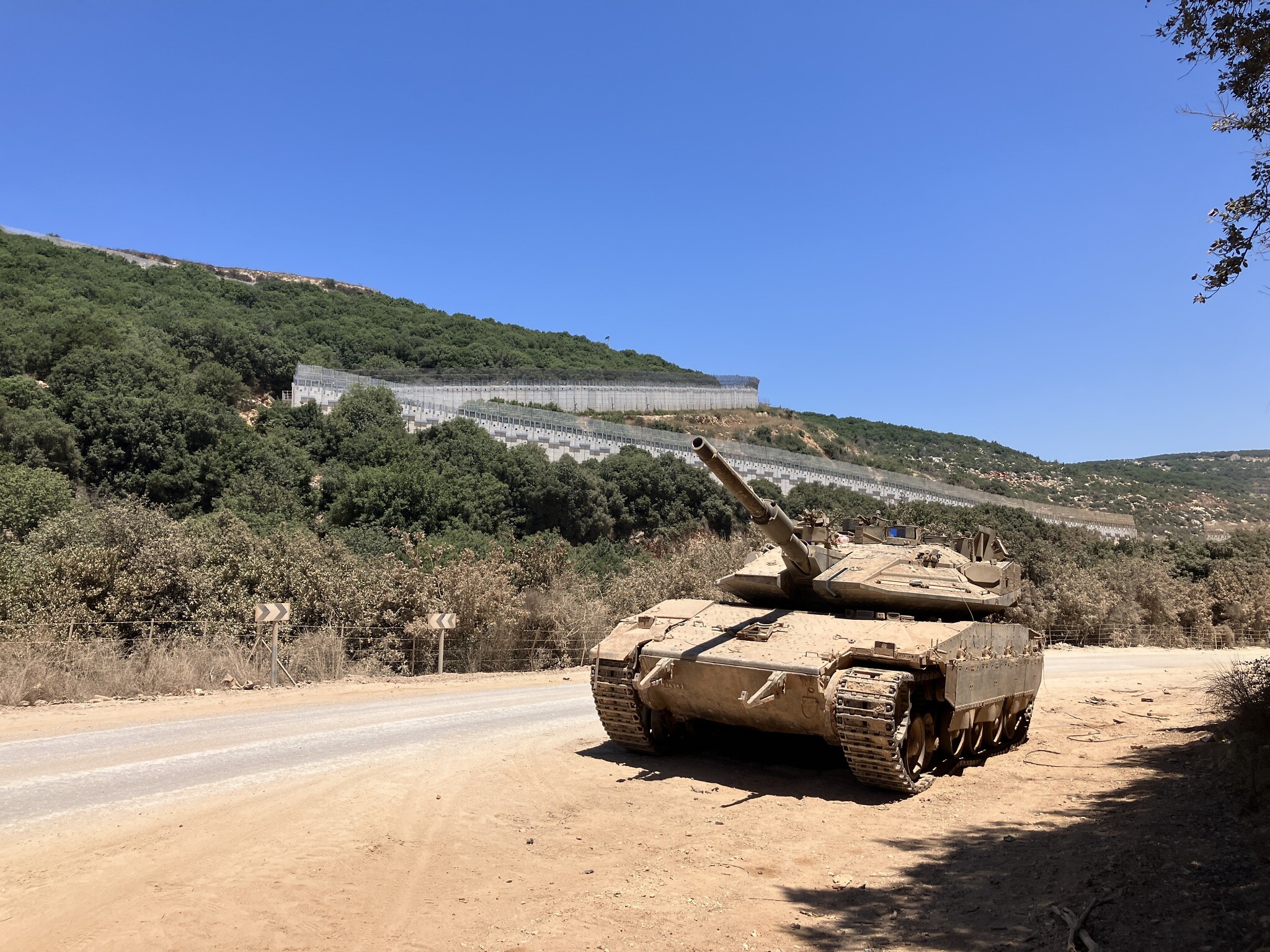
An IDF tank sits outside Shtula, Western Galilee, near the spot where a July 12, 2006, Hezbollah border attack killed five IDF troops and sparked the first Israel-Hezbollah War, on July 14, 2026. (Diana Bletter/Times of Israel)
Sharon Hen, the village’s community manager, spoke to The Times of Israel in her newly renovated office. The building, in the center of the village under tall trees, had been struck by Hezbollah rocket fire during the war.
“We have a big task ahead of us to rebuild Shtula… In Shtula now, there are exactly 197 people,” Hen said. “I make sure to count everyone.”
Some residents have still not returned to Shtula, Hen said. However, 12 new families have recently moved in.
“They will face challenges living in a small community where the closest supermarket is about 15 miles (24 kilometers) away,” Hen said. “And the security situation is still uncertain.”
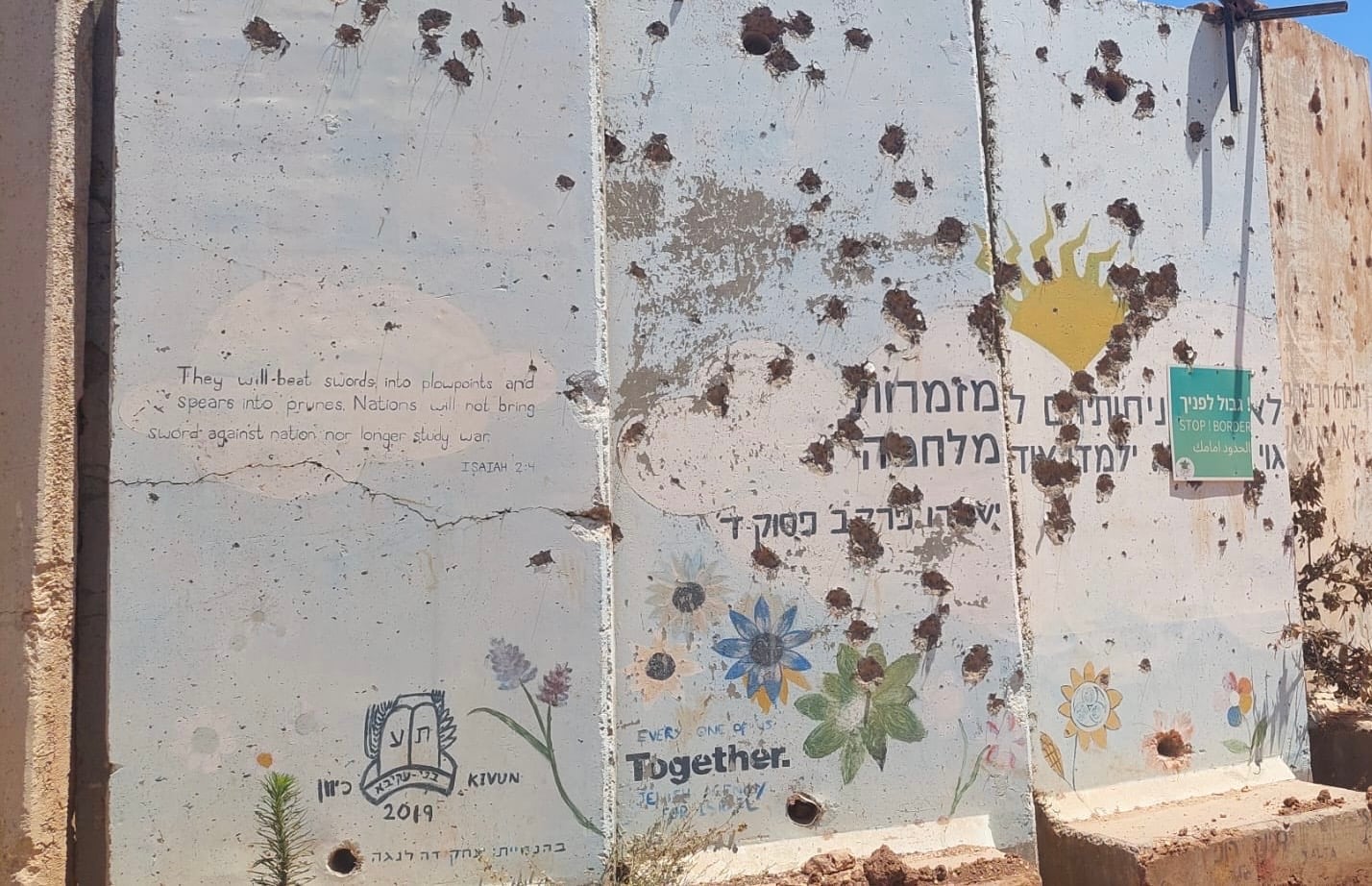
A war-scarred section of ‘The Talking Walls,’ the concrete barrier in Shtula, on the Lebanese border, with a quote from Isaiah, ‘They will beat swords into plowshares,’ on July 14, 2026. (Diana Bletter/Times of Israel)
“We know there are still Hezbollah tunnels near here,” Hen said. “But we’re still here.” She paused and asked rhetorically, “Where else can we go?”
On the edge of a conflict zone
The remote community, whose roots trace back to rugged farmers who came mostly from Kurdistan and Iraq, is surrounded by natural beauty. There are chicken coops, apple, pear and nectarine orchards, several restaurants, and a goat cheese farm.
However, on October 7, 2023 — when thousands of Gazans poured into Israel, invading communities, music festivals, army posts, and other locations, and massacring some 1,200 people and abducting 251 hostages in the deadliest attack on Jews since the Holocaust — residents fled Shtula.
The following day, Hezbollah began firing almost daily rockets and drones at northern Israel. The government then ordered the evacuation of Shtula’s residents along with some 60,000 people from 32 northern communities.
Recently, cross-border violence has been reduced following a fragile ceasefire between Israel and Iranian-backed terror group Hezbollah that was mediated by the Trump administration and implemented on June 19. However, Shtula has seen only about 60% of its 300 residents return to their homes; residents began coming back in early 2025 after the government authorized a phased return following the previous northern ceasefire, in November 2024.
More than two and a half years of Hezbollah bombardment destroyed about 64% of Shtula’s buildings, of which 80% have since been repaired in the past year.
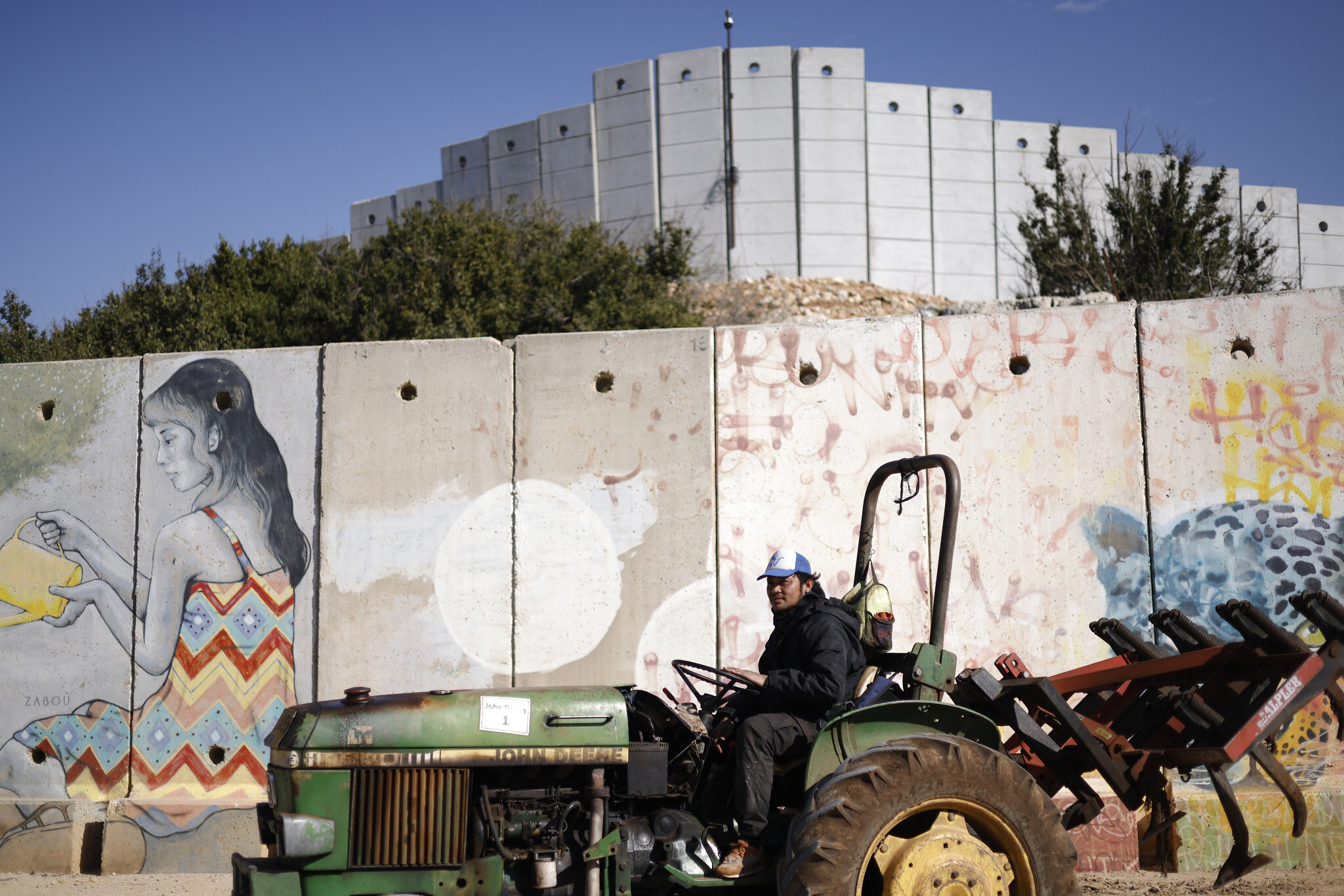
A foreign worker drives a tractor past the security wall, known as The Talking Walls, on the border of Shtula and southern Lebanon, January 8, 2026. (Jalaa MAREY / AFP)
“Living here has always been like the way the Amish live,” Eliyahu, 30, reflected. “It’s a very simple life, far away from the city.”
After more than two years of closure, the On The Border Café recently reopened. The café offers homemade desserts and new picnic tables in an alcove of shady trees, but there are few visitors. Before the war, the picturesque border town drew thousands of tourists.
This current conflict is hardly its first foray into war. A 10-minute drive from On The Border Cafe brings visitors to a sharp bend in a road — the exact spot where Hezbollah terrorists killed and seized the bodies of Israeli reservists Ehud Goldwasser and Eldad Regev on July 12, 2006. Three other soldiers were killed in the attack, and five more IDF troops were killed shortly thereafter in a failed Israeli rescue attempt, triggering the Second Lebanon War.
Twenty years later, Israel’s military is holding what it describes as a “security zone” 10 kilometers (six miles) into Lebanon along the entire length of the Israeli border. Israeli officials say the zone is necessary to protect northern Israeli communities from attacks launched by Hezbollah.
Iran has reportedly told its regional allies, including Hezbollah, to prepare for the possibility of a broader conflict amid military escalations with the United States, raising the prospect of Israel becoming directly involved in the fighting.
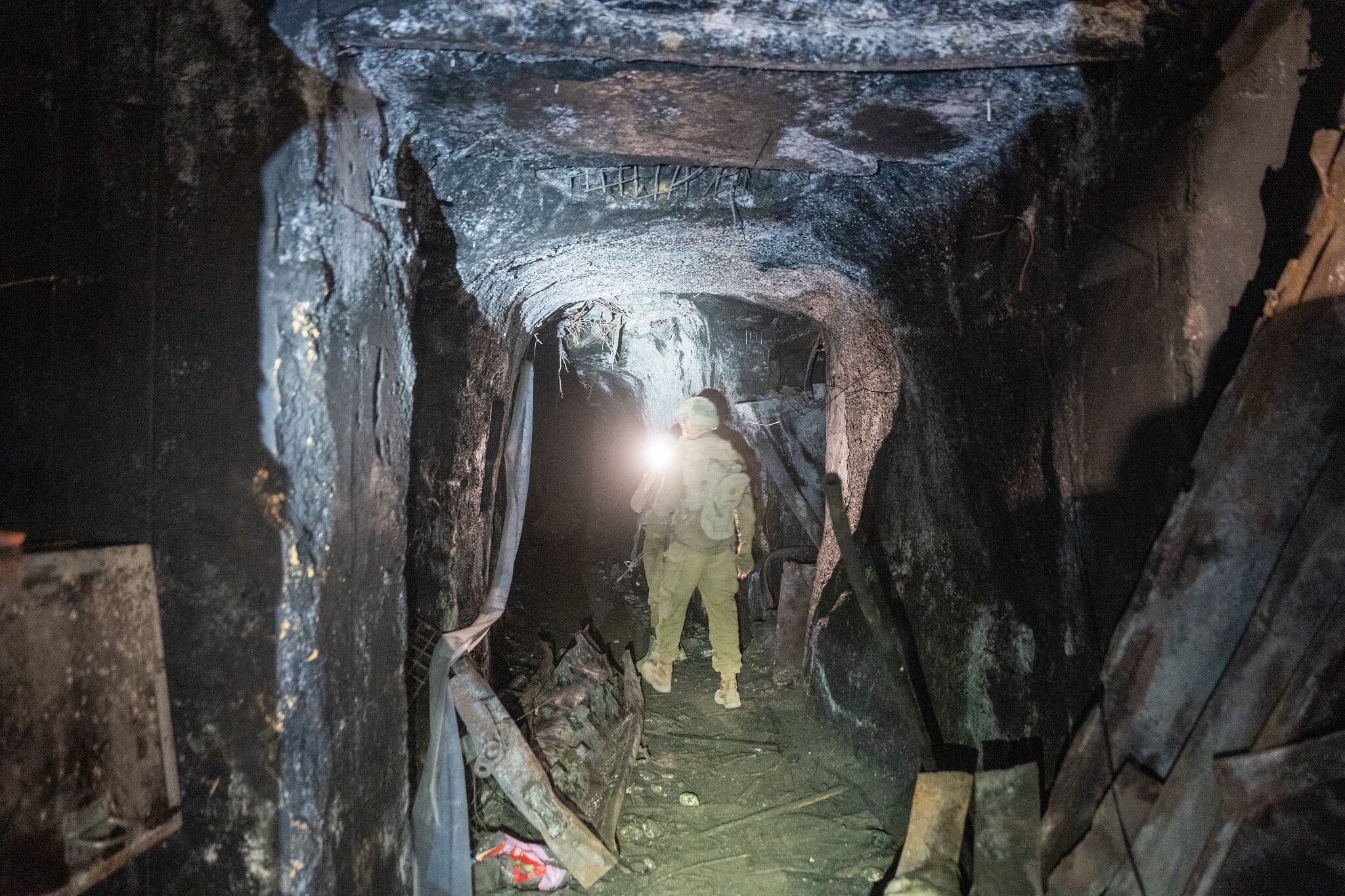
An IDF soldier is seen in a Hezbollah tunnel near the Beaufort Castle in southern Lebanon, July 7, 2026, about 19 kilometers, 12 miles, from Shtula. (Emanuel Fabian/Times of Israel)
Little house on the border
On a recent sunny afternoon, Avigail Baron, 23, was playing with her two children in part of the rebuilt playground in the village center. She and her husband moved to Shtula from a community near Hebron in May, renting a house from a family that had fled on October 7, 2023, and decided not to return.
“Living here gives us an important role,” Baron said. “It’s meaningful. It’s not just our home, it’s our country’s home.”
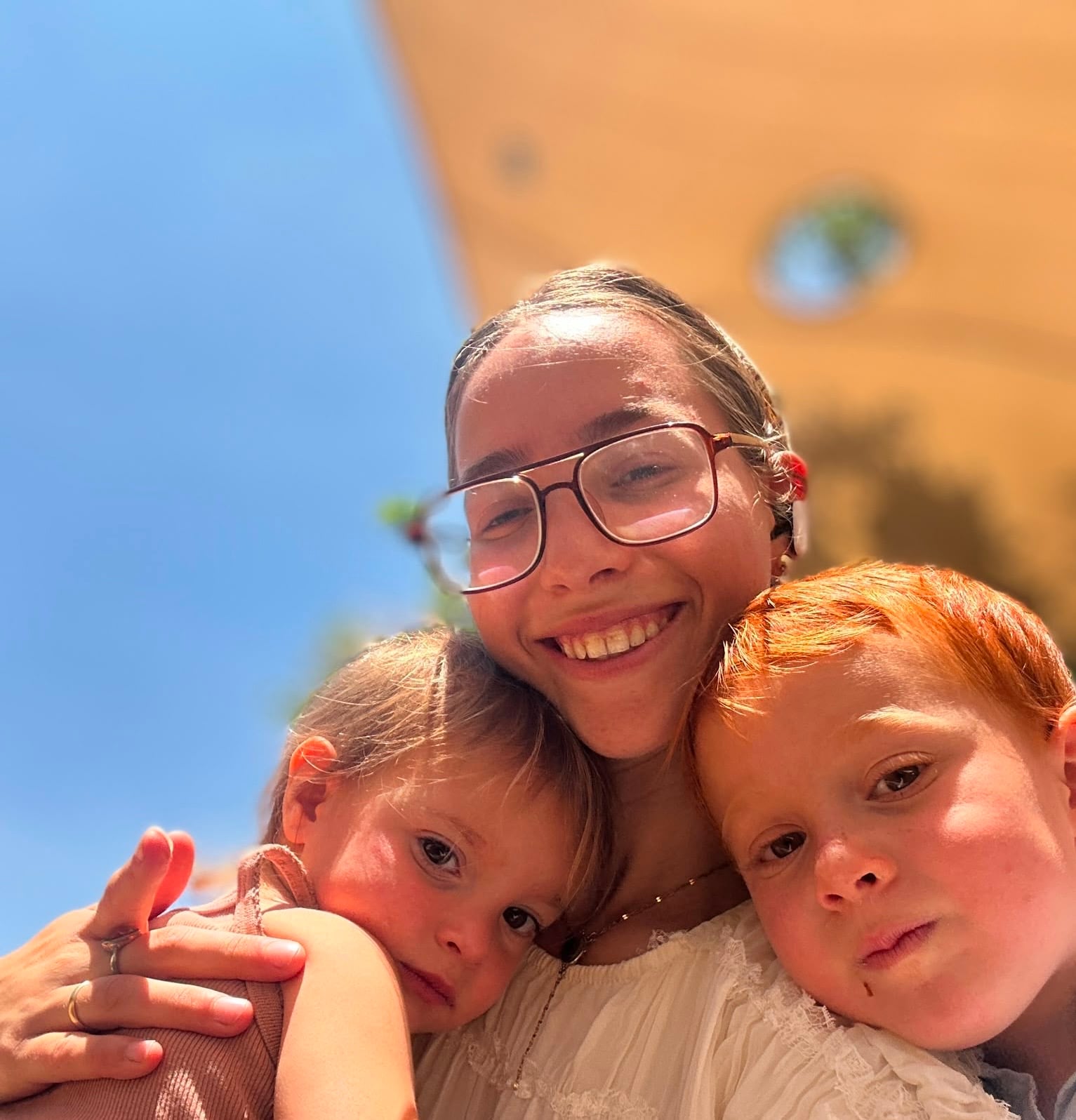
Avigail Baron at the playground in Shtula with her two children on July 14, 2026. (Courtesy/Avigail Baron)
In September 2026, the community gan, or kindergarten, will open with only eight children. In December 2026, when the 15 new families move into the caravillas, there will be more children. Right now, she said, parents jokingly call it a “boutique kindergarten.”
Over the years, the community has attracted a mixture of religious, traditional, and secular people. When religious people ask about moving to Shtula, Hen said she tells them that the roads in Shtula will “never be closed” on the Sabbath, and there will only be one synagogue, the one that all the residents have used since the village’s founding.
She then escorted The Times of Israel to look at the new border fence in the distance.
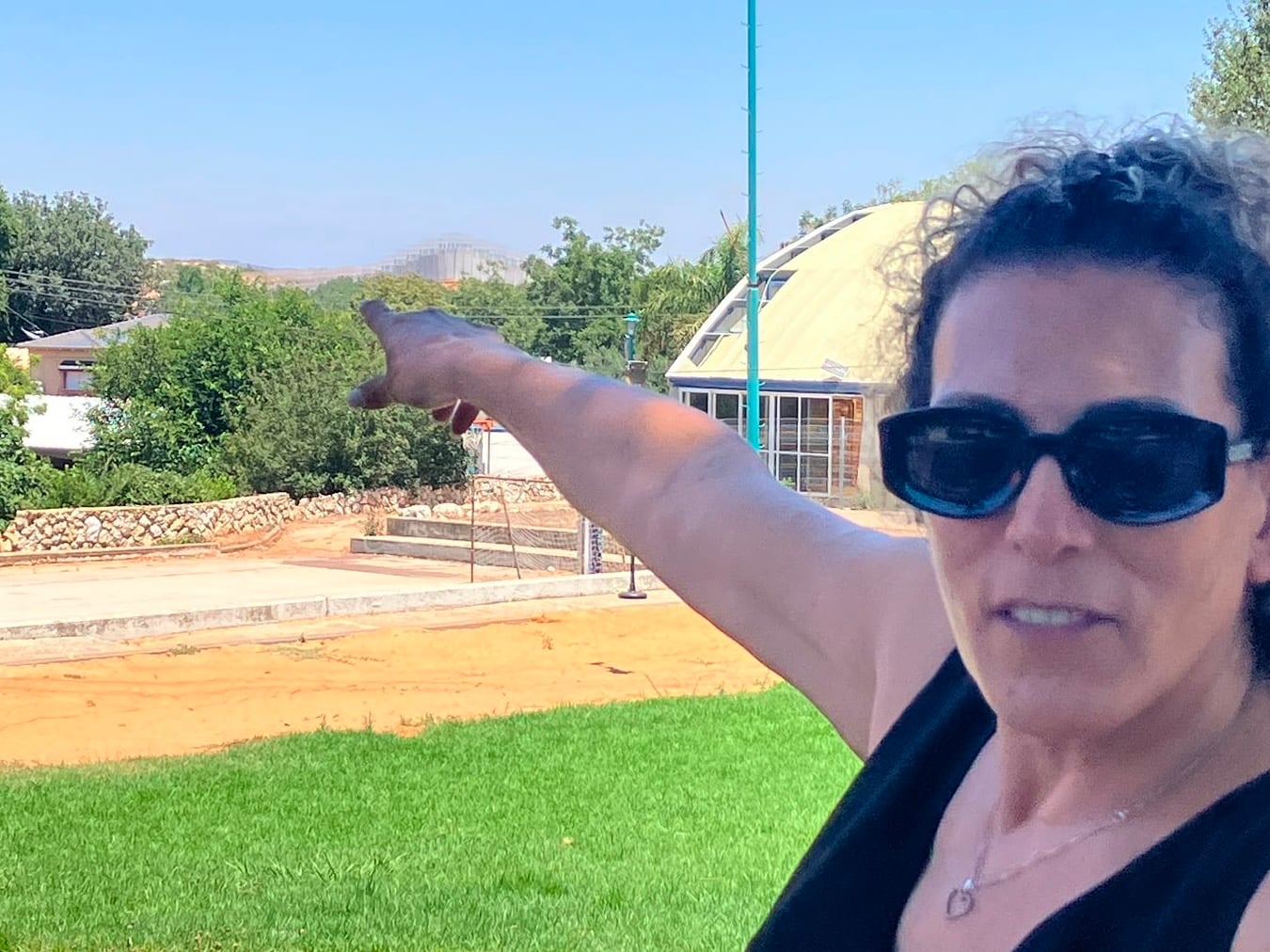
Sharon Hen, Shtula community manager, stands in the playground in the center of the village, with a damaged basketball court on the right, and points to the border with Lebanon on July 14, 2026. (Diana Bletter/Times of Israel)
“Before that fence, Hezbollah operatives would come up close to the edge of Shtula, wave Hezbollah flags, and threaten people, making a sign with their hand as if slashing their throat, saying, ‘We’re going to come for you.’”
Hen said the village is repairing the damaged basketball court and playing fields.
“We’re rebuilding the playground,” she said. “We’re trying to increase the number of people here, making sure to build up the community to be even stronger than it was before the war, so that people stay. That’s our victory.”