
The embassies of a dozen Western countries — some allies, some leading critics — on Monday called on Israel to change its policies on incarceration for Palestinian prisoners, arguing that Israel is not meeting its responsibilities under international law.
The German, Canadian, Danish, EU, Finnish, French, Irish, Dutch, Norwegian, Spanish, Swedish and UK missions released a joint statement lamenting “the extensive use of administrative detention by Israeli authorities without formal charge.”
They also panned Israel for its prisons’ “inadequate food, denial of medical care and systematic abuse. ”
The 12 embassies expressed deep concern over the health of incarcerated Gazan doctor Hussam Abu Safiya, the director of Gaza’s Kamal Adwan Hospital, who is also a colonel in the Hamas terror group and who has been held since December 2024.
They called on Israel to “uphold its human rights obligations towards detainees under international law,” including by giving the Red Cross access to its facilities.
Get The Times of Israel’s Daily Edition
by email and never miss our top stories
By signing up, you agree to the terms
Israel currently holds over 1,300 Palestinian detainees under the terms of the law for unlawful combatants, in a practice known as administrative detention.
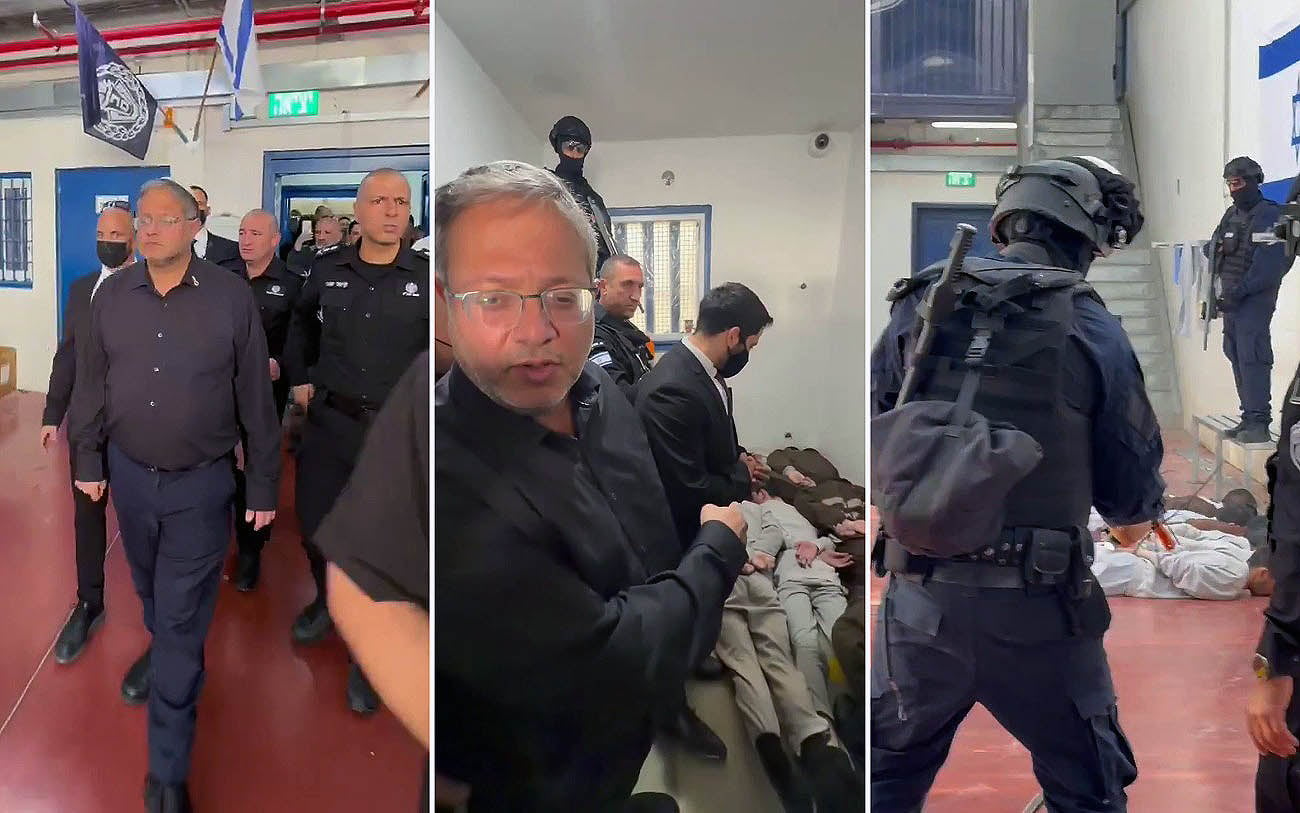
Footage shows Palestinian prisoners in scenes filmed during National Security Minister Itamar Ben Gvir’s visit to the Ofer Prison on February 13, 2026. (Screenshots/X)
Such detainees include those arrested by the Israel Defense Forces and security services inside Gaza and the West Bank during military operations, but who have not been charged with a crime.
The measure sees individuals held without charge for up to six months at a time, under limited court review. The detentions can be renewed indefinitely while allowing military prosecutors to keep suspects from being able to see the evidence against them.
The tool is typically used when authorities have intelligence tying a suspect to a crime but do not wish to reveal the source of the information.
A series of reports issued by the Public Defender’s Office and revealed in January found that Palestinian security detainees held in Israeli prisons suffer from severe and systematic violence from prison guards, deprivation of food and medical neglect, as well as unsanitary conditions that caused and exacerbated outbreaks of disease in the prisons.
The reports were made public after a yearlong legal battle by the Association for Civil Rights in Israel (ACRI), which filed a freedom of information request to gain access to the documents, after the Justice Ministry refused to release them.
Official inspectors described one prison they visited as “not fit to hold human beings,” and said of another that their findings showed “unnecessary and unjustified violence against prisoners” carried out “on a regular basis and on numerous occasions.”
Far-right National Security Minister Itamar Ben Gvir, who has authority over the Israel Prison Service and its policies, has repeatedly boasted of the harsh conditions he has imposed on Palestinian detainees and prisoners.
MSF demands Israel release detained Palestinian health workers
Meanwhile, Doctors Without Borders (MSF) called for the immediate release of all Palestinian healthcare workers “arbitrarily detained” by Israel.
“MSF is outraged by the treatment of healthcare workers, most of whom are being detained in dire conditions, without justification or cause,” it said in a statement on Monday.
The medical charity joined calls for the release of Abu Safiya.
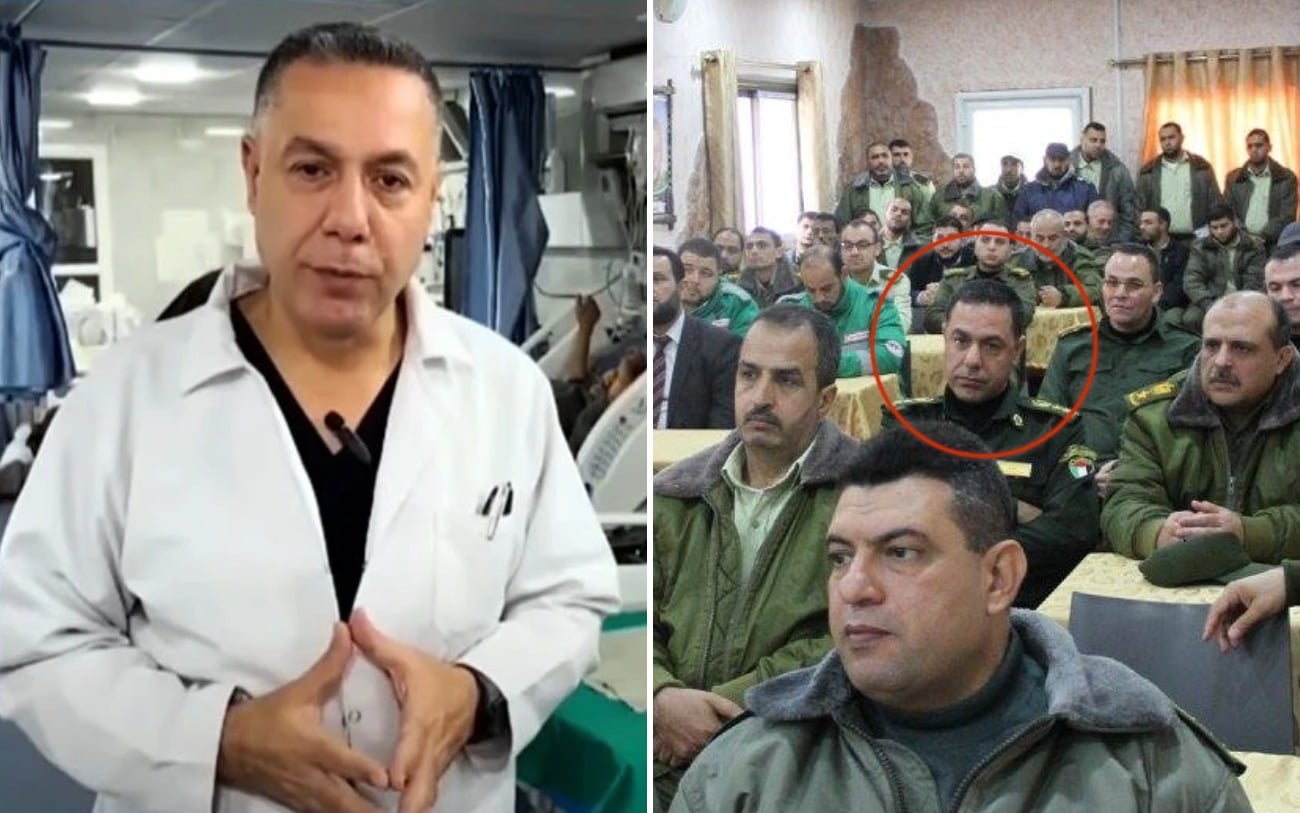
L-R: Kamal Adwan Hospital director Hussam Abu Safiya, in an undated screenshot taken from a Democracy Now video posted to YouTube on January 14, 2025. (Democracy Now screenshot/YouTube); A resurfaced photo from 2016 shows Abu Safiya wearing a Hamas uniform alongside other senior officers in the terror group. (Medical services – Gaza Strip)
His detention “follows an appalling pattern of the Israeli authorities detaining and targeting medical staff across Palestine,” said Geneva-based MSF.
Israel said earlier this month that his detention was “lawful,” and rejected reports of him suffering from a life-threatening condition. However, it said that Abu Safiya was under medical monitoring, though it didn’t explain why the several medical examinations were necessary.
The statement came after a United Nations investigative team and several UN rights experts raised the alarm about the case.
About 50 people, including doctors, trade unionists and pro-Palestinian activists, gathered outside France’s Foreign Ministry in Paris on Thursday to call for his release.
MSF said that its orthopedic surgeon Mohammed Obeid “has been detained in Israel for more than 600 days, in difficult conditions, and without any contact with his family.”
Doctors Without Borders said he was arrested by Israeli forces on October 26, 2024, while on duty at the Kamal Adwan Hospital, which the IDF has said the terror group uses for military operations.
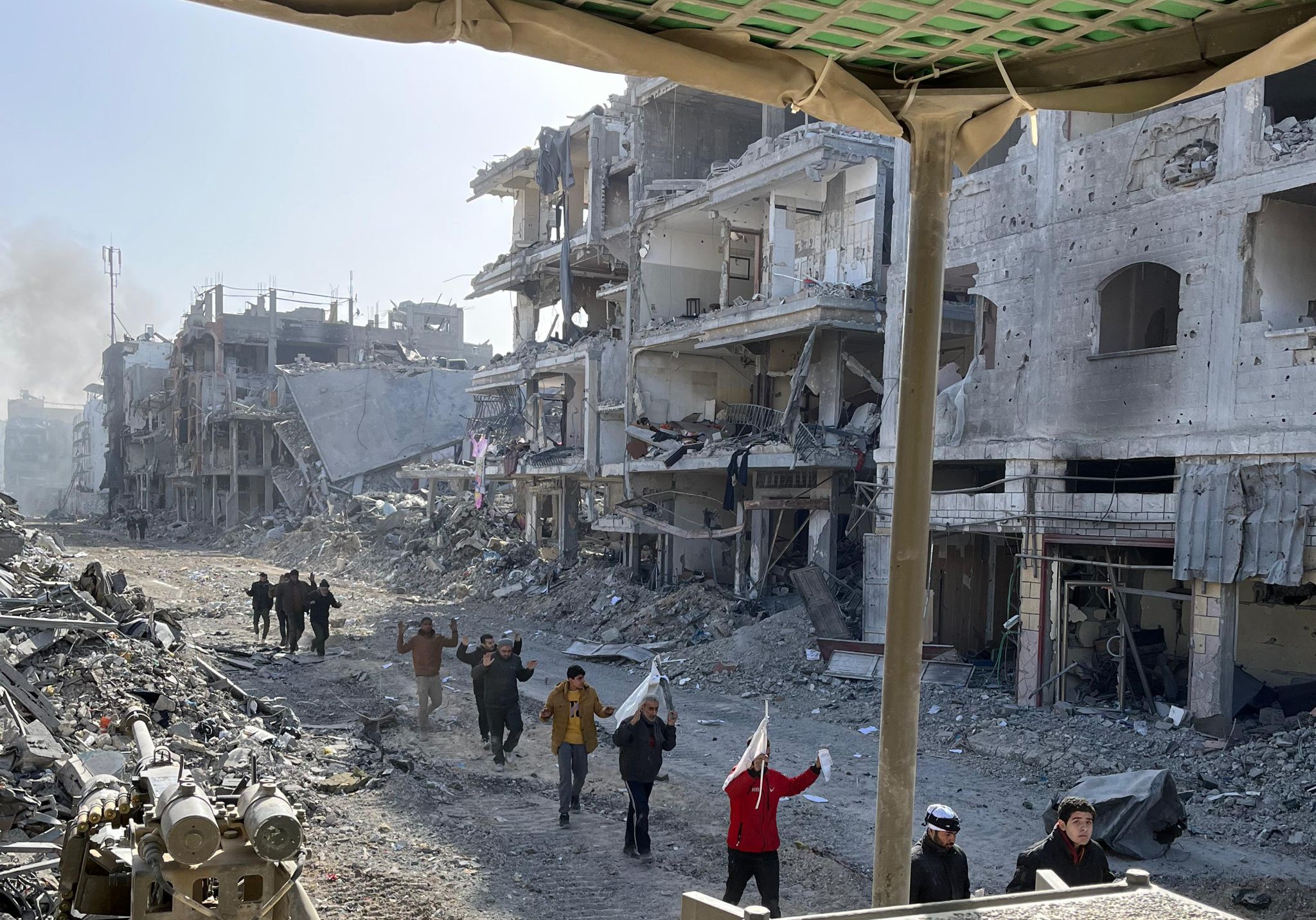
Palestinians evacuate from northern Gaza’s Kamal Adwan Hospital, in a handout photo issued by the military on December 29, 2024. (Israel Defense Forces)
It reiterated its call for his immediate and unconditional release.
“The practice of arbitrarily detaining, torturing and abusing Palestinian medical staff in Israel is unacceptable. For too long, too many world leaders have failed to condemn Israel’s conduct in Palestine,” the non-governmental organization said.
“We call for the release of all arbitrarily detained medical personnel immediately. Pending their release, they must be granted access to adequate medical care and dignified detention conditions.”
MSF added that 15 of its colleagues had been killed since the start of the war in the Gaza Strip between Israel and Hamas, sparked by the Hamas-led October 7, 2023, massacre.
Israel has accused some MSF staffers it has killed or arrested in Gaza of being members of terror groups. For example, in the case of Fadi al-Wadiya, killed in 2024, MSF denied he was a member of Islamic Jihad and claimed Israel had provided no evidence of his activities, but in February, the terror group named him as a high-ranking operative.
In October 2025, a ceasefire was reached in Gaza between Israel and Hamas, though violence has persisted since.
We can’t do this work alone.

The war with Iran has been draining for all of us in Israel. But when I heard about a high casualty incident – ballistic missile impacts in Arad and Dimona that left nearly 200 people wounded – I drank a cup of coffee, packed a bag, and headed south.
There, I spoke with Shilgit, the head of an after-school program for underprivileged youth. Standing outside her destroyed center, Shilgit said it was a miracle that no children were hurt and spoke about the community coming together in the hours since.
As a Times of Israel reporter, I’m committed to telling stories of resilience like Shilgit’s. But my colleagues and I can’t do this alone. If you value work like this, please consider joining our reader support group, The Times of Israel Community. Your financial support is essential to keep real human reporting like this going.
— Stav Levaton, military reporter
Already a member? Sign in to stop seeing this
You’re a dedicated reader

That’s why we started the Times of Israel – to provide discerning readers like you with must-read coverage of Israel and the Jewish world.
So now we have a request. Unlike other news outlets, we haven’t put up a paywall. But as the journalism we do is costly, we invite readers for whom The Times of Israel has become important to help support our work by joining The Times of Israel Community.
For as little as $6 a month you can help support our quality journalism while enjoying The Times of Israel AD-FREE, as well as accessing exclusive content available only to Times of Israel Community members.
Thank you,
David Horovitz, Founding Editor of The Times of Israel