
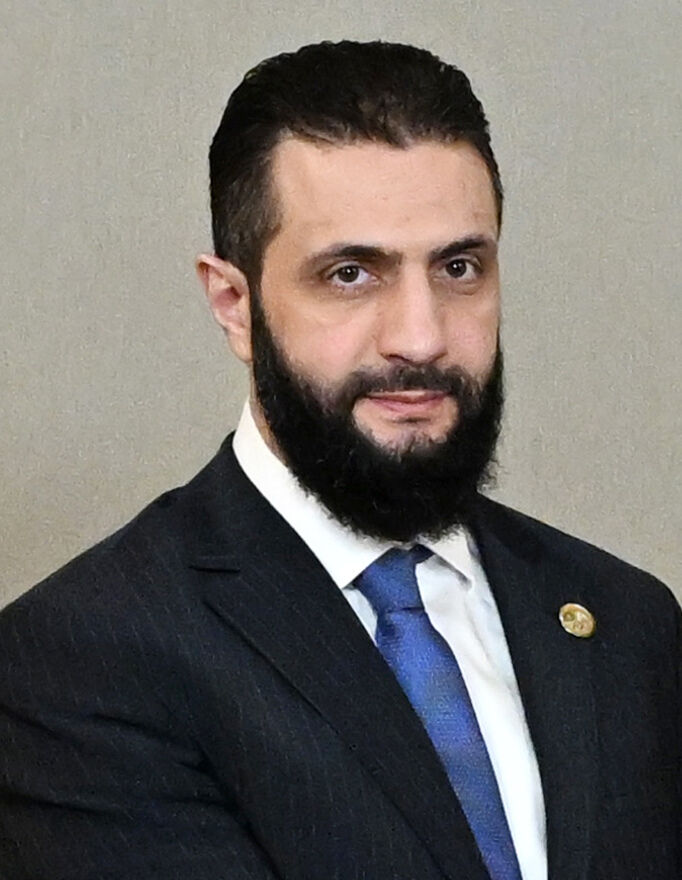
 Syrian President Ahmed al-Sharaa (wikicommons/Press Service of the President of the Republic of Azerbaijan)
For more than four decades, Syria occupied a singular place in American foreign policy. Since 1979, it has appeared on the U.S. list of state sponsors of terrorism, a reflection of its support for terrorist organizations, its close alliance with Iran, and later its central role in the “Axis of Resistance” directed against Israel and American interests throughout the Middle East.
That chapter may now be coming to an end.
President Donald Trump’s announcement that his administration will remove Syria from the terrorism list marks far more than a bureaucratic change. Combined with growing international recognition of Syrian President Ahmed al-Sharaa by leaders from Turkey, Britain, France and the Gulf states, it signals that much of the world has concluded that Syria’s future is more important than its past.
Whether that judgment proves correct remains to be seen.
Al-Sharaa’s own biography invites skepticism. A former Islamist commander with roots in al-Qaida-affiliated movements is an unlikely candidate to become the face of moderation. Syria has yet to adopt the permanent constitution it promised, democratic institutions remain fragile, sectarian violence continues, and ISIS remains capable of deadly attacks. No responsible observer should mistake transition for transformation.
Yet diplomacy often begins by recognizing reality rather than rewarding perfection.
The Assad regime is gone. Iran has lost its most important Arab ally and the land bridge that allowed it to move weapons, money and personnel from Tehran through Iraq and Syria to Hezbollah in Lebanon. Hamas, Palestinian Islamic Jihad and other Iranian-backed organizations have likewise seen one of their principal logistical corridors disrupted. For Israel, that represents one of the most significant strategic changes in the region in decades.
That does not make Syria an ally. But it creates the possibility that Damascus may eventually conclude its national interests are better served by rebuilding its shattered economy than by serving as a platform for someone else’s war against Israel.
The economic incentives point in that direction. Syria desperately needs investment, infrastructure, energy development and access to international markets. Gulf states increasingly view Syrian stability as essential to regional commerce, while new transportation corridors bypassing the Strait of Hormuz could make Syria economically relevant once again. Countries seeking investment rarely invite renewed proxy warfare.
Israel, meanwhile, has every reason to remain cautious while also recognizing opportunity. Security along the Golan Heights cannot depend upon hopeful rhetoric, and any reemergence of Iranian influence or terrorist infrastructure must be met decisively. But history also demonstrates that durable stability is often built incrementally through shared interests rather than formal peace treaties.
The Middle East has repeatedly shown that today’s enemy can become tomorrow’s negotiating partner when strategic realities change. Egypt and Jordan were once active military adversaries before becoming indispensable security partners. Syria has a much longer journey ahead, but it has begun moving in a different direction than the one charted by Bashar al-Assad.
Legitimacy is not bestowed by foreign governments. It is earned through responsible governance, rejection of terrorism, protection of minorities and peaceful relations with neighbors.
The world appears willing to give Syria that chance. Whether Damascus ultimately deserves it will shape not only Syria’s future, but also the strategic balance confronting Israel, Iran and the entire Middle East for years to come.