BEIRUT — Iran publicly hanged two men who were convicted of killing four police officers during nationwide anti-government protests in January, state media reported Tuesday.
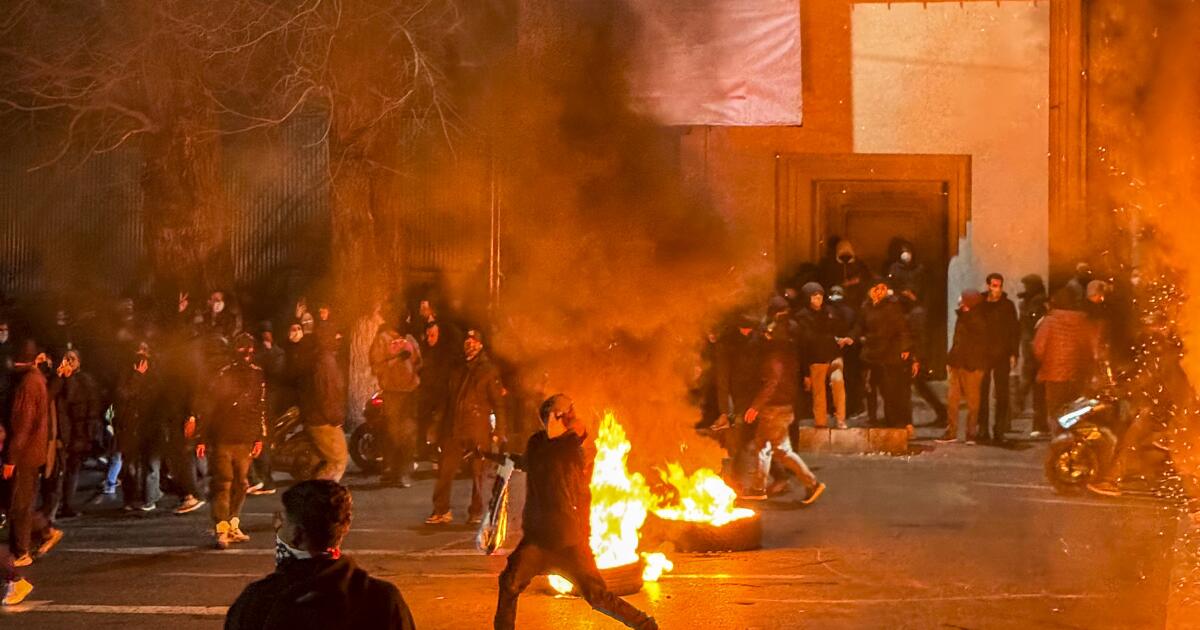
The protests were some of the largest ever held against the Islamic Republic, which responded with a brutal crackdown in which thousands of people were killed and tens of thousands arrested. The protests had been largely stamped out when the United States and Israel went to war with Iran on Feb. 28.
Rights groups said the execution of Abdolfazl Sepahi Badjani and Amir Hossein Safari Hosseinabadi was carried out at dawn in Alikhani Square in the central city of Isfahan, the place where the government said the police were killed. A website affiliated with Iran’s judiciary said the two men also set a police station on fire and damaged public buildings.
They were among 14 people accused of killing police officers, all of them sentenced to death. Two were executed earlier this month.
Public executions are not uncommon in Iran and often are reserved for political prisoners. They largely are carried out by hanging in a public square, where cranes mounted on trucks serve as gallows.
At least five protesters, including the two on Tuesday, have been hanged in public since March, according to the U.S.-based Human Rights Activists News Agency, HRANA, which monitors human rights in Iran. The group says it has documented 29 public executions in the last five years.
Amnesty International called Tuesday’s executions “a further escalation in the authorities’ use of the death penalty to crush dissent.” It said at least 60 others, including three arrested as children, remain at risk of execution.
“The Iranian authorities are unleashing a horrifying wave of executions and death sentences to punish and suppress dissent and project an image of strength and absolute control,” said Heba Morayef, Amnesty International’s regional director. “The muted response from the international community emboldens the Iranian authorities to continue their deadly rampage.”
Amnesty said at least 26 people were arbitrarily executed after being convicted of offenses related to the January protests, following what it said were “torture-tainted, grossly unfair trials” by revolutionary courts. Another 26 people have been executed this year on politically motivated charges, including espionage and membership in opposition groups, it said.
The protests were triggered by Iran’s deepening economic crisis and quickly escalated into calls for the overthrow of Supreme Leader Ayatollah Ali Khamenei, who was later killed in the opening U.S.-Israeli strikes.
The crackdown was the deadliest carried out by the Islamic Republic in its 47-year history.
HRANA, which relies on a network of contacts inside Iran, says more than 7,000 people were killed and that it is investigating thousands more cases. It said more than 50,000 were arrested in a little more than six weeks. The government has acknowledged more than 3,000 people were killed.
At the height of the protests, Iranian authorities signaled that fast trials and executions lay ahead.
Rights groups say political prisoners in Iran are tried in secretive courts without due process, with verdicts often based on forced confessions extracted through torture.