
For a growing number of Israelis, the promise of vacation villas, auto repairs, and everyday goods at a fraction of Israeli prices has become enough of a lure to outweigh repeated military warnings against entering Palestinian Authority-controlled areas of the West Bank, where Israeli civilians are barred by law.
Among the biggest draws are vacation rentals. On Airbnb, which connects travelers with hosts in cities around the world, a five-bedroom house with a private pool in Israel can cost more than NIS 20,000 ($6,550) for a five-day stay, while comparable properties in the Palestinian city of Jericho are often listed for less than half that price.
Despite the ban on Israelis from entering PA-controlled cities, one Palestinian Airbnb host in Area A told The Times of Israel that he does not question guests about their nationality.
“A lot of people come to visit, but I don’t ask where they are from,” he said. “I welcome everyone to my house, but I’m not sure if there are any Israelis who came.”
While Israeli trips into Area A may end uneventfully, there have been what appears to be an increasing number of incidents in which Israelis in distress need to be extracted from the territory with the involvement of Palestinian and Israeli security forces. In one such incident on May 23, six Israelis were extracted by security forces from a villa in Jericho, after nearby residents heard shouting in Hebrew and alerted authorities.
Get The Times of Israel’s Daily Edition
by email and never miss our top stories
By signing up, you agree to the terms
These cases, which often involve Israelis in the area for car repairs, shopping, vacations, or other seemingly innocent activities, are separate from violent settler incursions into Area A, which are typically aimed at harassing local Palestinians and expanding Israeli control over the West Bank.
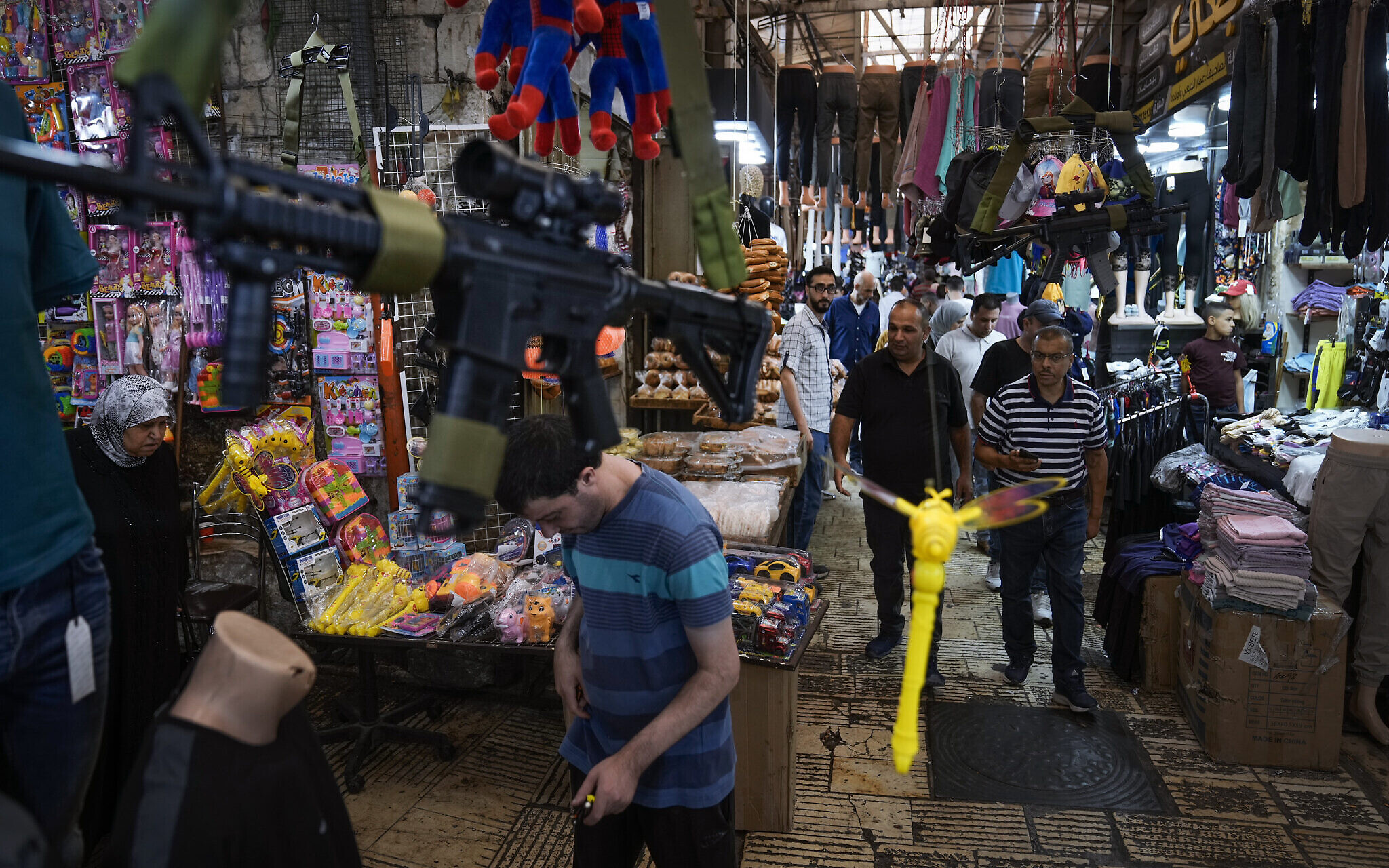
Palestinians shop at the commercial center of the old city of Nablus, in the West Bank, September 15, 2024. (AP Photo/Majdi Mohammed)
Since the 1995 signing of the Oslo II Accords between Israel and the PA, the West Bank has been divided into areas, A, B, and C. While Area C, where nearly all settlements are located, is under full Israeli control, Area B is under Palestinian civilian control and Israeli security control, and Area A is under full Palestinian control.
Most of the West Bank’s cities are in Area A, with Israeli civilians banned by their own government from entering without advance permission from the Israel Defense Forces, as in cases of organized visits to biblical gravesites.
The prohibition is reinforced by bright red warning signs posted at entrances to PA-controlled areas in Hebrew, Arabic, and English, reading, “This road leads to Area ‘A’ under the Palestinian Authority. The entrance for Israeli citizens is forbidden, dangerous to your lives, and is against the Israeli law.”
Yet many Israelis who knowingly enter prohibited zones appear to disregard both the prominently displayed warnings and repeated public advisories issued by Israeli security authorities.
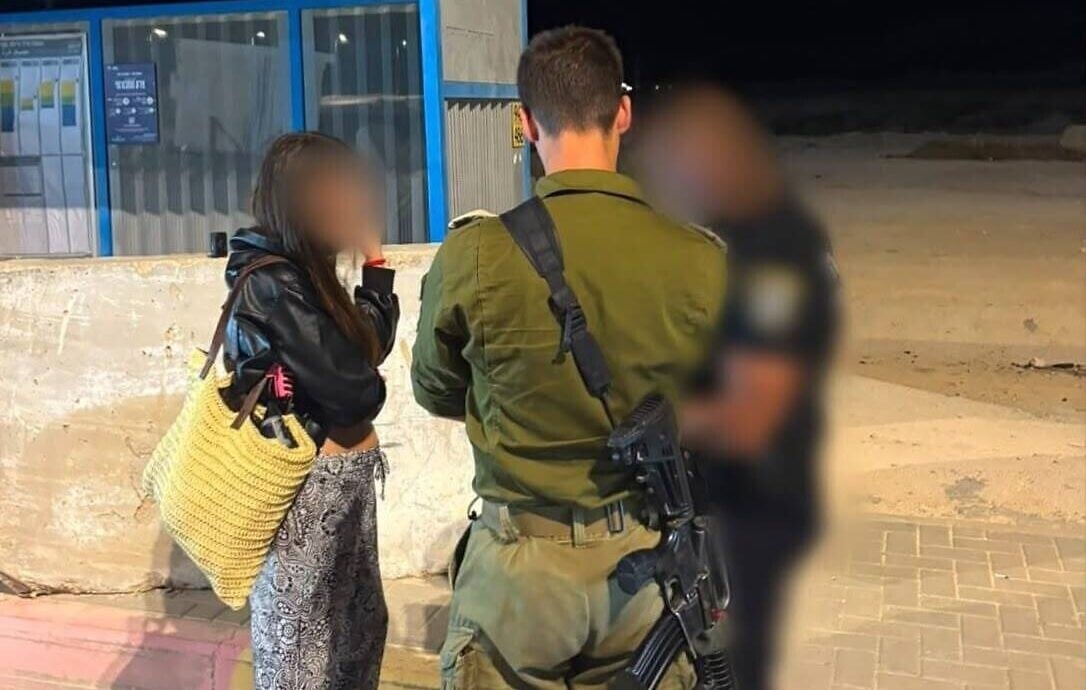
An off-duty IDF servicewoman speaks with Israeli security forces after being extracted from the West Bank city of Jericho, July 10, 2026. (Civil Administration)
Some, especially in the Arab community, may travel to Area A to visit relatives or friends. For others, the draw is often cheaper goods and services, not just vacation villas, but also car repairs and even dental work.
Palestinian mechanics often charge thousands of shekels less than their Israeli counterparts. According to Walla, repairs in Palestinian cities can be less than half of what they cost in Israel.
The disparity has become so lucrative that some Israelis now make a living as intermediaries, collecting vehicles from Israeli owners, driving them into Area A for repairs at Palestinian garages and returning them once the work is complete.
“I’m not afraid to enter the territories. It’s all in God’s hands. I go in looking like a religious Jew, dressed in black and white, and everyone already knows me. I bring them work. We bring cars in for repairs and everyone profits,” one such middleman told Walla earlier this year.

Palestinian mechanics work on vehicles belonging to Israelis at a car garage in the Palestinian village of Hizma, near Jerusalem, in the West Bank, November 28, 2022. (Jamal Awad/Flash90/File)
The price differences are driven by lower wages, operating costs, and spare-part prices in the West Bank, where Palestinian mechanics often rely on less expensive aftermarket or used parts. This allows them to undercut Israeli garages that must absorb higher salaries, taxes, insurance costs, and stricter regulatory requirements.
Jack Abed, an Israel-born priest in the West Bank’s Taybeh, said Israelis from nearby settlements still came into the village to shop, much as they did before the Oslo Accords made doing so illegal.
“I still have friends from [the settlements of] Rimonim and Kochav HaShachar who come to shop at our stores,” he told The Times of Israel. “They buy cigarettes, drinks, pita bread, and gas canisters. Instead of going to the Rami Levy supermarket at Sha’ar Binyamin and paying NIS 32 ($10) for one carton of eggs, they come to our grocery store and buy two cartons for the same price.”

Jews and Arabs sharing an Iftar (breakfast) together during the month of Ramadan, in the town of Taybeh, June 9th, 2016. (Dov Lieber / Times of Israel/File)
Not all who come to Area A are driven by bargains, though. In one recent case, a group of 23 deaf Israelis were extracted from Nablus after reportedly accepting an invitation from a deaf Palestinian resident.
And there have been cases of Israelis entering Area A accidentally, after getting lost while driving through the West Bank, though such incidents have become rarer lately, thanks to the prevalence of navigational apps.
A growing trend
Israel does not publish official statistics on the number of cases involving its citizens entering Area A, but such incidents have recently been reported in national media at what appear to be unprecedented levels, particularly in Tulkarem, Qalqilya, Nablus, and Jericho, suggesting they are becoming more frequent.
According to Channel 12, 160 cases of Israelis illegally entering Area A were recorded last year, up from 60 in 2024. Security sources told the outlet they believe many Israelis have felt safer entering Palestinian-controlled areas following the October 2025 ceasefire with Hamas.
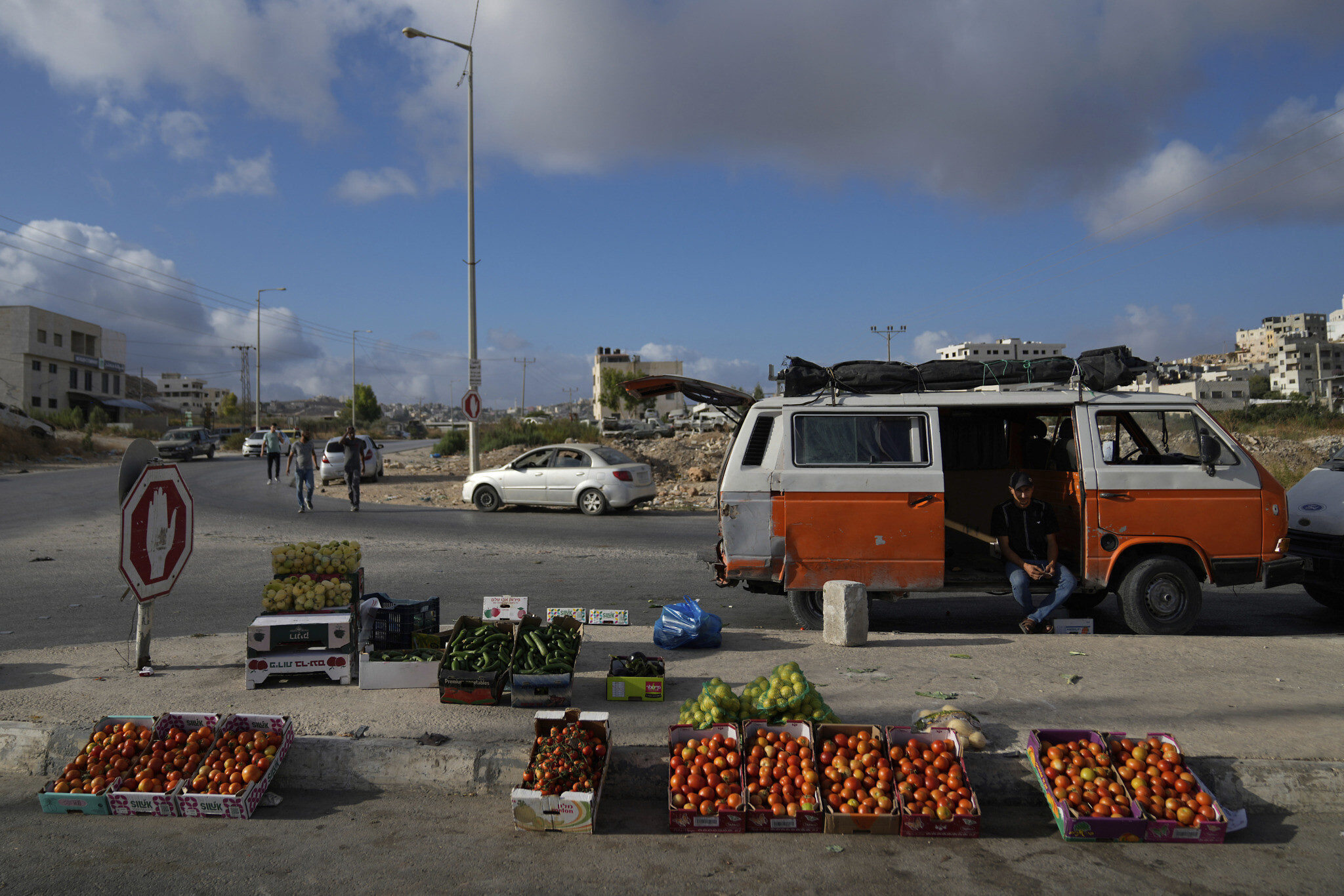
A Palestinian street vendor waits for customers while he displays vegetables for sale in the weekly market at the eastern outskirts of the West Bank city of Nablus, September 16, 2024. (AP Photo/Nasser Nasser)
Most recently, an off-duty IDF servicewoman and two other Israeli women were extracted from the Palestinian city of Jericho while visiting friends. The separate incidents, less than a day apart, underlined the uptick in cases reported in recent months.
Yossi Kuperwasser, director of the Jerusalem Institute for Strategy and Security, pointed out that “there was no intifada after October 7,” despite Hamas’s repeated calls for violence in the West Bank.
“Maybe some people think that it’s less dangerous than it could be and take the risk,” he suggested.
Israel’s security forces, however, have shown little indication that they believe the danger has subsided.
In most cases, extractions occur when Israelis who enter Area A are identified by Palestinian residents and reported to PA security bodies. PA police generally detain the Israelis for their own protection before handing them over to Israeli forces, who transport them out of Area A.
The defense establishment uses each publicly reported incident to reiterate its unequivocal warnings.
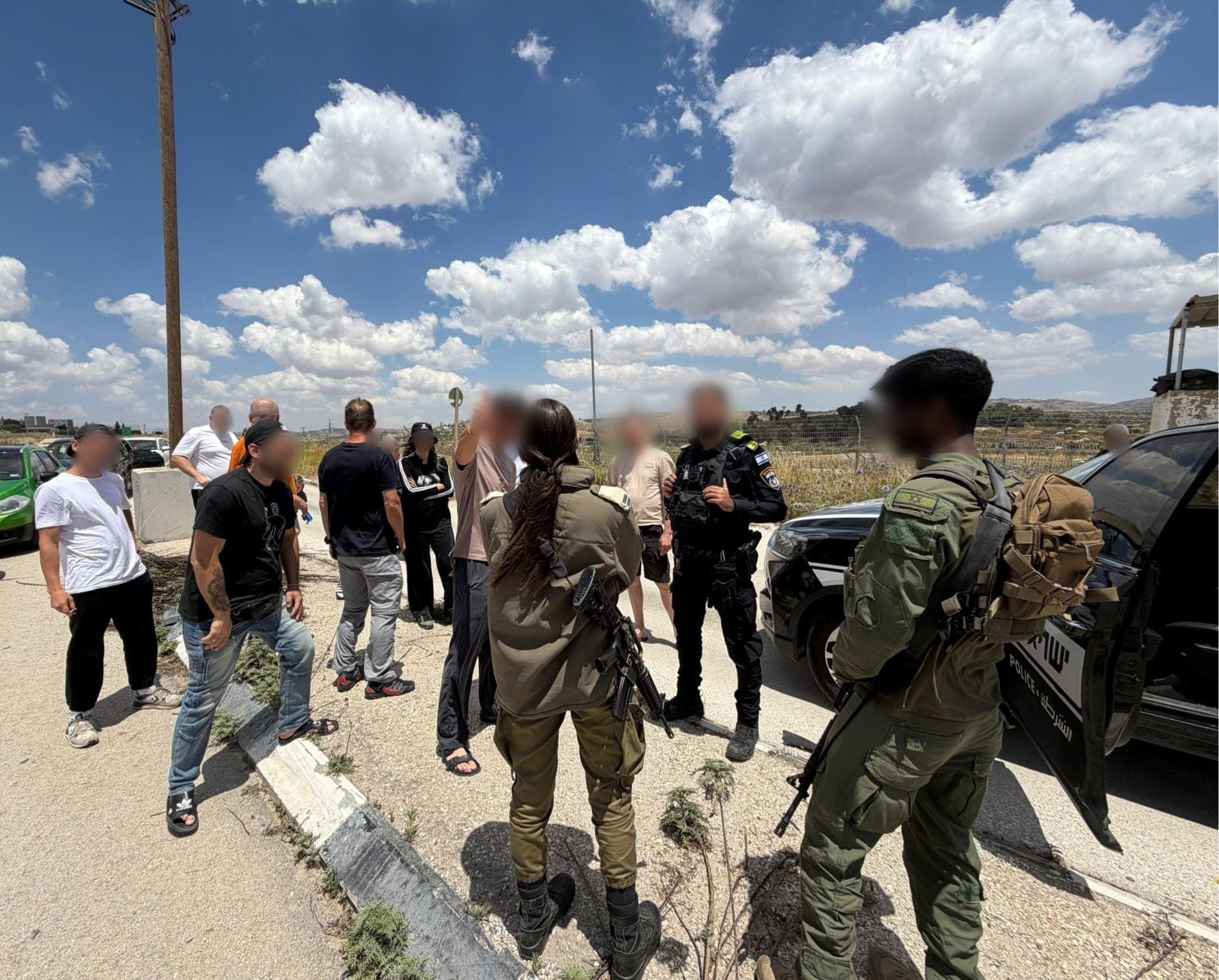
Security forces extract Israelis from the Palestinian-controlled West Bank city of Nablus, May 23, 2026. (Civil Administration)
“The IDF continues to monitor the phenomenon and is working to reduce it through public awareness efforts, law enforcement, and cooperation with all relevant authorities,” a military source told The Times of Israel, without detailing any new measures that security forces have taken to address the persistent issue.
“The entry of Israeli civilians into Area A is dangerous and prohibited by law,” he said, parroting warnings by the army.
The IDF declined to offer an official comment on the phenomenon.
A tale of two crossings
While the Israeli prohibition formally applies to all Israeli citizens regardless of ethnicity, it is enforced primarily against Jewish Israelis. Arab Israelis routinely enter Area A for family visits, commerce, work, and religious purposes, and security forces generally do not seek to prevent or penalize those crossings, focusing instead on the security risks facing Jewish Israelis.
Last December, an IDF representative told the Knesset subcommittee on West Bank issues that the army had been instructed by the political echelon to allow Israeli Arabs to enter zones designated as Area A in order to strengthen the local economy, adding that the military planned to further encourage such visits.
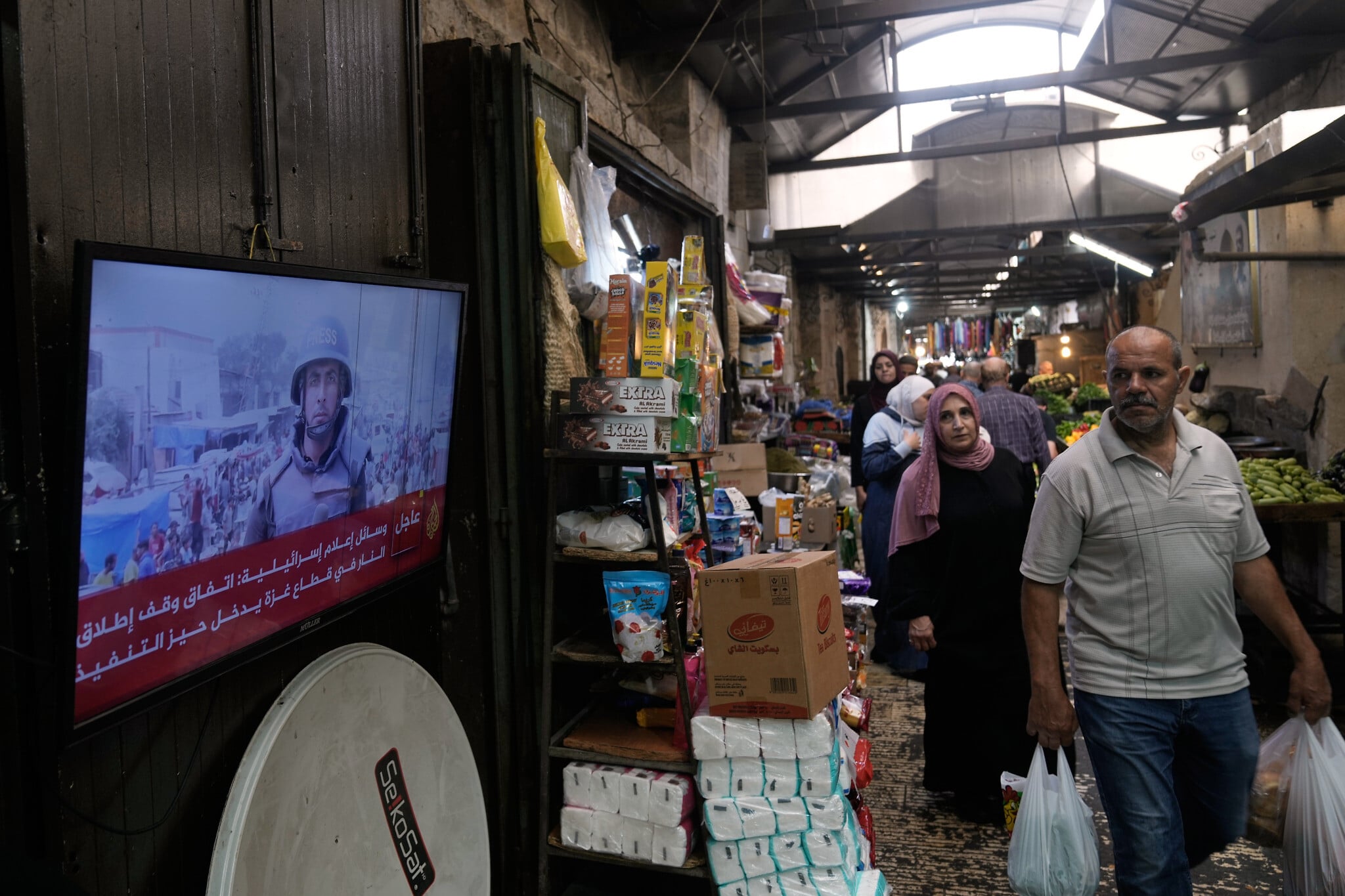
A Palestinian man looks at a television broadcasting the news following the announcement that Israel and Hamas have agreed to the first phase of a peace plan to pause the fighting, as he walks at a local market in the Old City of Nablus, in the West Bank, October 9, 2025. (AP Photo/Majdi Mohammed)
“[The order] applies to every Israeli, Jewish or Arab. The enforcement policy determined by the Justice Ministry makes a distinction between Jews and Arabs in light of the risk and potential for harm. There is a need and a necessity to enforce this upon Jews because it endangers them, but that is not the case with regard to Arabs,” Lt. Col. Shmulik Cohen of the IDF’s Central Command told the subcommittee.
“There are periods in which the Israeli government encourages the entry of Israeli Arabs into Area A, at the instructions of the prime minister and the defense minister,” he added.
Palestinian officials say the easing of access has been noticeable.
“I see Palestinians from inside Israel coming to Nablus,” said Yassin Dweikat, a member of the Nablus Chamber of Commerce, using the common Palestinian term for Arab citizens of Israel.
“When the checkpoints at the entrances to the city were stricter, it affected the number of visitors. But in recent months it’s become much easier, and that has encouraged people to come into the city.”
‘Clear danger’
Regardless of their motivation, Kuperwasser described Jewish Israelis entering Area A as committing acts of “carelessness.”
“The people who enter quite often end up being beaten or having their life threatened,” he claimed, adding that some incidents have even proved fatal.
In 2019, a Jewish Israeli man and his son were stabbed while entering a dental clinic in a West Bank village, after being approached by a teenage Palestinian knifeman who first asked them if they were Jewish.
The dentist, who offered prices dramatically lower than available in Israel, said that before the stabbing, Israelis accounted for about a fifth of his business, but after the stabbing, most stopped coming out of fear of being harmed.
In 2024, a Petah Tikva man who entered Qalqilya to go shopping was shot and killed by the head of a local terror network linked to the Islamic Jihad group.
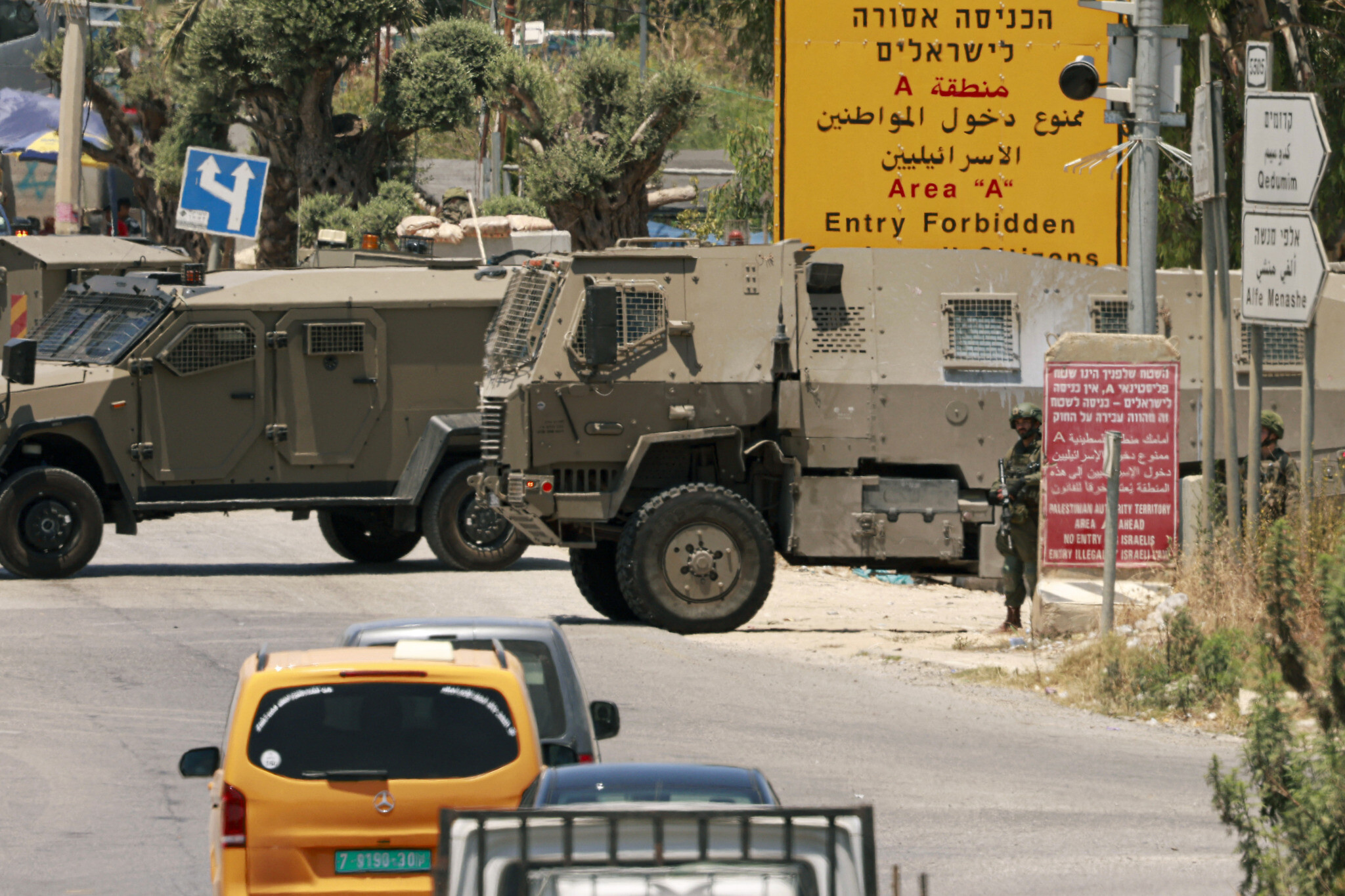
Israeli army vehicles close off the entrance to the West Bank city of Qalqilya after an Israeli civilian was shot and killed on June 22, 2024. (Jaafar ASHTIYEH / AFP)
And earlier this month, security forces rescued a group of Israelis who said they had entered Qalqilya to recover a stolen motorcycle, after dozens of Palestinians surrounded their vehicles in what police described as an attempted “lynching.”
“The dangers for those who enter are clear,” Kuperwasser said.
Most recorded cases of violence against Israelis in Area A, however, have been linked to extremist settlers accused of entering Palestinian areas to attack or frighten locals and expand their footprint in the West Bank.
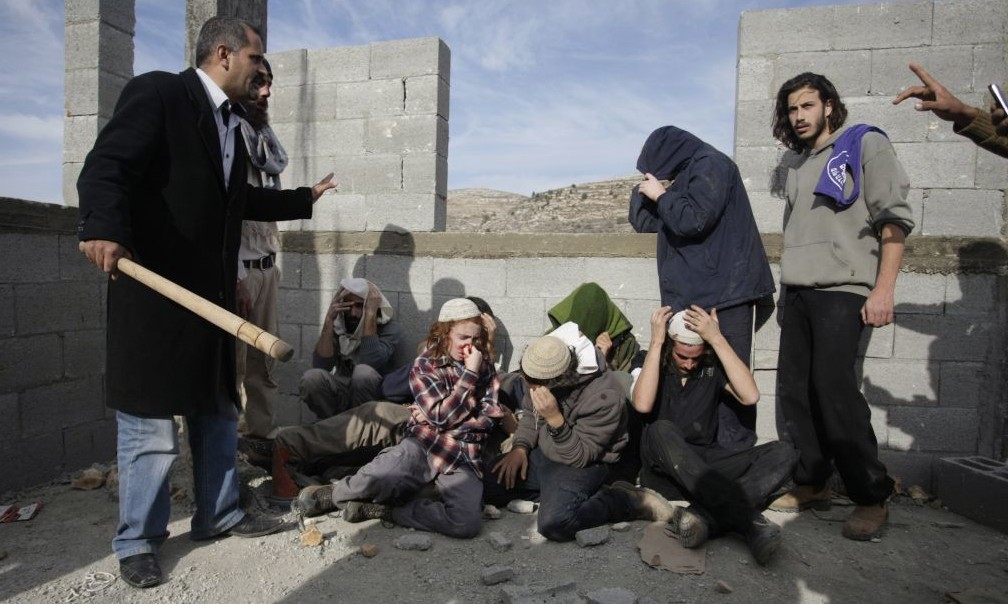
Injured Israeli settlers are detained by Palestinian villagers in a building under construction near the West Bank village of Qusra, southeast of Nablus, on January 7, 2014. (AP/Nasser Ishtayeh/File)
Earlier this month, two Israelis and four Palestinians were killed in a gunfight on the outskirts of the village of Tell after a group of settlers entered Areas A and B without coordinating with the military in advance. Members of the group said they had entered for a hike, while Palestinian officials disputed that account, alleging the settlers had first attacked the eastern part of the village and attempted to break into two houses before the ensuing clash.
Despite the legal prohibition, Israelis caught in Area A rarely, if ever, face criminal prosecution, with offenders often released after little more than a warning.
“There should be some sort of punishment for those who [enter illegally], because in most cases we are so happy that we manage to take them out — we don’t even put them to trial. We don’t punish them,” said Kuperwasser. “I think what needs to happen is some punishment, and the lesson will be learned.”
Nurit Yohanan contributed to this report.