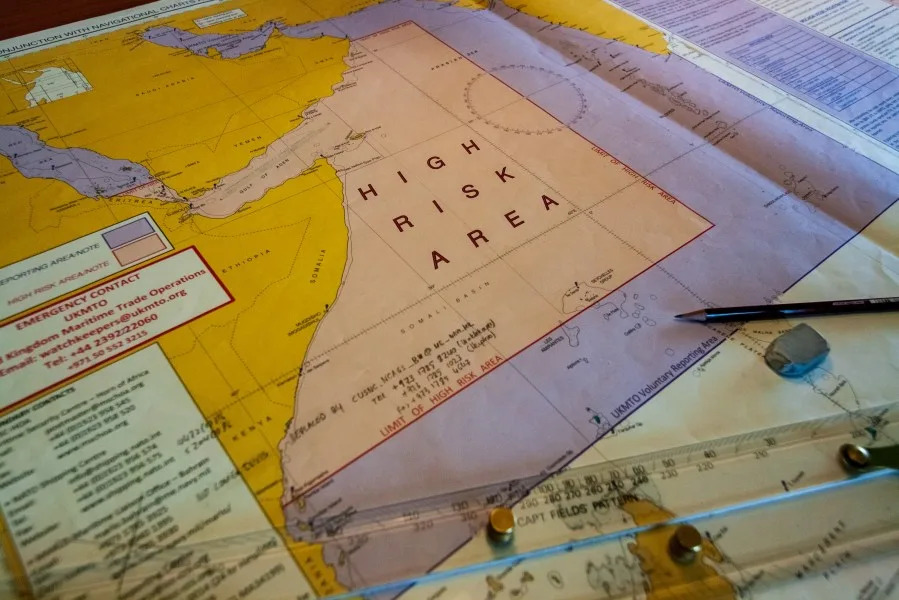
The Iran war has not just rattled the Strait of Hormuz. It reached down the Red Sea and knocked on a door Washington thought it had closed: Somali piracy.
It had not been closed. It had been left ajar.
In April and May of this year, pirates seized four vessels in less than two weeks off Somalia’s coast. One of them, the Togo-flagged Eureka, an oil tanker operated by Emirati-linked interests, was taken in the Gulf of Aden and hauled to the Puntland coast, where a $10 million ransom demand is now sitting. The Eureka did not happen in isolation. It happened inside a threat architecture that Tehran built, U.S. and United Nations-designated terrorist groups in Yemen staffed, and their counterparts in Somalia are now running as a logistics franchise.
The connection is documented. A 2025 U.N. Panel of Experts report recorded direct meetings between terrorist representatives from Yemen and Somalia-based militants in July and September 2024. The Somalia-based group agreed to intensify piracy in the Gulf of Aden. In return, it received weapons, precision GPS tracking devices for locating commercial vessels, and military training conducted inside Yemen. The deputy intelligence director of the Puntland Maritime Police Force confirmed in January 2026 that equipment supplied through those networks is now operational inside Somali pirate cells.
That is not a regional security problem. It is a weapons proliferation and maritime terror problem with a direct line to Tehran.
Washington has spent two years watching the Bab el-Mandeb Strait through the lens of missile attacks from Yemen. That focus is correct, but badly incomplete. The Yemen-based groups disrupted the Red Sea. Somali pirates moved into the disruption. The two threats are not parallel events; they are the same operation running at different ends of the same corridor.
The Iran war did not invent the piracy resurgence, but it did give it hardware, training and strategic cover. Every additional week of conflict that keeps international naval assets stretched toward Yemen is a week that pirate networks in Puntland consolidate, recruit and push further out to sea.
The numbers tell the direction of travel. At its 2011 peak, Somali piracy cost the global economy an estimated $7 billion in insurance premiums, ransoms, naval deployments and rerouting costs. A decade of sustained naval pressure and onboard armed guards suppressed it. That suppression is now unwinding. Global piracy reached a five-year high in 2025 — 137 incidents, up from 116 the year before — and the worst was still ahead. The April and May 2026 hijacking cluster arrived before the annual count had even closed.
The United States has concrete interests here, not abstractions about freedom of navigation.
Weapons flowing from Yemen to Somalia do not stay in Somalia. They feed a market that arms destabilization operations across East Africa, in a region where the United States maintains counterterrorism commitments and hard-won military access arrangements. The pipeline running from Tehran through its Yemen proxies into Somalia’s coastal criminal networks functions as a sanctions evasion route, a weapons distribution channel, and a ransom-laundering operation all at once. It deserves to be treated accordingly.
The Red Sea-Horn corridor is not on the periphery of the Iran conflict. It is one of the theaters where Iran is prosecuting the war at low cost and high deniability. Disrupting shipping, deepening militant reach in Somalia, and bleeding international naval resources are not side effects. They are the strategy.
Washington’s response has not kept pace. Operation Prosperity Guardian was built for missile threats from Yemen, not for a hybrid piracy network running Iranian equipment out of Puntland. The US Africa Command runs counterterrorism operations in Somalia on land; maritime piracy answers to different command structures entirely. That seam is exactly where Iran is working.
Congress should direct a formal interagency review of the weapons pipeline running between Yemen and Somalia — covering its financing, its command relationships, and its reach into East African arms markets. The administration should apply the Iran sanctions architecture to the financial networks moving ransom payments and weapons proceeds across that corridor. The Navy should rebuild dedicated counter-piracy presence in the Gulf of Aden before the next hijacking, not in response to it.
The 2011 lesson was that Somali piracy yields to sustained, coordinated pressure. The 2026 lesson is that it now has a state sponsor. Treating the Eureka as a maritime crime story rather than a chapter in Iran’s regional war will prove far more expensive than the $10 million currently sitting on the table in Puntland.
Siyad Madey is a Nairobi-based legal practitioner and policy analyst covering Horn of Africa geopolitics and Red Sea security. He is a contributing writer at the Middle East Forum.
Copyright 2026 Nexstar Media, Inc. All rights reserved. This material may not be published, broadcast, rewritten, or redistributed.
For the latest news, weather, sports, and streaming video, head to The Hill.