
Iran announced on Monday that it had reached an agreement with Oman on a plan for ships to transit the Strait of Hormuz, which lies between the two countries, and that the sides were now working to finalize details of a joint statement.
Iranian Foreign Affairs spokesperson Esmail Baghaei told reporters in Tehran that “an understanding has been reached regarding the map of the transit route.”
He did not elaborate, but details that have previously emerged suggest the deal would reopen the strait with ships entering through a route close to Iran and exiting through a route close to Oman. Ships would transit without paying fees or tolls during the interim period.
Iran and the United States have been locked in a stalemate over control of the key waterway and Tehran’s nuclear program, with Tehran effectively putting a closure on the strait while the US has blockaded Iranian ports.
The US has sought an acceptable deal to open the strait before ending its blockade of Iranian ports, and it is unclear whether the new agreement would meet Washington’s expectations.
Get The Times of Israel’s Daily Edition
by email and never miss our top stories
By signing up, you agree to the terms
Baghaei conceded the talks with Oman have gone slowly, “but we had planned, and still plan, to finalize the understanding in the form of a package: the map plus a joint statement.”
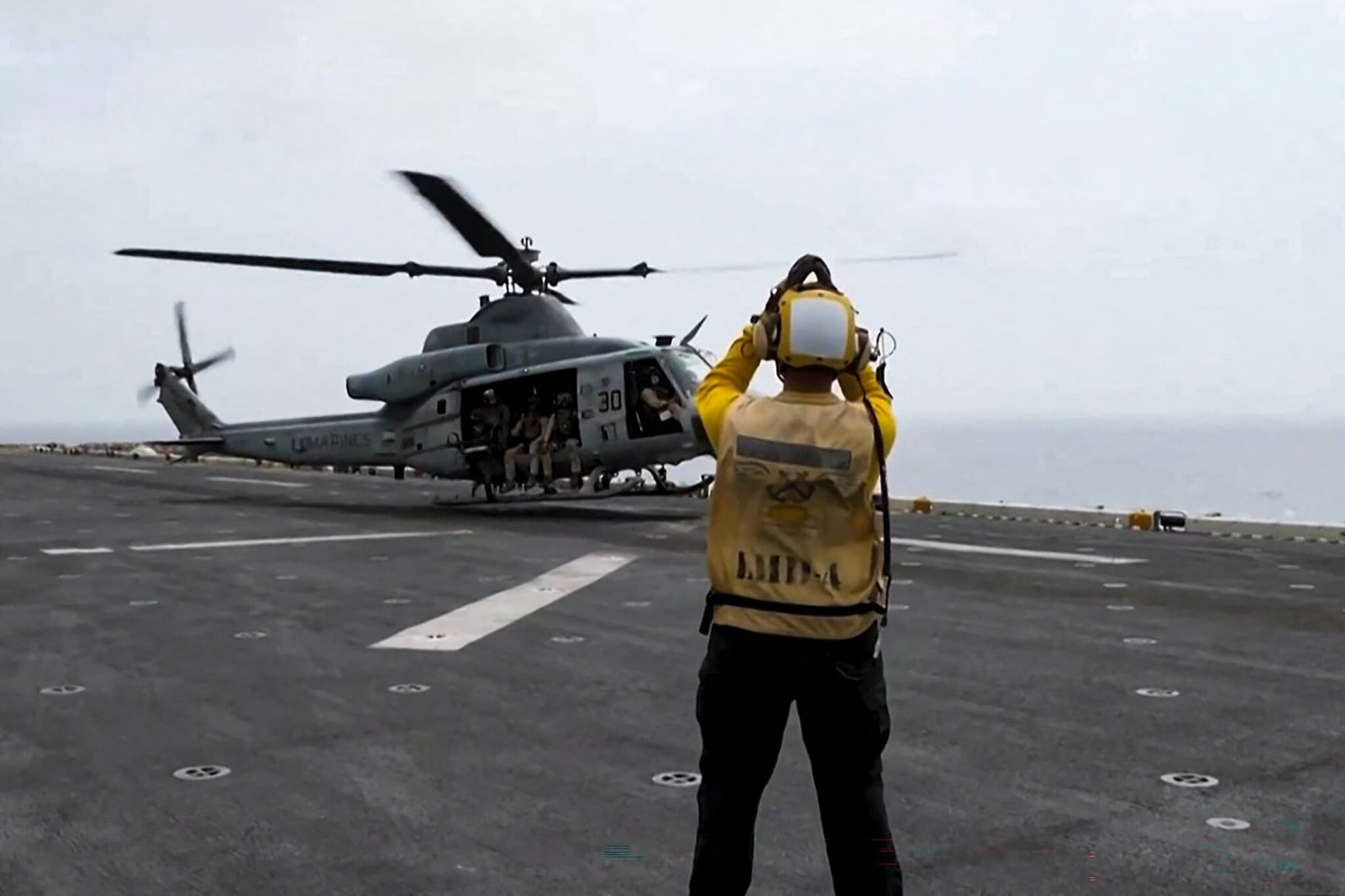
This screen grab made on July 26, 2026 from undated handout video footage released by the US Central Command on July 25, 2026 shows what CENTCOM says are operations enforcing its naval blockade against Iran. (CENTCOM)
His comments came as a 60-day deadline for finding an agreement to end the war under a June memorandum of understanding expired, with no signs of a deal between the US and Iran. The MOU, which Israel is not a party to, largely broke down soon after it was announced, and Iran resumed attacks on ships it accuses of trying to transit the strait without its permission, leading to US retaliatory strikes.
In an early-morning post, US President Donald Trump said that the US’s top priority was to prevent Iran from achieving a nuclear weapon.
“The number one Goal is, and always will be, that Iran cannot have, in any way, shape, or form, a Nuclear Weapon,” Trump wrote on Truth Social.
His words appeared to be a direct contradiction to US Vice President JD Vance’s comments last week that the US’s top goal was to lower gas prices for Americans, and only the second priority was preventing Iran from going nuclear.
Trump asserted last year that the June 2025 bombing of three Iranian uranium enrichment facilities had “obliterated” Iran’s nuclear capability and set back its nuclear program by decades. But the exact extent of the damage is unknown.
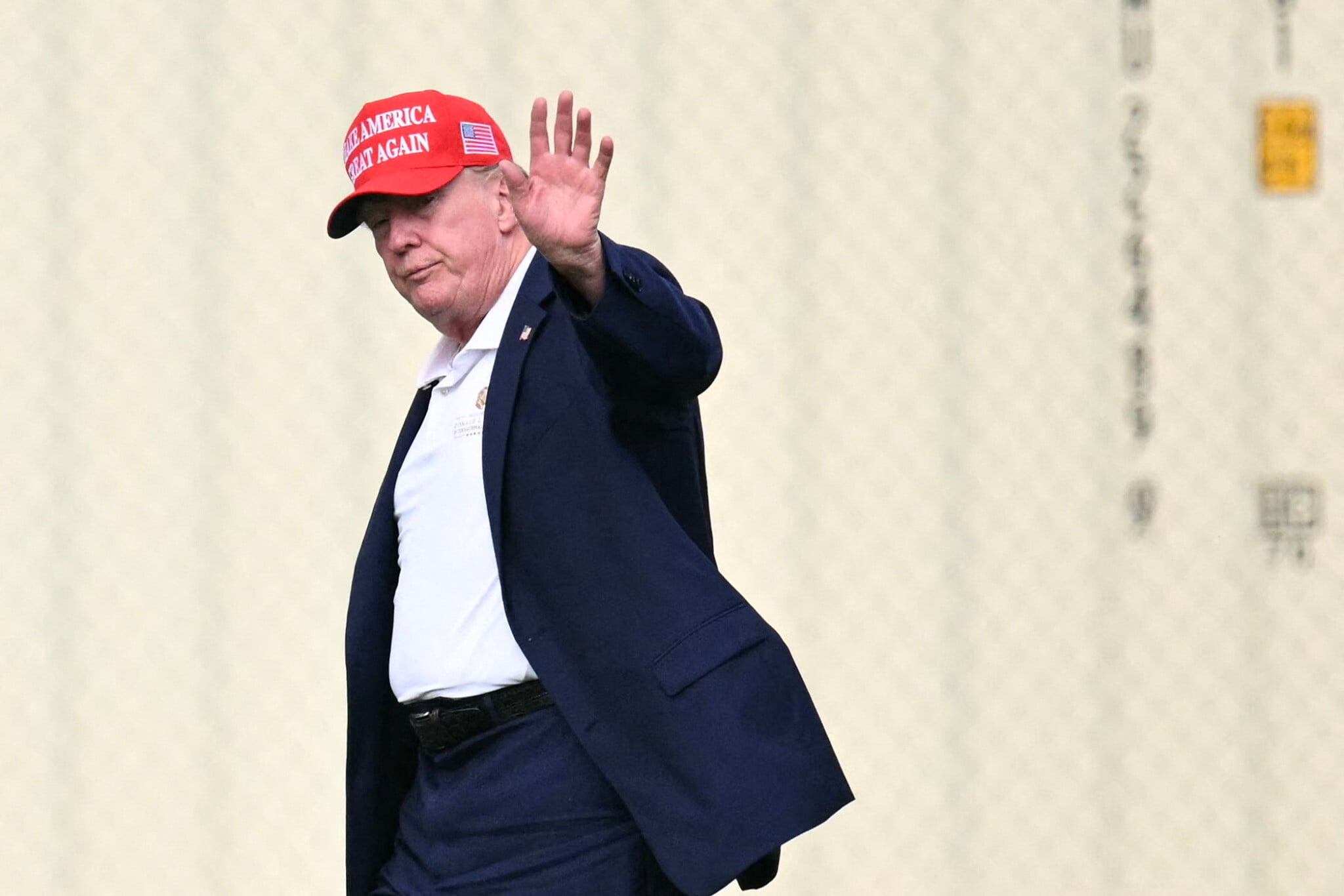
US President Donald Trump waves as he walks to his motorcade after exiting Marine One on the Ellipse near the White House on August 16, 2026. (Mandel NGAN/AFP)
Prior to last year’s strikes, Iran was enriching uranium to 60 percent, according to the International Atomic Energy Agency. That is far higher than is necessary for civilian reactor levels, and a short step away from the 90 percent required to build a nuclear weapon.
Reports have said the 440 kilograms (970 pounds) of highly enriched uranium stored in the facilities was buried by the strikes, but Israel reportedly believes that Iran managed to transfer some of it to the nearby Pickaxe Mountain site following that conflict.
Pickaxe Mountain was not hit then or in the latest war, although Trump has repeatedly threatened to bomb it.
Separately, Baghaei on Wednesday blamed pollution in Gulf waters on the US military’s operations in the region, after several reported oil spills.
“This environmental damage stems from the US military presence and the wars it has waged in the region over the past five decades,” he said. “The damage caused to the environment of the Persian Gulf and the Sea of Oman is not solely linked to this war.”
He called for the United States to be held accountable, estimating the damage at “trillions of dollars.”
Last week, Iran called for compensation after an oil slick in the Strait of Hormuz reached the island of Qeshm, affecting beaches and an environmentally sensitive mangrove forest.
At the time, Baghaei cited preliminary evidence identifying “a foreign bulk carrier” as the source of the spill, which Iranian officials later said had been “completely cleaned up.”
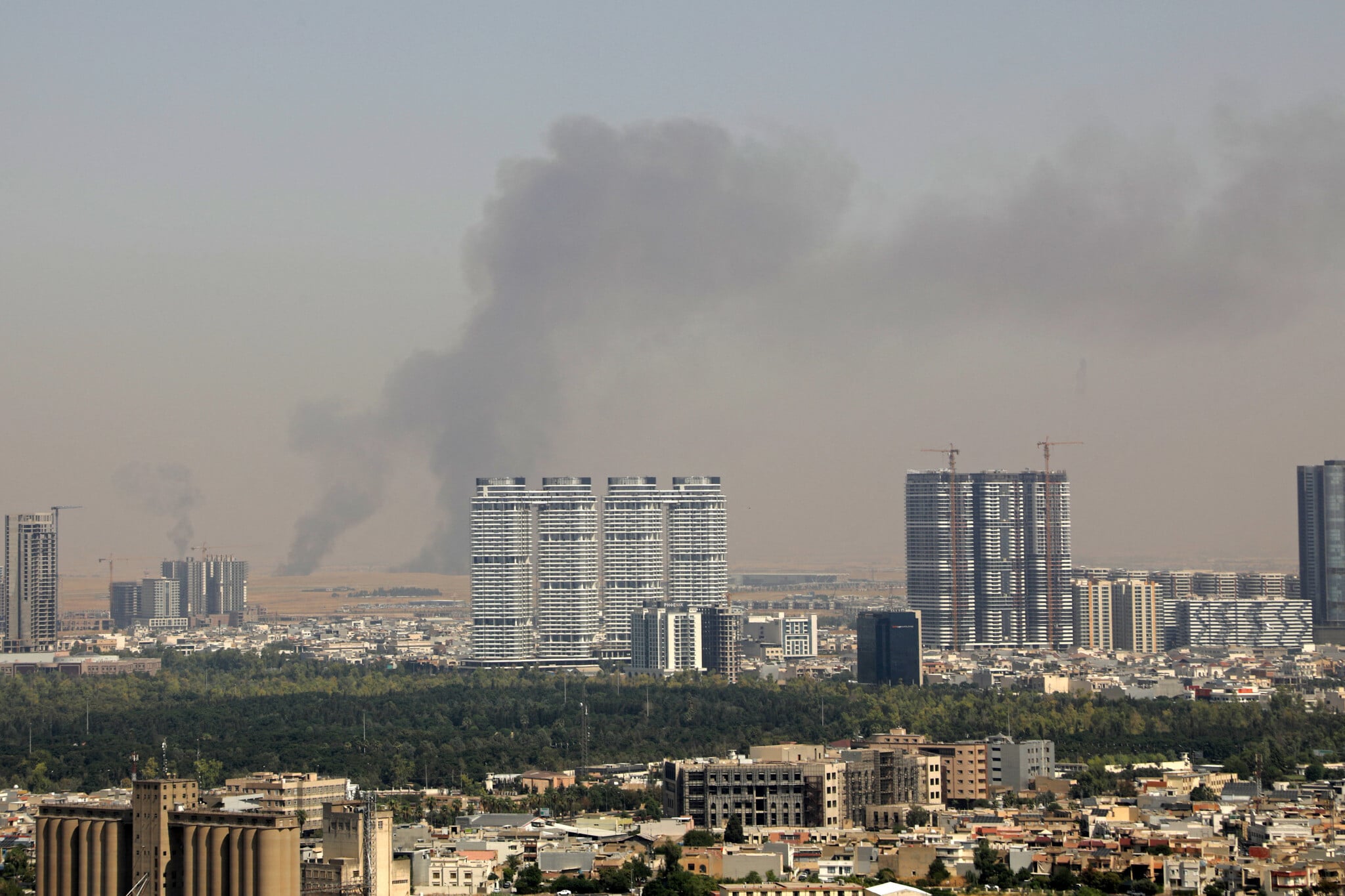
Smoke rises after explosions were heard and air defences activated near the airport in Erbil, Iraqi Kurdistan, on July 24, 2026. (AFP)
Drone attacks in Iraq
Meanwhile, two officials in northern Iraq were targeted in drone attacks that the regional counterterrorism service said were launched from the border with Iran.
One was fired at the office of Iraqi Kurdistan Prime Minister Masrour Barzani, and the other targeted the home of a top regional intelligence official, the counterterrorism service said.
There were no casualties, and it was unclear whether the buildings were damaged. There was no immediate claim of responsibility.
Since the beginning of the US-Iran war, Iran and Iranian-backed Iraqi militant groups have launched regular attacks on US military and diplomatic facilities in Iraq and on bases of exiled Iranian Kurdish dissident groups, but Monday’s direct attack on regional government buildings was unusual.
Barzani, in a post on X, called the attack “a dangerous escalation and a direct threat to the security and stability of the Kurdistan Region.”
The attack comes as US forces currently stationed in the Kurdish region of Iraq have begun withdrawing ahead of a September 30 deadline agreed upon between Washington and Baghdad to end the US military presence in Iraq.
Times of Israel staff contributed to this report.
Help us report truthfully on social media

As a multimedia journalist, my job is to take the quality, fact-based journalism produced by The Times of Israel newsroom and make it accessible across every platform — from Instagram posts to podcasts to short-form videos.
This is how many, especially young people, consume news these days. But misinformation is rampant on social media. Our team at ToI produces accurate, responsible short-form reporting on Israel and the Jewish world.
If you believe in the importance of factual social media journalism, please consider joining our reader support group, The Times of Israel Community. Your financial support is essential to sustain responsible multimedia reporting.
— Gabriella Jacobs, multimedia journalist
Already a member? Sign in to stop seeing this
You’re a dedicated reader

That’s why we started the Times of Israel – to provide discerning readers like you with must-read coverage of Israel and the Jewish world.
So now we have a request. Unlike other news outlets, we haven’t put up a paywall. But as the journalism we do is costly, we invite readers for whom The Times of Israel has become important to help support our work by joining The Times of Israel Community.
For as little as $6 a month you can help support our quality journalism while enjoying The Times of Israel AD-FREE, as well as accessing exclusive content available only to Times of Israel Community members.
Thank you,
David Horovitz, Founding Editor of The Times of Israel