2026-08-30T05:38:45+00:00
font
Enable Reading Mode
A-
A
A+
Shafaq News- Baghdad
Iraq’s banking sector faces a “critical crossroads”
after years of weak management, oversight failures and declining public
confidence have limited its ability to attract savings and finance investment
and development, the prime minister’s economic adviser told Shafaq News on
Saturday.
Mudher Mohammed Saleh said building an efficient
banking system could no longer be delayed, particularly in an economy heavily
dependent on oil for foreign currency. “Restoring confidence requires stronger
governance, supervision and compliance, strict anti-money laundering and
counter-terrorist financing standards, restructuring troubled banks, addressing
weaknesses in their financial positions and raising capital in line with risk
levels and modern banking requirements.”
Technology is another key part of the overhaul, Saleh
said, calling for improved digital systems, cybersecurity and risk management,
along with secure and reliable electronic payment services. Such measures would
reduce reliance on cash, expand financial inclusion and bring more people into
the formal banking system.
However, technology and oversight alone would not
restore confidence. Banks also need greater transparency, stronger depositor
protections, clear deposit safeguards, faster complaint handling and the
ability to protect customers’ money, according to the advisor.
He called for banks to shift from traditional services
and liquidity management toward financing the real economy, particularly small
and medium-sized enterprises and productive agricultural, industrial and
service sectors.
“A bank that does not finance productive economic
activity remains a financial intermediary with limited impact,” he said, adding
that institutions capable of mobilizing savings, managing risks and financing
production and investment can become partners in development.
Read more: Iraq turns to borrowing to cover salaries amid oil-revenue collapse
From Cash to Credit
International economics professor Nawar Al-Saadi told
Shafaq News that banking reform had become essential for moving Iraq from a
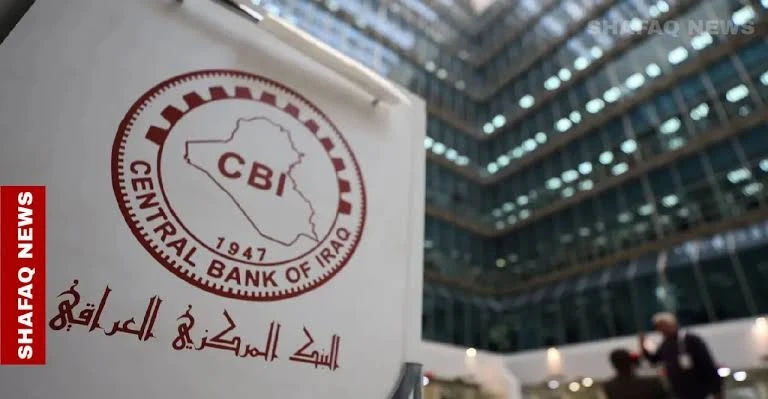
cash-based economy toward one driven by financing. He said the Central Bank of
Iraq’s (CBI) program offers banks several paths, including remaining in
business, merging or leaving the market, alongside tougher governance,
compliance and risk-management requirements.
Rebuilding confidence requires sound governance,
solvency and transparency rather than campaigns to attract deposits, Al-Saadi
said. He called for resolving the status of banks unable to continue operating,
strengthening the capital of viable institutions, improving disclosure and
independent auditing, and holding boards and executives accountable for
violations.
Depositors should find banks “safer and easier to use”
than keeping cash, he added. This would also require greater lending to small
and medium-sized businesses and productive sectors, as well as effective
credit-scoring systems instead of excessive reliance on traditional collateral.
Read more: Iraq’s private banks: Capital Growth and the structural credit gap
Protecting Deposits
Economic expert Ahmed Al-Janabi said reform required a
comprehensive package beginning with restoring confidence and protecting
depositors’ money, noting that many Iraqis remain reluctant to place their
savings in banks.
He noted that the reform program involving global
consultancy Oliver Wyman was developed against the backdrop of restrictions on
several Iraqi banks. Seven institutions subsequently entered an initial phase
allowing them to resume transactions and transfers in foreign currencies other
than the dollar, while further reforms remain underway.
Al-Janabi estimated that currency issued by the CBI
totals around 103 trillion dinars, while about 20 trillion dinars remain
outside the banking system, much of it “hoarded in homes.”
Economic expert Ahmed Abdul Rabbo said the reforms
undertaken with Oliver Wyman were important for rebuilding the banking sector,
improving its efficiency and strengthening its links to the global financial
system, calling for faster implementation.
He welcomed the decision allowing seven banks to
conduct foreign transfers in currencies other than the dollar but said the
priority should be enabling them to gradually resume broader operations. Reform
should also extend beyond those institutions, he said, with other banks
assessed and allowed to conduct foreign transfers once they meet the required
standards.
The Central Bank has been working with international
firms to overhaul the banking sector and address compliance problems that had
cut several Iraqi banks off from dollar transactions. On July 18, the CBI
reached an agreement with the US Treasury Department allowing seven eligible
banks to resume foreign correspondent banking in currencies other than the
dollar. Access to dollar transactions remains subject to further compliance,
governance and relicensing requirements.
Read more: Exchange offices expand in Iraq: Cash economy outpaces banking sector