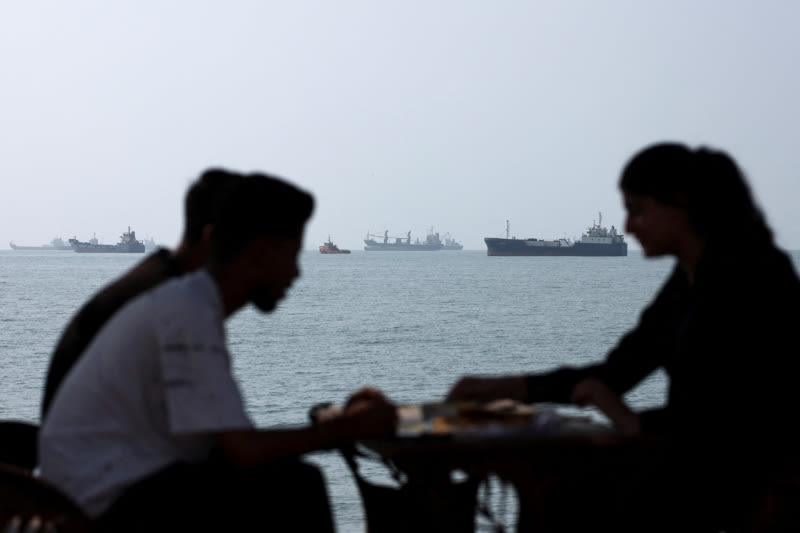
SINGAPORE, Sept 11 (Reuters) – Vessel transits at the Strait of Hormuz fell to seven on Thursday from 11 the previous day, preliminary shiptracking data showed on Friday, well below the 10-day average of 15.
Of the seven vessels, two Panamax ships exited the strait, one carrying fertiliser and the other sailing in ballast, according to data from ship tracker Kpler as of 0306 GMT.
Five vessels entered the strait, including a Panamax vessel carrying dry bulk cargo, a Handysize vessel laden with steel, a Handysize vessel carrying grains, a medium-range tanker loaded with dirty petroleum products, and a Supramax vessel carrying dry bulk cargo.
The figures exclude any vessels that might have crossed the strait with their Automatic Identification System transponders turned off to avoid detection.
Before the Iran war started on February 28, the strait typically handled about 125 large, commercial vessels per day, including tankers, gas carriers, bulkers and container vessels, accounting for some 20% of the world’s daily crude oil and liquefied natural gas supply.
A U.S. blockade of Iran-related shipping has halted Iranian crude oil exports since it was reimposed in mid-July.
In the Red Sea, Iran-aligned Houthis seized control of Yemen’s port city of Mocha on Thursday and advanced down the Red Sea coast to strategic islands, military sources said.
In the Bab el-Mandeb strait on Thursday, 26 commodity vessels travelled through, tracking data showed. Of these, 10 vessels entered and 16 exited.
This compares with an average of around 27 ships over the last 10 days.
(Reporting by Siyi Liu in Singapore; Editing by Jacqueline Wong and Kate Mayberry)