Politics, Geopolitics & Conflict
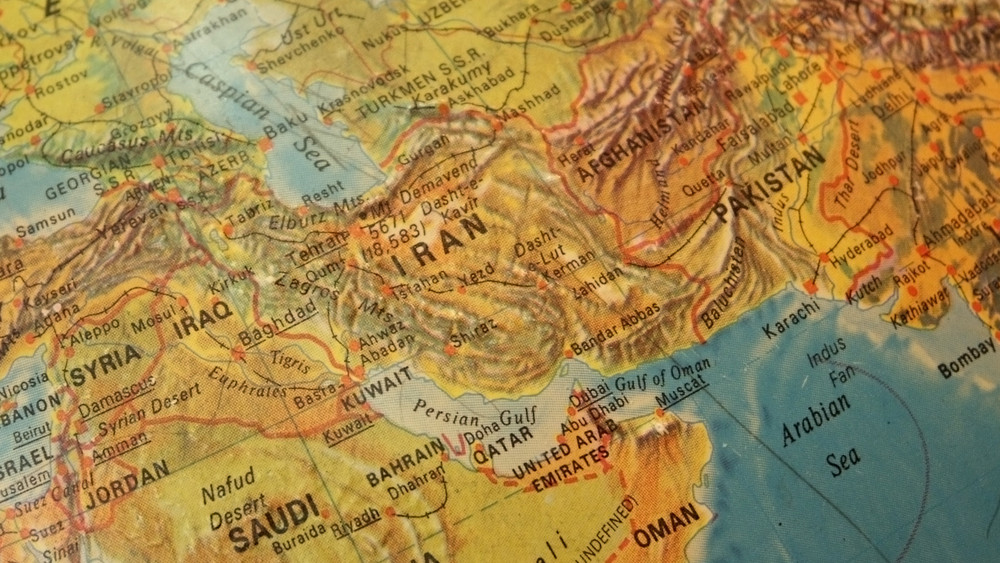
The U.S. and Iran are back to negotiating over the same basic bargain that briefly ended the war in June: reopen Hormuz, ease the U.S. blockade, and use a temporary ceasefire to negotiate everything they can’t settle now. The latest discussions in New York are focused on a phased arrangement under which Tehran would restore commercial shipping through Hormuz while Washington begins lifting restrictions on Iranian trade, with access to frozen Iranian assets also under discussion (at the same time, Washington slapped new sanctions blocking Iranian flights). Iran has proposed a regionwide ceasefire of up to 60 days and a timetable for negotiations on the remaining disputes, while Qatar, Pakistan and increasingly Egypt are mediating. Tehran has also shown some room on the tolls it has imposed on shipping, with Reuters reporting that it could move the issue into a separate annex rather than make U.S. acceptance of the charges a condition of the main agreement. It has not backed away from claiming administrative control over the strait. Trump has ruled out lifting the blockade before Iran demonstrates what Washington considers sufficient goodwill, while Tehran says Hormuz will not reopen until U.S. military pressure is reduced and the blockade is lifted. Gulf states are also pushing for their own negotiations with Tehran rather than leaving Hormuz and regional security to another bilateral U.S. Iranian deal. Eighty countries issued a statement…
Politics, Geopolitics & Conflict
The U.S. and Iran are back to negotiating over the same basic bargain that briefly ended the war in June: reopen Hormuz, ease the U.S. blockade, and use a temporary ceasefire to negotiate everything they can’t settle now. The latest discussions in New York are focused on a phased arrangement under which Tehran would restore commercial shipping through Hormuz while Washington begins lifting restrictions on Iranian trade, with access to frozen Iranian assets also under discussion (at the same time, Washington slapped new sanctions blocking Iranian flights). Iran has proposed a regionwide ceasefire of up to 60 days and a timetable for negotiations on the remaining disputes, while Qatar, Pakistan and increasingly Egypt are mediating. Tehran has also shown some room on the tolls it has imposed on shipping, with Reuters reporting that it could move the issue into a separate annex rather than make U.S. acceptance of the charges a condition of the main agreement. It has not backed away from claiming administrative control over the strait. Trump has ruled out lifting the blockade before Iran demonstrates what Washington considers sufficient goodwill, while Tehran says Hormuz will not reopen until U.S. military pressure is reduced and the blockade is lifted. Gulf states are also pushing for their own negotiations with Tehran rather than leaving Hormuz and regional security to another bilateral U.S. Iranian deal. Eighty countries issued a statement Thursday calling for the strait to reopen without tolls, conditions or charges. There is considerably more diplomacy underway than there was a week ago, but the negotiations have so far produced another roadmap rather than an agreement.
The UAE is building out its Hormuz bypass on land as the war turns Fujairah into an increasingly important gateway for goods as well as oil. Etihad Rail has launched a new freight service linking Fujairah, on the Gulf of Oman outside the Strait of Hormuz, with Abu Dhabi’s industrial center roughly 200 kilometers away, with container trains running three times a week and customs clearance available at the Abu Dhabi end. The route gives importers another way to bring cargo into the UAE without sending ships through Hormuz, where traffic has been heavily disrupted since the Iran war began. The rail connection also adds another piece to the infrastructure already clustered around Fujairah, including ADNOC’s 1.5 million bpd Habshan Fujairah crude pipeline and the emirate’s large oil storage and bunkering complex. Saudi Arabia is adding freight capacity of its own, ordering 780 railcars from U.S. manufacturer Greenbrier, including tank cars for phosphoric acid and molten sulfur, as Gulf governments put considerably more urgency behind transport networks that can keep goods moving when maritime routes do not.
United Russia came out of Russia’s first parliamentary election since the invasion of Ukraine with an even bigger majority, taking 57.83% of the party vote and a record 355 of the State Duma’s 450 seats, up from 324 after the 2021 election. There wasn’t much suspense since most genuine opposition had already been pushed out and OSCE observers were not welcome. Putin had nevertheless cast the election as a measure of support for the war, so the result gives the Kremlin the parliamentary numbers it wanted as the conflict moves deeper into its fifth year and Ukrainian attacks reach deeper into Russian energy infrastructure. United Russia now controls nearly four-fifths of the Duma and can pass legislation and constitutional amendments without support from the other parties.
The last U.S. troops are due to leave Iraq by September 30, but the deadline Baghdad attached to getting the country’s militias under state control is being quietly rewritten at the 11th hour. Hundreds of U.S. personnel still in the north in Iraqi Kurdistan are expected to withdraw or redeploy elsewhere in the region, along with U.S. air defenses, while pro-Iranian Iraqi militias (Kataib Hezbollah, Harakat al Nujaba, Kataib Sayyid al Shuhada) have rejected disarmament or are seeking impossible concessions. The Iraqi government is now talking less about militias surrendering their weapons by September 30 and more about bringing their missiles, long-range drones and fighters under the command of the Popular Mobilization Forces and the Iraqi military over time. Some factions have agreed to integrate, but the most heavily armed groups also happen to be those most closely aligned with Tehran, and seven months of U.S. Iran fighting have given them considerably less reason to give up that leverage.
Washington wants to put $5 billion into rebuilding Gulf energy infrastructure after seven months of war with Iran, but the more interesting part of the plan is where the money would go. The proposed $10-billion fund (half financed by Washington and half by Middle Eastern governments) would repair damaged pipelines and refineries alongside building new oil and gas export routes that avoid Hormuz. Washington is now discussing the fund with Saudi Arabia, the UAE, Qatar, Bahrain, Kuwait, Oman, Iraq and Jordan, although none has yet committed funding.
Naftogaz says Russia fired at least five ballistic missiles at one of its oil and gas facilities in Poltava overnight on Monday, inflicting enough additional damage that the company no longer considers the site recoverable. The facility was already out of operation after repeated Russian attacks since 2022, so the immediate production loss appears limited; the more consequential part is the permanent loss of infrastructure that Ukraine might otherwise have repaired.
Deals, Mergers & Acquisitions
The U.S. Export-Import Bank signed a framework with Argentina this week to mobilize up to $7 billion in financing through 2027 for energy, critical minerals and other strategic infrastructure. Argentine officials have identified the $51 billion Argentina LNG development led by YPF, Eni and Abu Dhabi’s XRG as a major prospective beneficiary, with Argentine reporting putting potential financing for the LNG project at around $6 billion. EXIM has not publicly confirmed that allocation, however, and its agreement does not commit the $7 billion to specific projects.
BP has entered the data room for Devon Energy’s Eagle Ford business, which analysts value at about $4.5 billion, as part of a renewed push into U.S. shale under new CEO Meg O’Neill. Reuters says BP has recently entered data rooms for a small number of shale assets and is primarily looking at oil-heavy properties valued between $2 billion and $5 billion. Devon’s package covers roughly 90,000 net acres and produced about 77,000 boepd in Q2. BP already produces around 205,000 boepd from its existing Eagle Ford position, so acquiring Devon’s acreage would consolidate a basin BP knows well rather than establish an entirely new operating position.
Saudi Aramco is preparing to give natural gas its own place in the corporate hierarchy, carving the business out of upstream to create a third standalone division alongside upstream and downstream. The restructuring, first reported by Reuters and subsequently carried by Saudi financial outlet Argaam, would put Aramco’s domestic gas operations and growing international LNG portfolio under a dedicated president and could eventually clear the way for a minority stake sale. Gas is absorbing an increasing share of Aramco’s investment as the company targets an 80% increase in sales gas production capacity by 2030 from 2021 levels, led by the Jafurah unconventional gas development, while buying into LNG projects and signing long-term supply agreements overseas.
Discovery & Development
Russia has started commercial exports from Rosneft’s Vostok Oil project, putting one of its largest new Arctic developments into operation after years of delays and sanctions. Three ice-class tankers have loaded around 250,000 tonnes from the new Bukhta Sever terminal this month, with two carrying crude west to Murmansk for ship-to-ship transfer and another heading toward Asia through the Northern Sea Route. Exports are expected to average around 150,000 bpd this year, largely using crude from Rosneft’s existing Vankor fields, before new production begins contributing more heavily. Rosneft is targeting 30 million tonnes annually by the second half of 2027 and 50 million tonnes by 2030, or roughly 1 million bpd. A shortage of suitable ice-class tankers remains one of the main obstacles to moving those volumes through the Arctic.