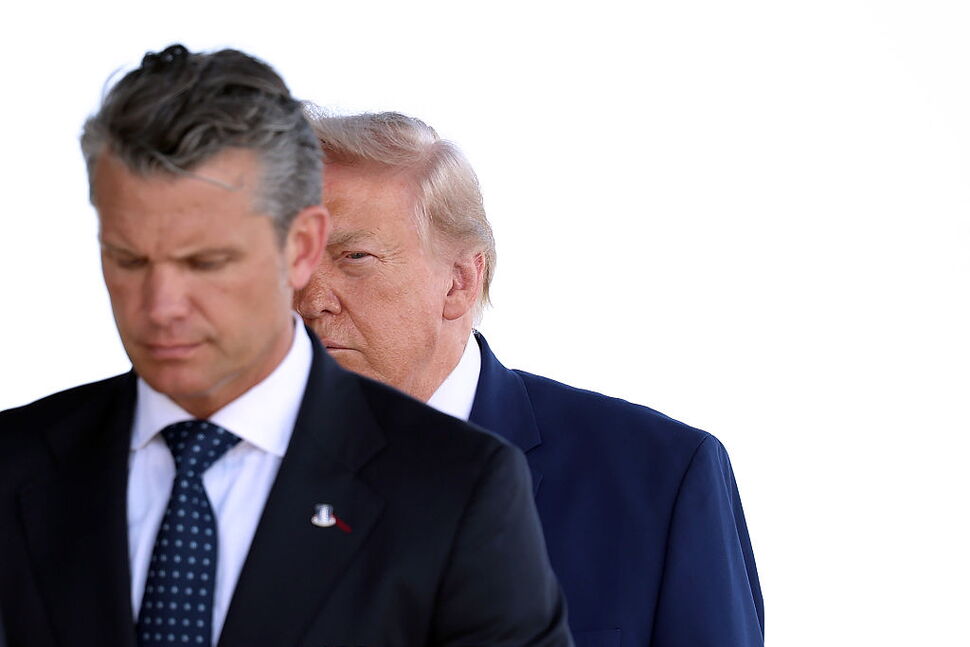
It can be tough politics for a president at war to lose support from the opposing party – even if it’s expected. But what happens when a commander-in-chief’s own supporters tell him to stop the fighting? When it comes to President Donald Trump’s military campaign against Iran, we’re about to find out.
If you needed more evidence that the war is politically toxic – beyond the midterm rout of Republicans at every level of government – Reuters has you covered.

Sign Up for U.S. News Decision Points
Your trusted source for breaking down the latest news from Washington and beyond, delivered weekdays.
By clicking “Sign Up”, you will receive the latest updates, including emails, from U.S. News & World Report and our trusted partners and sponsors, and you agree to our Terms and Conditions & Privacy Policy.
A new Reuters/Ipsos poll, completed after the election, found 71% of Americans want the U.S. Congress to pass legislation to end the conflict. That 93% of Democrats said this is not a surprise. But that a majority of Republicans – 51% – agreed adds to the White House’s headaches and could induce some in the GOP to break with the administration.
In the aftermath of Republicans’ electoral debacle, Trump has seemed to struggle to find his rhetorical footing on the war.
He has acknowledged that the conflict played a role in the election, while rebuking Vice President JD Vance for saying the war was “the reason we lost.”
Trump has also said he would do it all again.
During an impromptu press conference Monday night, the president declared the conflict “effectively over,” adding, “Military action doesn’t seem to be a very necessary thing. But we’re locked and loaded, ready to go for any reason that changes.”
To some degree, this was a variation of his messaging about the war since it began in February with U.S.-Israeli strikes: It’s going great, it’ll be over very soon, we reserve the right to blow everything up.
Iran Isn’t Going Away
The conflict shows no signs of going away as a political issue.
First, because the House seems likely to impeach Defense Secretary Pete Hegseth. Republicans beat back the effort by Republican Rep. Thomas Massie of Kentucky in a procedural vote on Tuesday, but the new Congress that meets Jan. 3 will have sizable Democratic majorities in both chambers, and the party’s leaders have made it clear they want to go after the defense secretary.
The accusations against Hegseth include going to war with Iran without congressional authorization and failing to minimize civilian casualties. Massie’s articles of impeachment quote the secretary as calling rules of engagement meant to limit accidental deaths “stupid” and putting a premium on “maximum lethality, not tepid legality.”
There’s a second reason not to expect the war with Iran to vanish from the front pages: Democratic leaders have vowed to end the conflict, possibly using the congressional power of the purse. A first confrontation is expected when lawmakers vote on government funding in December.
Third, Americans have easily made the connection between the war and the higher prices they face for gas and diesel. See “Results, Election.” On Tuesday, the Bureau of Labor Statistics reported consumer prices rose more than expected in October.
Fourth, the conflict may be widening, and on Iran’s terms. France blamed Tehran for cyberattacks on French supermarket refrigeration that spoiled food worth tens of millions of euros. Iran denied responsibility.
American bombs may not be striking Iranian targets, but this conflict does not feel “effectively over.”