A couple months ago, most farmers and others who follow the agriculture industry knew very little about the Strait of Hormuz.
Since late February, this tiny Strait in the Persian Gulf has dominated agricultural news, as well as U.S. business news in general. In late February, the United States and Israel became involved in a war with Iran. Iran controls much of the eastern border of the Persian Gulf, including the Strait of Hormuz, and has threatened to attack ships transporting any goods through the Strait. Other Western Asian (Middle East) countries in the Persian Gulf region that rely on export and import shipping through the Strait include Saudi Arabia, Oman, Qatar, Kuwait, Iraq, and the United Arab Emirates (UAE), which all play a role in the world agricultural economy.
The Strait of Hormuz is a narrow passageway that is located between Iran and Oman, linking the Persian Gulf to the Gulf of Oman and the Arabian Sea. It serves as the outlet for shipping goods to other countries. The Strait is approximately 21 miles wide; however, the width of the actual shipping lane for large cargo tankers is only about 2 miles wide. This makes any cargo ships very easy targets within the Strait during a wartime environment; such has been occurring in the region in the past few weeks. Prior to the start of the war with Iran, an estimated 138 vessels passed through the Strait daily. As of March 20, it was estimated that Iran had conducted 21 strikes on ships attempting to pass through the Strait. Only a few ships from countries that are friendly to Iran have been allowed to pass through the Strait since the war began. It normally takes about 30 days for a loaded cargo ship to travel from the Persian Gulf to ports in the U.S.

The focal point of the mainstream media related to the war in Iran and the economic impacts of the Strait of Hormuz has focused on disruptions to the worldwide supply of oil, as well as the impacts on the world oil price. In a normal situation, approximately 20 million barrels of crude oil and other petroleum products, or 20% of the global demand, travel through the Strait daily. If the war lasts for a long period of time, it could impact oil supplies in portions of Europe and other locations in the world that are heavily dependent on Middle Eastern oil. World oil prices increased by over 40% from late February to mid-March, trading at over $100 per barrel for the first time since the beginning of the Russia-Ukraine conflict in 2022.
The war in Iran does not impose an immediate oil supply concern in the U.S.; however, since oil is traded on a worldwide basis, the rapid increase in the world oil price has caused retail gas prices to increase significantly in the U.S. In most areas, gas prices had risen nearly $1 per gallon by March 20, since the start of the Iran war in late February. Retail gas prices were $3.75 to $4 per gallon in many areas, with prices topping $5 per gallon in some states. The price of diesel fuel also increased dramatically from late February until mid-March, reaching $4.50 to over $5 per gallon in many areas. This represents an increase of approximately $1.50 per gallon, or about 40%, in the past couple of months. The price of diesel fuel is an important factor in farm expenses and in providing food and goods to U.S. consumers.
Probably the biggest concern for the agriculture industry resulting from the ongoing war in Iran is the
potential impact on the U.S. and worldwide fertilizer supply,
along with the potential for large increases in the
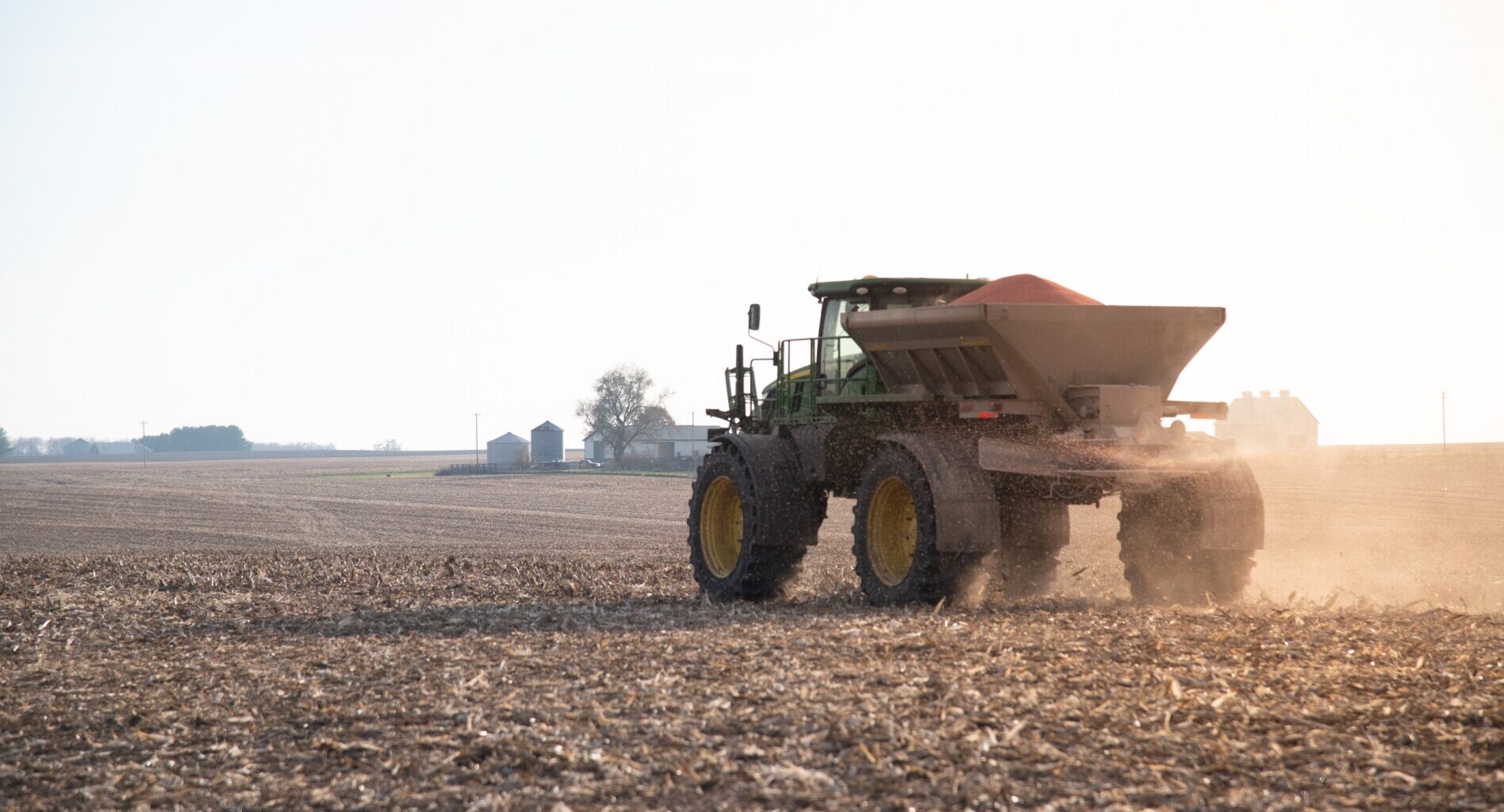
The countries in the Persian Gulf region are major producers of many types of fertilizer that are used around the world for crop production. The region is a major producer of nitrogen fertilizer, which is very important for the production of corn, wheat, cotton, and other crops. Approximately 43% of the urea and 27% of the anhydrous ammonia in the world, which are both important nitrogen fertilizer sources, are shipped through the Strait of Hormuz each year. In addition, about 44% of the sulfur and 16% of the phosphate fertilizer is shipped through the Strait annually. Any impacts on these fertilizer resources not only affect the U.S, but impacts nearly every major agricultural country in the world.
Iran also holds some of the largest natural gas supplies in the world, which play a key role in the production of ammonia fertilizer. Some Middle Eastern countries outside of the Persian Gulf region that are major producers of ammonia rely on getting natural gas from Iran and other countries in that region for production purposes. Sulfuric acid is required to produce phosphate fertilizers and many countries rely on sulfur from the Persian Gulf region for their phosphate production. If these countries do not have access to an adequate sulfur supply, they will not be able to produce enough phosphate fertilizer to meet world demand.
The United States relies both on domestic production and imports from other countries to meet the fertilizer needs of U.S. farmers. The impact of outside conflicts, such as the war in Iran, varies by the fertilizer nutrient. The U.S. imports approximately 18% of the nitrogen and 13% of the phosphate that are used on an annual basis, which could be subject to global trade disruptions caused by the current war. The U.S. also imports about 97% of the potash fertilizer used in crop production; however, a large majority of the potash is imported from Canada. In fact, 52% of all fertilizer imports into the U.S. come from Canada, compared to only about 10% of imports from the Persian Gulf region.
Similar to oil, the prices for most fertilizer nutrients are set on a worldwide basis, due to the major fertilizer companies being multinational and selling fertilizer around the world. This means that even though the U.S. does not import large quantities of certain fertilizer nutrients from the Persian Gulf region, the price increases caused by the shipping restrictions in the Strait of Hormuz may still impact fertilizer prices in the U.S. For example, if countries that rely heavily on Persian Gulf fertilizer sources are forced to go elsewhere to meet their needs, it will likely increase nutrient costs in those countries. In addition, if fertilizer supplies get tight, some countries may restrict exports or put extra export fees or tariffs on fertilizer that is exported.
The cost of all types of nitrogen fertilizer and phosphate increased significantly following the initiation of the war in Iran and have stayed quite high into mid-March. The price of urea fertilizer in the U.S. increased by about 25%, or around $75 to $100 per ton from late February until mid-March. Fertilizer prices for 2026 crop production were already considerably higher than costs in 2024 or 2025 for similar fertilizer products. For example, the cost of urea in early February, prior to the start of the conflict in Iran. was already 17% higher compared to a year earlier, and the cost of anhydrous ammonia was 15% higher. The cost of phosphate was up 11% and potash costs increased by 9%, compared to a year earlier. The 2026 average fertilizer cost before the conflict in Iran for corn production in the Midwest was estimated to be $20 to $30 per acre higher than fertilizer costs in 2024 or 2025.
Final thoughts on the Iran war impacts
Many farmers in the upper Midwest had already locked-in their fertilizer needs and costs for the 2026 growing season. For those producers, the rapid increase in fertilizer costs may have a minimal impact on fertilizer expense for the current year. However, for the farmers who usually wait until planting season to purchase their fertilizer, the 2026 fertilizer expense could be considerably higher. In addition, some producers may face challenges in getting adequate fertilizer nutrients to meet their needs for the coming growing season, if fertilizer supplies get tight. In areas where fertilizer cost and availability become an issue this spring, there could be some switching from intended corn acres to soybeans for the 2026 growing season.
The impacts of the war in Iran on U.S. farmers will likely depend on the length of the conflict and how long it takes to get the Strait of Hormuz fully operational again. If the war in Iran continues or expands in the coming weeks and months, farmers will likely see higher diesel fuel costs throughout the current growing season, as well as potentially higher natural gas and propane costs for drying crops in the Fall. The higher fuel cost will likely increase the cost of most other farm expenses as well in the coming months. Significantly more U.S. producers would be impacted by higher fertilizer prices and tight supplies by this fall if the conflict continues.
Kent Thiesse is a Farm Management Analyst . Contact him by phone at (507) 381-7960 or by email at kentthiesse@gmail.com.