
The United States can only determine with certainty that it has destroyed about a third of Iran’s vast missile arsenal as the US-Israeli war on the country nears its one-month mark, five people familiar with the US intelligence told Reuters Friday.
The status of around another third is less clear, but bombings likely damaged, destroyed, or buried those missiles in underground tunnels and bunkers, four of the sources said. The sources spoke on condition of anonymity.
One of the sources said the intelligence was similar for Iran’s drone capability, saying there was some degree of certainty about a third having been destroyed.
The assessment, which has not been previously reported, shows that while most of Iran’s missiles are either destroyed or inaccessible, Tehran still has a significant missile inventory and may be able to recover some buried or damaged missiles once fighting stops.
The intelligence appeared to contradict US President Donald Trump’s public remarks a day earlier that Iran has “very few rockets left.” He also appeared to acknowledge the threat from remaining Iranian missiles and drones to any future US operations to safeguard the economically vital Strait of Hormuz.
Get The Times of Israel’s Daily Edition
by email and never miss our top stories
By signing up, you agree to the terms
The Pentagon and White House did not immediately respond to requests for comment.
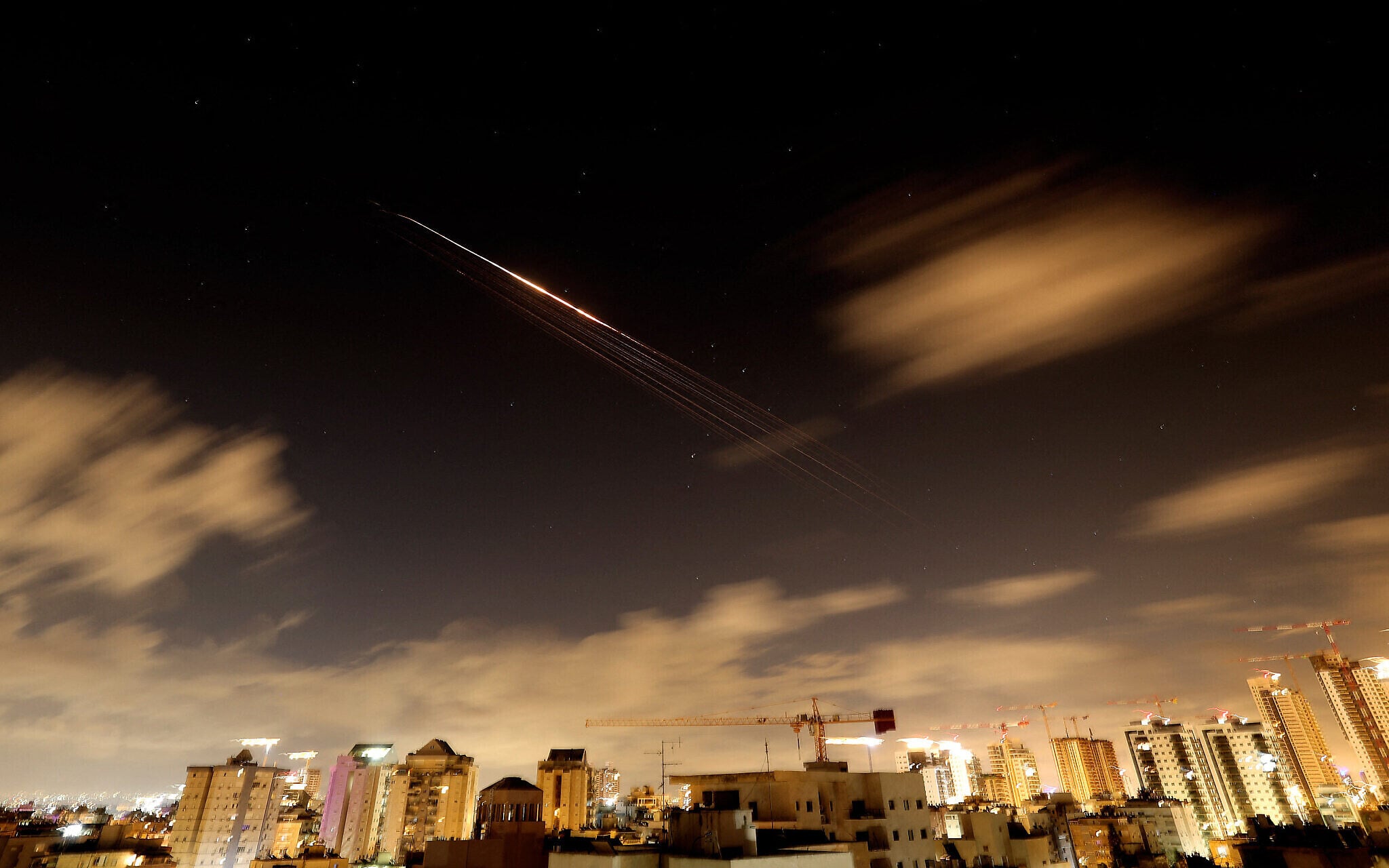
An Iranian ballistic missile seen above the coastal city of Netanya, on March 27, 2026. (JACK GUEZ / AFP)
US strikes have hit more than 10,000 Iranian military targets as of Wednesday and, according to Central Command, have sunk 92 percent of the Iranian navy’s large vessels.
Still, Central Command has declined to state precisely how much of Iran’s missile or drone capability has been destroyed.
One source told Reuters that part of the problem is determining how many Iranian missiles were stockpiled in underground bunkers before the war started. The US has not disclosed its estimate of the size of Iran’s pre-war missile stockpile.
One senior US official voiced skepticism about Washington’s ability to accurately assess Iran’s missile capabilities, in part because it is unclear how many are underground and accessible in some way. “I don’t know if we’ll ever have an accurate number,” the official said.
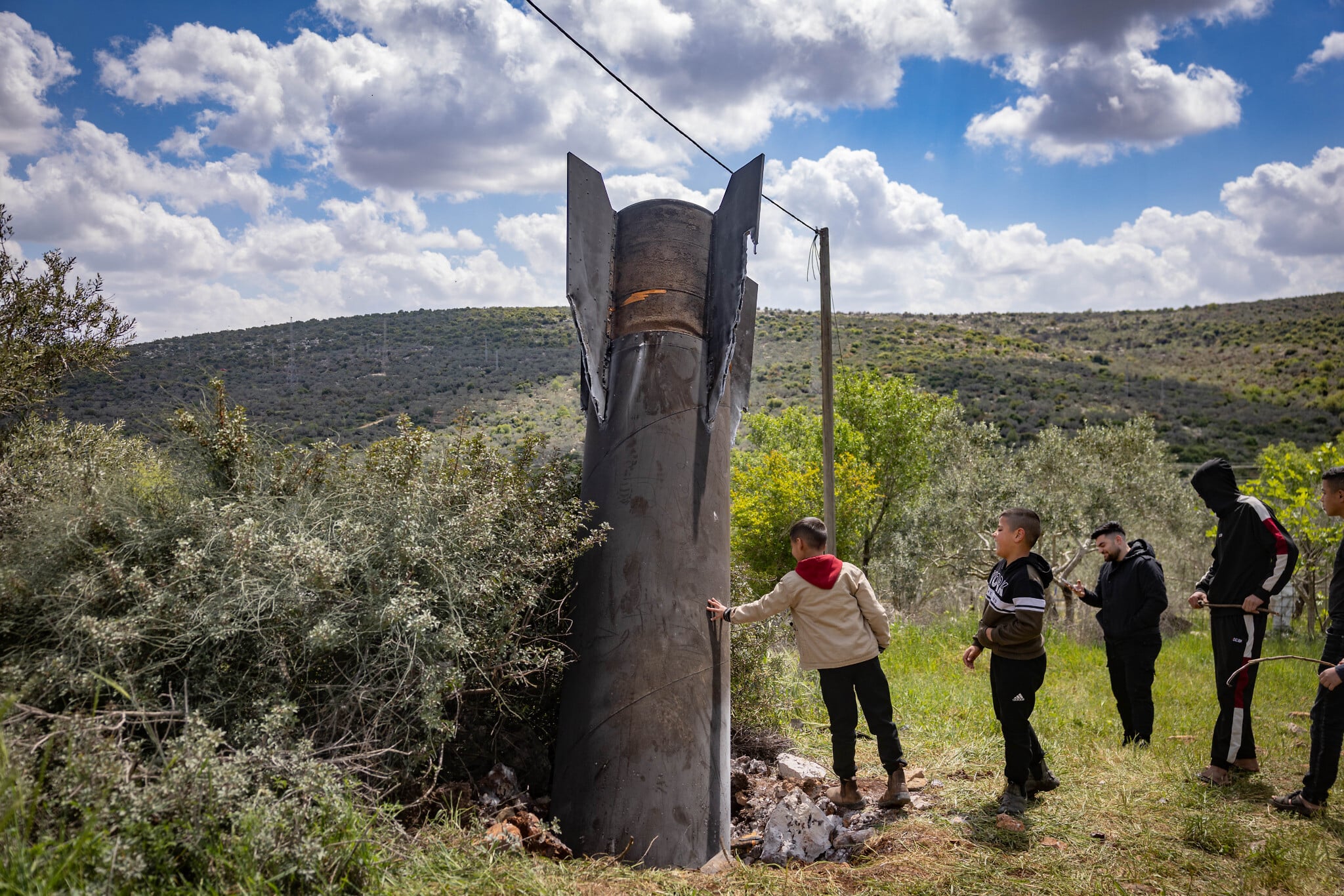
Palestinians surround debris from a ballistic missile fired from Iran toward Israel that fell outside the Palestinian village of Haris in the West Bank, on March 24, 2026. (Chaim Goldberg/Flash90)
In addition, some officials in the Pentagon fear that the US military has been burning through its own missile stockpiles at too fast a rate, according to a Friday report in the Washington Post, citing people familiar with the matter.
The US military has fired over 850 Tomahawk cruise missiles in four weeks of war with Iran, a rate that has alarmed some Pentagon officials and prompted internal discussions about how to make more available, the report said. Reuters could not immediately verify the report.
“The US military has more than enough munitions, ammo and weapons stockpiles to achieve the goals of Operation Epic Fury laid out by President Trump — and beyond,” White House press secretary Karoline Leavitt said in a statement to Reuters.
“Nevertheless, President Trump has always been intensely focused on (strengthening) our Armed Forces, and he will continue to call on defense contractors to more speedily build American-made weapons, which are the best in the world,” Leavitt’s statement said.
Responding to a request for comment, the US Department of Defense said it “has everything it needs to execute any mission at the time and place of the President’s choosing and on any timeline.”
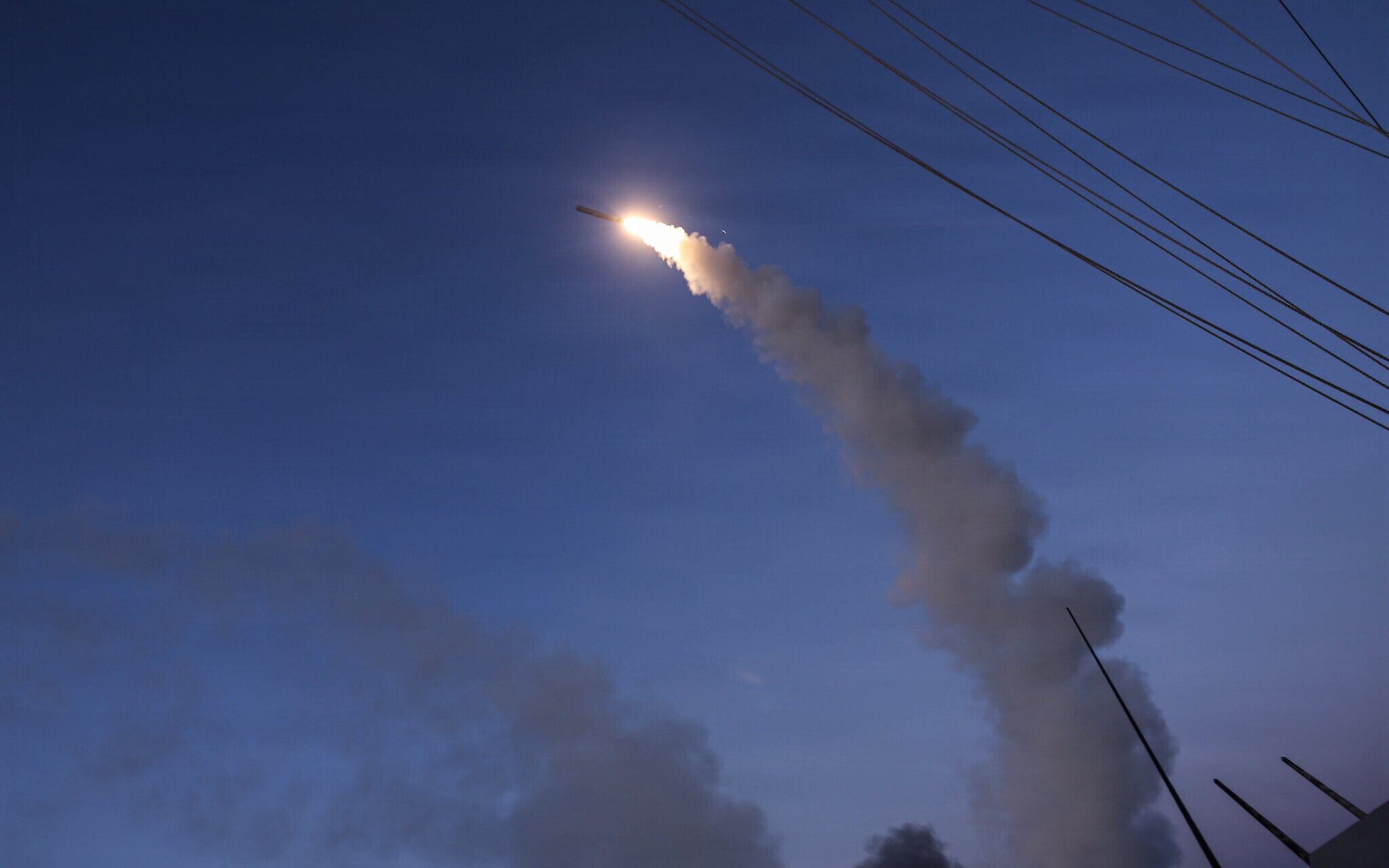
This US Navy handout photo released by US Central Command public affairs on March 8, 2026, shows an Arleigh Burke-class guided-missile destroyer USS Thomas Hudner (DDG 116) firing a Tomahawk land attack missile, on March 5, 2026. (US NAVY / AFP)
Iran-linked hacker group says it breached FBI chief’s emails
Meanwhile, Iran-linked hackers on Friday publicly claimed the breach of FBI Director Kash Patel’s personal inbox, publishing photographs of the director and other documents to the internet.
On their website, the hacker group Handala Hack Team said Patel “will now find his name among the list of successfully hacked victims.” A Justice Department official confirmed that Patel’s email had been breached and said the material published online appeared authentic.
The Iranian state-backed “Handala Hack Team” is claiming to have breached FBI Director Kash Patel’s personal email, posting an apparent resume and several old photos of Patel. pic.twitter.com/PHwkBrw88z
— OSINTdefender (@sentdefender) March 27, 2026
The FBI did not immediately respond to a request for comment. The hackers did not immediately respond to messages.
Handala, which calls itself a group of pro-Palestinian vigilante hackers, is considered by Western researchers to be one of several personas used by Iranian government cyber-intelligence units. Handala recently claimed the hack of Michigan-based medical devices and services provider Stryker on March 11, claiming to have deleted a massive trove of company data.
Reuters was not able to independently authenticate the Patel emails, but the personal Gmail address that Handala claims to have broken into matches the address linked to Patel in previous data breaches preserved by the dark web intelligence firm District 4 Labs. A sample of the material uploaded by the hackers and reviewed by Reuters appears to show a mix of personal and work correspondence dating between 2010 and 2019.
Rubio pressed by G7 allies on war plans
As the US-Israeli campaign against Iran neared its one-month mark, G7 allies on Friday pressed US Secretary of State Marco Rubio for clarity on American plans for Iran, with concern also intensifying over the extent of cooperation between Russia and the Islamic Republic.
Having skipped the first day of the meeting at the historic monastery turned luxury hotel complex outside Paris, Rubio arrived at the Vaux-de-Cernay Abbey for a full day of talks with counterparts from leading industrialized democracies.
German Foreign Minister Johann Wadephul said the international community needed to collaborate even more closely now that it was dealing with two wars — including the conflict sparked by Moscow’s invasion of Ukraine — in which Russia and Iran were cooperating.
“We need to strengthen our unity. Given that Iran and Russia are working together in the closest way, we must stand even closer together,” Wadephul told reporters.
He told German radio earlier, ahead of the talks, that allies needed to know “how the US will proceed” in Iran. Rubio, he said, would “perhaps explain this more precisely.”

EU High Representative and Vice-President for Foreign Affairs and Security Policy Kaja Kallas, center, Germany’s Foreign Minister Johann Wadephul, from left, Britain’s Foreign Secretary Yvette Cooper, US Secretary of State Marco Rubio, France’s Minister for Europe and Foreign Affairs Jean-Noel Barrot, Canada’s Foreign Minister Anita Anand, and Japan’s Foreign minister Toshimitsu Motegi attend talks on Peace and Security during a G7 Foreign Ministers’ meeting at the Vaux-de-Cernay Abbey in Cernay-la-Ville outside Paris, March 27, 2026. (Brendan Smialowski/Pool Photo via AP)
In contrast to usual protocol, and in a sign of the distance between the United States and its allies, there was no joint communiqué at the end of the meeting. Instead, the G7 presidency, which France holds this year, will issue a statement, said a diplomatic source who asked not to be named.
UK Foreign Minister Yvette Cooper urged a “swift resolution to this conflict that restores regional stability.”
She echoed concerns over the ongoing blockade by Iran of the key Strait of Hormuz, which has driven up global oil prices and left vessels queuing up to enter the energy bottleneck.
“Frankly, Iran cannot be able to just hold the global economy hostage as a result of a Strait, which is about international shipping routes and the freedom of navigation,” she said.
It was Rubio’s first trip abroad since the United States and Israel launched the war with the air strikes on February 28 that killed supreme leader Ali Khamenei.
Before leaving for France, Rubio said Thursday that it was in the “interest” of all G7 nations to push for the reopening of the Strait of Hormuz.
Defending the war, he said: “The president is not just doing a favor to the United States and to our people. This is for the world.”
Iran: 120 historical sites, museums damaged by US-Israeli bombing
Also on Friday, the head of Tehran city council’s heritage committee said that US and Israeli strikes on Iran have damaged at least 120 culturally or historically significant sites across the country since the start of the war.
“At least 120 museums, historical buildings and cultural sites across various provinces were directly targeted and sustained serious structural damage,” said Ahmad Alavi.
He was quoted by state TV as naming UNESCO-listed Golestan Palace — sometimes likened to Versailles — as well as Tehran’s Marble Palace, Teymourtash house and Saadabad Palace.
Golestan Palace UNESCO World Heritage Site Damaged Amid US‑Israeli Strikes, Highlighting Cultural Costs of War
The iconic Qajar-era palace in Tehran a symbol of Persian architectural heritage and artistic legacy has suffered damage as part of the widening conflict, raising… pic.twitter.com/DLLYSEivNE
— Washington Eye (@washington_EY) March 25, 2026
One of the capital’s most visited sites, the Saadabad Palace complex includes an extensive park and museums dedicated to Iranian history.
In addition to the cultural institutions, it also houses the residences of the Iranian president and the governor of Tehran province, with judicial and Revolutionary Guards facilities located nearby.
Iran, whose history spans several millennia, possesses a significant cultural heritage that has largely been spared from mass tourism.
According to the UN, at least four of the country’s 29 UNESCO-listed sites have been damaged in the war: Golestan Palace, Chehel Sotoun Palace in Isfahan, the Masjed-e Jame mosque in the same city, and the prehistoric sites of the Khorramabad Valley.