
Former prime minister Naftali Bennett and Opposition Leader Yair Lapid’s combined electoral list, dubbed “Together,” would receive a total of 26 seats if elections were held Monday, placing them ahead of Prime Minister Benjamin Netanyahu’s ruling Likud as the Knesset’s largest party, according to a new poll by Channel 12.
In the poll — the network’s first since Sunday night’s announcement of the union, Netanyahu’s right-wing bloc only garnered 50 out of 120 Knesset seats while the Zionist opposition parties received 60 and the Arab factions 10 — an identical showing to last Thursday’s Channel 12 survey.
The combined Bennett-Lapid platform’s showing of 26 seats is one less than the two received separately in that previous poll, in which Bennett 2026 and Yesh Atid garnered 21 and 7 seats, respectively.
Together is followed by Likud with 25 seats; Gadi Eisenkot’s centrist Yashar at 15; the left-leaning Democrats at 10; the Mizrahi ultra-Orthodox Shas, the secular, right-wing Yisrael Beytenu and the far-right Otzma Yehudit at 9 each; the Ashkenazi ultra-Orthodox United Torah Judaism at 7; and the Arab-majority Hadash-Ta’al and the Islamist Ra’am each with 5.
The ultra-nationalist Arab Balad party, the Reservists, Bezalel Smotrich’s far-right Religious Zionism, and Benny Gantz’s centrist Blue and White all fall below the electoral threshold.
Get The Times of Israel’s Daily Edition
by email and never miss our top stories
By signing up, you agree to the terms
According to the poll, in the event that Eisenkot would join Bennett and Lapid in a single list, their united party would garner 41 seats, but the overall balance of the blocs would remain unaffected.
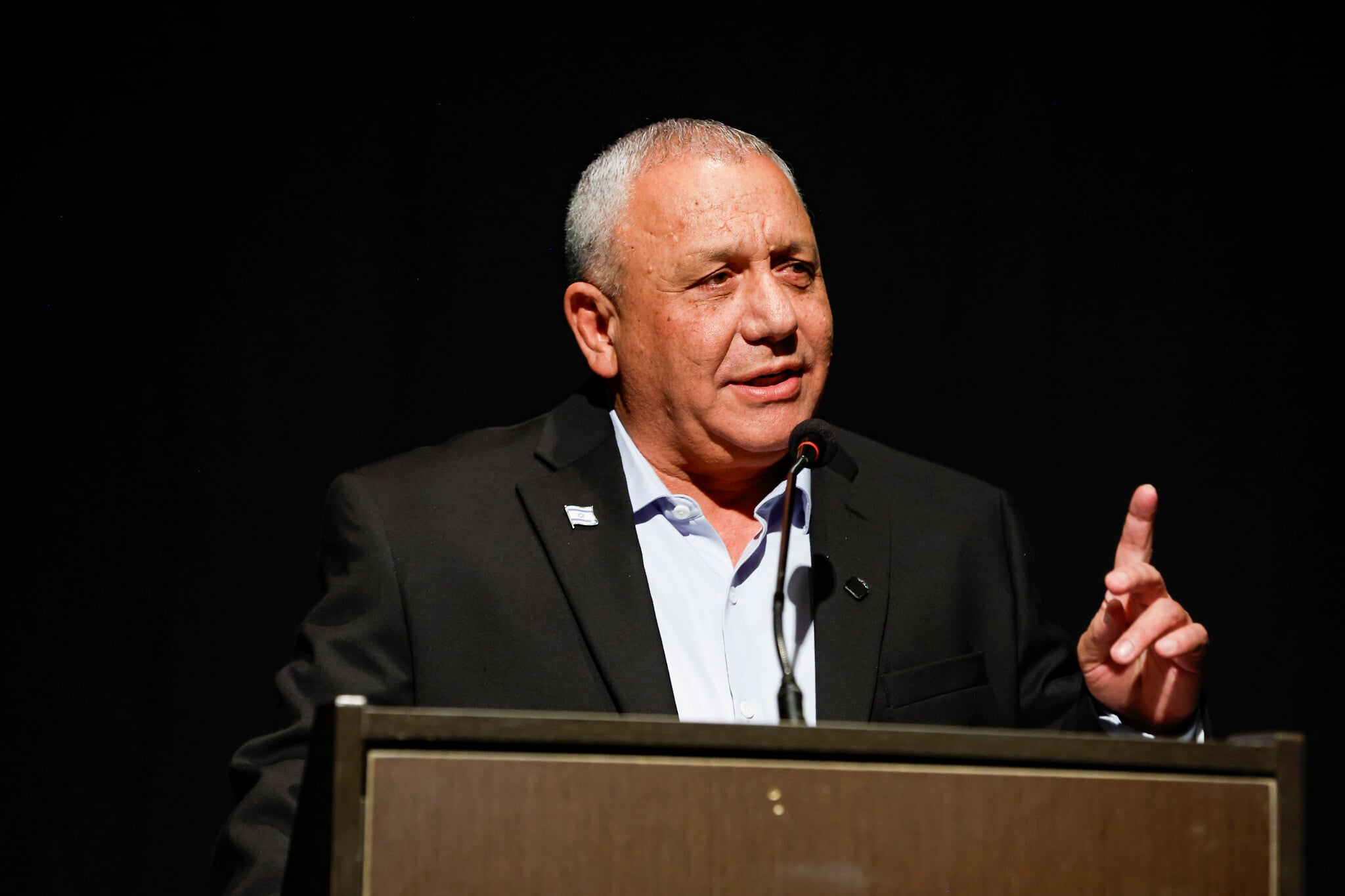
Gadi Eisenkot, head of the Yashar party, speaks during the launch of a book by Yoav Limor and Oren Nahari in Herzliya, central Israel, April 26, 2026 (Tal Gal/Flash90)
The Channel 12 poll also found that should several right-wing critics of Netanyahu establish an alternative party on the right — dubbed Likud B by the press — it would siphon away support from both the coalition and opposition, and would ultimately weaken the opposition bloc’s overall standing.
The poll, carried out by Mano Geva, surveyed 501 Israelis online and over the phone, with a margin of error of 4.4%.
Both Netanyahu and Bennett are again campaigning on not forming a coalition with Arab-majority parties. Bennett pledged not to sit in the same government as Ra’am during the 2021 election campaign, but did subsequently just that in order to form a coalition. Bennett said Sunday that Netanyahu was ready to the same thing, a claim Ra’am leader Mansour Abbas has repeatedly made.
While the 2021-22 Bennett-Lapid government appeared to break the taboo against such high-level political cooperation with Arab majority parties — and both of them have touted Ra’am chairman Abbas as a trailblazer looking to improve the lives of Israel’s Arab citizens while accepting Israel as a Jewish state — attitudes toward such collaboration have soured following Hamas’s October 7 attack.
According to a Channel 13 poll also released Monday evening, the coalition would receive 57 seats — up three from the network’s last poll — while the Jewish-majority opposition parties would receive 52 and the Arab-majority parties 11 seats.
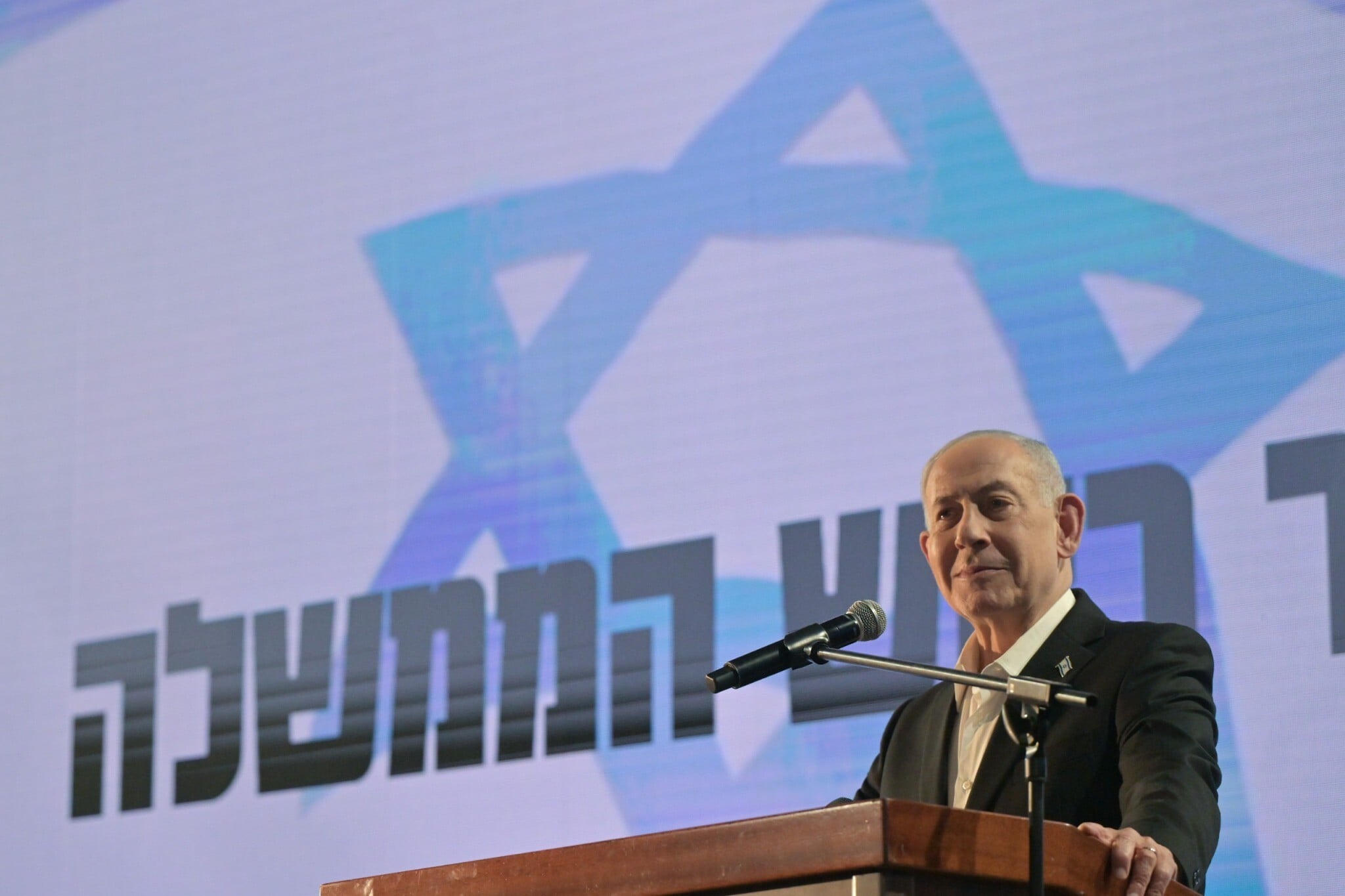
Prime Minister Benjamin Netanyahu speaks to the IDF senior command on April 27, 2026. (Kobi Gideon/GPO)
A Walla poll released earlier Monday showed Together garnering 27 seats, with Likud rising to 28. With Eisenkot, Together would receive 41 seats — with the opposition standing at 59 seats and the coalition 51.
Last week, a poll conducted by Zman Yisrael, The Times of Israel’s Hebrew-language sister site, put the current coalition at 51 seats in total, while the Zionist opposition would receive 60 and the Arab-majority parties 9. Neither side would be able to assemble a 61-strong majority and form a government without Arab party support.
Elections must take place by October 2026 at the latest.
You appreciate our wartime journalism

You clearly find our careful reporting of the Iran war valuable, at a time when facts are often distorted and news coverage often lacks context.
Your support is essential to continue our work. We want to continue delivering the professional journalism you value, even as the demands on our newsroom have grown dramatically during this ongoing conflict.
So today, please consider joining our reader support group, The Times of Israel Community. For as little as $6 a month you’ll become our partners while enjoying The Times of Israel AD-FREE, as well as accessing exclusive content available only to Times of Israel Community members.
Thank you,
David Horovitz, Founding Editor of The Times of Israel
Already a member? Sign in to stop seeing this