
The Israel Defense Forces on Tuesday announced it had located and destroyed two major Hezbollah tunnels in the southern Lebanon town of Qantara, which it said were constructed by the terror group with “direct guidance” from Iran.
The tunnels were built over a decade, reaching depths of some 25 meters, and were “funded by the Iranian terror regime and as part of Hezbollah’s plan to conquer the Galilee,” according to the military.
The two tunnels — located near each other but not connected — spanned a total of some two kilometers in length, making it one of the longest underground systems found by the military in southern Lebanon to date.
The IDF said the tunnels were part of a larger underground network located in the towns of Rab al-Thalathin and Mays al-Jabal during the fighting in 2024.
The IDF believed the underground sites were intended by Hezbollah for use as a staging ground, where hundreds of terror operatives would arrive when called, gather equipment, and ready themselves to attack Israeli towns. Hezbollah’s invasion plans never materialized.
Get The Times of Israel’s Daily Edition
by email and never miss our top stories
By signing up, you agree to the terms
“One of the tunnels was recently used by operatives of Hezbollah’s Radwan Force to advance terror attacks against the State of Israel and its citizens, thereby posing a direct threat to Israeli civilians and IDF troops,” the military said.
Major Hezbollah tunnels located by the IDF in the southern Lebanon town of Qantara, in videos issued by the military on April 28, 2026. (Israel Defense Forces)
Troops of the 36th Division raided Qantara, some 10 kilometers from Israel’s border, during the current offensive against Hezbollah, following “precise intelligence” of the tunnel systems, the military said. The entrances to the tunnels were relatively hidden.
Inside the tunnels, the IDF said troops located numerous weapons and equipment that Hezbollah operatives could use to reside in the tunnels for long periods. One of the tunnels featured some 10 rooms, each with several bunk beds.
In total, the tunnels featured some 30 rooms and 30 separate shafts, including some with rocket launchers in them aimed at Israel, according to the military.
According to military officials, the tunnels were built “to Iranian standards,” and Iran was directly involved in the planning and funding of the underground systems.
On Tuesday afternoon, using 450 tons of explosives, the military said it blew up the tunnels.
Footage shows the demolition of two major Hezbollah tunnels in the southern Lebanon town of Qantara on April 28, 2026. (Israel Defense Forces)
Large explosions were heard across the area, and the Geological Survey of Israel said the massive controlled blasts were picked up by the seismic warning system. However, no earthquake sirens were activated. The military told residents earlier it would ensure that the controlled blast would not set off the earthquake sirens, which has happened in the past.
Meanwhile, Hezbollah continued its attacks on Israeli forces stationed in southern Lebanon, despite a ceasefire. The IDF said that troops were targeted several times with explosive-laden drones, which exploded near the forces but did not cause any injuries.
Hezbollah claimed to have targeted Israeli forces in Qantara, where the major tunnels were razed.
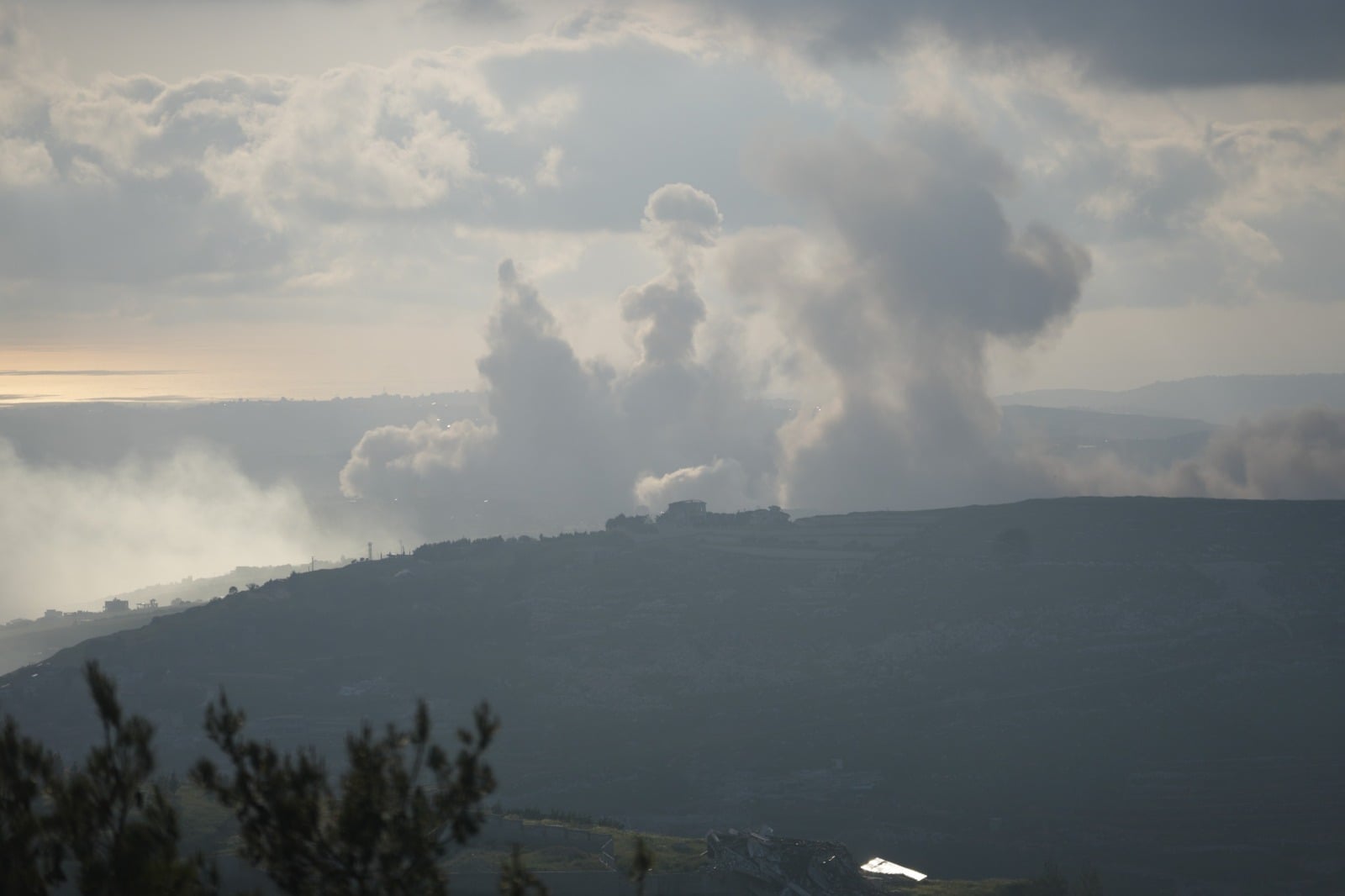
A Hezbollah tunnel system in the southern Lebanon town of Qantara is demolished in a controlled blast, April 28, 2026. (Israel Defense Forces)
Meanwhile, interceptor missiles were fired at several suspected Hezbollah drones that were detected over areas of southern Lebanon where troops were deployed, the military said. The IDF said the results of the interception attempts were under review.
In one of the incidents, a siren was activated in the border community of Misgav Am amid fears of falling fragments.
The Iran-backed terror group has made frequent use of small FPV drones in its attacks on Israeli troops in recent weeks. On Sunday, Sgt. Idan Fooks, 19, was killed and six other soldiers were wounded in a Hezbollah explosive drone strike in southern Lebanon.
The incidents came despite an ongoing ceasefire in Lebanon, which US President Donald Trump said last week would be extended by three weeks while noting that Israel could carry out strikes in Lebanon in self-defense.
Since Hezbollah began firing at Israel on March 2, breaking a ceasefire reached in November 2024, two Israeli civilians have been killed in attacks and 16 IDF soldiers have died fighting in Lebanon.
Lebanon’s health ministry says that more than 2,500 people have been killed in Israeli strikes during the same period, a figure that does not distinguish between civilians and combatants. The IDF has said that it has killed over 1,900 Hezbollah operatives since hostilities escalated.
You appreciate our wartime journalism

You clearly find our careful reporting of the Iran war valuable, at a time when facts are often distorted and news coverage often lacks context.
Your support is essential to continue our work. We want to continue delivering the professional journalism you value, even as the demands on our newsroom have grown dramatically during this ongoing conflict.
So today, please consider joining our reader support group, The Times of Israel Community. For as little as $6 a month you’ll become our partners while enjoying The Times of Israel AD-FREE, as well as accessing exclusive content available only to Times of Israel Community members.
Thank you,
David Horovitz, Founding Editor of The Times of Israel
Already a member? Sign in to stop seeing this